Norman England 1066-1100
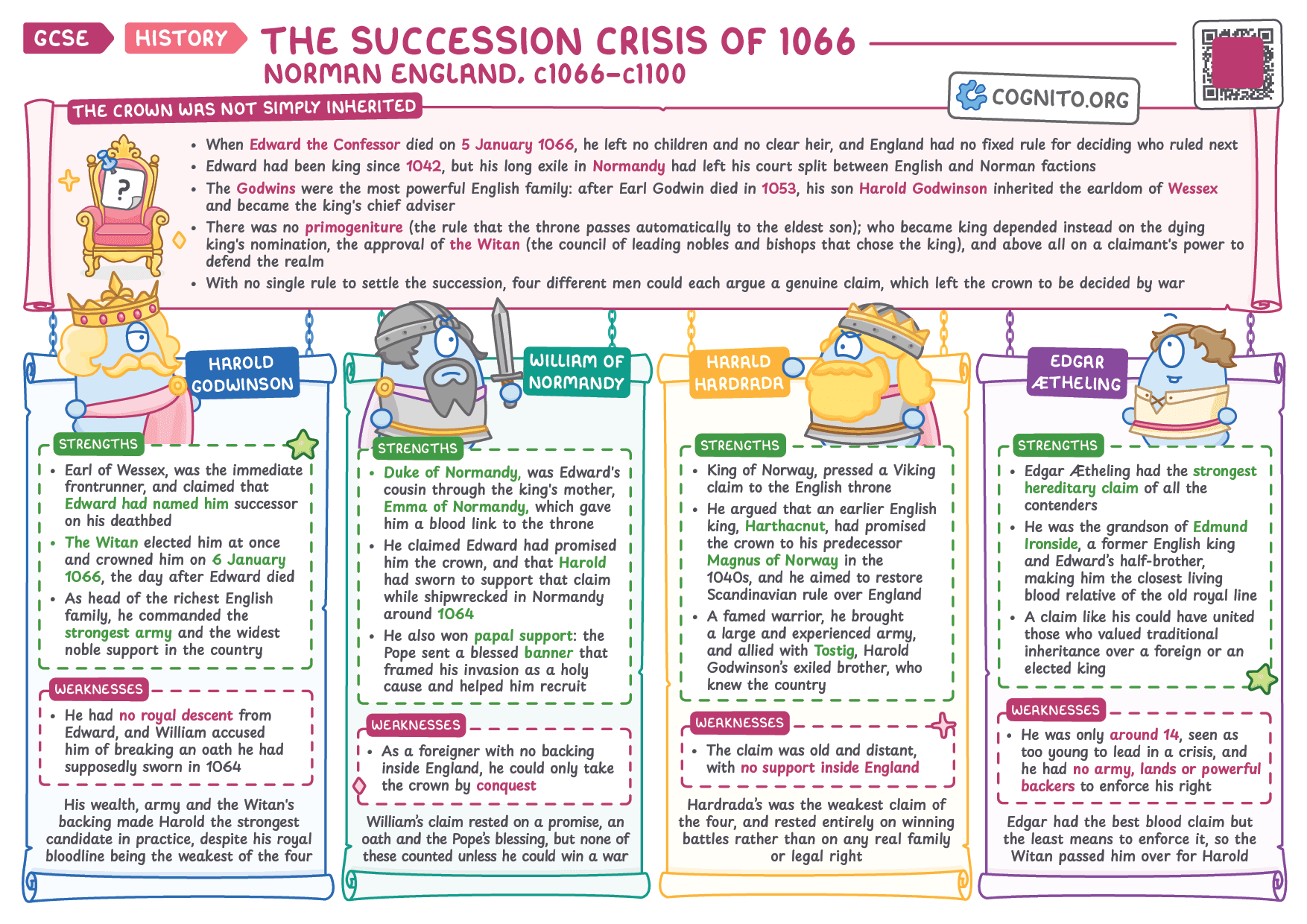
The Succession Crisis of 1066: The Four Claimants to the Throne
Why the crown was not simply inherited when Edward the Confessor died in 1066, and the claims of Harold Godwinson, William, Hardrada, and Edgar Ætheling.
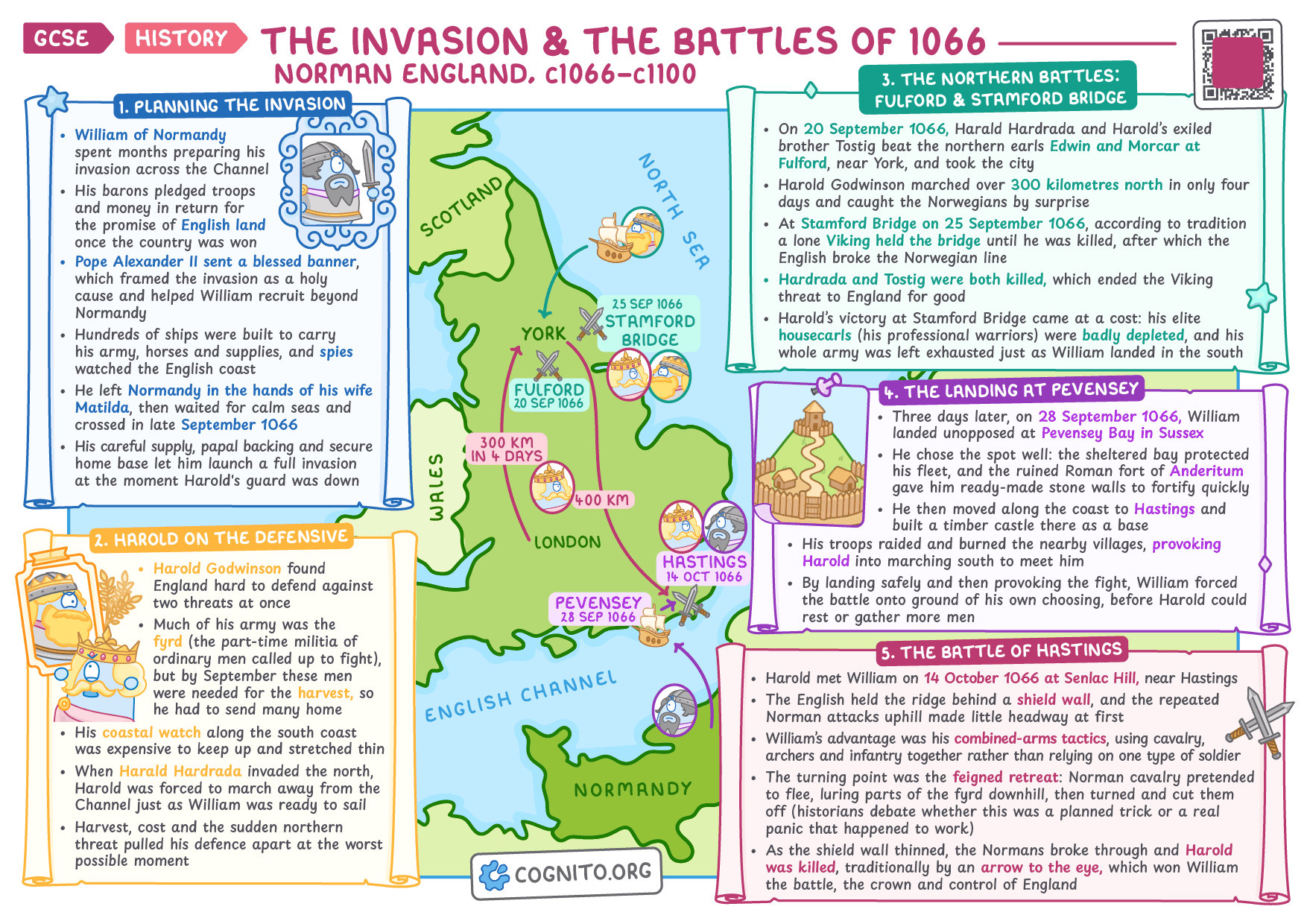
The Battles of 1066: Fulford, Stamford Bridge and the Battle of Hastings
How William planned his invasion, why Harold's defences were stretched, and the three battles of 1066: Fulford, Stamford Bridge, and Hastings on 14 October.
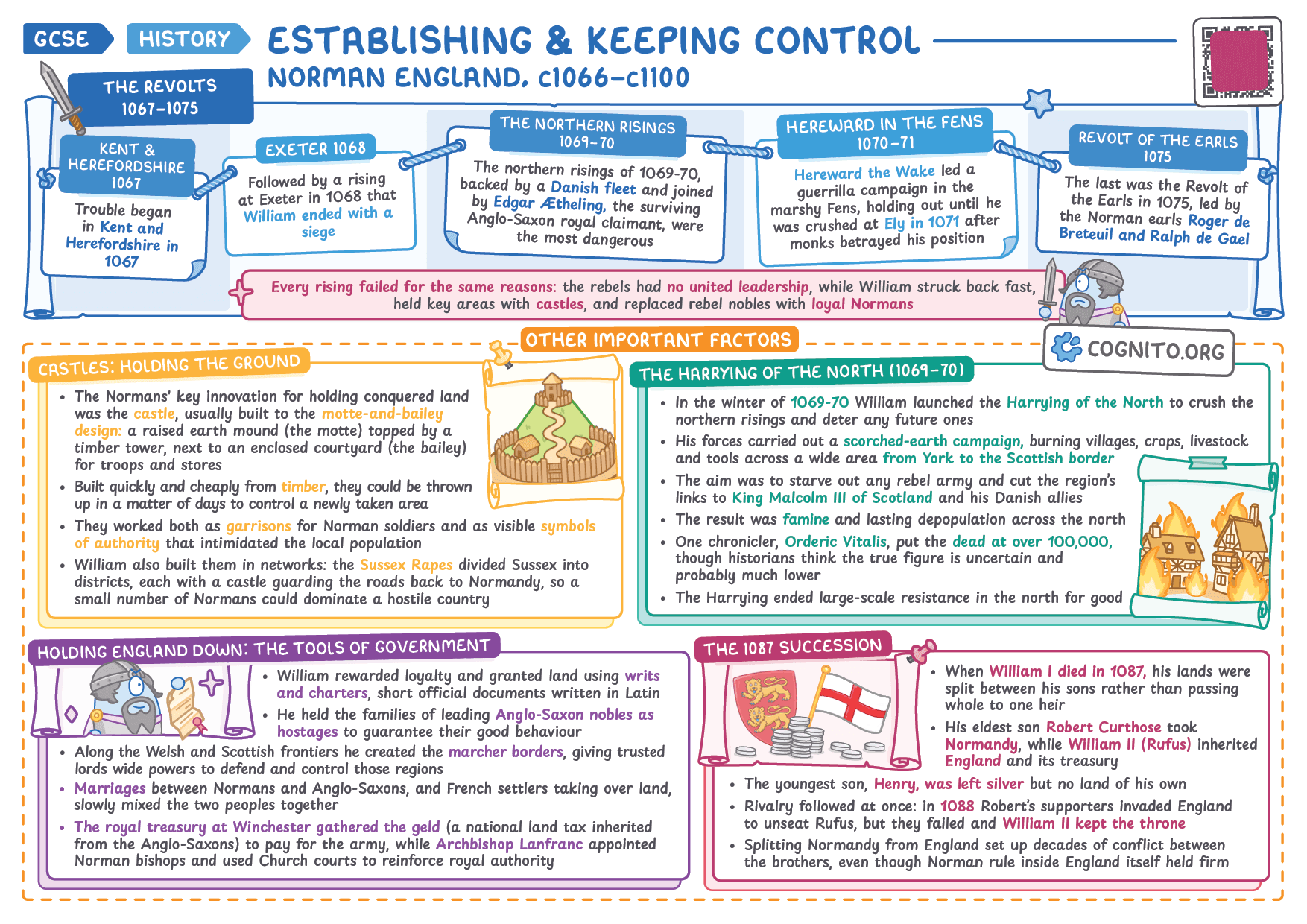
How William Kept Control of England: Castles, Revolts and the Harrying of the North
How William held England after 1066: motte-and-bailey castles, the revolts of 1067-1075, the Harrying of the North, and the tools of Norman government.
Conflict and Tension 1894-1918
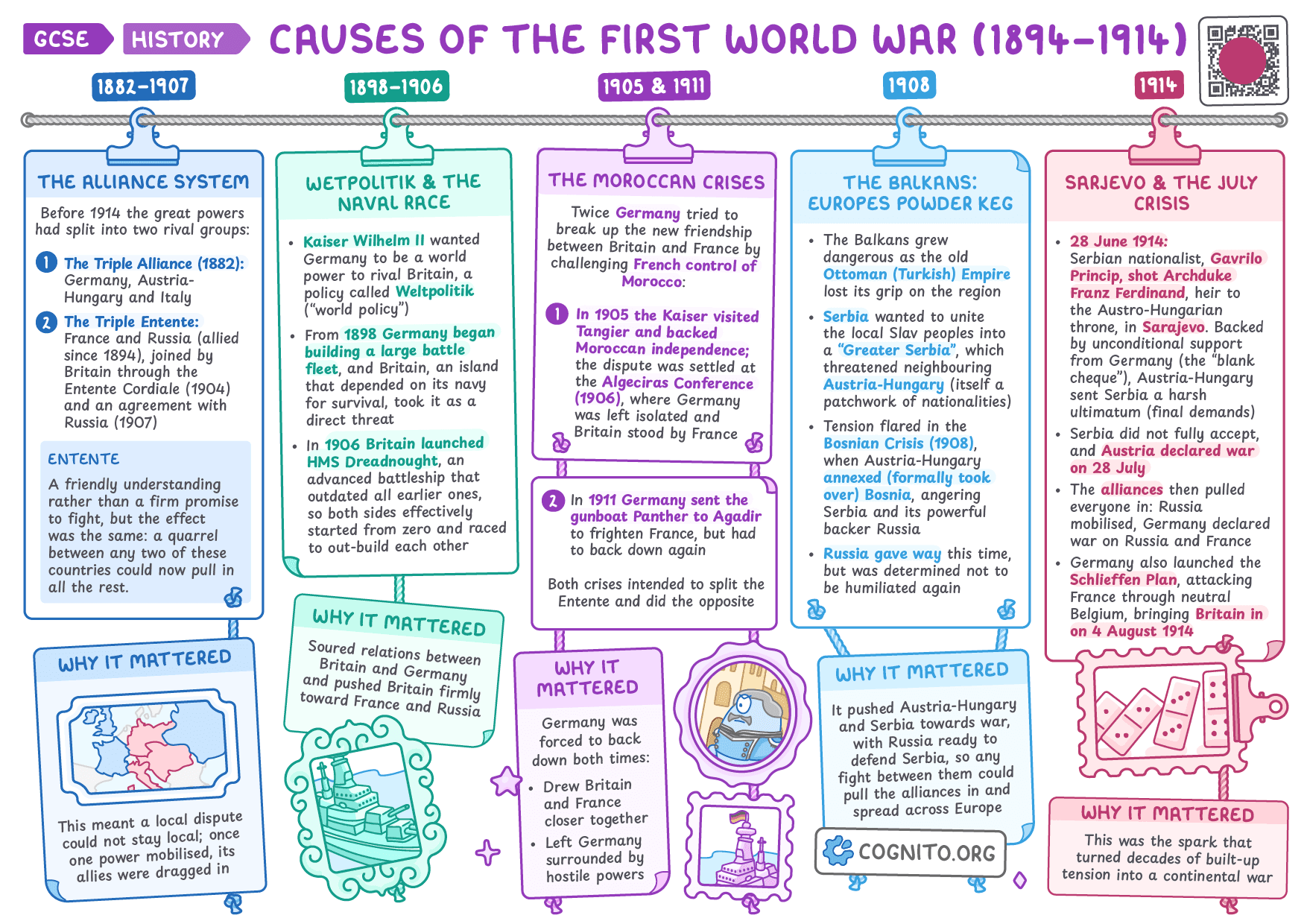
Causes of the First World War: Alliances, the Naval Race and Sarajevo
Alliances, the Anglo-German naval race, the Moroccan crises, the Balkans, and the Sarajevo assassination that turned decades of tension into war in 1914.
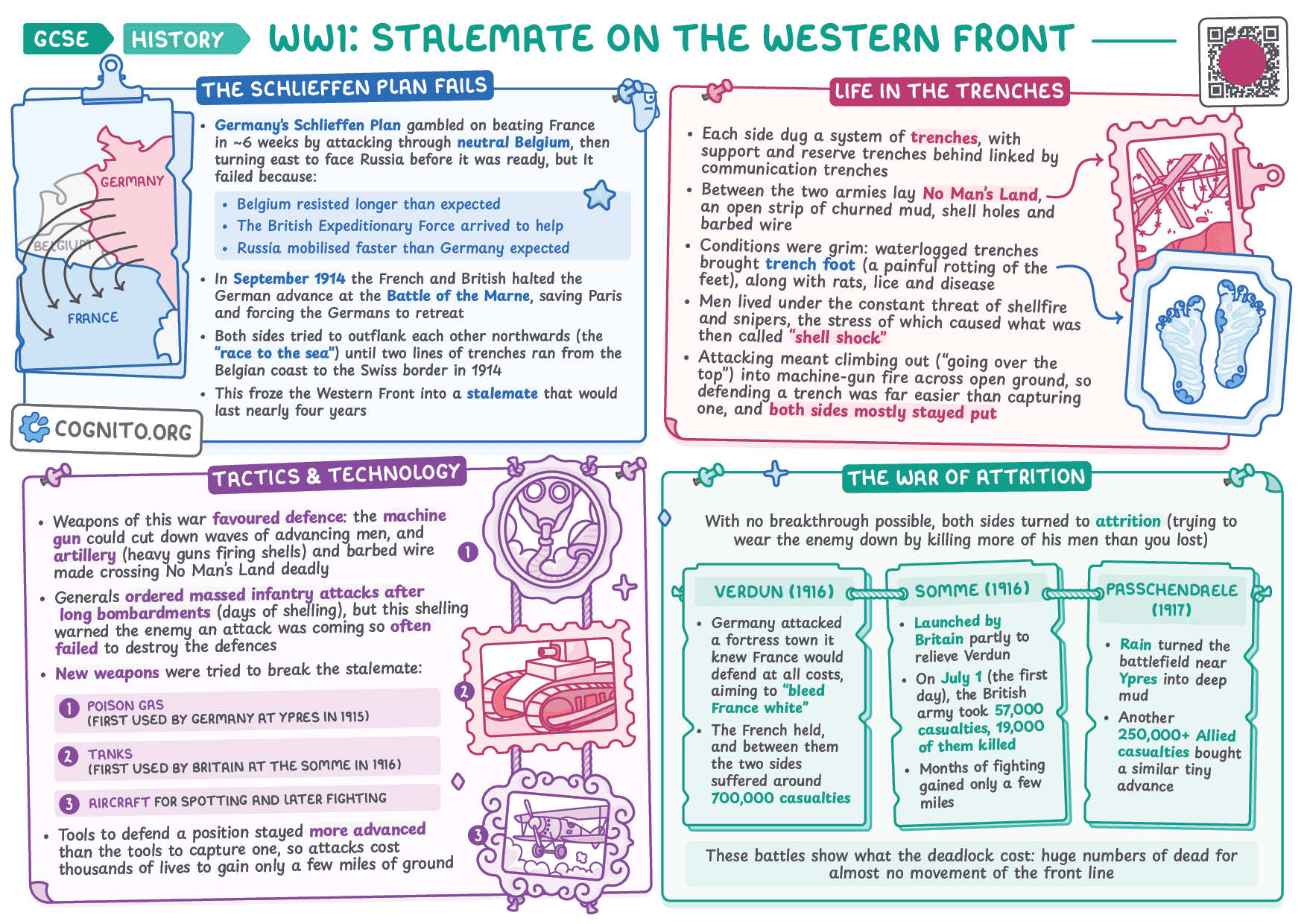
Trench Warfare on the Western Front: Why the Stalemate Lasted
Why the Schlieffen Plan failed, what life in the trenches was like, how machine guns and artillery favoured defence, and what Verdun and the Somme cost.
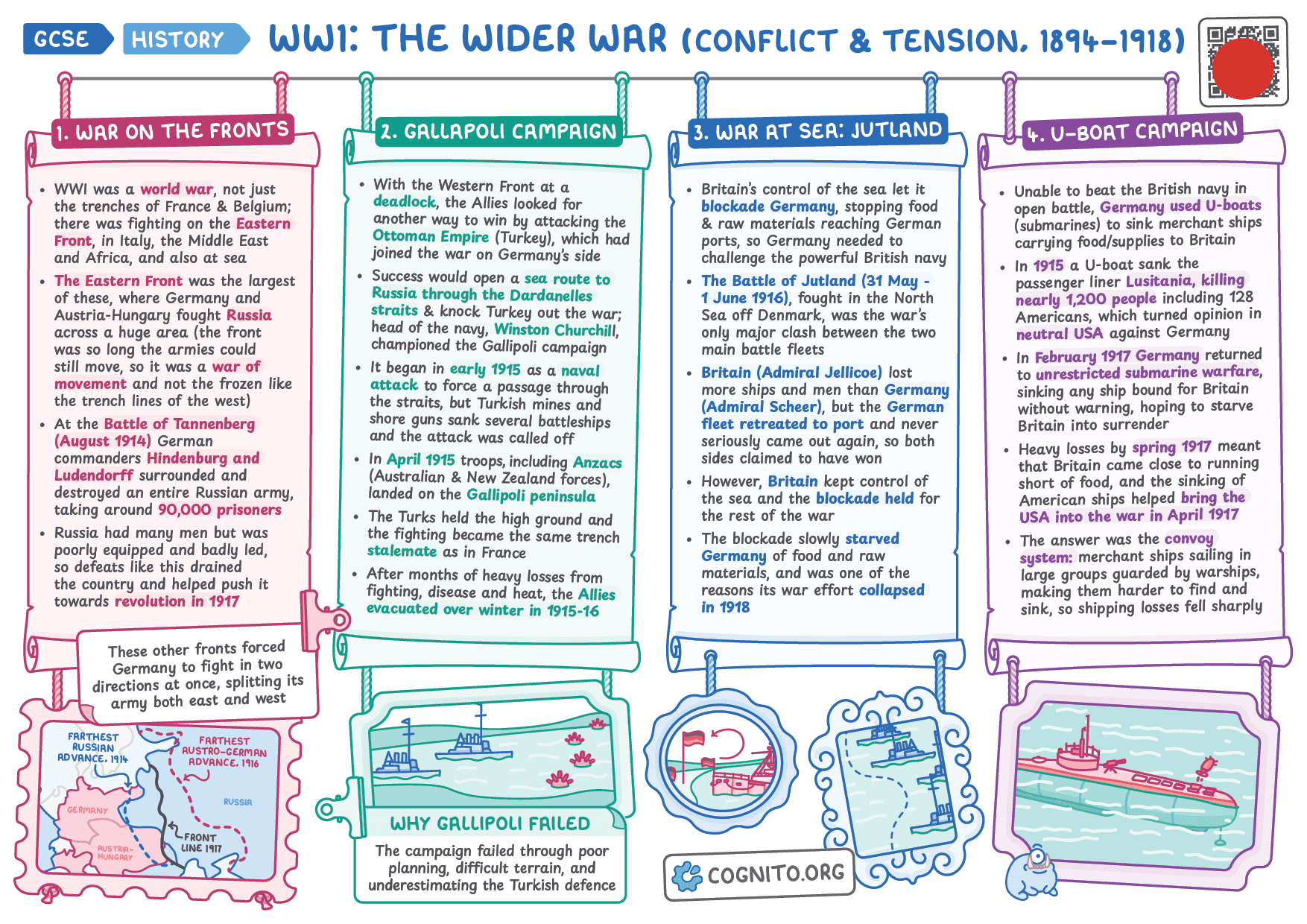
Gallipoli, Jutland and the Eastern Front: The First World War Beyond the Trenches
The Eastern Front and Tannenberg, why Gallipoli failed, who won the Battle of Jutland, and the U-boat campaign that brought the USA into the war in 1917.
America 1920-1973
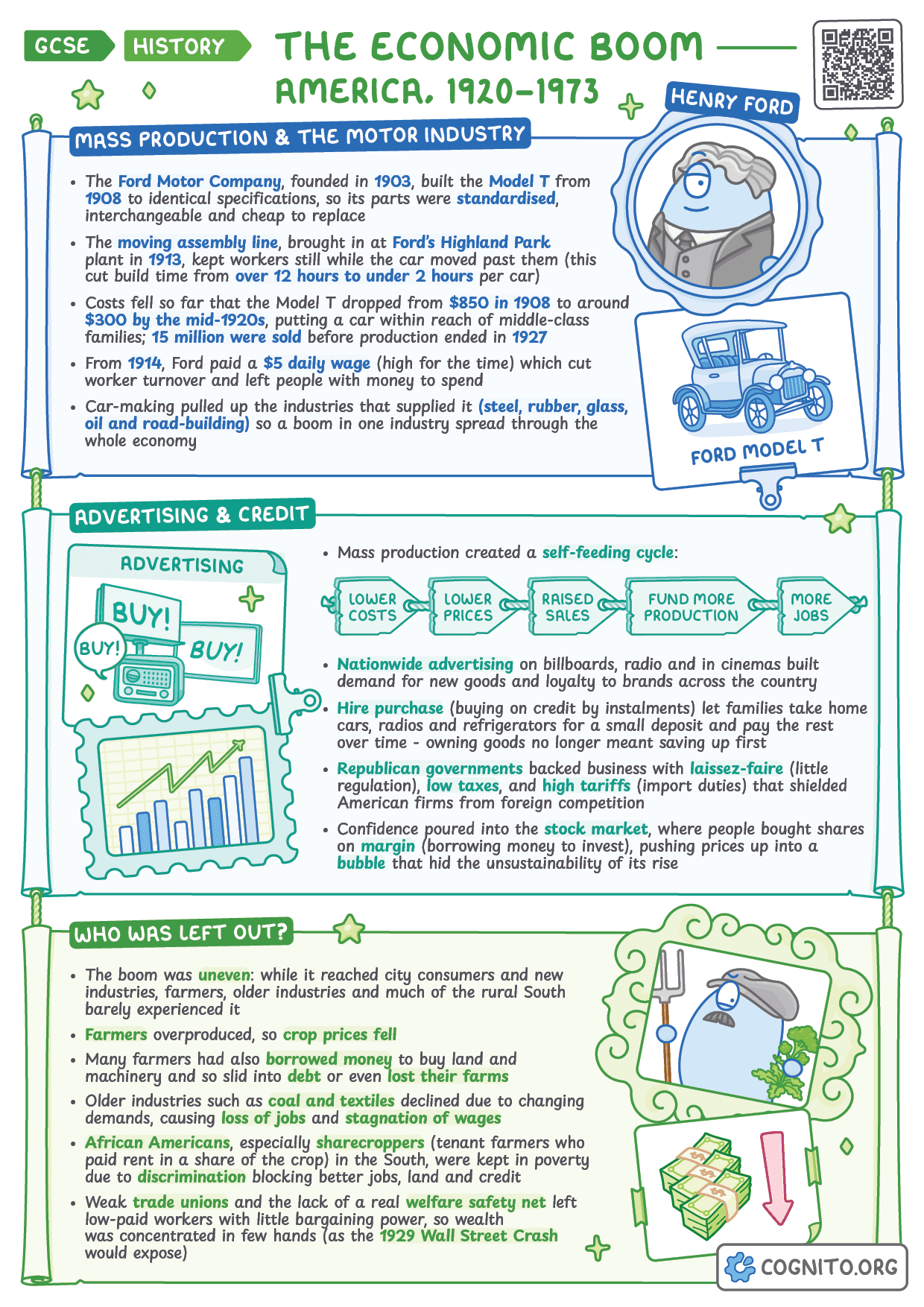
The 1920s Economic Boom in America
How mass production, hire purchase and Republican economic policy built the boom of the 1920s, and why farmers and the rural South never felt it.
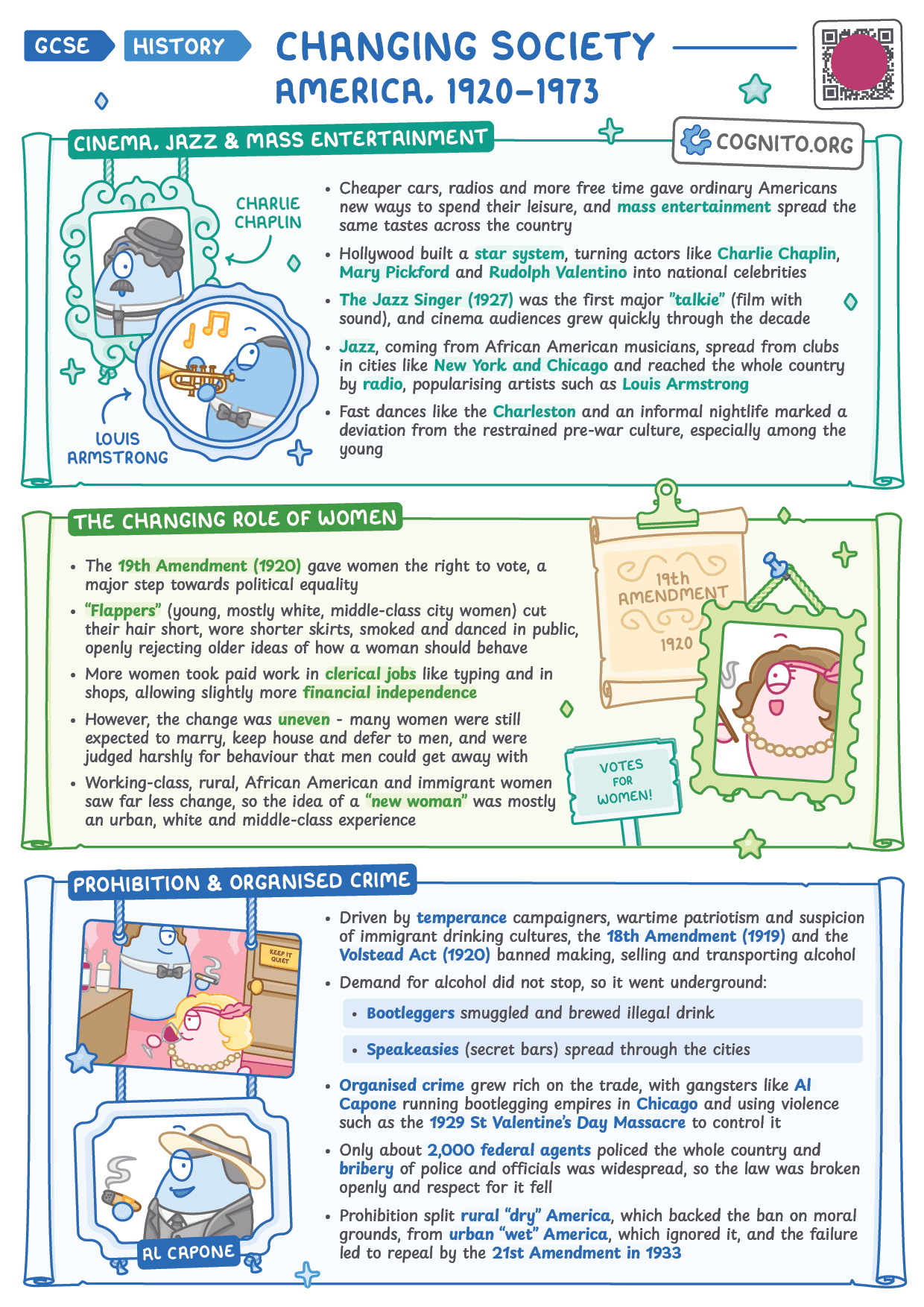
Social Change in 1920s America: Cinema, Jazz, Women and Prohibition
The star system and the first talkie, jazz on the radio, flappers and the 19th Amendment, and why Prohibition handed the cities to Al Capone.
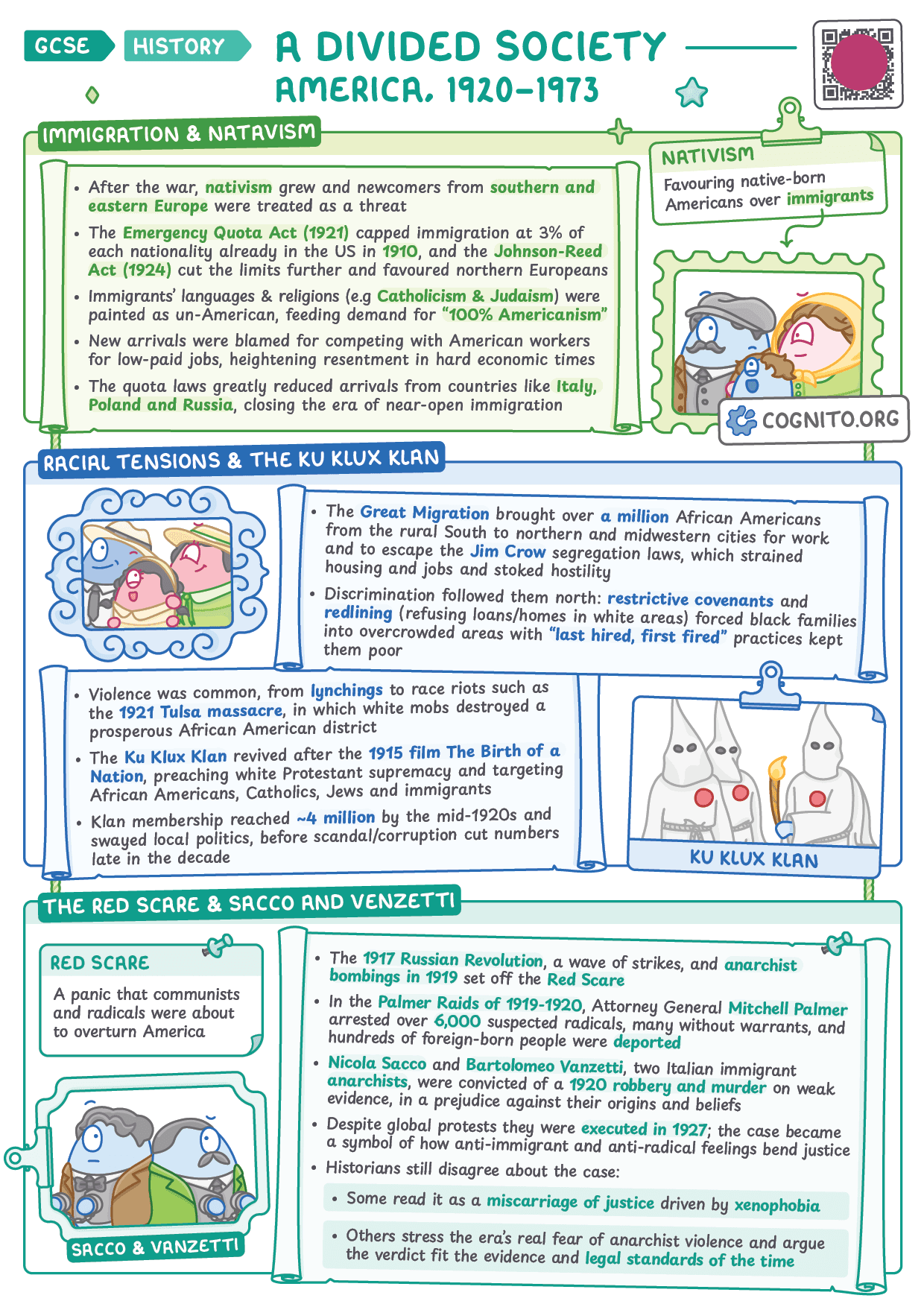
A Divided Society in 1920s America: Immigration, the Ku Klux Klan and the Red Scare
Quota laws and nativism, the Great Migration and Jim Crow, a Ku Klux Klan four million strong, and the Red Scare that sent Sacco and Vanzetti to their deaths.
Health and the People
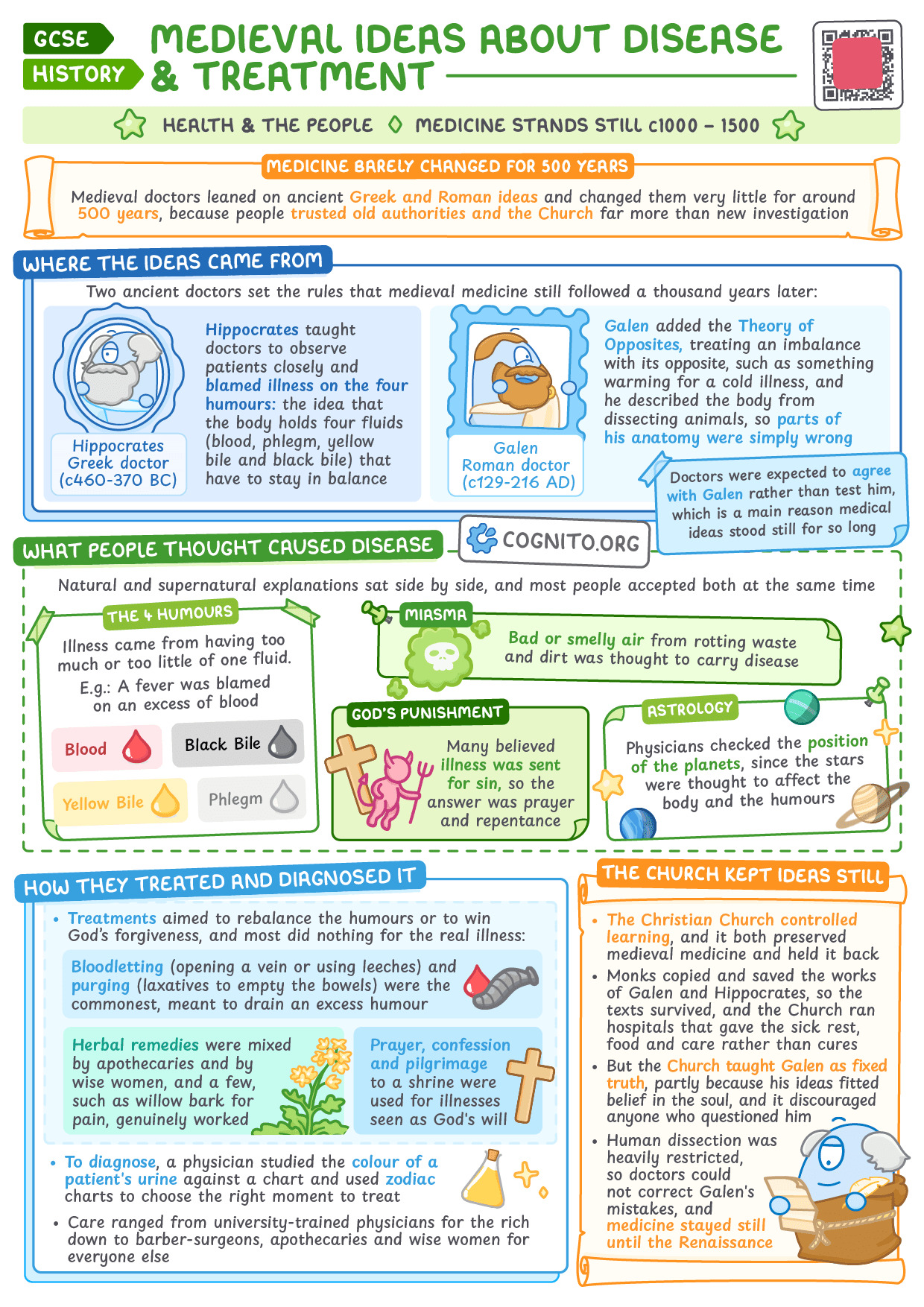
Medieval Medicine: Ideas About Disease and Treatment
Why medieval doctors blamed the four humours, miasma, sin and the stars for illness, how they treated patients, and why the Church kept medicine still.
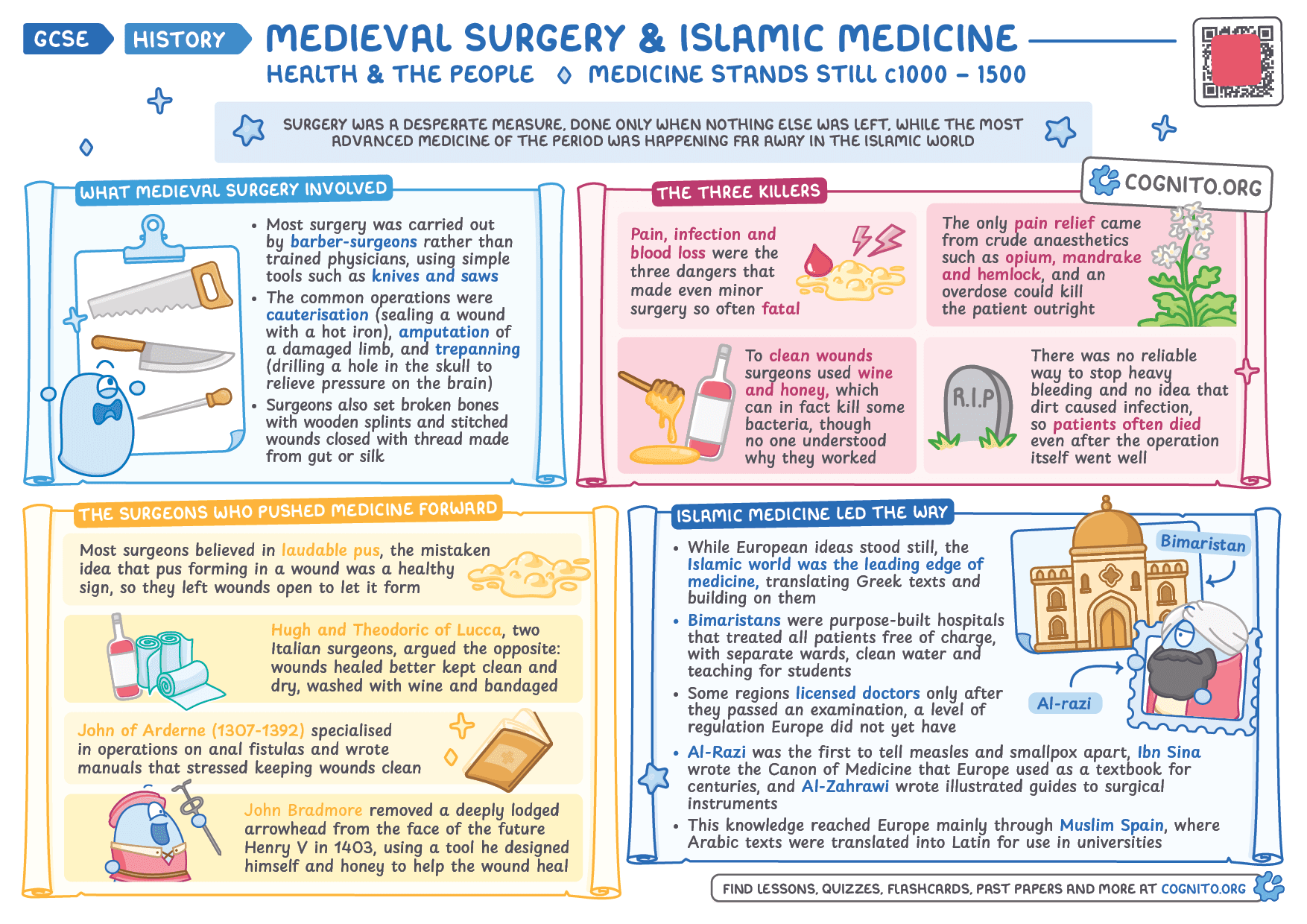
Medieval Surgery and Islamic Medicine
Cauterisation, amputation and trepanning, the three killers of pain, infection and blood loss, and how Islamic hospitals and doctors led the way instead.
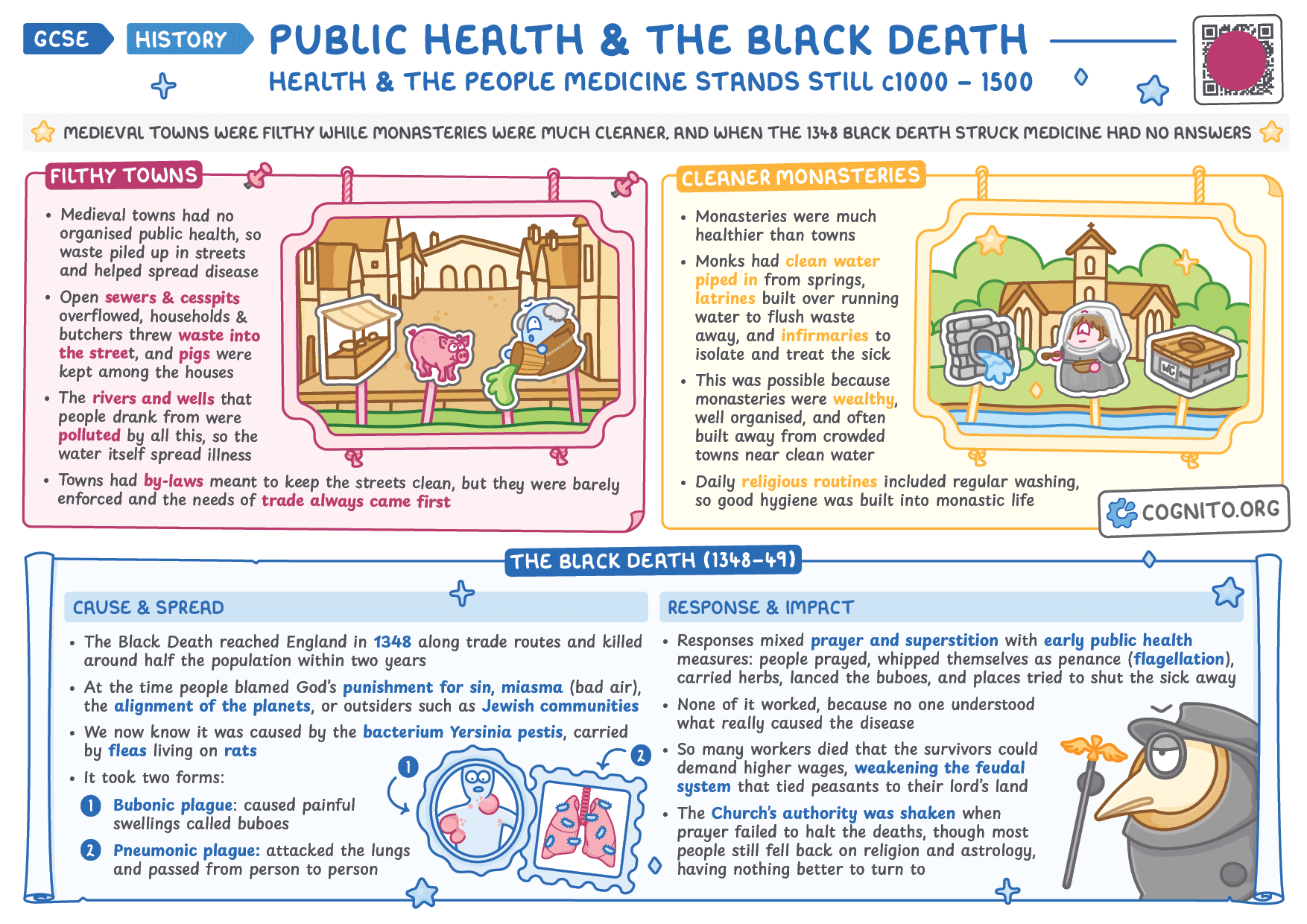
The Black Death and Medieval Public Health
Filthy towns and far cleaner monasteries, what people in 1348 blamed for the Black Death, how they responded, and the impact on wages and the Church.
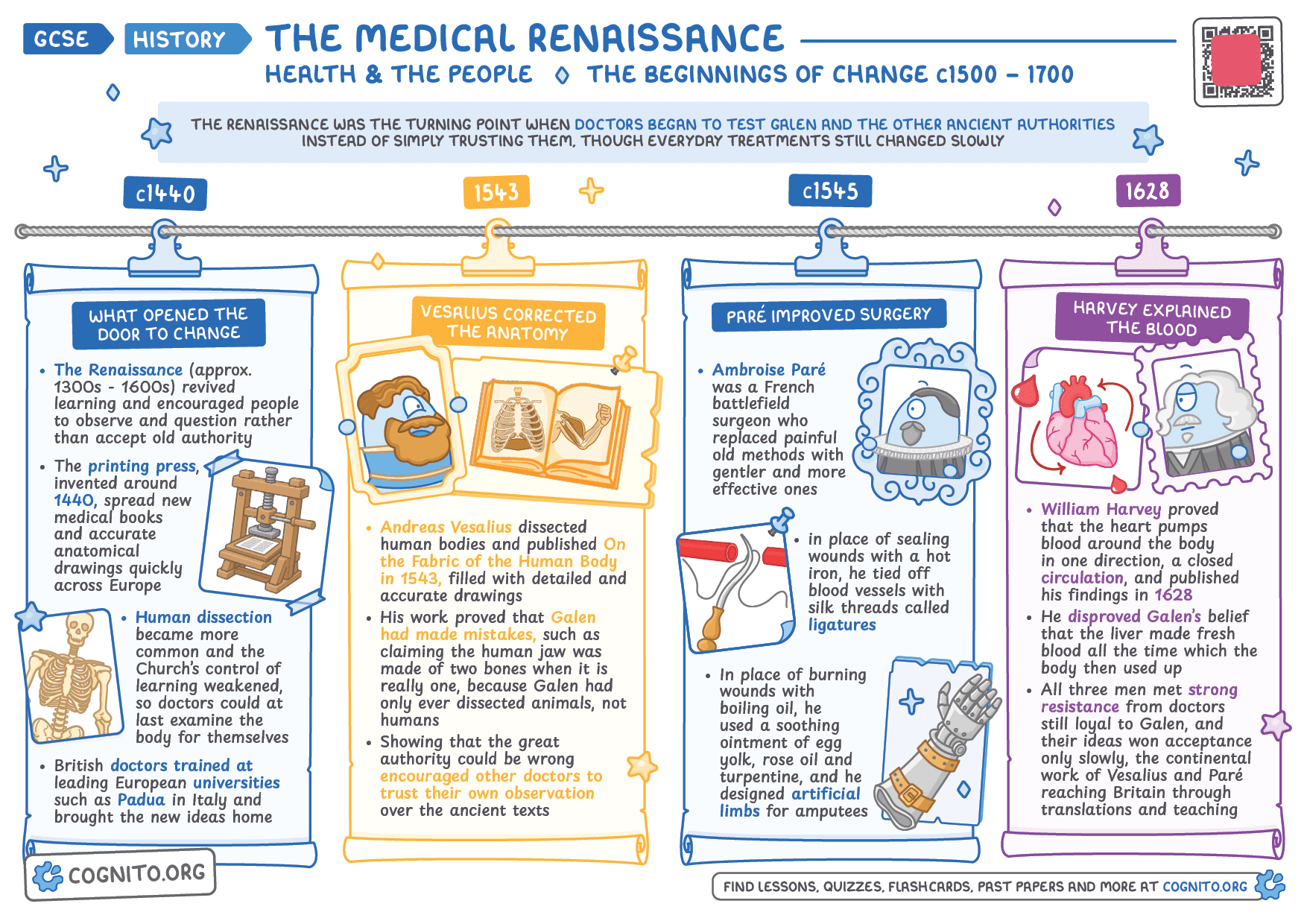
The Medical Renaissance: Vesalius, Paré and Harvey
How Vesalius, Paré and Harvey tested Galen instead of trusting him, and how the printing press, dissection and European universities opened the door.
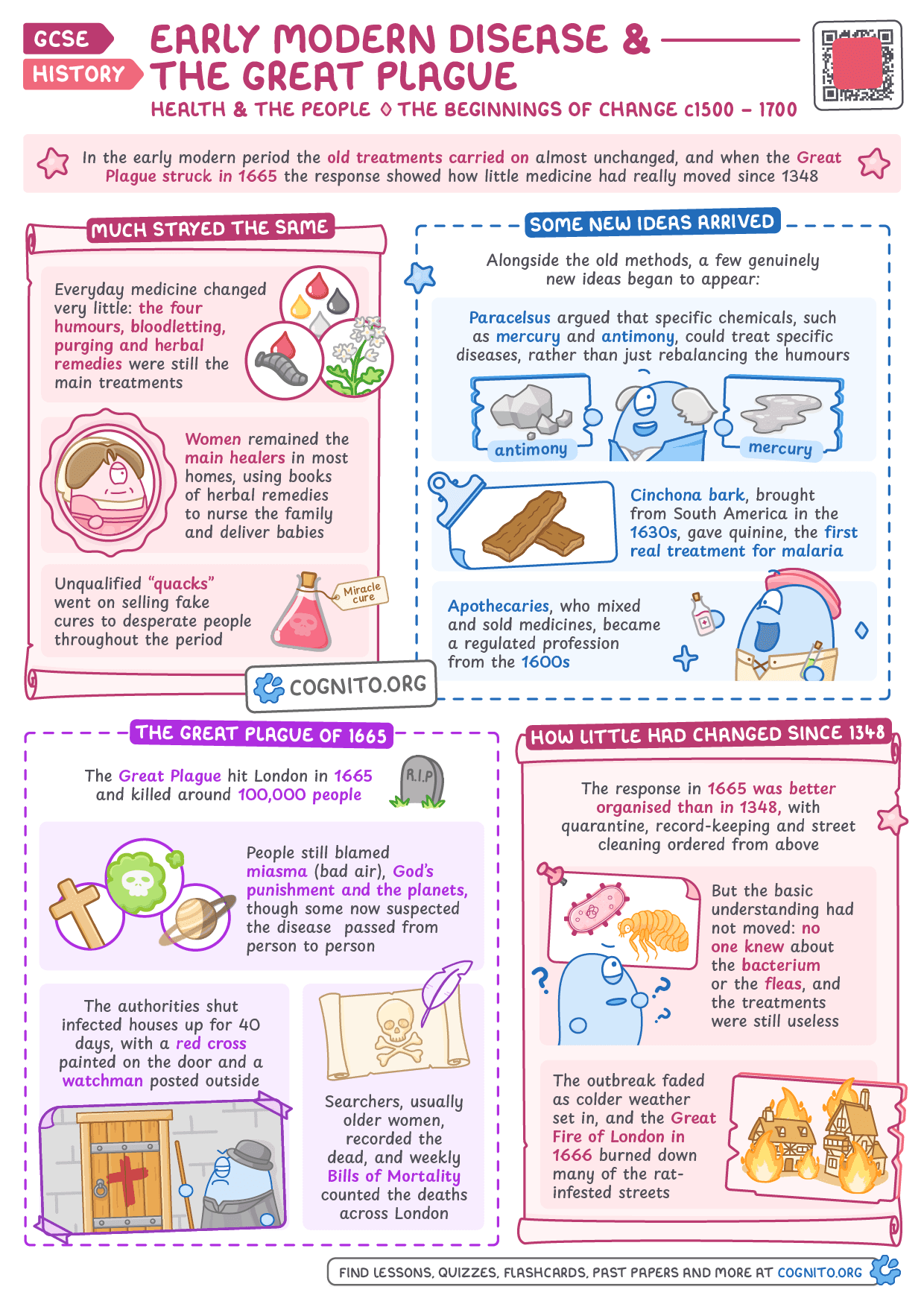
The Great Plague of 1665 and Early Modern Medicine
Bloodletting and the humours carried on while Paracelsus and quinine arrived, and the 1665 Great Plague showed how little had really changed since 1348.
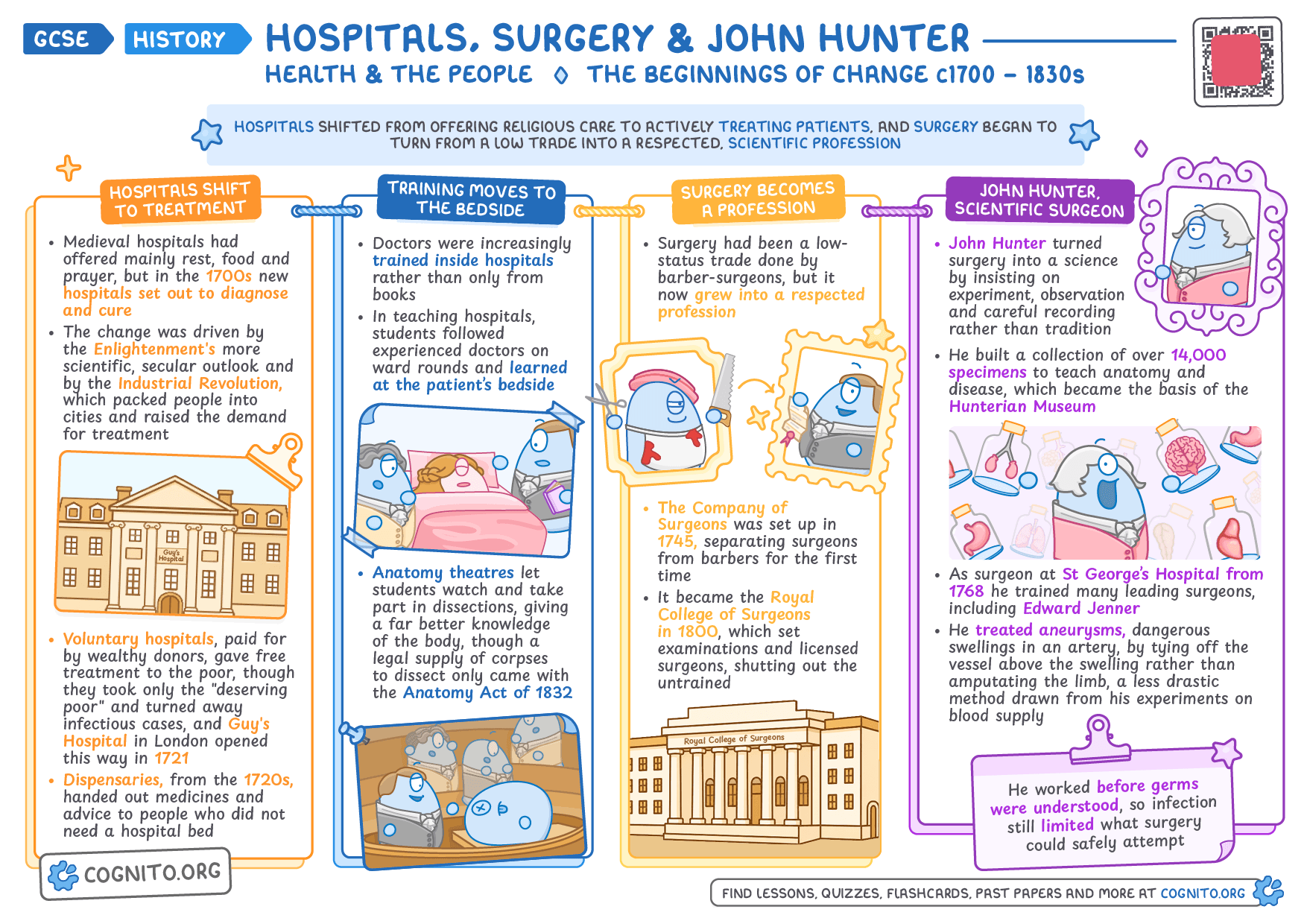
Hospitals, Surgery and John Hunter, c1700-1830s
How 1700s hospitals turned to curing patients, how training moved to the bedside, and how John Hunter and the Royal College made surgery a profession.
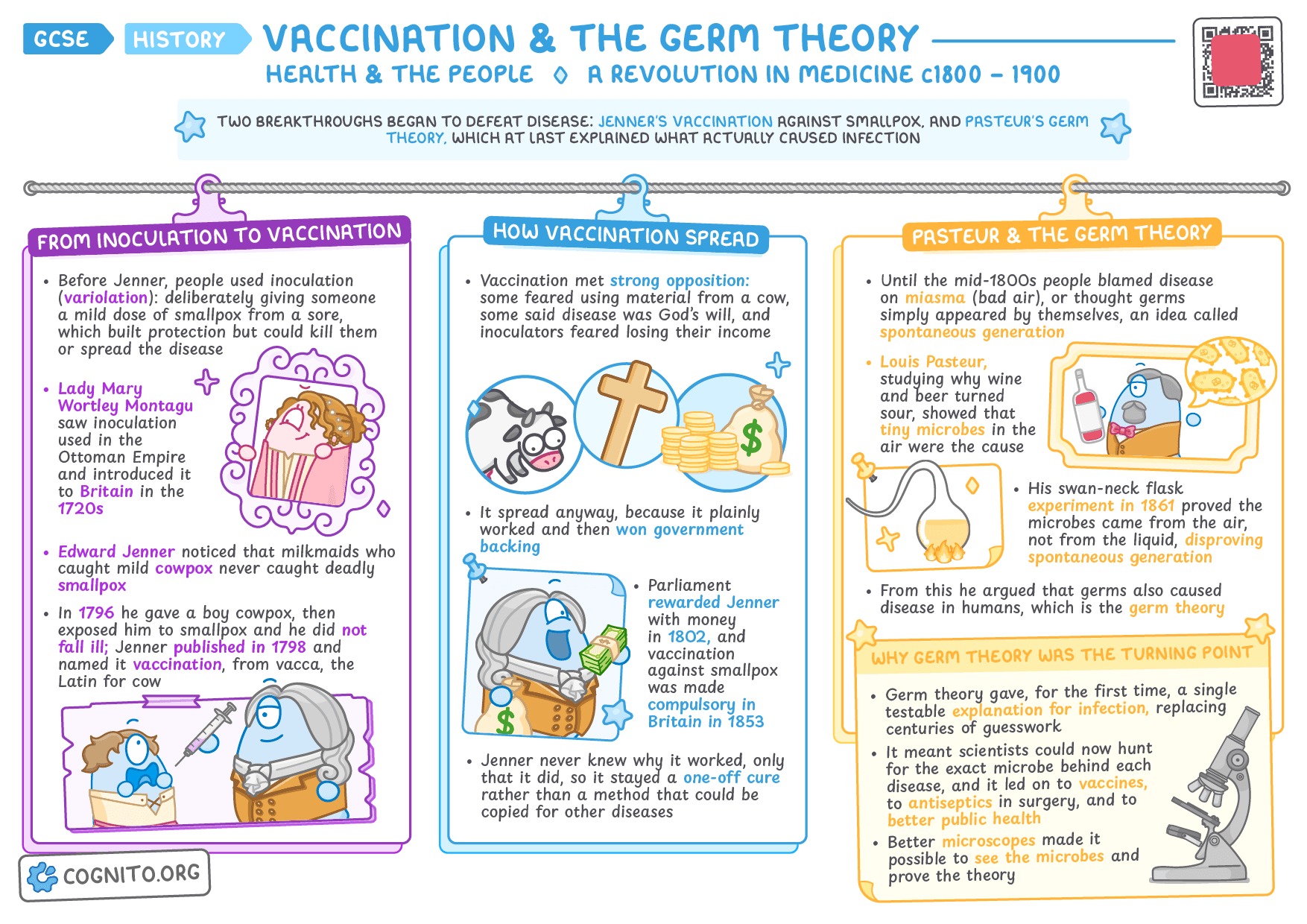
Vaccination and Germ Theory: Jenner and Pasteur
How Edward Jenner developed smallpox vaccination in 1796 and how Louis Pasteur proved that germs cause disease, plus the opposition both faced.
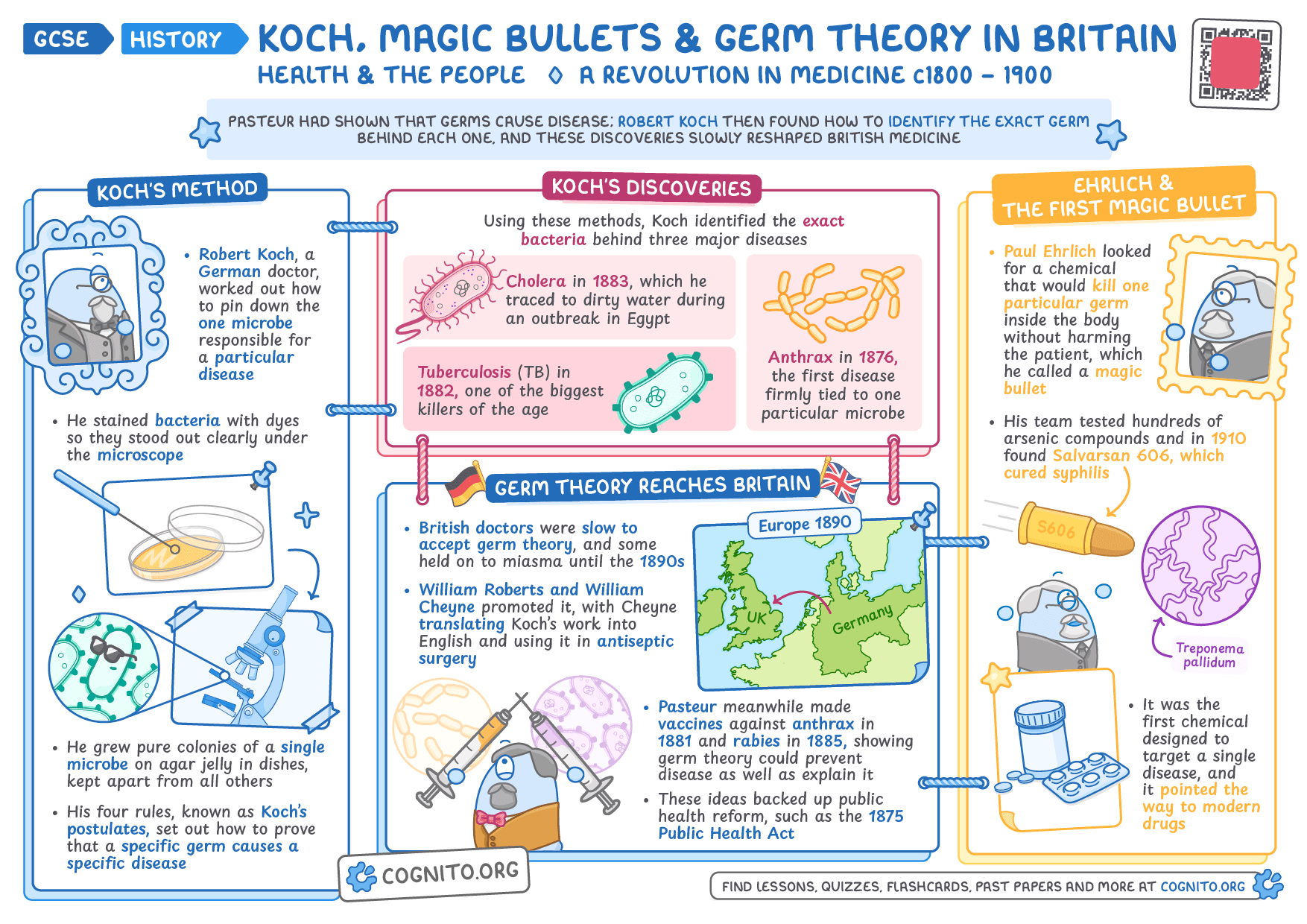
Koch, Magic Bullets and Germ Theory in Britain
Robert Koch's methods and the bacteria he identified, why British doctors resisted germ theory, and Ehrlich's magic bullet Salvarsan 606 of 1910.
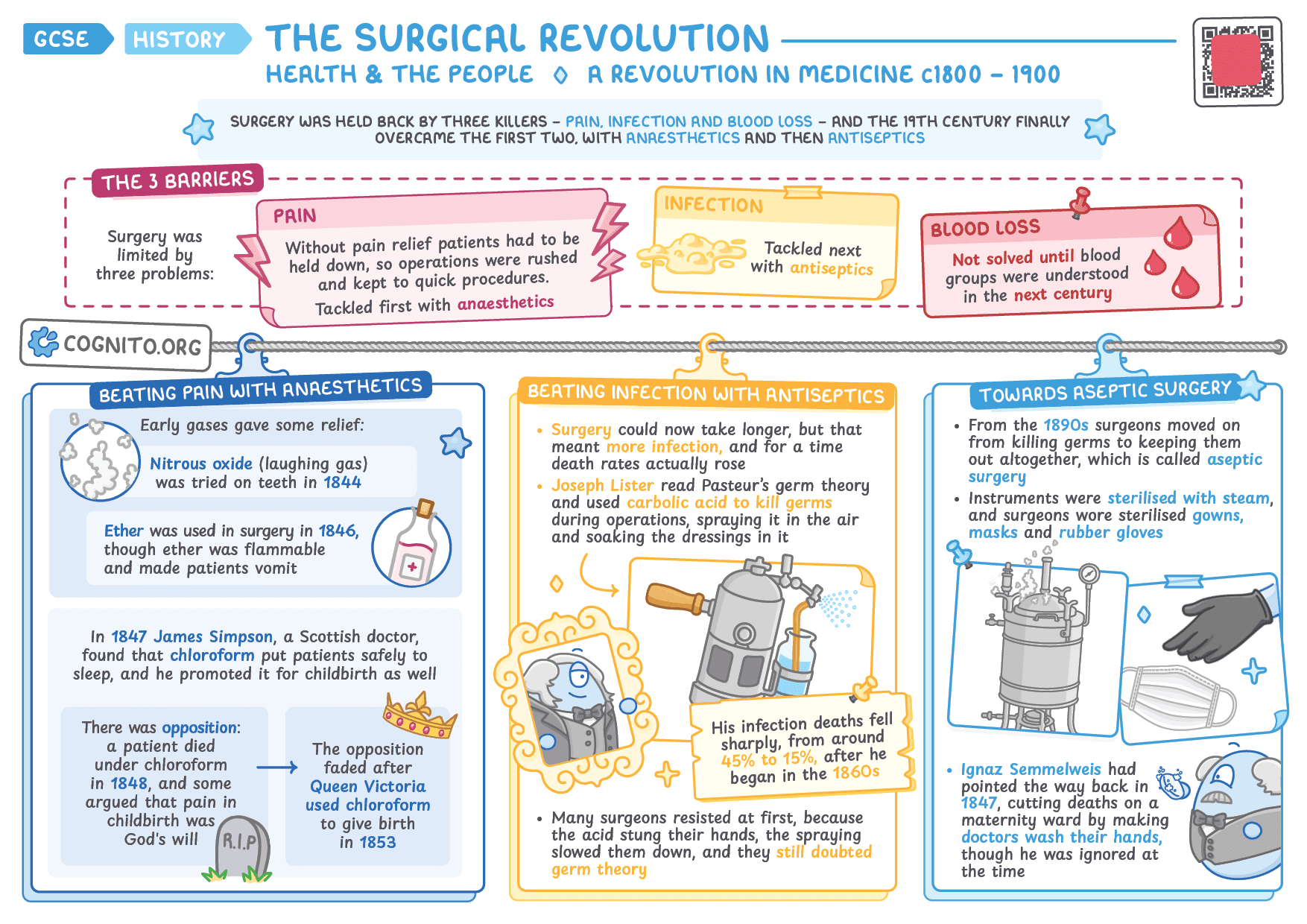
The Surgical Revolution: Anaesthetics and Antiseptics
How anaesthetics beat pain and Lister's antiseptics beat infection, from ether and chloroform to carbolic acid and the move to aseptic surgery.
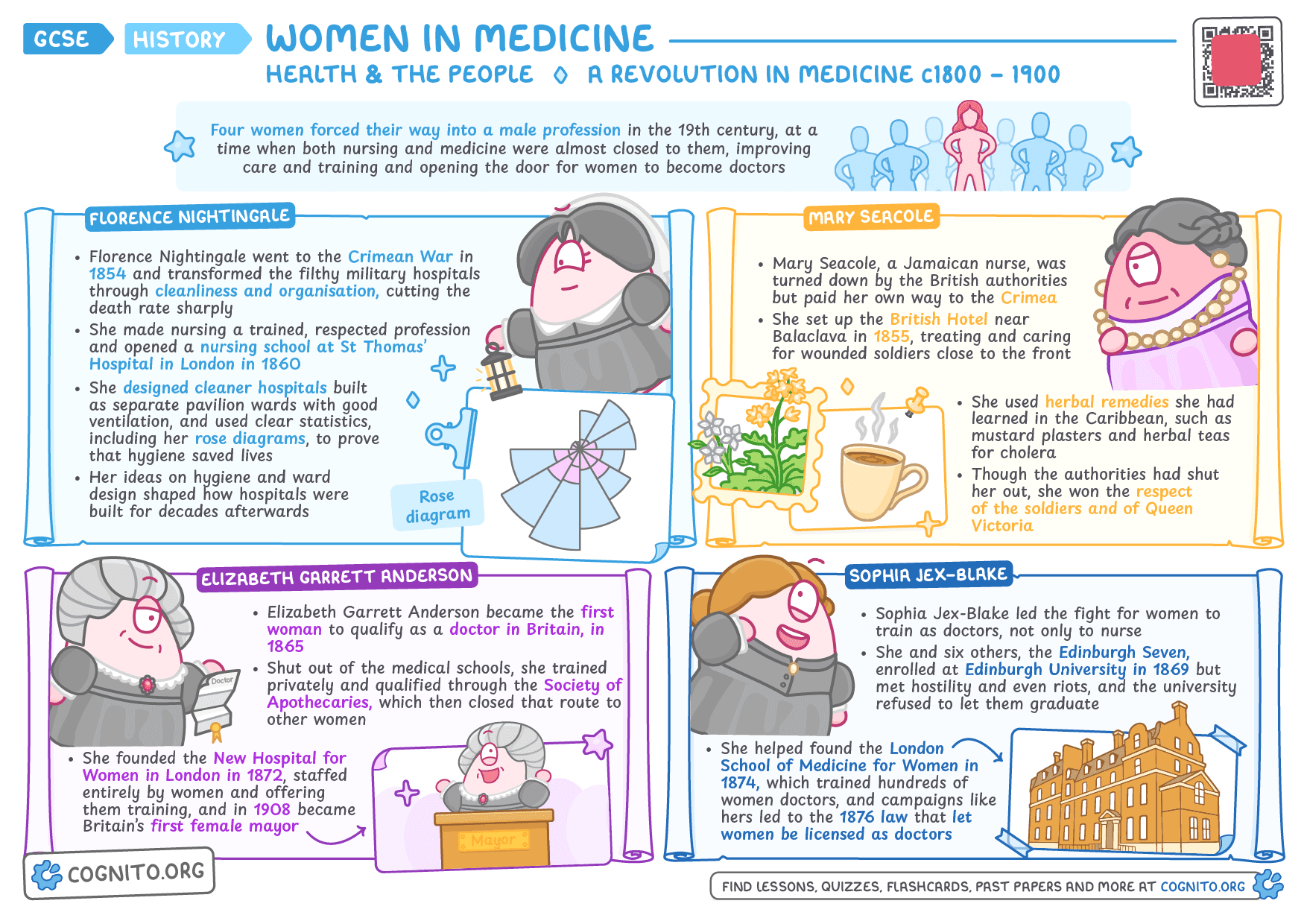
Women in Medicine: Nightingale, Seacole, Garrett Anderson and Jex-Blake
How Nightingale, Seacole, Garrett Anderson and Jex-Blake broke into nursing and medicine, and what each of them changed for patients and for women.
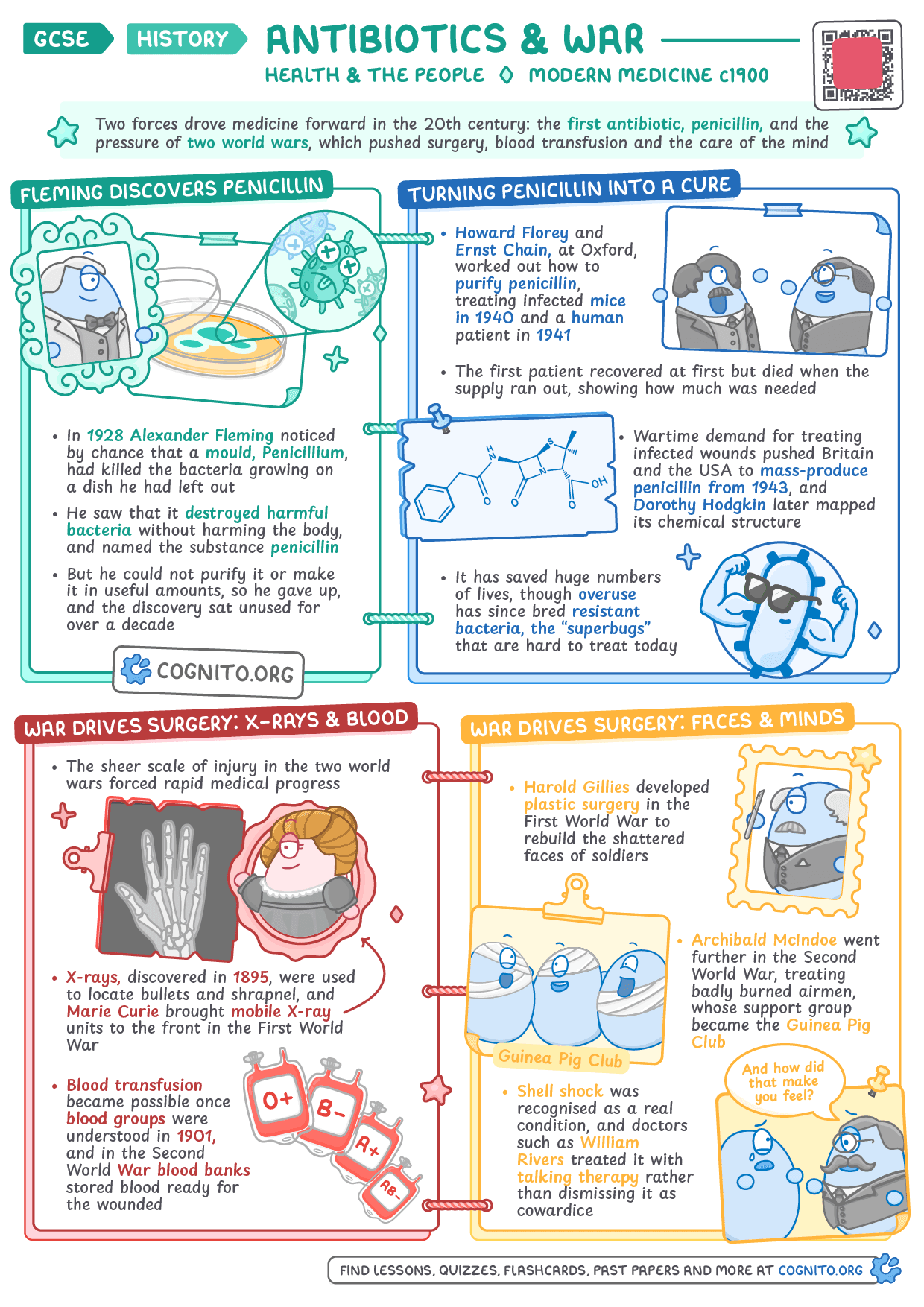
Antibiotics and War: Penicillin and Wartime Medicine
How Fleming, Florey and Chain turned penicillin into a cure, and how the two world wars drove X-rays, blood banks, plastic surgery and shell shock care.