
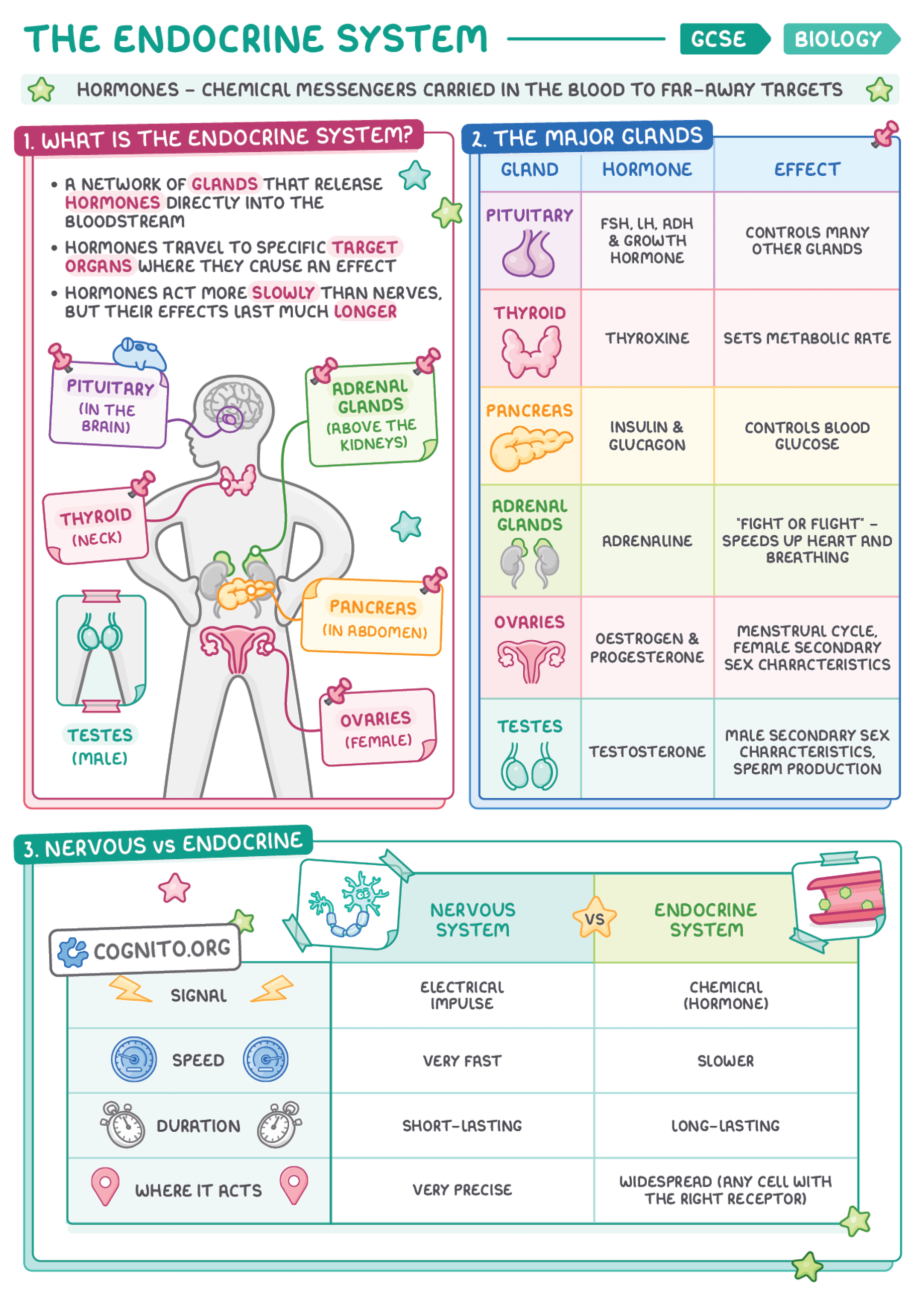
on this cheat sheet
Everything on the GCSE Biology Endocrine System poster is written out below, section by section. Use it to search the sheet, copy parts into your own notes, or check a fact quickly.
What is the endocrine system?
The endocrine system is a network of glands that release hormones directly into the bloodstream. Hormones travel to specific target organs where they cause an effect. Hormones act more slowly than nerves, but their effects last much longer.
The major glands
The diagram shows gland locations in the body:
- Pituitary (in the brain)
- Thyroid (neck)
- Adrenal glands (above the kidneys)
- Pancreas (in abdomen)
- Ovaries (female)
- Testes (male)
Hormones and their effects
| Gland | Hormone | Effect |
|---|---|---|
| Pituitary | FSH, LH, ADH, growth hormone | Controls many other glands |
| Thyroid | Thyroxine | Sets metabolic rate |
| Pancreas | Insulin & glucagon | Controls blood glucose |
| Adrenal glands | Adrenaline | 'Fight or flight' - speeds up heart and breathing |
| Ovaries | Oestrogen & progesterone | Menstrual cycle, female secondary sex characteristics |
| Testes | Testosterone | Male secondary sex characteristics, sperm production |
Nervous vs endocrine
| Nervous system | Endocrine system | |
|---|---|---|
| Signal | Electrical impulse | Chemical (hormone) |
| Speed | Very fast | Slower |
| Duration | Short-lasting | Long-lasting |
| Where it acts | Very precise | Widespread (any cell with the right receptor) |