14.6 - Dangers of Electromagnetic Radiation
Why high-frequency EM radiation can harm the body
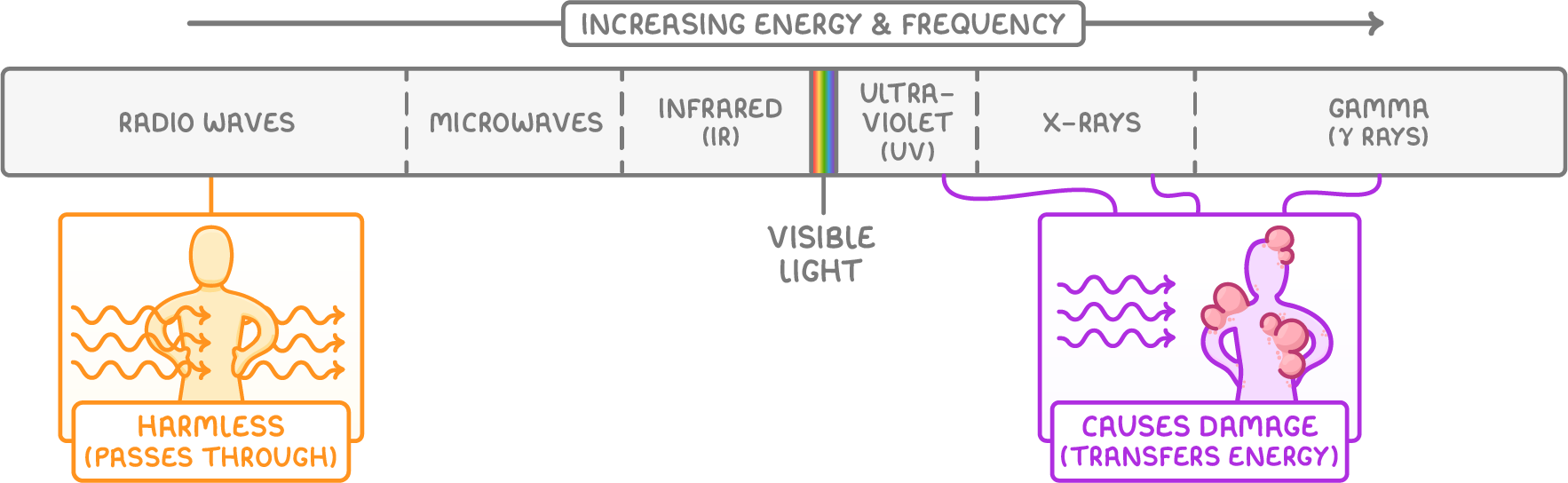
- Whether EM radiation is harmful depends on how much energy it transfers to living tissue.
- The higher the frequency, the more energy the radiation carries, and generally the more harmful it is.
- Low-frequency radiation (e.g. radio waves) passes straight through soft tissue without being absorbed.
- High-frequency radiation (e.g. ultraviolet, X-rays, gamma rays) transfers large amounts of energy and can cause severe damage.
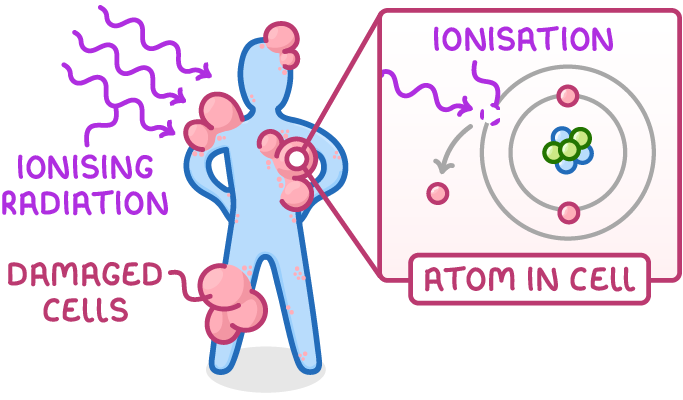
Ultraviolet, X-rays and gamma rays are ionising
- These are types of ionising radiation: they carry enough energy to knock electrons off atoms, damaging living cells.
- Ultraviolet (UV) - Absorbed by the skin, where it damages surface cells. It can cause premature ageing of the skin, skin cancer, and eye damage including blindness.
- X-rays and gamma rays - Carry even more energy than UV. They pass through the skin and are absorbed by deeper tissues, damaging cells throughout the body and leading to mutations and cancer.
Lower-frequency hazards - Microwave and infrared
- Radiation doesn't have to be ionising to be harmful. Microwaves and infrared can damage the body by heating it.
- Microwaves - Have a similar frequency to the vibrations of many molecules, causing internal heating of body cells.
- Infrared (IR) - Absorbed by the surface of the skin, where high exposure causes skin burns.
TermDefinition
Ionising radiationRadiation that has enough energy to knock electrons out of atoms, turning them into ions.