1.5 - Aerobic & Anaerobic Exercise
How the body releases energy for exercise
All living cells in the body require energy to function, and this energy comes from breaking down nutrients obtained from food. During exercise, muscles need a continuous supply of energy, which can be released through different processes depending on the intensity and duration of the activity. The main nutrient used is glucose, a simple sugar derived from food, but the way energy is released varies based on oxygen availability.
Key factors influencing energy release
| Factor | How it influences energy release |
|---|---|
| Oxygen supply | Determines whether the process uses oxygen (aerobic) or not (anaerobic) |
| Exercise intensity | High intensity may limit oxygen delivery, shifting to anaerobic methods |
| Exercise duration | Longer activities favour efficient, oxygen-based energy release |
| Fuel sources | Different nutrients provide energy at varying rates and efficiencies |
The process of aerobic respiration
Aerobic respiration is the primary way the body releases energy from glucose using oxygen. This process occurs in the cells' mitochondria and is highly efficient for sustained activity. It breaks down glucose completely, maximising energy output while producing manageable by-products.
Chemical equation for aerobic respiration
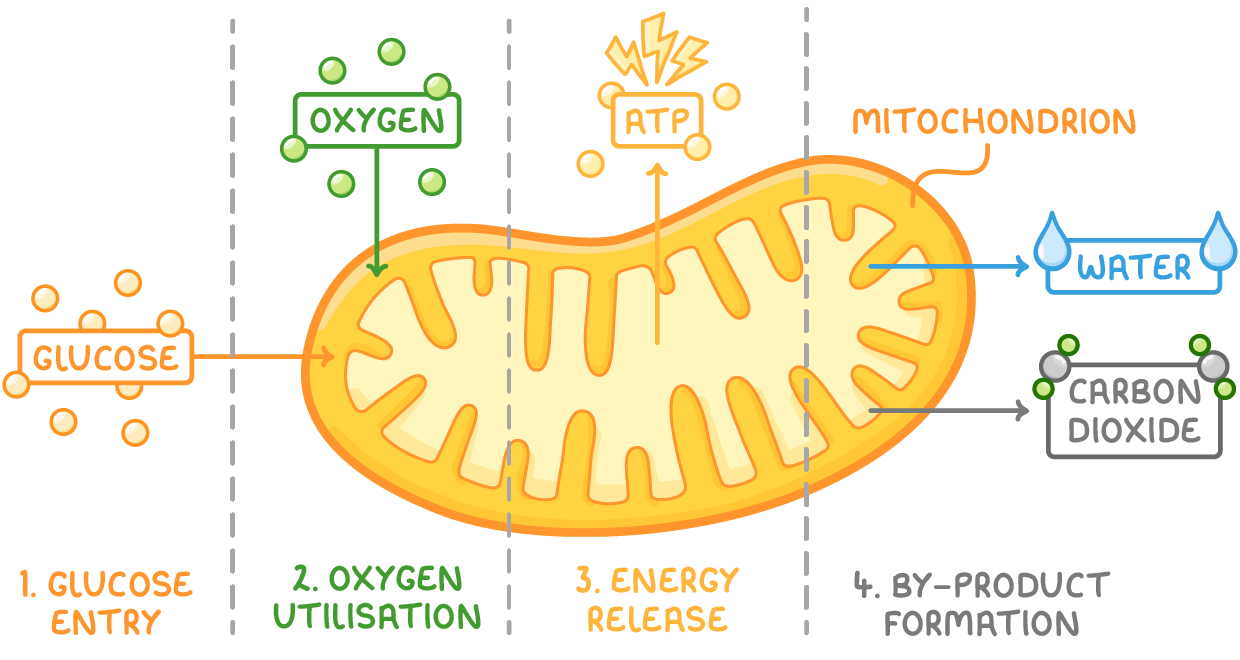
Step-by-step breakdown of aerobic respiration
- Glucose entry - Glucose from the bloodstream enters the cell and is broken down into smaller molecules
- Oxygen utilisation - Oxygen combines with these molecules in the mitochondria to release energy through a series of chemical reactions
- Energy release - Energy is released in a controlled manner, stored in molecules called ATP (adenosine triphosphate), which cells use for muscle contraction and other functions
- By-product formation - Carbon dioxide and water are produced; carbon dioxide is transported to the lungs for exhalation, while water is lost through sweat, urine, or exhaled air
This process requires a steady oxygen supply from the bloodstream, making it suitable for activities where the heart and lungs can keep up with demand.
Characteristics and examples of aerobic exercise
Aerobic exercise occurs when the body can meet the oxygen demands of working muscles, allowing energy to be produced through aerobic respiration. This type of exercise is typically steady and not overly intense, enabling prolonged performance without rapid fatigue.
Defining features of aerobic exercise
| Feature | Description |
|---|---|
| Oxygen presence | Exercise performed with sufficient oxygen supply to muscles |
| Intensity level | Moderate pace where the heart can deliver oxygen efficiently |
| Duration | Suitable for extended periods, as it efficiently releases energy without building up harmful by-products |
| Physiological effects | Increased breathing and heart rate to supply oxygen, with by-products easily removed |
An example of aerobic exercise is marathon running. Athletes maintain a steady pace over long distances, relying on aerobic respiration for efficient energy production.
The process of anaerobic respiration
Anaerobic respiration releases energy from glucose without using oxygen, occurring when oxygen supply cannot meet demand. This process takes place in the cell's cytoplasm and is less efficient than aerobic respiration, providing quick but limited energy.
Chemical equation for anaerobic respiration
Step-by-step breakdown of anaerobic respiration
- Glucose breakdown - Glucose is partially broken down in the cytoplasm without oxygen involvement
- Energy release - A small amount of energy is quickly released and stored as ATP for immediate use
- By-product accumulation - Lactic acid builds up in muscles, causing fatigue and a burning sensation; oxygen is later needed to break it down and remove it
This method is a short-term solution, as lactic acid accumulation limits how long it can be sustained.
Characteristics and examples of anaerobic exercise
Anaerobic exercise happens when the body must release energy without sufficient oxygen, typically during short bursts of high-intensity activity. The heart and lungs cannot deliver oxygen fast enough, forcing reliance on anaerobic respiration.
Defining features of anaerobic exercise
| Feature | Description |
|---|---|
| Oxygen absence | Exercise performed without enough oxygen reaching the muscles |
| Intensity level | High effort where demand exceeds supply |
| Duration | Limited to short periods due to lactic acid build-up and lower energy efficiency |
| Physiological effects | Rapid fatigue, muscle soreness from lactic acid, and a need for recovery time to clear by-products |
An example of anaerobic exercise is sprinting. Athletes perform at maximum speed for brief durations, using anaerobic respiration for quick energy bursts.
Fuels used for exercise: carbohydrates and fats
The body uses stored nutrients as fuel for respiration during exercise. The main fuels are carbohydrates and fats, each suited to different exercise intensities and durations. Carbohydrates are broken down into glucose for energy, while fats are converted into fatty acids.
The choice of fuel depends on exercise demands: carbohydrates for speed and power, fats for steady, low-effort activities. Both are stored in the body and accessed as needed to support respiration.