1.6 - Short-term Impacts of Exercise
Overview of short-term effects of exercise
Short-term effects of exercise are the immediate changes that occur in the body during and just after physical activity. Some of these effects help improve performance by supporting energy production and oxygen supply, while others can feel unpleasant. These changes mainly affect the muscular, respiratory, and cardiovascular systems.
Effects on the muscular system
During exercise, muscles work harder to produce movement, leading to several short-term changes. These adaptations support energy release but can also cause discomfort if the activity is intense.
Key short-term changes in muscles
- Energy release and heat production - Muscles generate extra energy for contraction, which creates heat as a by-product. This makes the body feel hot and triggers sweating to cool down.
- Lactic acid production - In anaerobic exercise, muscles produce lactic acid. This builds up as lactate accumulation if the activity continues without rest.
- Muscle fatigue and pain - Lactic acid build-up causes muscles to feel painful and tired (known as muscle fatigue), reducing performance. Fatigued muscles need extra oxygen to break down and remove the lactic acid.
- Oxygen debt - This is the extra oxygen required after exercise to recover, also called excess post-exercise oxygen consumption (EPOC). It helps clear lactic acid and restore energy stores, often requiring you to slow down or stop to repay it.
- Post-exercise effects - Intense sessions can lead to feeling tired, sick, or light-headed. Delayed onset muscle soreness (DOMS), or muscle cramps may also occur.
Anaerobic training often includes rest periods or low-intensity phases between efforts to manage lactic acid and prevent excessive fatigue.
Effects on the respiratory system
The respiratory system adjusts during exercise to bring in more oxygen and remove waste gases. These changes involve muscles around the lungs and ribcage, allowing the body to handle increased demands.
Muscles involved in breathing changes
- Inspiratory muscles - Muscles like the pectorals (chest muscles) and sternocleidomastoid (neck muscle) help expand the lungs to take in more air.
- Expiratory muscles - Abdominal muscles pull the ribcage down to force air out faster during exhalation.
Key respiratory adaptations
- Increased tidal volume - This is the amount of air breathed in or out per breath, which deepens to allow more oxygen intake.
- Higher breathing rate - The number of breaths per minute rises, delivering oxygen to the bloodstream and expelling extra carbon dioxide (CO2) produced during aerobic respiration.
- Support for exercise duration - These changes enable prolonged aerobic activity by meeting muscle oxygen needs. After anaerobic exercise, breathing stays elevated until oxygen debt is repaid.
- Intensity variations - During hard exercise, breathing becomes deeper and quicker than in light activity, leading to more extreme adaptations.
These effects ensure efficient gas exchange in the lungs, where oxygen enters the blood and CO2 is removed.
Cardiovascular system and blood vessels
The cardiovascular system, including the heart and blood vessels, responds to exercise by pumping more blood to deliver oxygen and remove waste. This supports muscle function but returns to normal during recovery.
Key cardiovascular terms and changes
- Heart rate - The number of times the heart beats per minute (bpm). A typical adult resting heart rate is 60-80 bpm, but it increases during exercise.
- Stroke volume - The amount of blood pumped out by each ventricle (heart chamber) per beat, which rises with activity.
- Cardiac output - The total volume of blood pumped by the heart per minute, calculated as heart rate multiplied by stroke volume. It increases to enhance oxygen delivery to muscles and CO2 removal to the lungs.
Formula for cardiac output:
Where:
-
Heart rate = Beats per minute (bpm)
-
Stroke volume = Blood volume per beat (typically in millilitres)
-
Blood pressure changes - Systolic blood pressure (pressure when the heart contracts) rises as the heart beats harder.
-
Post-exercise recovery - Heart rate, stroke volume, and cardiac output remain high until oxygen debt is cleared.
-
Intensity impact - These responses are stronger in strenuous exercise compared to light activity.
Blood vessel changes during exercise
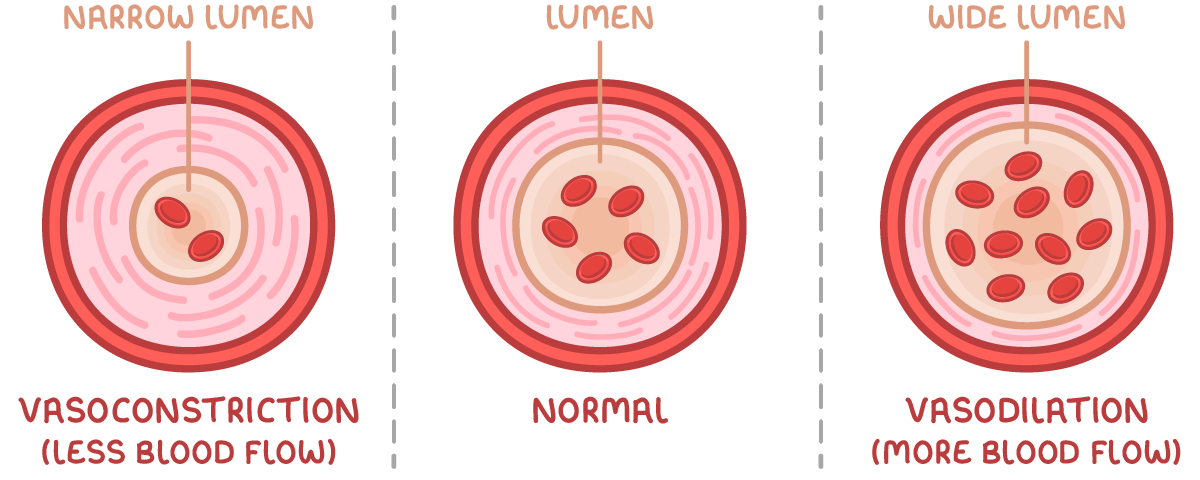
Blood vessels adapt to redistribute blood flow, ensuring active muscles get more oxygen while helping with temperature control. This involves widening and narrowing of vessels.
Key changes in blood vessels:
- Vasodilation - Arterioles (small arteries) serving working muscles widen to increase blood flow and oxygen supply.
- Vasoconstriction - Arterioles to inactive areas, like the gut and liver, narrow to redirect blood away from them.
- Blood redistribution - Overall, blood shifts from organs to muscles, proportional to exercise intensity.
- Heat management - Working muscles produce heat that warms the blood, which then moves closer to the skin surface for dissipation through radiation (heat loss to the air). Sweating also helps cool the body.
These adjustments prevent excessive blood pressure rises by allowing arteries to widen overall.
Integration and heart rate patterns
The cardiovascular and respiratory systems work together during exercise to boost oxygen delivery to muscles and remove CO2. This collaboration supports aerobic energy production and helps repay oxygen debt after activity.
How oxygen delivery increases
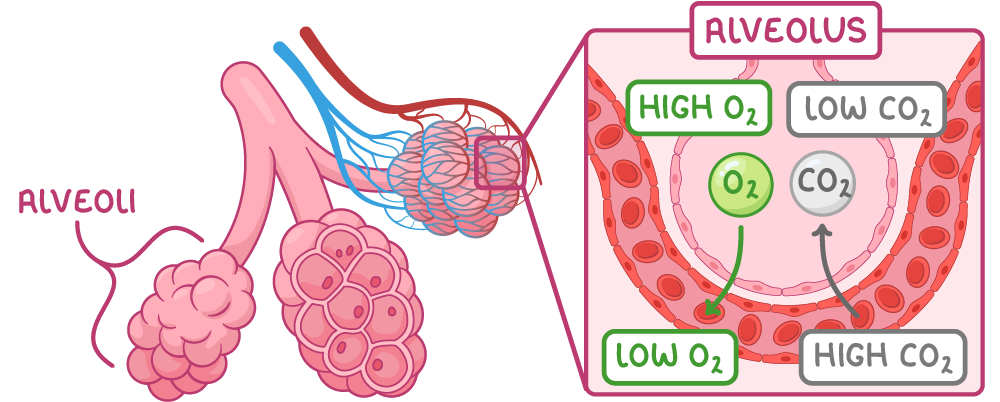
- Higher breathing rate and depth bring more oxygen into the alveoli (tiny air sacs in the lungs).
- Increased cardiac output speeds up blood flow through the lungs, picking up oxygen faster.
How CO₂ removal improves
- Elevated cardiac output transports CO2 from muscles to lungs more quickly.
- Faster, deeper breathing expels CO2 efficiently.
These processes maintain concentration gradients: higher oxygen in alveoli than in blood capillaries, and higher CO2 in capillaries than in alveoli. This allows rapid gas diffusion (movement of gases from high to low concentration areas). As a result, muscles can produce energy aerobically for longer, and recovery from anaerobic efforts is supported.
Heart rate patterns during exercise
Heart rate changes follow a predictable pattern during and after exercise, reflecting the body's response to activity demands. Graphs of heart rate over time help visualise these shifts.
Key points in heart rate patterns:
- Pre-exercise - Heart rate is at its lowest, known as resting heart rate.
- Anticipatory rise - Heart rate may increase slightly before exercise starts due to excitement or preparation.
- Exercise initiation - Heart rate rises as activity begins to meet oxygen needs.
- Sustained exercise - Heart rate levels off at a plateau, depending on the exercise intensity (higher for strenuous activity).
- Peak exercise - The highest heart rate occurs during the most intense phase.
- Post-exercise recovery - Heart rate decreases gradually but stays elevated initially to repay oxygen debt.
- Full recovery - Heart rate returns to resting levels.
These patterns show how heart rate adapts proportionally to effort, with quicker rises and higher peaks in intense exercise.