7.3 - Food, Fluids & Energy
A balanced diet for health and performance
A balanced diet provides the right mix of nutrients to support daily needs, overall health, and physical activity. This means consuming foods in proportions that match individual lifestyles, including activity levels. For athletes, a balanced diet enhances performance by supplying energy, aiding recovery, and reducing injury risk.
Benefits of a balanced diet
- Supports energy needs - Provides fuel for muscles during exercise and daily activities
- Promotes growth and repair - Helps build tissues and recover from training or injuries
- Prevents health issues - Reduces risks like obesity or nutrient deficiencies that could impair performance
- Adapts to lifestyle - Varies based on factors such as age, height, and exercise intensity, with more active people needing higher energy intake
No single food supplies all nutrients, so a variety of foods is essential to achieve the best nutrient ratio.
Key macronutrients and their roles in the body
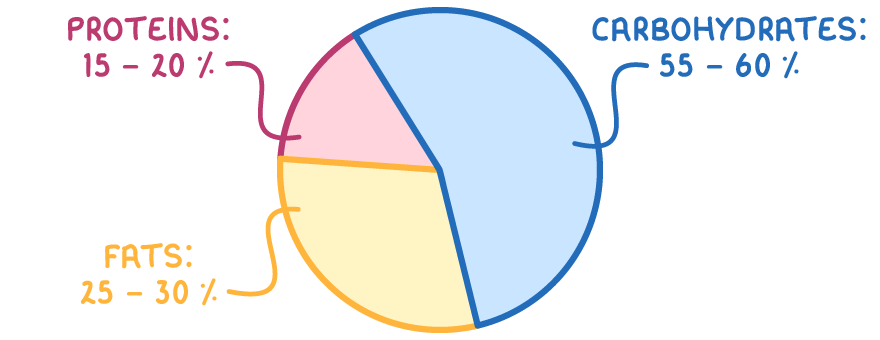
Macronutrients are nutrients needed in large amounts, including carbohydrates, proteins, and fats. For an average person, a balanced diet roughly consists of 55-60% carbohydrates, 15-20% proteins, and 25-30% fats. These proportions help maintain energy, support bodily functions, and optimise sports performance.
Carbohydrates
Carbohydrates are the primary energy source for the body, especially during physical activity. They come in simple forms, like sugars, and complex forms, like starches found in pasta or rice.
Functions of carbohydrates:
- Energy provision - Broken down to fuel muscles, particularly during high-intensity exercise
- Storage mechanism - Excess carbohydrates are stored in the liver and muscles as glycogen (a stored form of glucose) for later use, or converted to fat if not needed
- Impact on performance - Adequate intake prevents fatigue, allowing sustained effort in sports like running or team games
Proteins
Proteins are essential for building and repairing tissues, made up of smaller units called amino acids. The body uses amino acids from food to create new proteins.
Functions of proteins:
- Growth and repair - Crucial for muscle development and recovery after exercise or injury
- Sources - Found in meat, fish, eggs, and plant-based options like beans
- Role in sports - Helps athletes rebuild muscle tissue damaged during training, improving strength and endurance
Fats
Fats consist of fatty acids and provide concentrated energy, especially for low-intensity activities. They also support other bodily roles.
Functions of fats:
- Energy for prolonged exercise - Used as fuel during activities like long-distance walking or cycling
- Protective functions - Insulate the body to maintain temperature, cushion organs to prevent injury, and aid absorption of certain vitamins
- Health considerations - Limit saturated fats (found in processed foods) to avoid obesity, while including unsaturated fats from sources like nuts or avocados
- Performance benefits - Help maintain energy levels and reduce injury risk in contact sports
How energy intake and usage affect body weight
Energy from food is measured in calories (kcal), with average daily needs around 2500 kcal for adult males and 2000 kcal for adult females. These amounts vary based on factors like age, height, bodily processes (such as breathing and digestion), daily activities, and exercise levels.
Balancing energy for weight management
- Energy surplus - Consuming more calories than used leads to storage as body fat, causing weight gain
- Energy deficit - Using more calories than consumed draws from fat stores, resulting in weight loss
- Energy balance - Matching intake to usage maintains a healthy weight, which is vital for optimal sports performance and injury prevention
Athletes often adjust intake to match training demands, ensuring they neither gain excess weight nor lose muscle mass.
Essential vitamins and minerals for body functions
Vitamins and minerals are micronutrients needed in small amounts for growth, chemical reactions, and overall health. They support processes like energy release from food and tissue maintenance, which are key for athletic performance.
Vitamins
Vitamins are organic compounds essential for bodily functions. They are classified as fat-soluble (stored in the body) or water-soluble (not stored, so needed regularly).
Fat-soluble vitamins:
- Vitamin A - Supports growth and vision, aiding coordination in sports like gymnastics
- Vitamin D - Promotes strong bones and teeth, helping prevent fractures during high-impact activities
Water-soluble vitamins:
- Vitamin C - Maintains skin health, supports tissue structure, and boosts the immune system to reduce illness and training downtime
Minerals
Minerals are inorganic elements that build tissues and facilitate reactions.
Key minerals and their roles:
- Calcium - Builds strong bones and teeth; also enables muscle contraction, essential for movements in sports like weightlifting
- Iron - Forms haemoglobin in red blood cells (cells that transport oxygen), ensuring muscles receive oxygen during aerobic exercise like cycling
Deficiencies in these can lead to fatigue or injury, so a varied diet is crucial.
The role of fibre in digestive health
Fibre is a type of carbohydrate that the body cannot digest, found in fruits, vegetables, and whole grains. It plays a vital role in keeping the digestive system functioning smoothly.
Benefits of fibre
- Aids digestion - Adds bulk to food, helping it move through the intestines and preventing constipation
- Supports nutrient absorption - Maintains gut health, which indirectly aids energy availability for physical activity
- Prevents health issues - Reduces risks like digestive disorders, allowing consistent training and performance
Including fibre-rich foods in meals helps athletes maintain energy levels without digestive discomfort.
The importance of water and effects of dehydration
Water is vital for numerous chemical reactions in the body and makes up a large part of blood and cells. It is lost through sweat (to cool the body during exercise), breath, urine, and faeces (solid waste). Dehydration occurs when water loss exceeds intake, impairing bodily functions and sports performance.
Functions of water
- Chemical reactions - Facilitates processes like nutrient transport and waste removal
- Temperature regulation - Enables sweating to prevent overheating during activities like running
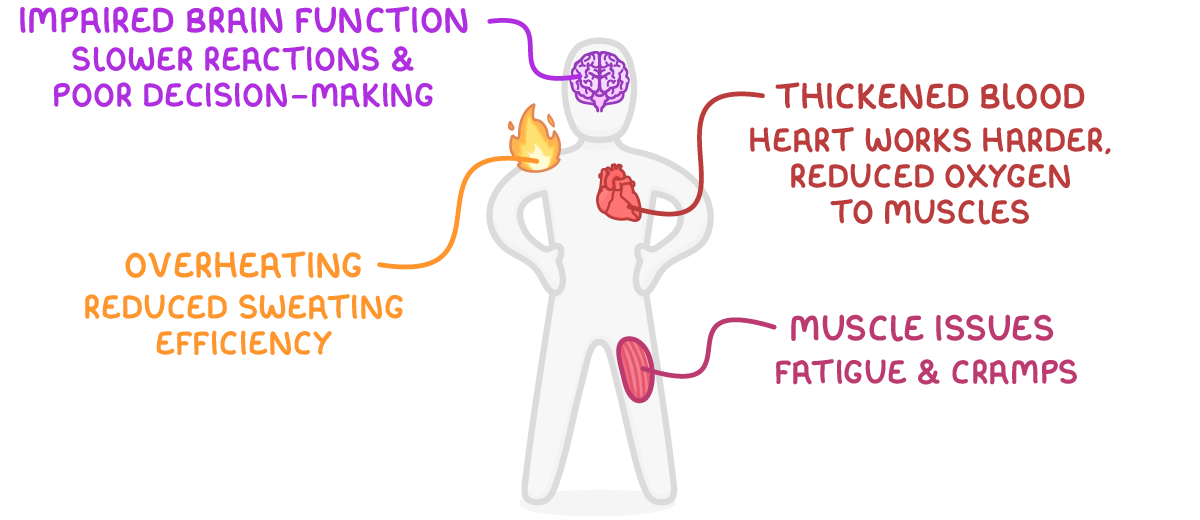
Consequences of dehydration
- Thickened blood - Increases viscosity (thickness), making the heart work harder to pump blood, reducing oxygen flow to muscles and lowering performance in aerobic sports like swimming
- Impaired brain function - Leads to slower reactions and poor decision-making, affecting sports like boxing where quick reflexes are needed
- Overheating - Reduces sweating efficiency, raising body temperature and risking heat exhaustion or fainting
- Muscle issues - Causes fatigue and cramps, potentially forcing athletes like marathon runners to stop
Dehydration is more common in hot climates or endurance events due to higher sweat loss.
Rehydration strategies during physical activity
Rehydration involves replacing lost fluids to maintain hydration and performance. This is especially important after or during exercise to counteract water and energy loss.
Effective rehydration methods
- Water intake - Drink regularly to replace fluids lost through sweat and other means
- Sports drinks - Contain sugars to replenish energy stores and small amounts of salt (sodium) to speed up water absorption and retention
- Timing considerations - Rehydrate during endurance activities or in hot conditions to prevent dehydration effects and support recovery
Proper hydration strategies help athletes sustain effort and recover faster.