1.3 - The Heart & Circulatory System
Functions of the cardiovascular system
The cardiovascular system plays a vital role in supporting physical activity by circulating blood throughout the body. This circulation delivers essential substances and removes waste, helping muscles perform effectively during exercise.
Key functions during physical activity
- Transport of essential substances - The system moves oxygen, carbon dioxide, and nutrients (such as glucose) in the bloodstream to where they are needed.
- Energy release for muscles - By supplying oxygen and glucose to muscles, the system enables them to release energy for movement, while also removing waste products like carbon dioxide.
- Temperature regulation - During exercise, more blood is directed closer to the skin's surface to release heat, allowing the body to cool down quickly and prevent overheating, which supports prolonged activity.
Structure and function of the heart
The heart is a muscular organ that acts as a pump to circulate blood around the body. It consists of four chambers and works in a continuous cycle to deliver oxygen and nutrients, especially important during physical activity when muscles demand more resources.
Main components of the cardiovascular system
- Heart - The central pump that propels blood through the body.
- Blood - The fluid that carries oxygen, nutrients, and waste.
- Blood vessels - The network of tubes that transport blood to and from tissues.
The path of blood through the heart
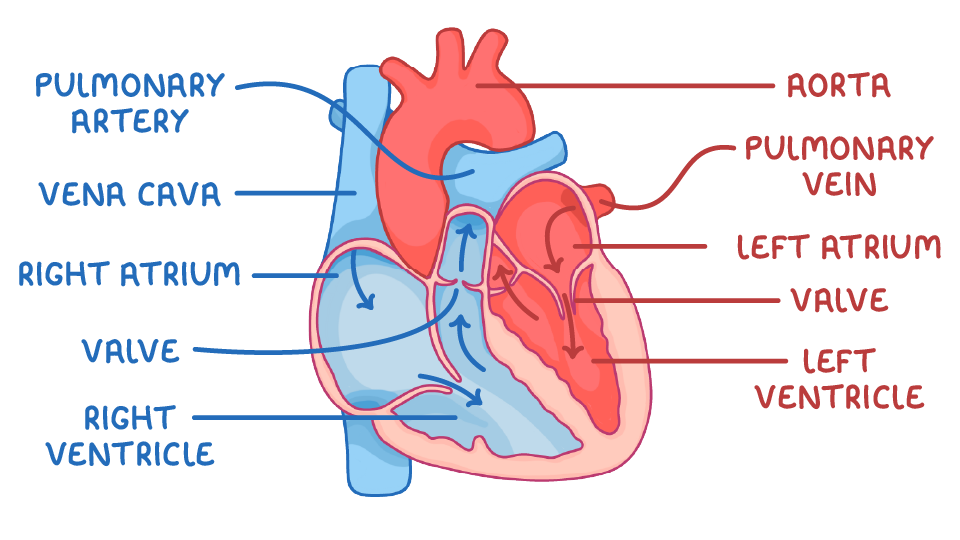
Blood flows through the heart in a specific sequence, separated into the right and left sides to handle deoxygenated and oxygenated blood separately. Deoxygenated blood lacks oxygen, while oxygenated blood is rich in oxygen.
Right side of the heart:
- Deoxygenated blood enters the right atrium (upper chamber) from the vena cava (a large vein) when the heart relaxes.
- The right atrium contracts, pushing the blood through a valve into the right ventricle (lower chamber).
- The right ventricle contracts, forcing the blood through another valve into the pulmonary artery, which carries it to the lungs for gas exchange.
- In the lungs, carbon dioxide is removed and oxygen is added, turning the blood oxygenated.
Left side of the heart:
- Oxygenated blood returns from the lungs and enters the left atrium via the pulmonary vein when the heart relaxes.
- The left atrium contracts, pushing the blood through a valve into the left ventricle.
- The left ventricle contracts, propelling the blood through another valve into the aorta (a large artery), which distributes it to the body, including muscles.
- Once muscles use the oxygen for energy, the blood becomes deoxygenated and returns to the heart.
The cardiac cycle and blood flow
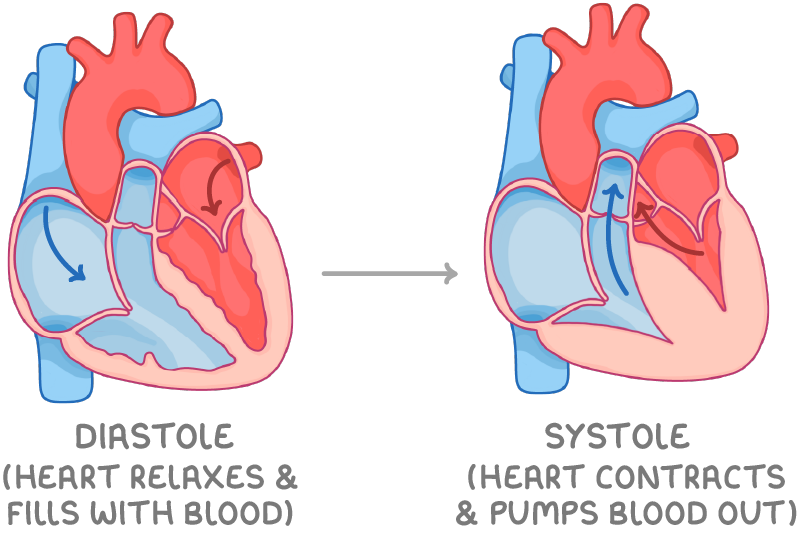
The heart's pumping action creates pressure differences that drive blood flow.
This occurs in a repeating cardiac cycle:
- Diastole - The relaxation phase when the heart fills with blood; both sides relax simultaneously.
- Systole - The contraction phase when the heart pumps blood out; both sides contract at the same time.
- Valves - These structures open to allow blood into chambers and close to prevent backflow (blood moving in the wrong direction).
- Blood pressure - This measures the force of blood against vessel walls, created by the heart's contractions, ensuring continuous circulation.
Types of blood vessels and their roles
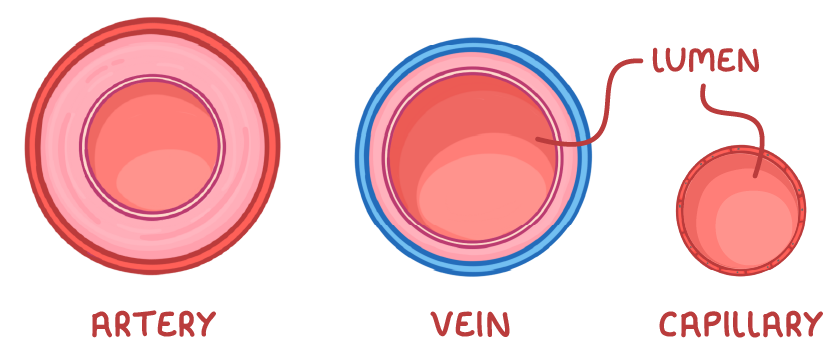
Blood vessels are tubes that carry blood around the body, each type adapted for specific functions. They have a hollow centre called the lumen for blood flow, with variations in wall thickness and lumen size to handle different pressures and tasks.
Characteristics of main blood vessel types
| Vessel type | Structure | Function | Blood type carried |
|---|---|---|---|
| Arteries | Thick, muscular walls; small lumen | Carry blood away from the heart at high pressure | Mostly oxygenated (except pulmonary arteries) |
| Veins | Thinner walls with less muscle; large lumen; contain valves | Carry blood towards the heart at low pressure; valves prevent backflow | Mostly deoxygenated (except pulmonary veins) |
| Capillaries | Very thin walls (one cell thick); very narrow lumen | Enable exchange of gases and nutrients with tissues; slow flow allows time for exchange; large surface area due to extensive network | Transitions from oxygenated to deoxygenated during exchange |
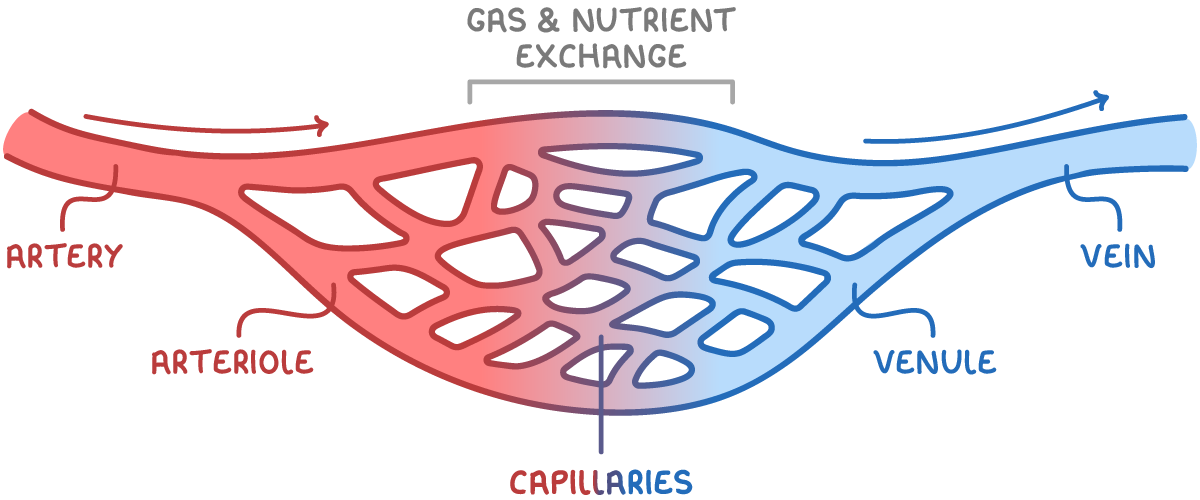
Smaller blood vessels and overall blood flow
- Arterioles - Small branches from arteries that direct blood into capillaries.
- Venules - Small vessels that collect blood from capillaries and join to form veins.
Blood follows this path: arteries → arterioles → capillaries (where gas and nutrient exchange occurs with tissues) → venules → veins. This sequence ensures efficient delivery during physical activity, with capillaries providing the site for oxygen to reach muscles and carbon dioxide to be removed.
Components of blood and their importance
Blood is a fluid tissue that transports substances and supports health, crucial for sustaining energy and performance in sports. It contains various cells suspended in plasma (the liquid part of blood).
Key blood cells and their roles
- Red blood cells - These cells carry oxygen from the lungs to body tissues, including muscles, to release energy for movement; they also transport carbon dioxide back to the lungs for exhalation. Haemoglobin (a protein in red blood cells) binds with oxygen to form oxyhaemoglobin, enabling efficient storage and release.
- White blood cells - These cells defend the body against infections and diseases, helping maintain health so individuals can perform well in physical activities without illness interrupting training or competition.