6.1 - National Sources on Western Front Medicine
Key facts and dates
National sources provide broad, official insights into medicine on the Western Front during the First World War, offering data on casualties, treatments, and policies. These materials, produced by organisations like the military or government, help historians understand large-scale medical operations and public perceptions.
Key facts to remember
- Army records – Compiled by the War Office, including casualty figures and unit diaries from 1914–1918.
- Government reports – Post-war official histories and parliamentary debates on medical care, such as hospital train provisions.
- National newspapers – Publications like The Times, reporting censored stories on nursing and evacuations during the war.
- Medical journals – Outlets like The Lancet, featuring articles on techniques such as the Carrel-Dakin method in 1917.
- Censorship impact – British media avoided graphic failures to maintain morale from 1914 onwards.
- Professional focus – Journals targeted doctors with frank assessments of innovations like x-ray use.
Army records and medical statistics
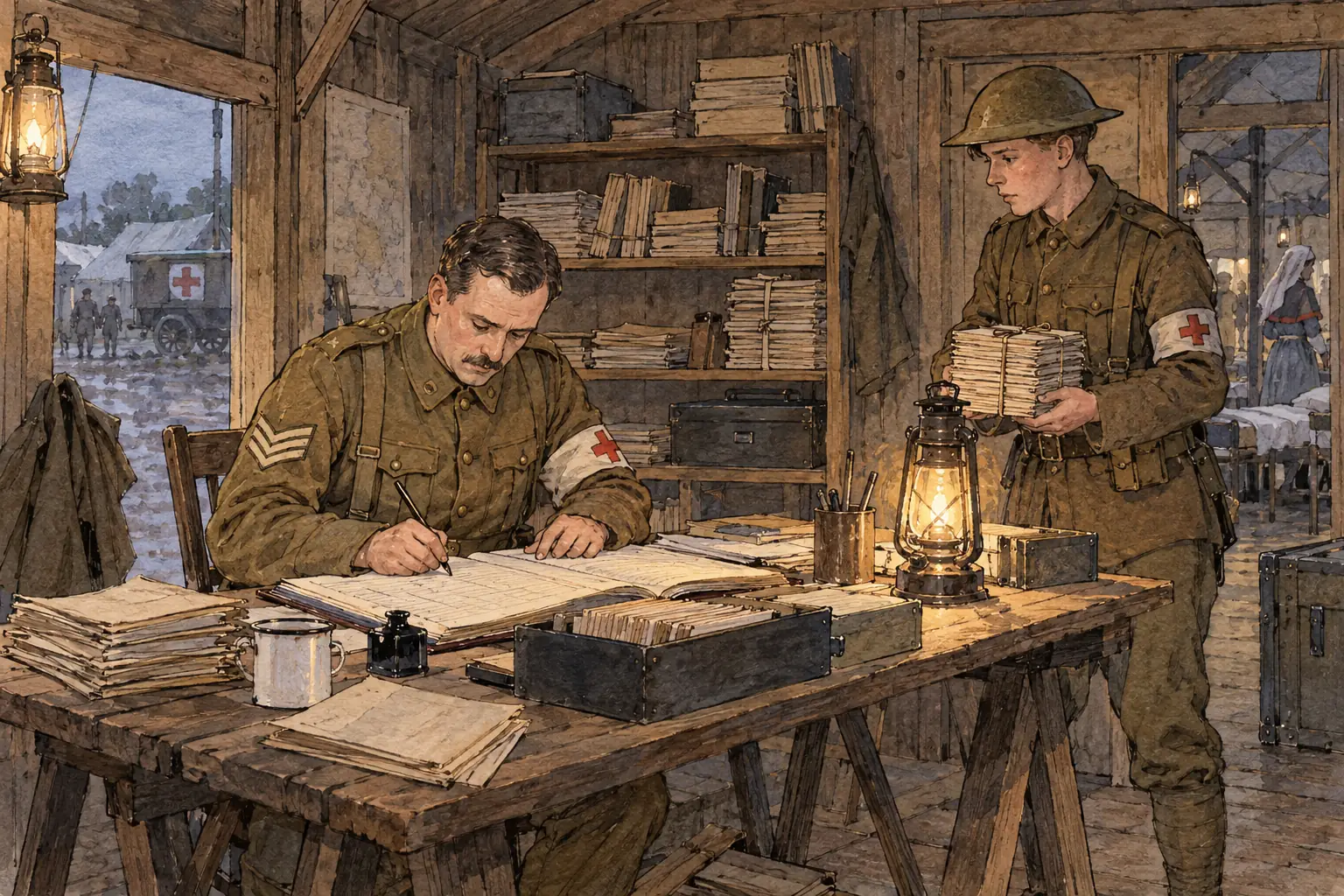
Army records served as official documents produced by the War Office, capturing essential data on medical matters during the First World War. These sources offer a factual overview of the scale and outcomes of injuries on the Western Front.
Types and uses of army records
- Official military medical statistics - These include details on the number of casualties, categories of wounds, and rates of survival, helping to reveal overall patterns in medical treatment effectiveness.
- Unit war diaries - Entries from military units sometimes reference health-related issues, such as disease outbreaks or evacuation processes, providing insights into day-to-day medical challenges.
- Purpose and reliability - Created for internal military use rather than public consumption, these records tend to be precise and free from exaggeration, focusing on broad trends across the front.
Government reports and medical policies
Government reports and inquiries provided evaluations of medical arrangements during and after the war, often stemming from parliamentary discussions or official reviews. They highlight decision-making processes related to healthcare on the Western Front.
Key features of government reports
- Post-war official histories - Publications like those on the Medical Services analysed the organisation of care, including supply chains for doctors and equipment.
- Parliamentary debates - Discussions during the conflict addressed topics such as the adequacy of hospital trains or ambulance services, reflecting policy priorities.
- Insights offered - These sources reveal how authorities assessed and adjusted medical strategies, offering a view of high-level planning and resource allocation.
National newspapers and medical aspects
National newspapers, such as The Times or The Daily Mail, disseminated information about the war to the British public, including aspects of medical care on the Western Front. They shaped public understanding through selected reporting.
Content and characteristics of newspaper coverage
- Stories on medical personnel - Articles often highlighted the efforts of nurses or heroic acts in saving lives during battles, emphasizing positive narratives.
- Reports on evacuations and facilities - Coverage included accounts of wound evacuations or public appeals for donations to support ambulances, indicating the state of medical infrastructure.
- Influence of censorship - Wartime restrictions meant newspapers avoided negative details, such as treatment failures, to sustain public morale, resulting in optimistic portrayals.
Medical journals and professional insights
Medical journals, including The Lancet and the British Medical Journal, published articles by practitioners during 1914–1918, sharing technical knowledge about Western Front medicine. These targeted a specialist audience with in-depth analyses.
Contributions of medical journal articles
- Accounts of innovations - Surgeons detailed new methods, such as using the Carrel-Dakin technique for wound infections or applying x-rays to locate shrapnel.
- Debates and outcomes - Articles discussed the effectiveness of treatments, including statistical results from field hospitals, fostering professional dialogue.
- Nature of the content - Aimed at doctors, these pieces offered candid evaluations of successes and shortcomings, based on direct experiences.
Strengths and limitations of national sources
National sources provide valuable perspectives on medicine during the First World War, but their utility depends on understanding their advantages and potential biases. Evaluating them critically enhances historical analysis.
Strengths of national sources
- Broad and authoritative data - They deliver big-picture information, such as trends in casualties from army records or policy overviews in government reports.
- Contemporary relevance - Created during or soon after events, these materials directly relate to the period, offering timely insights into medical developments.
- Professional detail - Journals, in particular, supply technical depth, while newspapers reflect public attitudes at the time.
Limitations of national sources
- Agendas and censorship - Government reports may downplay failures to protect reputations, and newspapers were restricted from showing graphic realities.
- Lack of personal detail - Official records often aggregate information, omitting individual experiences or on-the-ground chaos.
- Potential for bias - Sources like newspapers prioritized morale-boosting stories, potentially skewing perceptions of medical effectiveness.