6.2 - Local & Personal Sources on the Western Front
Key facts and dates
Local and personal sources offer detailed insights into the individual experiences of soldiers, medical staff, and conditions during medical treatment on the Western Front in the First World War. These materials, ranging from written accounts to visual records, reveal the human side of warfare and healthcare, though they must be analysed critically for bias and limitations.
Key facts to remember
- Letters – Personal correspondences from soldiers, often censored, describing wounds, evacuations, and nursing care.
- Diaries – Private records by medical officers or stretcher-bearers, providing day-to-day details of treatments and challenges.
- Photographs – Images showing medical scenes like casualty clearing stations or ambulances, though many were staged for propaganda.
- Hospital records – Unit-level logs of admissions, diagnoses, treatments, and outcomes, useful for compiling statistics.
- Military reports – Battalion war diaries noting medical incidents, such as dangers faced by staff.
- Strengths – Offer emotional depth and granular details not found in official documents.
- Weaknesses – Subjective, limited in scope, and potentially biased or exaggerated.
Types of local and personal sources
Local and personal sources provide valuable evidence about medicine during the First World War on the Western Front. These materials focus on individual experiences and specific locations, such as trenches or field hospitals, offering a contrast to broader official records.
Main categories of local and personal sources
- Written personal accounts - Include letters and diaries from soldiers and medical personnel, capturing firsthand perspectives on injuries and care.
- Visual records - Comprise photographs that depict medical environments and procedures in action.
- Institutional documents - Encompass hospital records and statistics, detailing treatments and outcomes at a unit level.
- Military logs - Feature battalion reports that mention medical events, highlighting operational challenges.
Insights from letters and diaries
Image 1 of 2: Wounded soldiers wrote home about their care, often leaving out graphic details to protect their families
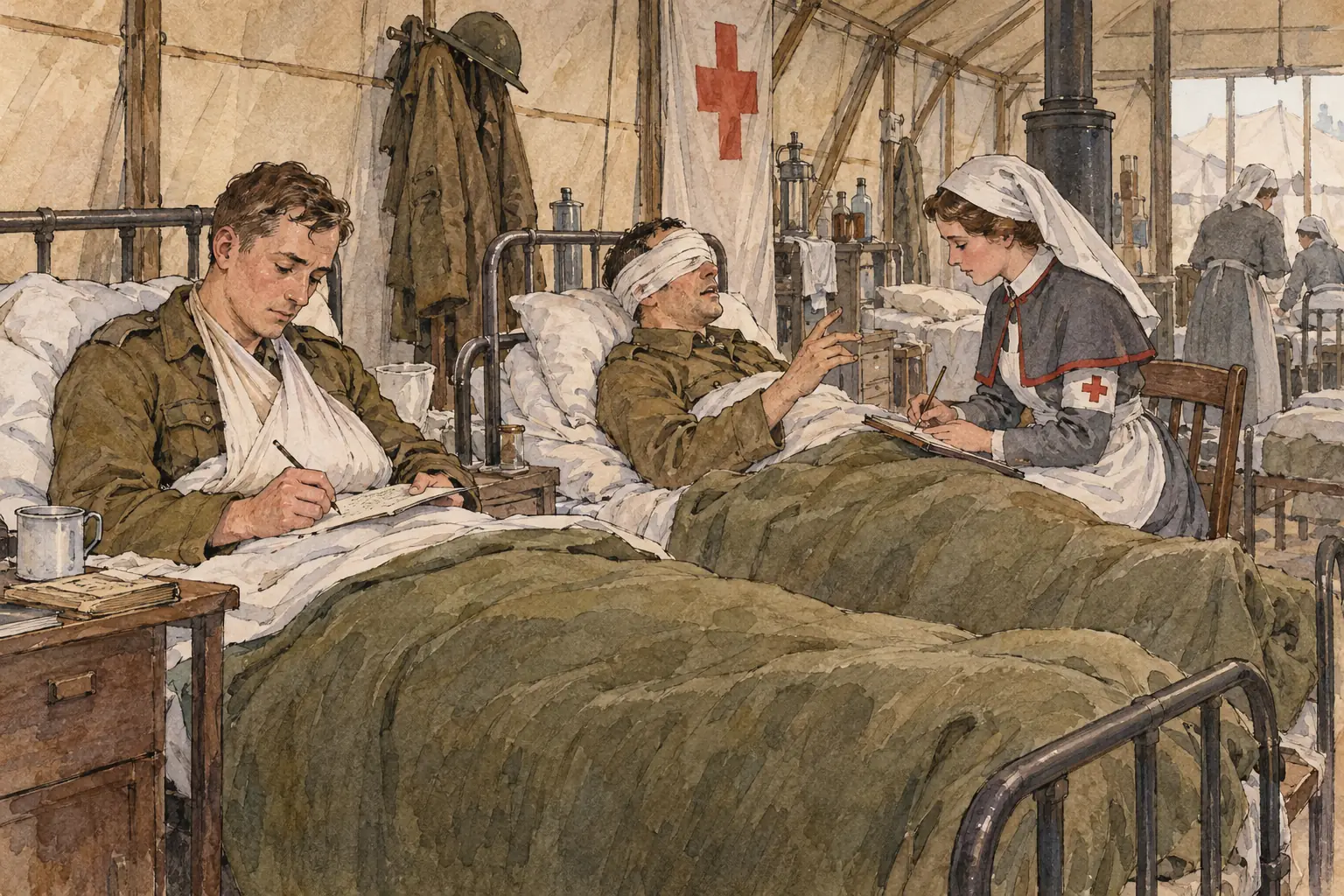
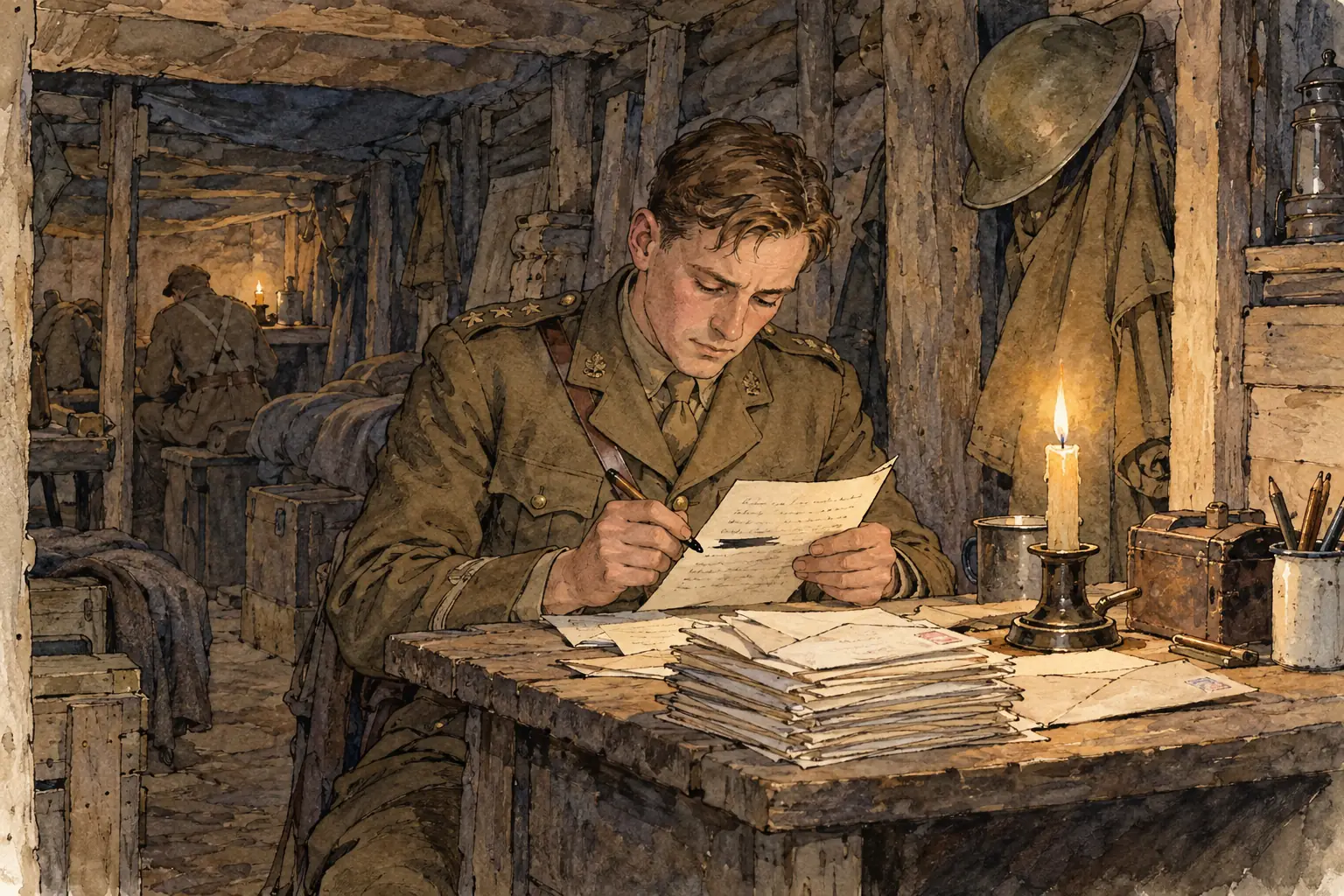
Letters and diaries serve as intimate sources, revealing the personal side of medical experiences on the Western Front. They often highlight emotional and practical aspects that official reports overlook.
Details from soldiers' letters
- Descriptions of wounding and care - Soldiers might recount the sequence of events after being injured, including evacuation processes and positive encounters with nurses.
- Impact of censorship - Official rules prevented mentions of sensitive details like troop positions or low morale, while self-censorship avoided graphic content to protect family members.
- Human perspectives - These accounts convey feelings such as gratitude for treatment or the stress of recovery.
Contributions of diaries
- Daily treatment records - Entries by medical officers or stretcher-bearers detail post-battle care, including obstacles like supply shortages or innovative methods.
- Frankness in private writing - Unlike letters, diaries could openly discuss failures, horrors, or personal emotions, providing unfiltered insights.
- Emotional depth - They illustrate morale among patients and staff, along with vivid accounts of procedures and environmental conditions.
Photographs and hospital records
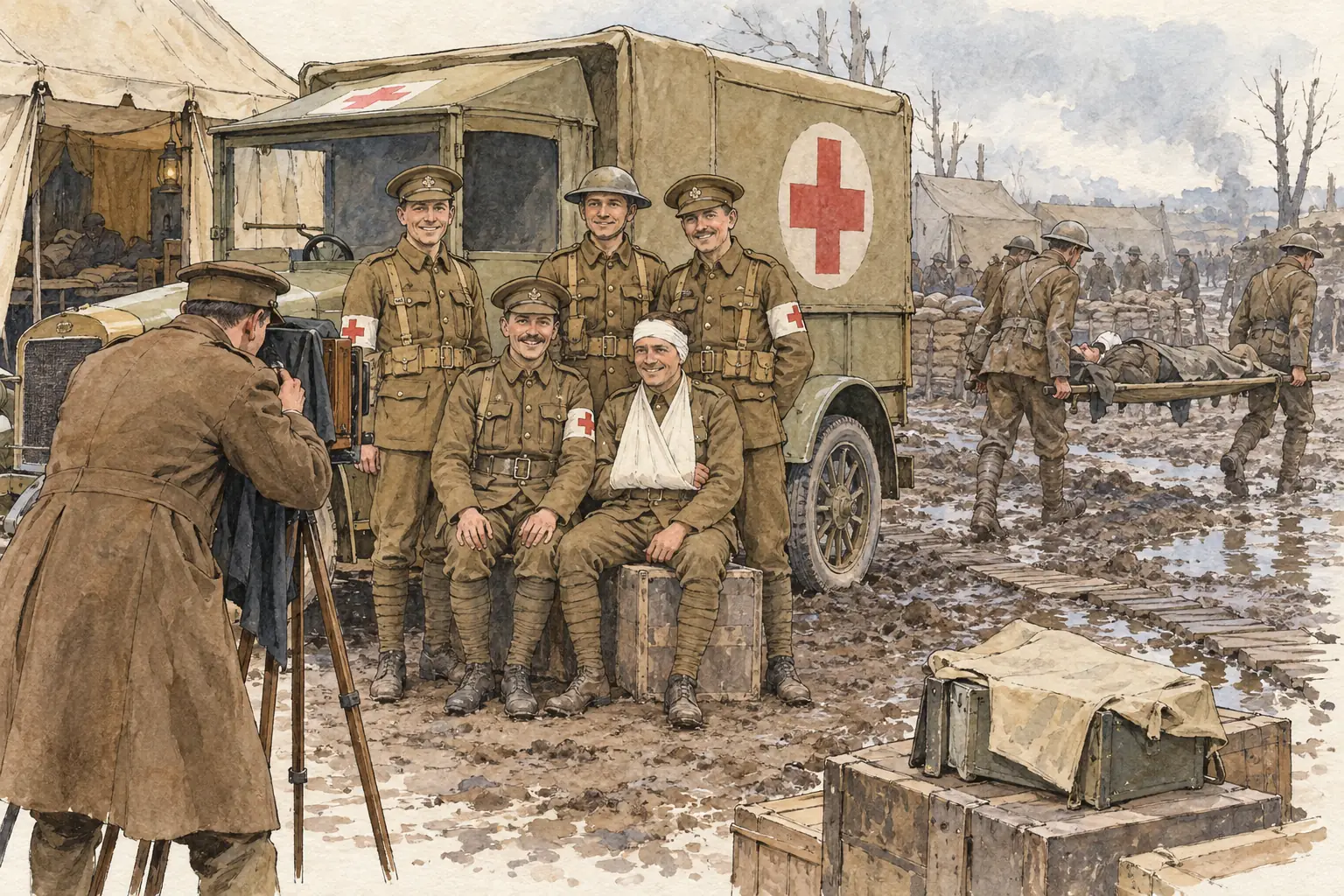
Photographs and hospital records offer concrete, location-specific evidence about medical conditions and practices on the Western Front. These sources help visualise and quantify aspects of healthcare.
Role of photographs
- Depictions of medical scenes - Images might capture stretcher-bearers navigating muddy terrain, the setup of operating tents, or ambulance types in use.
- Evidence of conditions - They demonstrate the basic nature of aid posts or overcrowding in field hospitals, showing real challenges.
- Limitations due to staging - Many were posed or selected for propaganda purposes, rarely including chaotic or gruesome elements like casualties.
Value of hospital records
- Unit-level documentation - Admissions and discharge logs from field ambulances or base hospitals list patients, injuries, treatments, and results.
- Basis for analysis - Historians can extract data on trends, such as monthly amputation rates or surges in illnesses like trench foot after offensives.
- Specific insights - Records highlight practical issues, including equipment shortages or staff overload during busy periods.
Military reports and statistics
Beyond letters and photographs, other local sources like military reports and derived statistics provide focused details on medical operations. These complement personal accounts by adding operational context.
Features of military reports
- Battalion war diaries - These occasionally note medical incidents, such as a doctor being wounded while treating soldiers under fire.
- Indications of risks - They reveal how units managed without key staff and the dangers medical teams encountered.
- Contextual value - Reports show how medical issues affected broader military activities in specific locations.
Use of statistics from local records
- Compilation from documents - Data from hospital logs can quantify patterns, like the frequency of gas poisoning cases or recovery rates.
- Highlighting peaks and problems - Statistics might indicate increased injuries following major battles or variations in treatment success across units.
- Reliability for specifics - While limited to one location, they offer factual evidence of local medical realities.
Strengths and weaknesses of sources
Local and personal sources enhance historical understanding but come with inherent advantages and drawbacks. Evaluating them critically is essential for accurate analysis.
Strengths of these sources
- Granular and emotional detail - They capture individual stories, such as the anxiety of waiting for transport or acts of compassion in hospitals.
- Revelation of hidden issues - Personal accounts often expose problems like transport delays or procedural discomforts absent from official narratives.
- Honesty in private materials - Diaries, in particular, provide candid views since they were not intended for public eyes.
Weaknesses of these sources
- Subjectivity and bias - Accounts reflect one viewpoint, potentially exaggerating events or downplaying negatives to reassure others.
- Limited scope - A single source, like one letter or photo, represents only a momentary or personal experience, not the wider reality.
- Potential for inaccuracy - Memories can fade or be distorted over time, and staged elements in photographs may mislead.
- Need for combination - To build a complete picture, these sources should be cross-referenced with multiple examples and broader national records.