2.1 - Revolt of the Northern Earls
Key facts and dates
The Revolt of the Northern Earls represented the first major domestic challenge to Elizabeth I's authority, driven by Catholic discontent and dynastic ambitions. Although short-lived, it exposed religious divisions in England and prompted a harsher stance towards Catholicism.
Timeline of key events
- 1569 – Catholic nobles, including the Earls of Northumberland and Westmorland, plan rebellion to restore Catholic influence.
- November 1569 – Rebels seize Durham Cathedral, hold Catholic mass, and march under a religious banner.
- Late 1569 – Elizabeth raises an army under the Earl of Sussex to counter the uprising.
- Early 1570 – Rebellion collapses without foreign support; leaders flee or are captured.
- 1570 – Pope Pius V issues papal bull excommunicating Elizabeth, urging Catholic disobedience.
- Post-1570 – Hundreds of rebels executed; recusancy laws strengthened against Catholics.
Causes and leaders of the revolt
By 1569, growing dissatisfaction among Catholic nobles in northern England led to a significant uprising against Elizabeth I's Protestant policies. This rebellion stemmed from religious grievances, loss of power, and ambitions tied to the succession.
Factors driving the revolt
- Religious discontent - Staunch Catholic nobles resented the shift to Protestantism, which diminished their influence and traditional practices.
- Dynastic ambitions - The plot aimed to free Mary, Queen of Scots, from imprisonment and possibly install her as heir or queen to restore Catholic rule.
- Key leaders - Thomas Percy, Earl of Northumberland, and Charles Neville, Earl of Westmorland, spearheaded the effort, supported by the Duke of Norfolk, who considered marrying Mary to bolster her claim.
Key events during the uprising
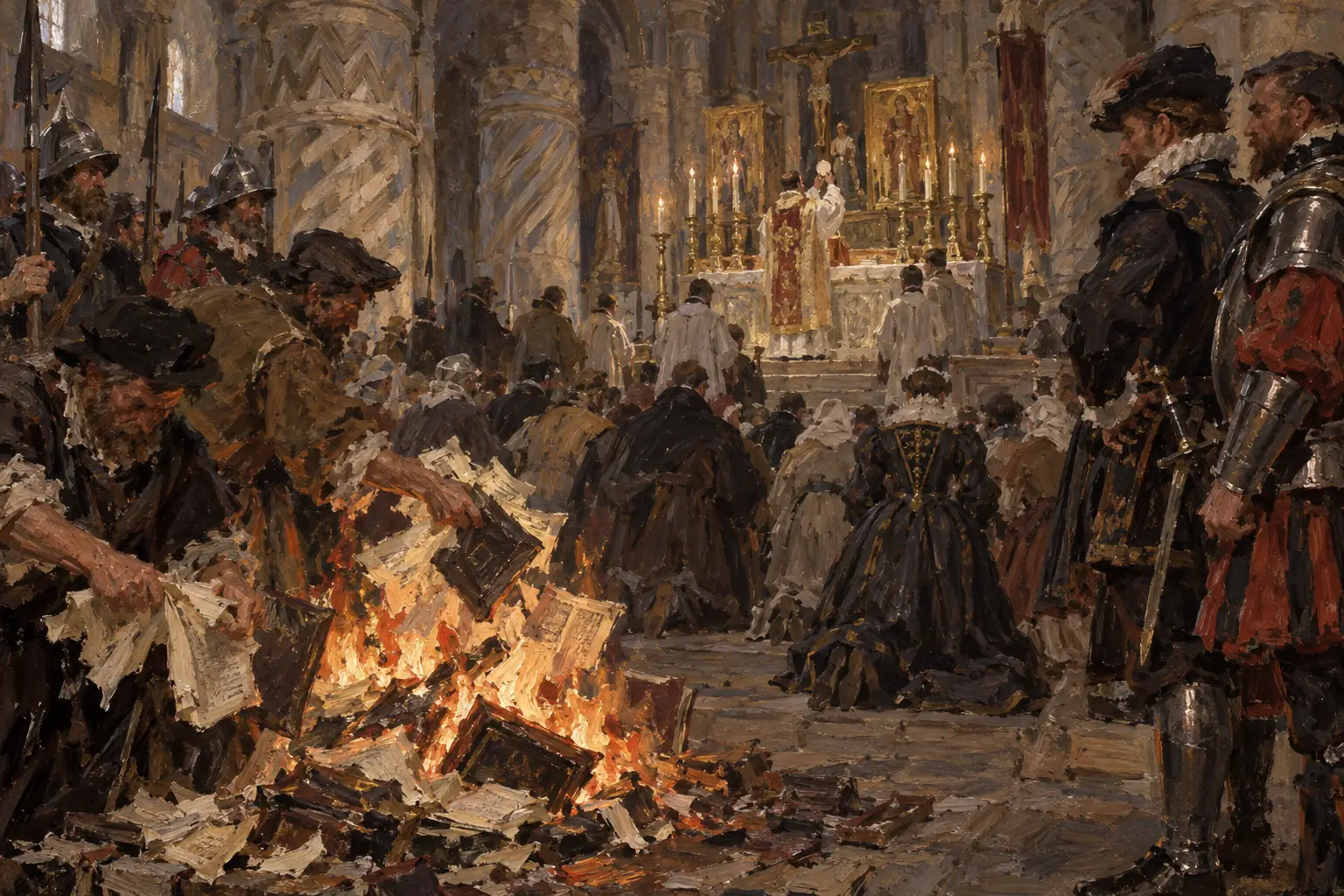
The revolt began in November 1569 when the northern earls mobilised their followers in an attempt to spark a widespread Catholic rebellion. They sought to challenge Elizabeth's authority through symbolic acts and calls for support.
Main actions of the rebels
- Symbolic march - The earls and their supporters advanced under the banner of the Five Wounds of Christ, a potent Catholic emblem, to rally others.
- Seizure of Durham Cathedral - Rebels captured the cathedral and conducted a Catholic mass, aiming to inspire broader participation across the region.
- Hopes for wider support - They anticipated foreign assistance and a national uprising, but enthusiasm remained confined to local areas with no external aid materialising.
Suppression and consequences of the revolt

Elizabeth responded swiftly to the threat, deploying forces that quickly overwhelmed the poorly supported rebellion. The aftermath involved severe reprisals to deter future challenges.
How the revolt was crushed
- Government response - An army led by the Earl of Sussex was assembled, leading to the rebels' defeat by early 1570.
- Fate of the leaders - Northumberland was captured and executed, while Westmorland fled overseas; the Duke of Norfolk faced imprisonment.
- Punishments - Hundreds of suspected participants were hanged in a display of royal authority, reinforcing control in the north.
Impacts on Catholic policies and Elizabeth's rule
The failed revolt marked a pivotal shift in Elizabeth's approach to domestic threats, intensifying scrutiny of Catholics and altering the religious landscape. It also influenced international perceptions and internal security measures.
Long-term effects of the uprising
- Harsher treatment of Catholics - The government increased monitoring of Catholic households and imposed stricter recusancy laws, viewing them as potential traitors.
- Papal intervention - The 1570 papal bull from Pope Pius V excommunicated Elizabeth, forcing English Catholics to choose between faith and loyalty to the crown.
- Dynastic implications - Mary's prospects for release through rebellion diminished, heightening tensions around the succession.
- Strengthening of Elizabeth's position - Surviving the crisis bolstered her regime, but it foreshadowed ongoing plots driven by religion and ambition over the following decades.