3.7 - Indigenous Peoples: Destruction of Ways of Life
Key facts and dates
The destruction of indigenous ways of life on the Plains during the late 19th century involved deliberate policies and actions by the US government and settlers that targeted economic, cultural, and social foundations. These efforts led to widespread loss of land, resources, and autonomy for native groups, accelerating assimilation into American society.
Timeline of key events
- 1870s – Commercial hide hunting intensifies, decimating buffalo herds for leather and robes.
- 1870s–1880s – Railroads enable sport hunting of buffalo, contributing to their rapid decline.
- 1870s–1880s – US Army encourages buffalo extermination to weaken indigenous resistance.
- 1870s onwards – Establishment of reservations enforces dependency through ration systems.
- 1880s – Bans on ceremonies and mission schools impose cultural suppression.
- 1887 – Dawes Act introduces land allotment, breaking up tribal holdings.
- By 1900 – Indigenous landholdings reduced by over 90 million acres due to Dawes Act effects.
Extermination of the buffalo and its impact
Image 1 of 2: Bones of slaughtered buffalo piled beside a railroad, waiting to be shipped east
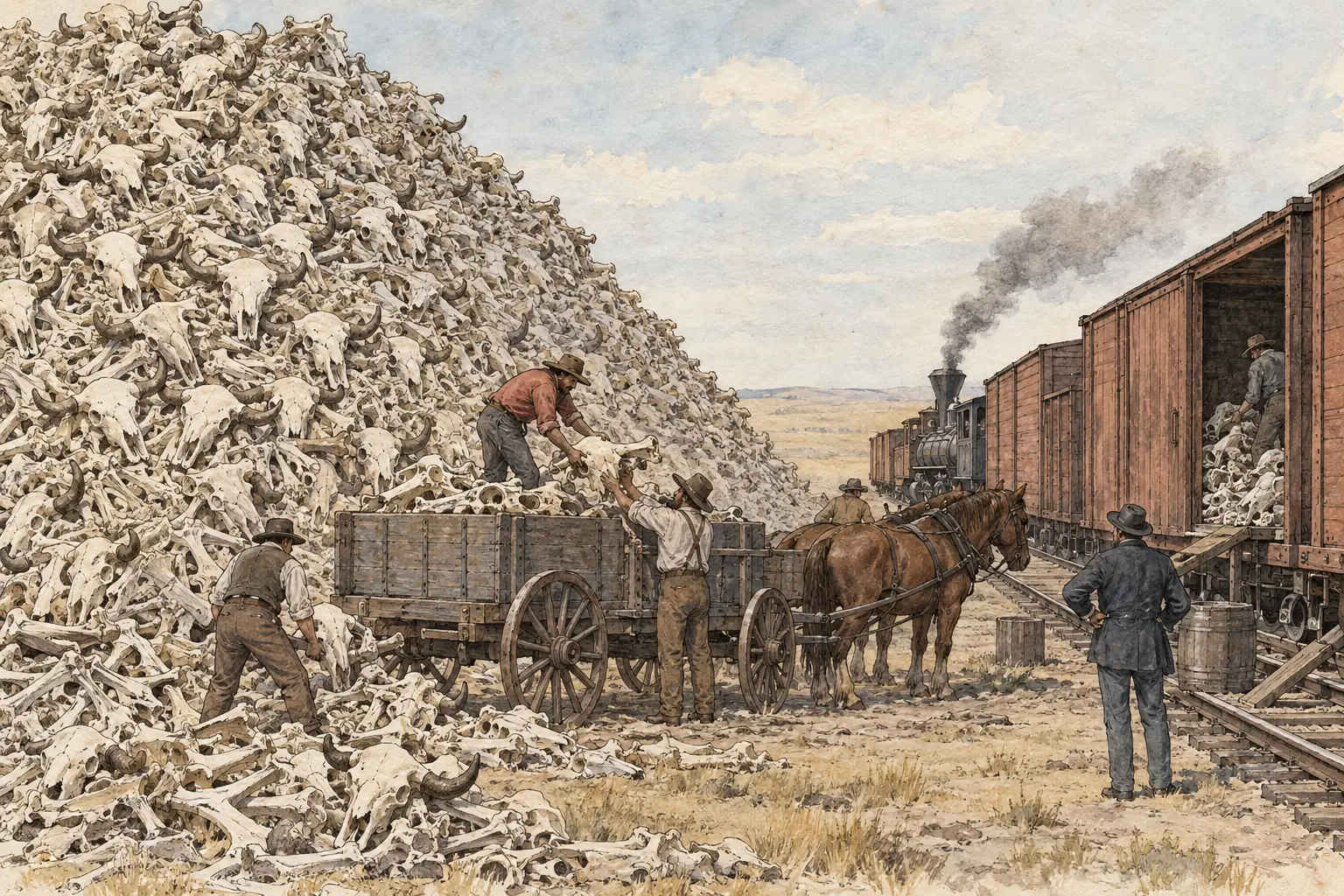
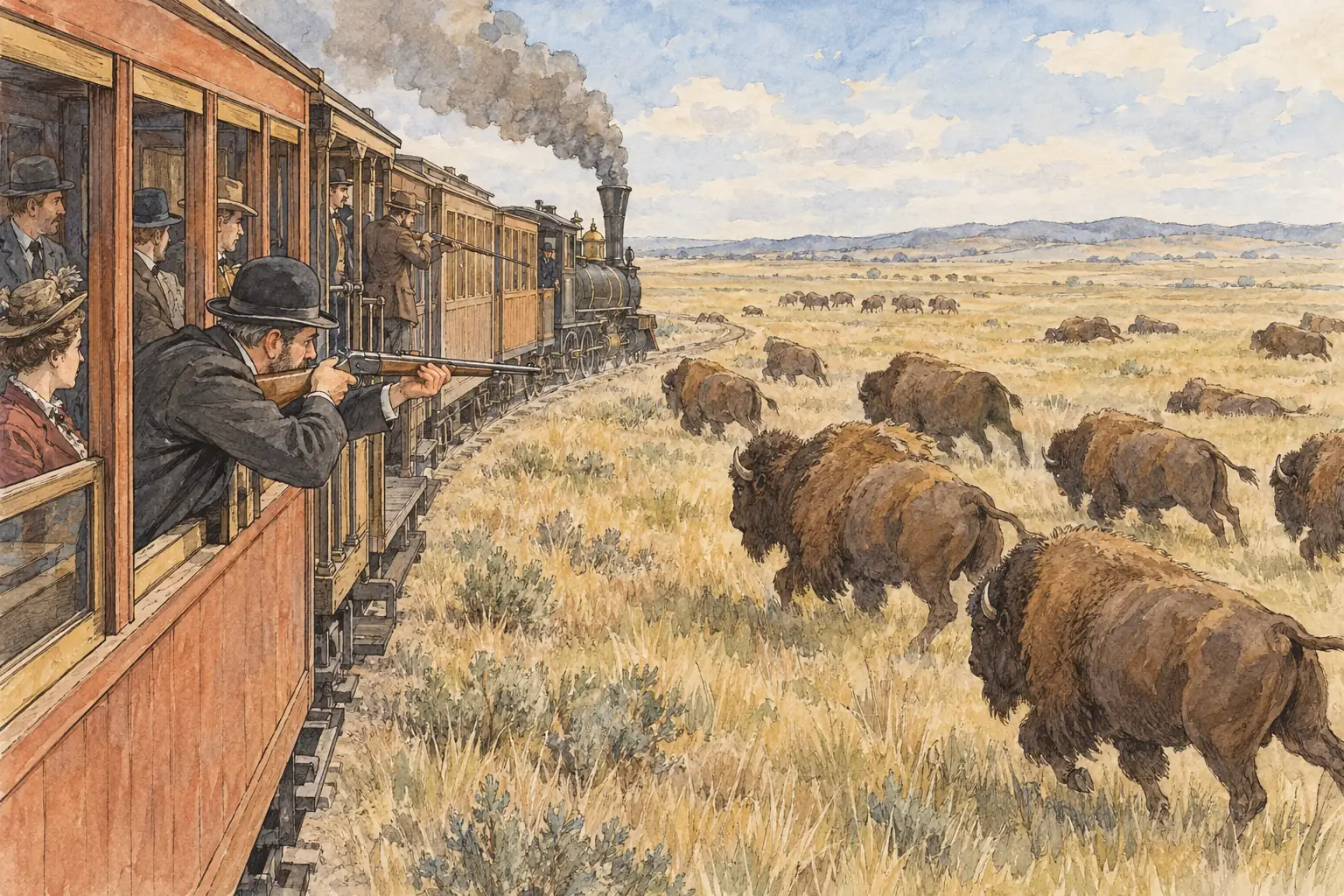
The deliberate destruction of buffalo herds in the 1870s and 1880s represented a targeted assault on the economic and cultural foundations of indigenous Plains societies. Buffalo were central to survival, providing food, clothing, shelter, and tools, and their loss forced profound changes in traditional lifestyles.
Causes of the buffalo extermination
| Cause | Description |
|---|---|
| Commercial hide hunting | Hunters slaughtered millions of buffalo for their hides, which were sold for leather goods and robes, driven by growing industrial demand in the east. |
| Railroad sport hunting | Passengers on expanding rail lines shot buffalo from trains for entertainment, with companies promoting this to attract travellers and clear land for tracks. |
| Army encouragement | The US military actively supported the killings, viewing them as a strategy to starve indigenous groups into submission and end resistance to settlement. |
Consequences for Plains economies and cultures
- Economic collapse - Without buffalo, indigenous communities lost their primary source of sustenance and trade goods, leading to famine and inability to maintain self-sufficient hunting economies.
- Cultural devastation - Buffalo held spiritual significance in rituals and stories; their disappearance eroded traditional practices, social structures, and communal hunts that reinforced tribal bonds.
- Forced dependency - The loss compelled many groups to rely on government aid, weakening independence and paving the way for relocation to reservations.
Life on reservations, adaptation and resistance
Image 1 of 2: At boarding schools, children's hair was cut and their languages and customs were forbidden
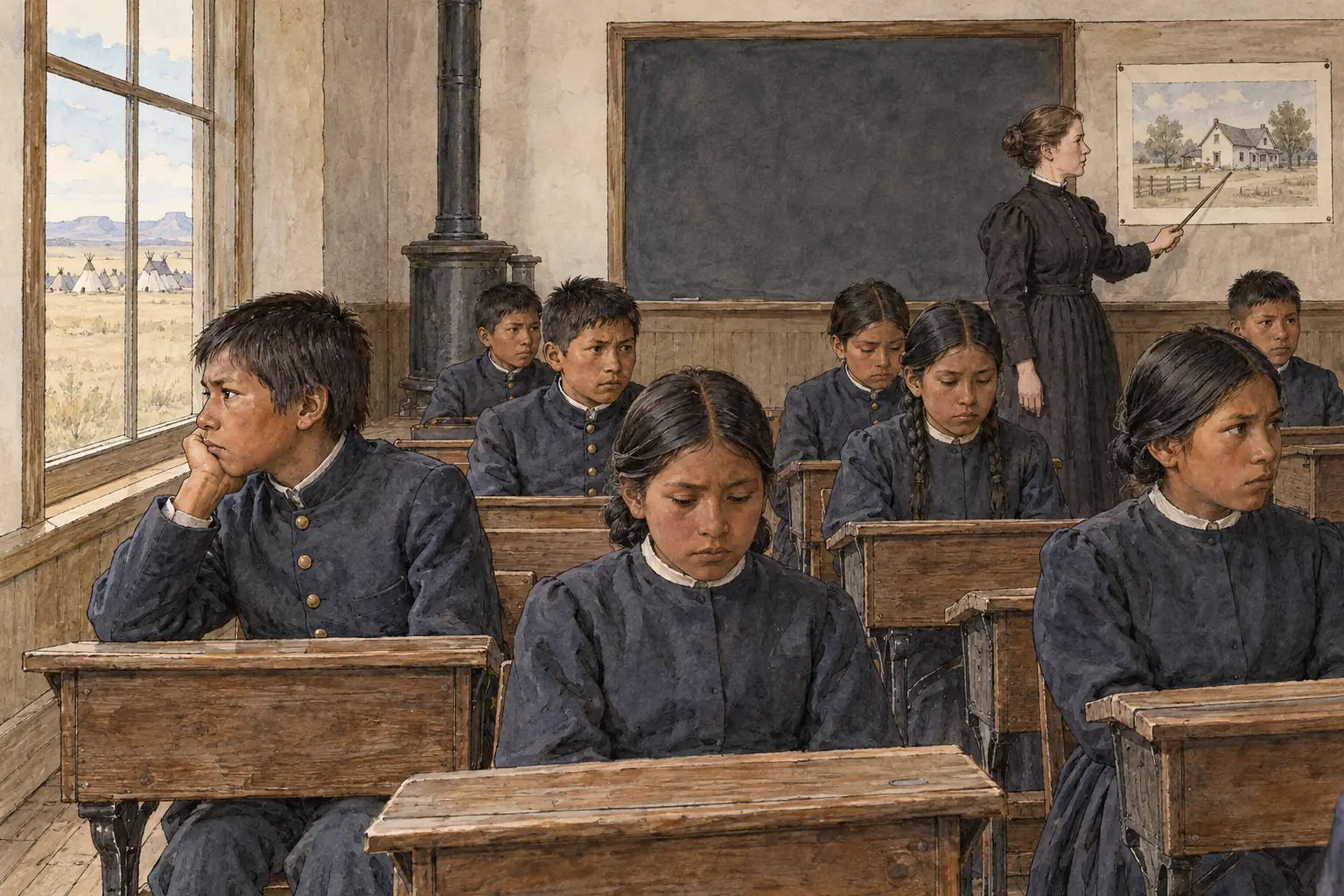
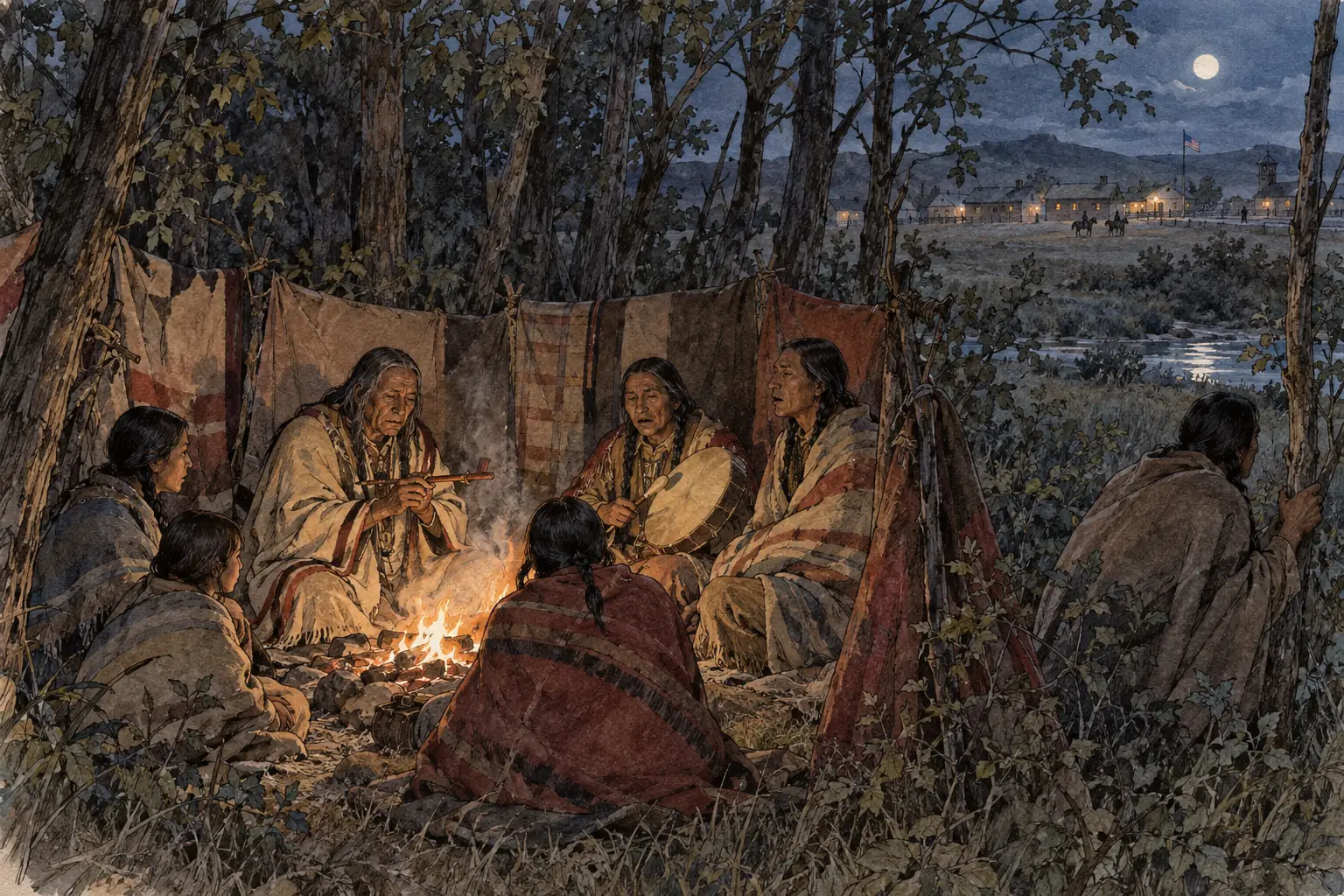
Reservations, established from the 1870s onwards, confined indigenous peoples to designated lands, imposing strict controls that dismantled traditional ways of life. This system fostered dependency while suppressing cultural practices, though some forms of adaptation and resistance emerged.
Features of reservation life
| Feature | Description |
|---|---|
| Ration systems and dependency | Government-provided food rations replaced traditional hunting, creating reliance on federal supplies that were often inadequate or withheld as punishment. |
| Agents and corruption | Reservation agents, appointed by the government, frequently engaged in corrupt practices, such as selling rations for profit or favouring certain individuals, exacerbating poverty. |
| Bans on ceremonies | Traditional dances, rituals, and spiritual practices were outlawed to promote assimilation, severing connections to ancestral beliefs and community identity. |
| Mission schools | Boarding schools run by missionaries aimed to "civilise" children by forbidding native languages and customs, often separating families and enforcing Western education. |
| Disease and malnutrition | Overcrowding and poor sanitation led to epidemics of diseases like tuberculosis, while insufficient rations caused widespread hunger and health decline. |
Limited forms of adaptation and resistance
- Cultural preservation efforts - Some communities secretly maintained traditions, such as underground ceremonies or oral storytelling, to preserve heritage despite bans.
- Economic adaptations - Indigenous groups experimented with farming or livestock herding on reservation lands, though poor soil and limited resources often hindered success.
- Acts of resistance - Protests, including petitions to authorities or small-scale rebellions, challenged corrupt agents and unfair policies, though these were often met with military force.
Changing federal attitudes and the Dawes Act
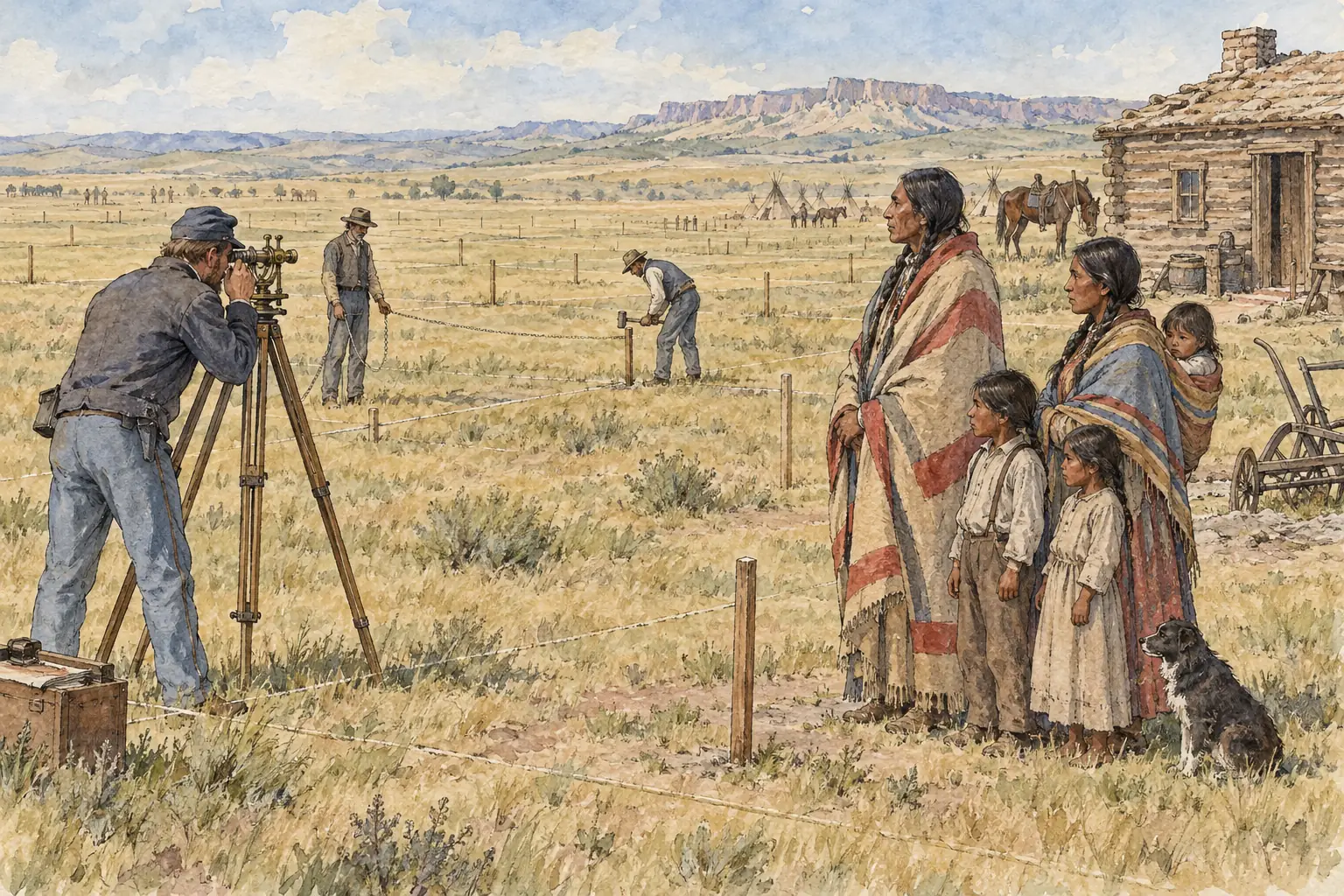
US government policies towards indigenous peoples shifted in the late 19th century from containment to aggressive assimilation, culminating in the Dawes Act of 1887. This legislation aimed to break up communal land ownership, promoting individual property as a means to integrate native populations into American society.
Key provisions of the Dawes Act
| Provision | Details |
|---|---|
| Allotment in severalty | Tribal lands were divided into individual plots, typically 160 acres per family head, with the goal of encouraging private farming and ending communal living. |
| Breakup of tribal lands | "Surplus" land not allotted to individuals was sold to white settlers, drastically reducing overall indigenous holdings. |
| Citizenship conditions | Indigenous people who accepted allotments and lived separately from tribes could gain US citizenship after 25 years, but this required abandoning traditional governance. |
Consequences of the Dawes Act
- Loss of land to white settlers - Millions of acres were transferred, as many allotments were sold under pressure or through fraud, benefiting settlers and railroads.
- Undermining of tribal authority - The act dissolved collective land rights, weakening chiefs and councils, and fragmenting communities.
- Accelerated assimilation pressures - By promoting individual ownership and citizenship, it intensified efforts to erase cultural identities, though it often resulted in further poverty and dislocation.