1.1 - Early East–West Tension
Key facts and dates
The early years of the Cold War were marked by growing suspicion between the Western Allies and the Soviet Union, stemming from wartime alliances that frayed amid ideological clashes and territorial disputes. This timeline captures the pivotal events and developments that escalated tensions from the Second World War's end.
Timeline of key events
- 1943 – Tehran Conference: Allies agree on strategies to defeat Germany but reveal initial disagreements over post-war borders.
- February 1945 – Yalta Conference: Discussions on dividing Germany and ensuring free elections in liberated nations, though tensions emerge over Poland's future.
- July 1945 – Potsdam Conference: Final wartime meeting confirms Germany's division but highlights deepening rifts with new leaders like Truman.
- 1945 – United States develops and tests the atomic bomb secretly, without informing the Soviet Union.
- 1946 – Long Telegram from US diplomat warns of Soviet expansionism; Novikov Telegram from Soviet side accuses US of aggressive intentions.
- 1945-1948 – Soviet Union establishes satellite states in Eastern Europe, installing communist regimes in countries like Poland and Hungary.
The Grand Alliance and wartime conferences
Image 1 of 3: At Tehran in November 1943 Roosevelt, Churchill and Stalin agreed to open a second front in France
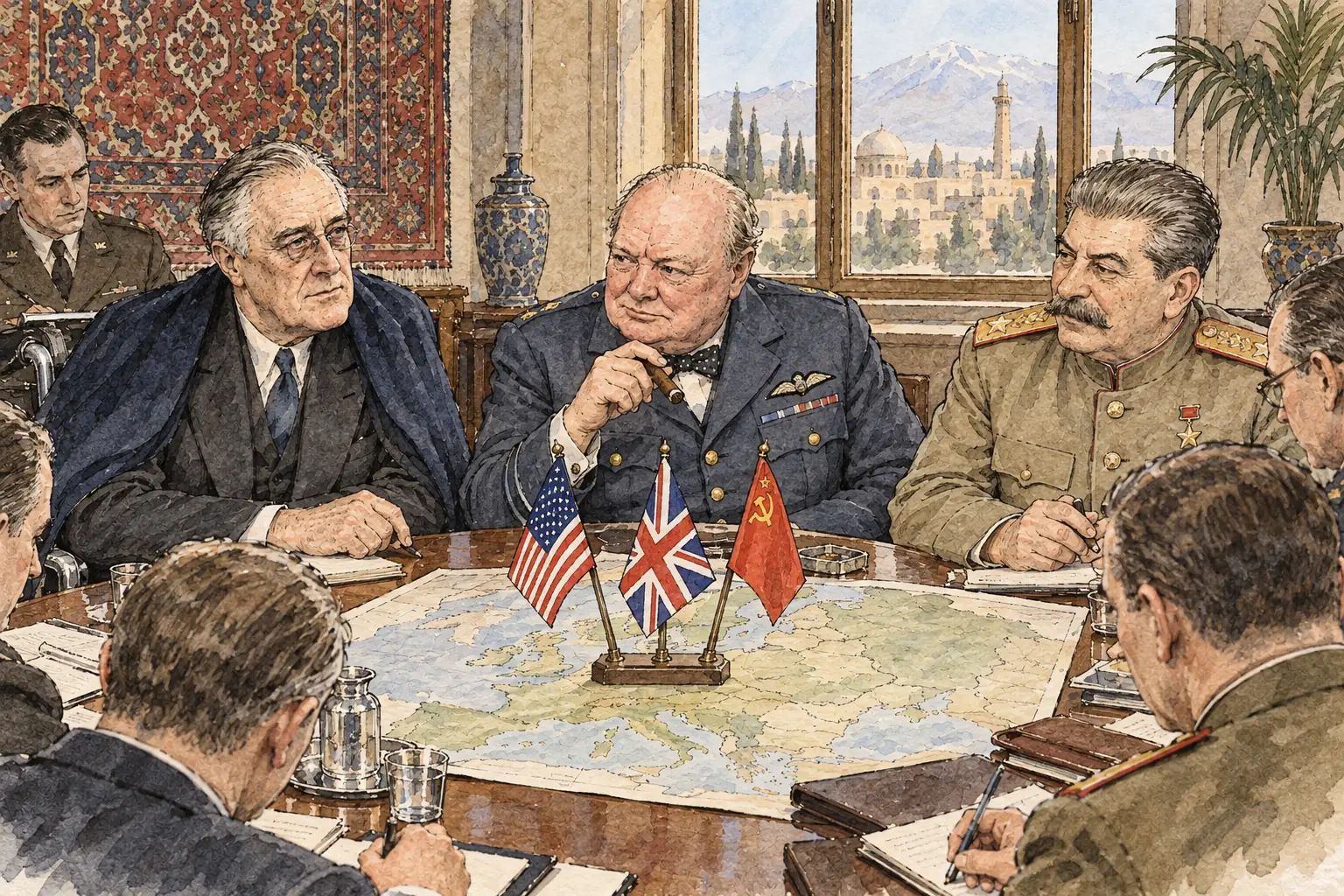

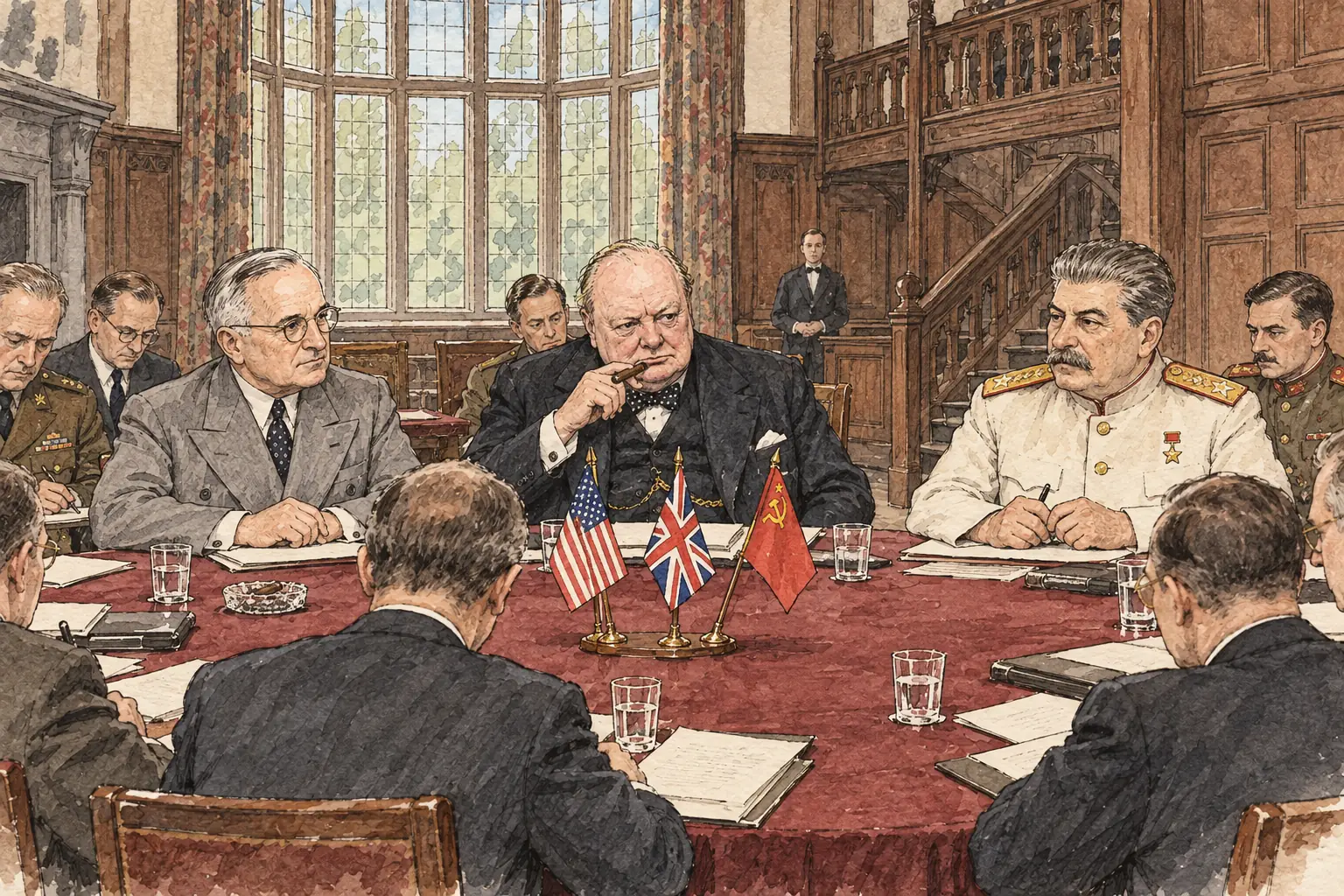
The Grand Alliance formed during the Second World War as a temporary coalition between the United States, Britain, and the Soviet Union to defeat Nazi Germany. While united against a common enemy, the Allies held conferences to plan the war's end and post-war order, but underlying disagreements began to surface, laying the groundwork for future conflict.
Outcomes of key wartime conferences
- Tehran Conference (1943) - Leaders including Roosevelt, Churchill, and Stalin coordinated military efforts, such as opening a second front in Europe, and discussed broad post-war aims like weakening Germany, but avoided detailed resolutions on territorial issues.
- Yalta Conference (February 1945) - Agreements included dividing Germany into occupation zones, holding free elections in Eastern Europe, and establishing the United Nations for global security; however, disputes arose over Poland's borders and government, with Stalin pushing for Soviet-friendly arrangements.
- Potsdam Conference (July 1945) - With Truman replacing Roosevelt and Attlee succeeding Churchill, the focus was on Germany's demilitarisation and reparations; emerging conflicts over Soviet influence in Eastern Europe and the lack of consultation on the atomic bomb heightened suspicions.
Ideological differences and leaders' attitudes
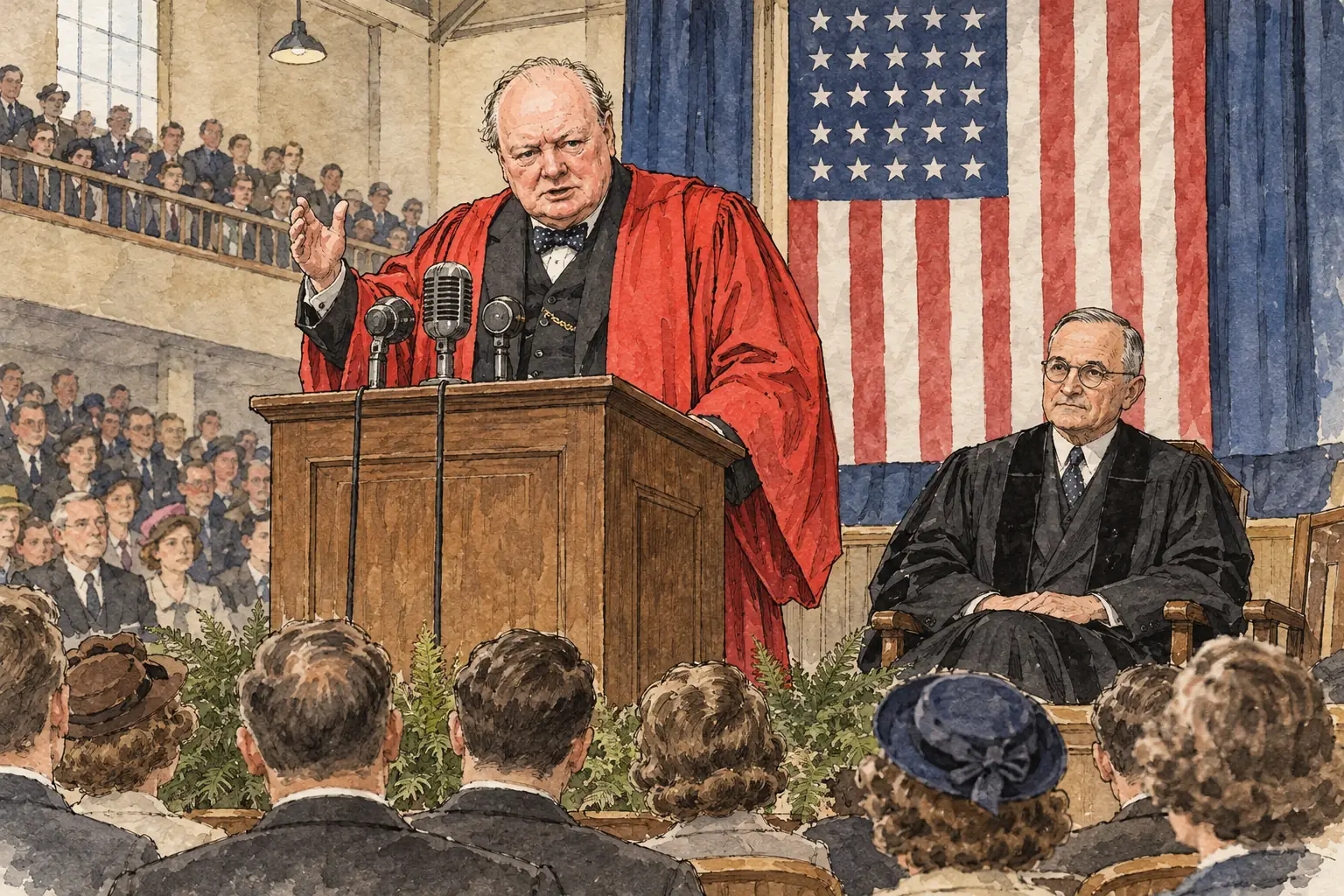
Fundamental clashes in political and economic systems between the capitalist, democratic West and the communist Soviet Union fuelled early Cold War tensions. These differences, combined with the personal outlooks of key leaders, fostered an atmosphere of mutual distrust and fear of domination.
Core ideological contrasts
- Western capitalism vs. Soviet communism - The United States and Britain promoted free-market economies and democratic governance, emphasising individual freedoms, while the Soviet Union advocated state-controlled communism, prioritising collective ownership and one-party rule.
- Leaders' aims and suspicions - Stalin sought a buffer zone of influence in Eastern Europe to protect against future invasions, viewing it as essential for Soviet security; in contrast, Truman and Churchill suspected this as an attempt to spread communism, interpreting Stalin's actions as aggressive expansionism that threatened Western values.
The atomic bomb and diplomatic telegrams
Image 1 of 2: At Potsdam in July 1945 Truman shared no details of the atomic bomb with Stalin, who saw the secrecy as a sign of hostility
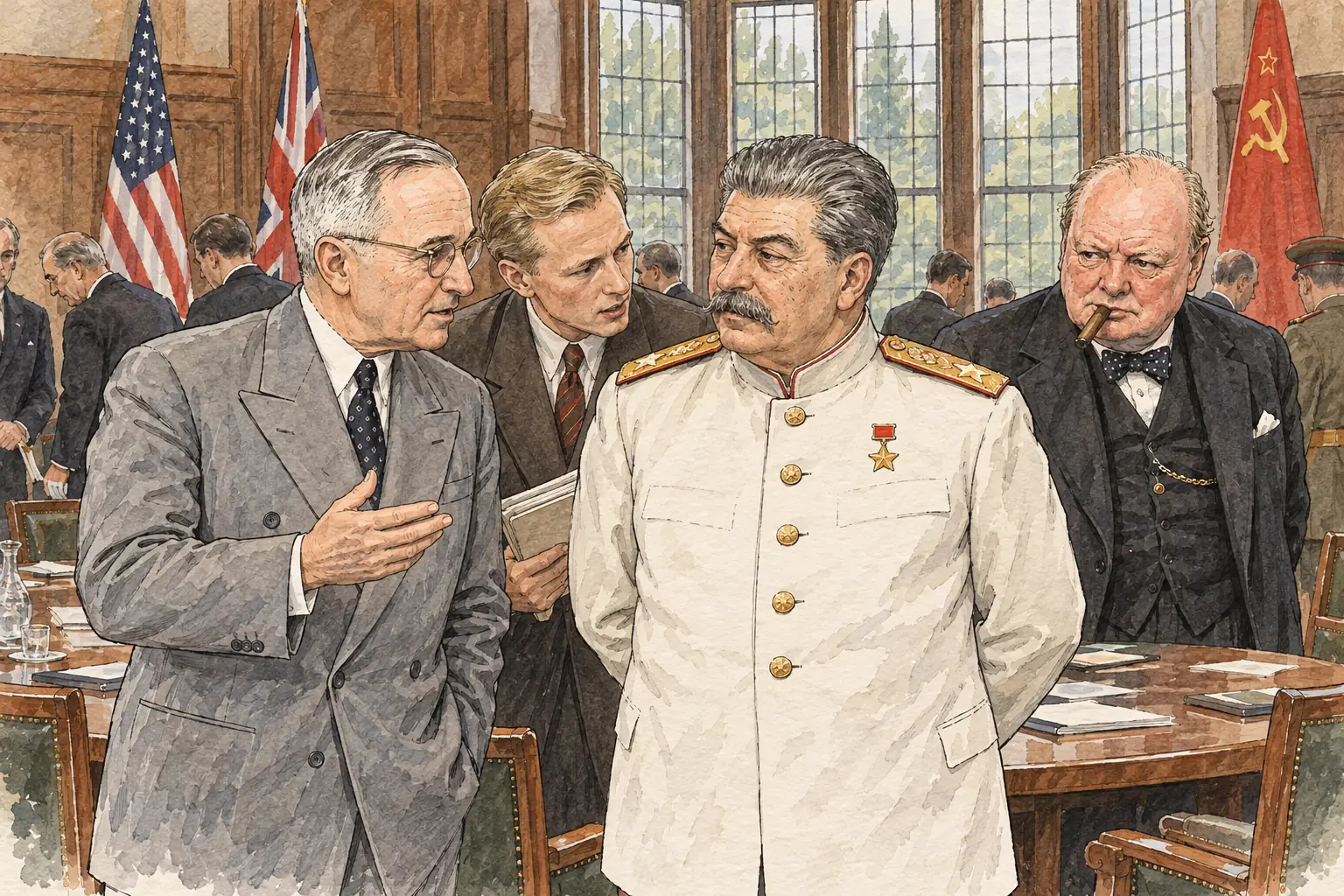

The United States' secret development of nuclear weapons and subsequent diplomatic exchanges intensified East-West mistrust. These events portrayed each side as a potential aggressor, escalating fears and solidifying opposing worldviews.
Development of the atomic bomb
The United States successfully tested the atomic bomb in 1945 without informing the Soviet Union, its wartime ally. This secrecy was seen by Stalin as a sign of hostility, giving the West a military advantage and prompting the Soviets to accelerate their own nuclear programme.
Impact of diplomatic telegrams
- Long Telegram (1946) - Sent by US diplomat George Kennan, this report depicted the Soviet Union as inherently expansionist and ideologically driven to undermine the West, recommending a policy of containment to limit communist influence.
- Novikov Telegram (1946) - From Soviet ambassador Nikolai Novikov, it accused the United States of pursuing global dominance through military and economic means, framing American actions as imperialistic threats to Soviet interests.
Creation of Soviet satellite states
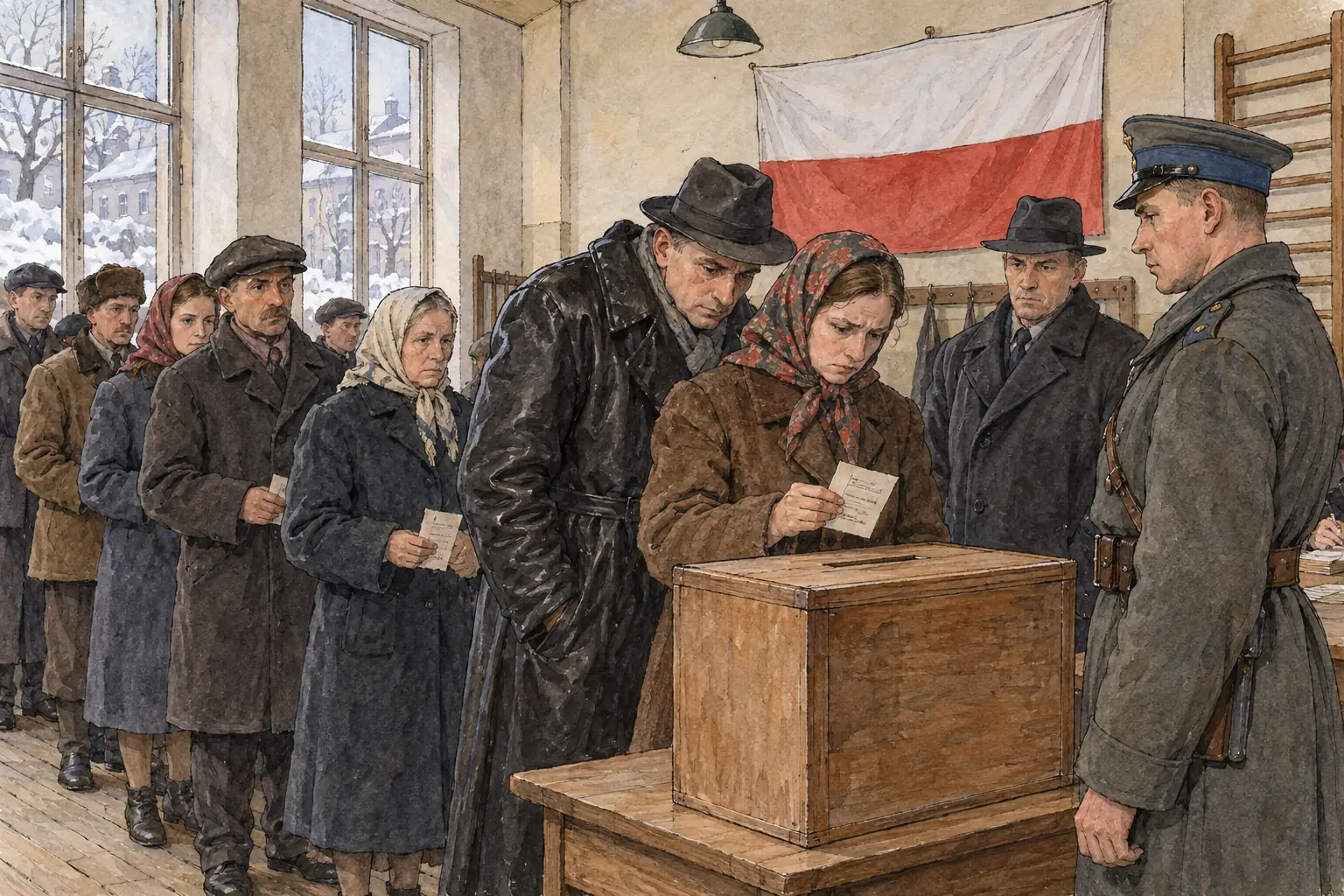
Between 1945 and 1948, the Soviet Union consolidated control over Eastern Europe by establishing satellite states, where communist governments were installed under Moscow's influence. This move breached wartime agreements and was perceived by the West as evidence of Soviet aggression.
Process and consequences of satellite state formation
- Installation of communist regimes - In countries such as Poland, Hungary, Romania, Bulgaria, Czechoslovakia, and East Germany, Soviet forces supported the rise of pro-communist leaders, often through rigged elections or suppression of opposition, creating a sphere of influence.
- Violation of agreements - These actions contradicted promises made at Yalta for free and fair elections, leading Western leaders to view them as a direct threat to democracy and a step towards further expansion.
- Western response - The establishment of these states heightened tensions, prompting the United States and Britain to see it as the creation of an "Iron Curtain" dividing Europe, which worsened relations and accelerated the Cold War's onset.