4.4 - Work Creation, Rearmament & Unemployment
Key facts and dates
The Nazi regime in Germany implemented various policies from 1933 onwards to tackle high unemployment, focusing on work creation, rearmament, and statistical manipulation. These measures were part of a broader economic recovery plan, though they often masked underlying issues through 'invisible' methods. The following timeline outlines the major developments in these employment strategies.
Timeline of key events
- 1933 – Establishment of the Reich Labour Service (RAD), initially voluntary but later compulsory for young men.
- 1933 – Launch of major public works programmes, including the construction of autobahns.
- 1935 – Introduction of conscription, requiring military service and boosting employment in related industries.
- 1935 – Open rearmament begins, accelerating factory production and job creation in armaments.
- 1936–1939 – Peak of deficit spending under the Four Year Plan, funding rearmament and infrastructure.
- Throughout 1930s – 'Invisible unemployment' practices, such as excluding women and Jews from official figures.
Reducing unemployment through work creation
Image 1 of 2: Building the autobahns from 1933 created jobs, much of the work done by hand
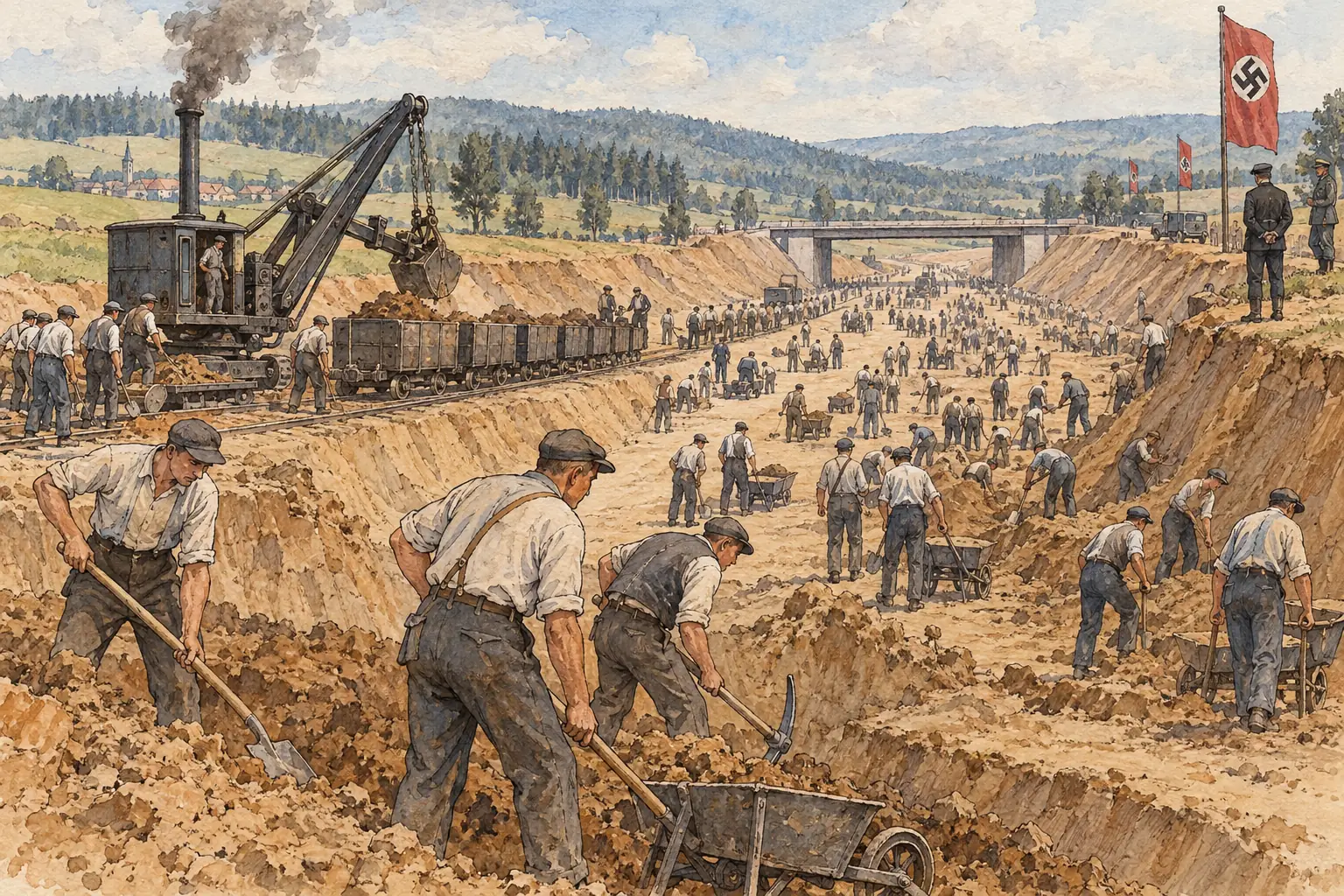
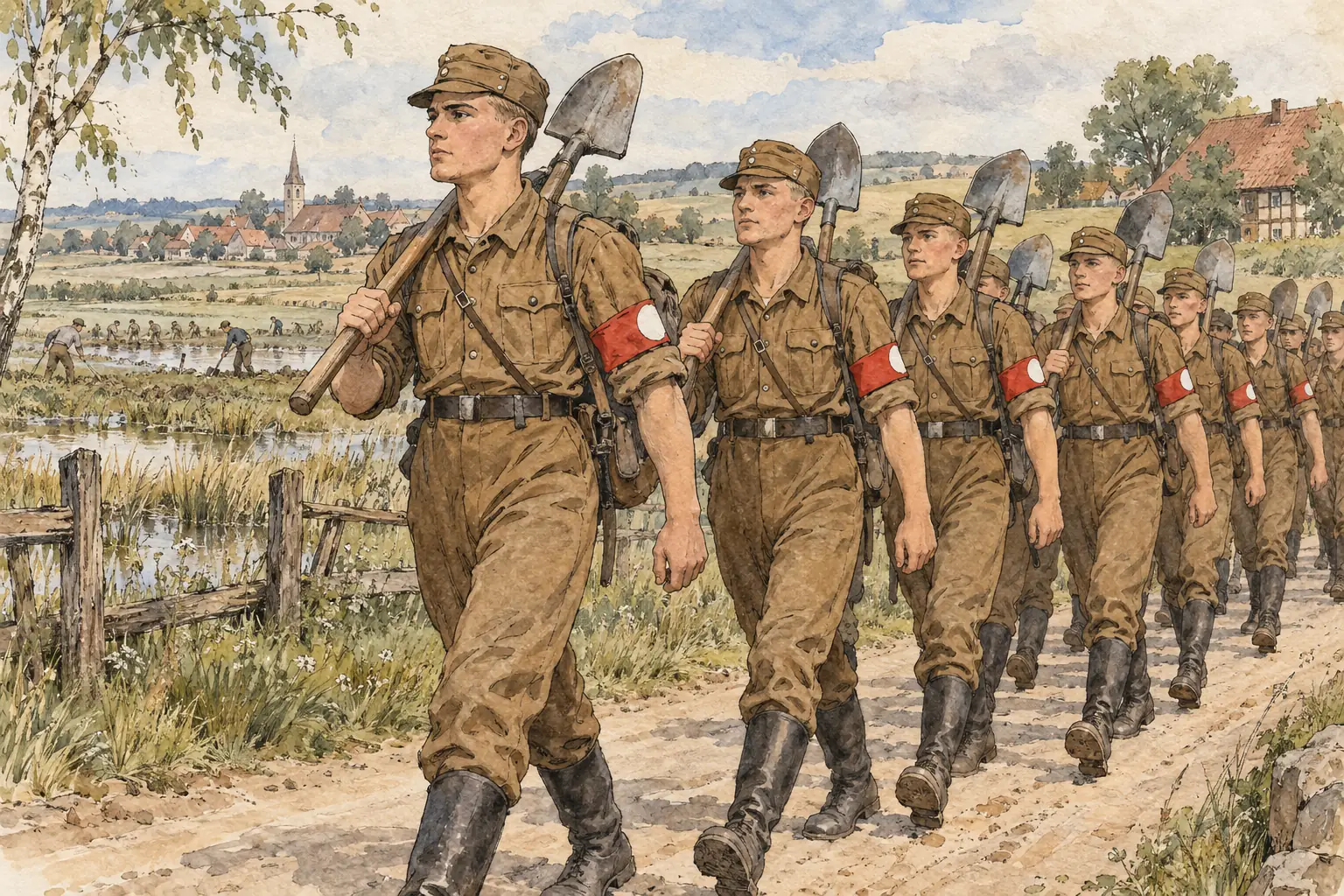
The Nazi government prioritised schemes to generate employment, aiming to fulfil promises of economic revival after the Great Depression. These initiatives focused on large-scale projects and mandatory labour programmes that provided jobs while aligning with ideological goals.
Key work creation programmes
- Reich Labour Service (RAD) - Introduced in 1933, this programme required young men aged 18–25 to undertake six months of manual labour, such as building roads or draining marshes. It became compulsory in 1935, offering basic pay and promoting discipline, though it often involved harsh conditions.
- Public works schemes - Major infrastructure projects, notably the construction of autobahns starting in 1933, created thousands of positions in construction and related sectors. These efforts not only reduced joblessness but also improved transport links, symbolising national progress.
- Other initiatives - Additional schemes included afforestation, land reclamation, and building projects like schools and hospitals, all designed to absorb the unemployed workforce and stimulate economic activity.
Rearmament and conscription in employment
Image 1 of 2: Conscription, brought back in 1935, took young men off the unemployment register and into the army
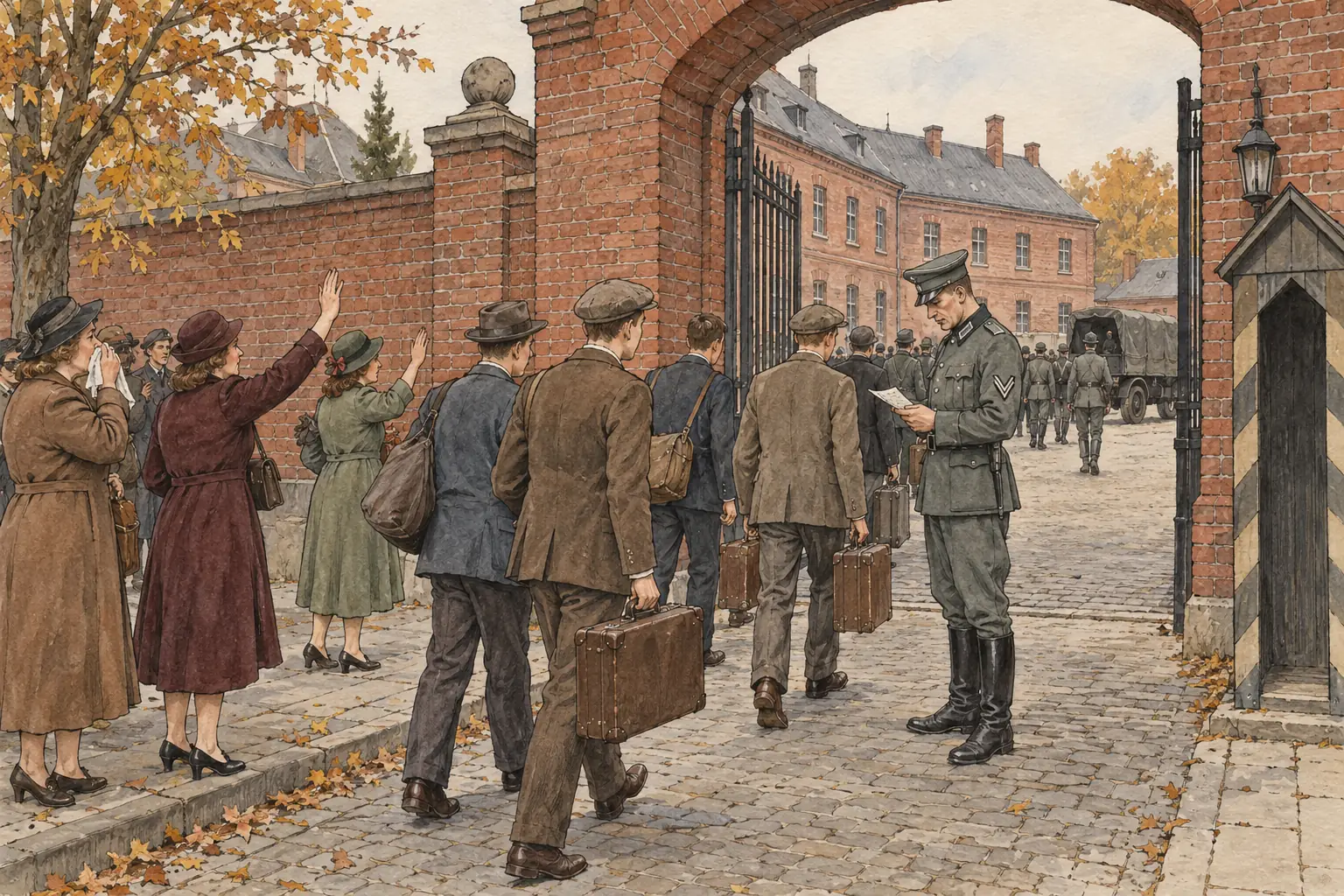
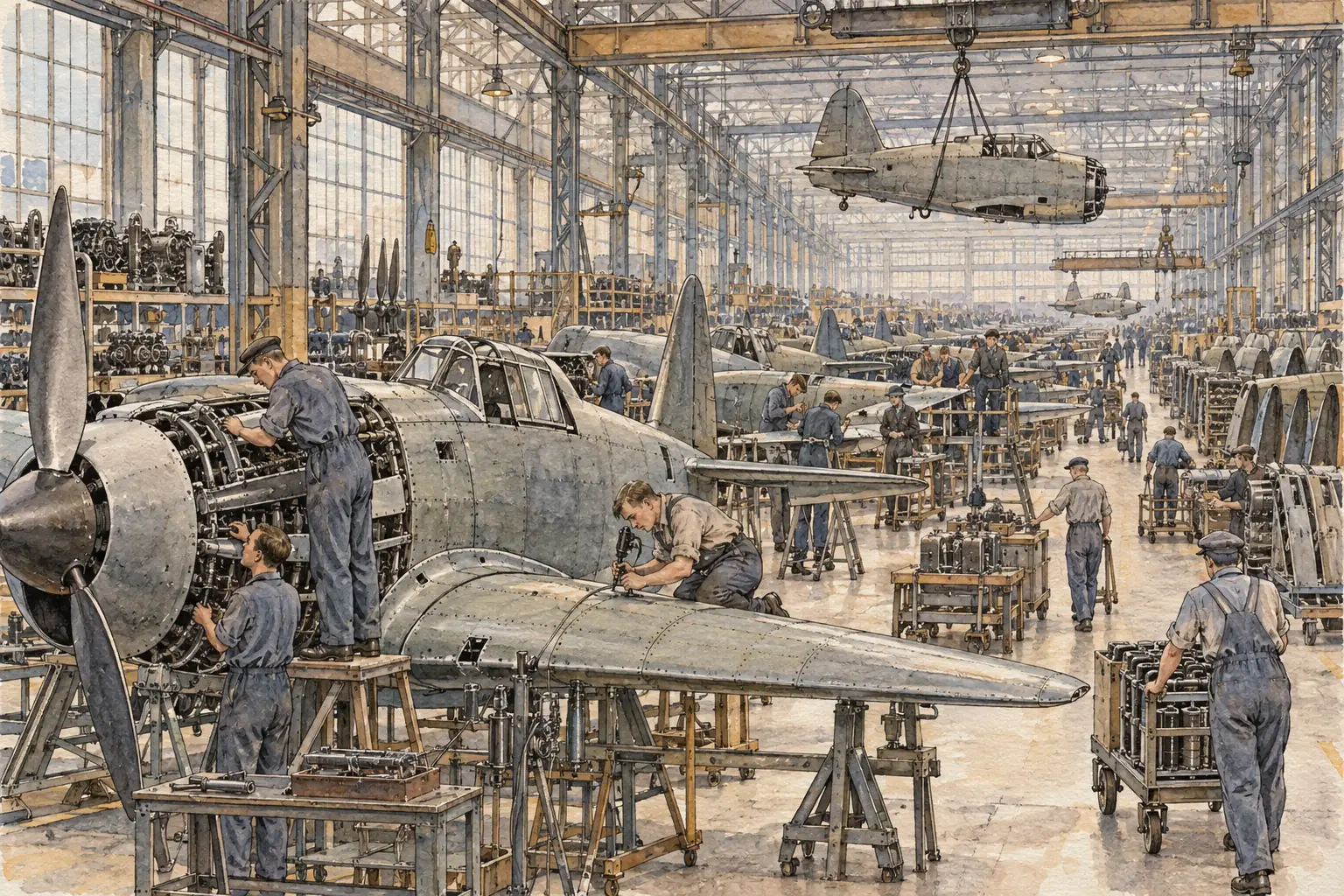
Rearmament became a cornerstone of Nazi economic policy, secretly beginning in 1933 and openly from 1935. This shift towards military expansion, coupled with conscription, significantly lowered unemployment by creating demand for labour in defence-related industries.
Impact of rearmament on job creation
- Industrial expansion - Factories producing weapons, vehicles, and aircraft saw rapid growth, employing workers in steel, chemicals, and engineering. By 1939, rearmament accounted for a large portion of industrial output.
- Conscription from 1935 - Mandatory military service for men aged 18–45 removed many from the unemployment register, while also training them for potential war. This directly reduced official jobless figures by integrating them into the armed forces.
- Economic multiplier effects - Increased production led to jobs in supporting sectors, such as raw materials extraction and transport, contributing to a broader recovery but prioritising military needs over civilian goods.
Explanation of 'invisible unemployment'
'Invisible unemployment' refers to methods used by the Nazi regime to artificially lower official unemployment statistics without creating genuine full-time jobs. These tactics hid the true extent of joblessness, presenting a facade of economic success.
Methods of creating 'invisible unemployment'
- Exclusion from statistics - Women were encouraged to leave the workforce for domestic roles, and their unemployment was no longer counted. Similarly, Jews were systematically removed from jobs and statistics as part of discriminatory policies.
- Short-time working - Many employees were placed on reduced hours or part-time contracts, which were not reflected as unemployment in official records.
- Public schemes and manipulation - Programmes like the RAD and other labour camps counted participants as employed, even if the work was temporary or unpaid. Statistical adjustments also reclassified certain groups to mask ongoing issues.
The use of deficit spending in economic recovery
Deficit spending involved government borrowing to fund large-scale projects and rearmament, disregarding balanced budgets to stimulate growth. This approach, influenced by economist Hjalmar Schacht initially and later by the Four Year Plan, underpinned much of the apparent recovery.
Features of deficit spending
- Funding mechanisms - The government issued 'Mefo bills' (a form of credit) to finance spending without immediate tax increases, allowing rapid investment in infrastructure and arms.
- Economic effects - This spending boosted demand, creating jobs and increasing industrial output. By 1936, it supported the Four Year Plan's aim of self-sufficiency, though it led to inflation risks and resource shortages.
- Long-term implications - While effective in reducing unemployment from 6 million in 1933 to under 1 million by 1939, it relied on unsustainable borrowing and prioritised war preparation over balanced development.
Groups that benefited and those excluded
The employment policies brought gains to certain segments of society, particularly those aligned with Nazi ideology, but left others marginalised. This selective approach reinforced social divisions and discriminatory practices.
Beneficiaries of employment policies
- Aryan men - Skilled and unskilled workers, especially in construction and manufacturing, gained stable jobs through public works and rearmament. Young men benefited from RAD training and conscription, which offered structure and purpose.
- Industrial sectors - Businesses in armaments and infrastructure profited from government contracts, leading to higher wages and overtime for employees.
Groups excluded from opportunities
- Women - Policies promoted traditional roles, excluding them from many jobs and statistics, limiting access to paid work despite labour shortages later in the decade.
- Jews and minorities - Discriminatory laws, such as the 1935 Nuremberg Laws, barred Jews from employment, forcing them into poverty or emigration. Political opponents and other 'undesirables' faced similar exclusion.
- Unskilled or rural workers - Those in short-time roles or temporary schemes often remained in precarious positions, with little long-term security or skill development.