1.3 - The Church, Crime & Punishment
Key facts and dates
The Christian Church held considerable power over crime and punishment in medieval England during the early 13th century, often providing alternatives to royal justice through religious practices and privileges. This influence sometimes created tensions with secular authorities, reflecting the Church's role as a competing source of authority.
Key facts to remember
- Trial by ordeal – Dangerous tests supervised by priests to determine guilt through divine judgement.
- 1215 – Pope's decree ends Church involvement in ordeals, prompting shift to jury trials.
- Sanctuary – Fugitives could seek refuge in churches for up to 40 days, avoiding immediate arrest.
- Benefit of clergy – Allowed trials in lenient Church courts, avoiding capital punishment.
- Church courts – Focused on mercy and reform rather than harsh penalties.
- Loopholes in justice – Practices like reciting Bible verses enabled some non-clergy to claim benefits.
- Decline of Church power – Royal authority strengthened in later centuries, reducing ecclesiastical influence.
Trial by ordeal and the Church's role
Image 1 of 2: Trial by hot iron, where the accused carried a red-hot bar for several paces
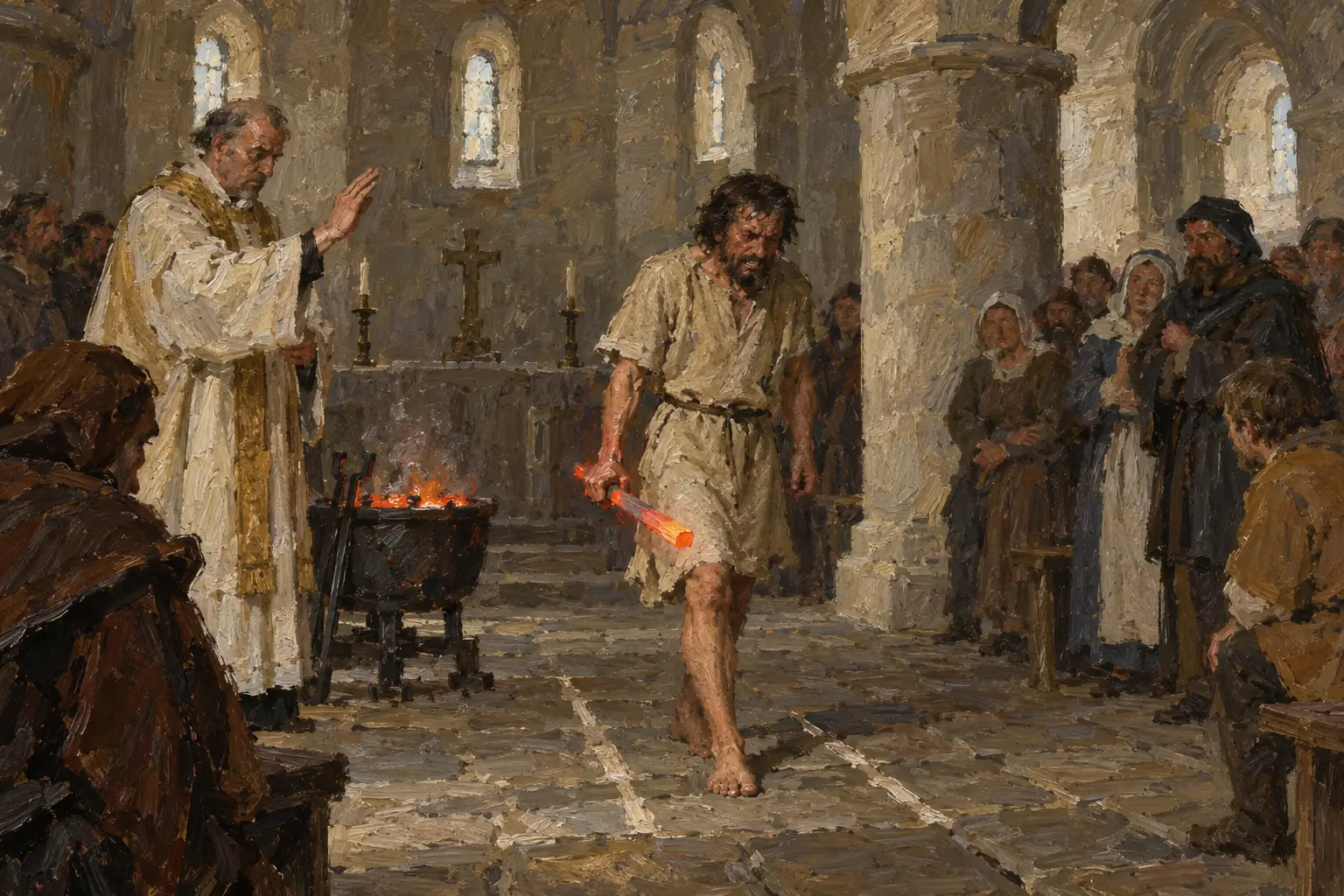
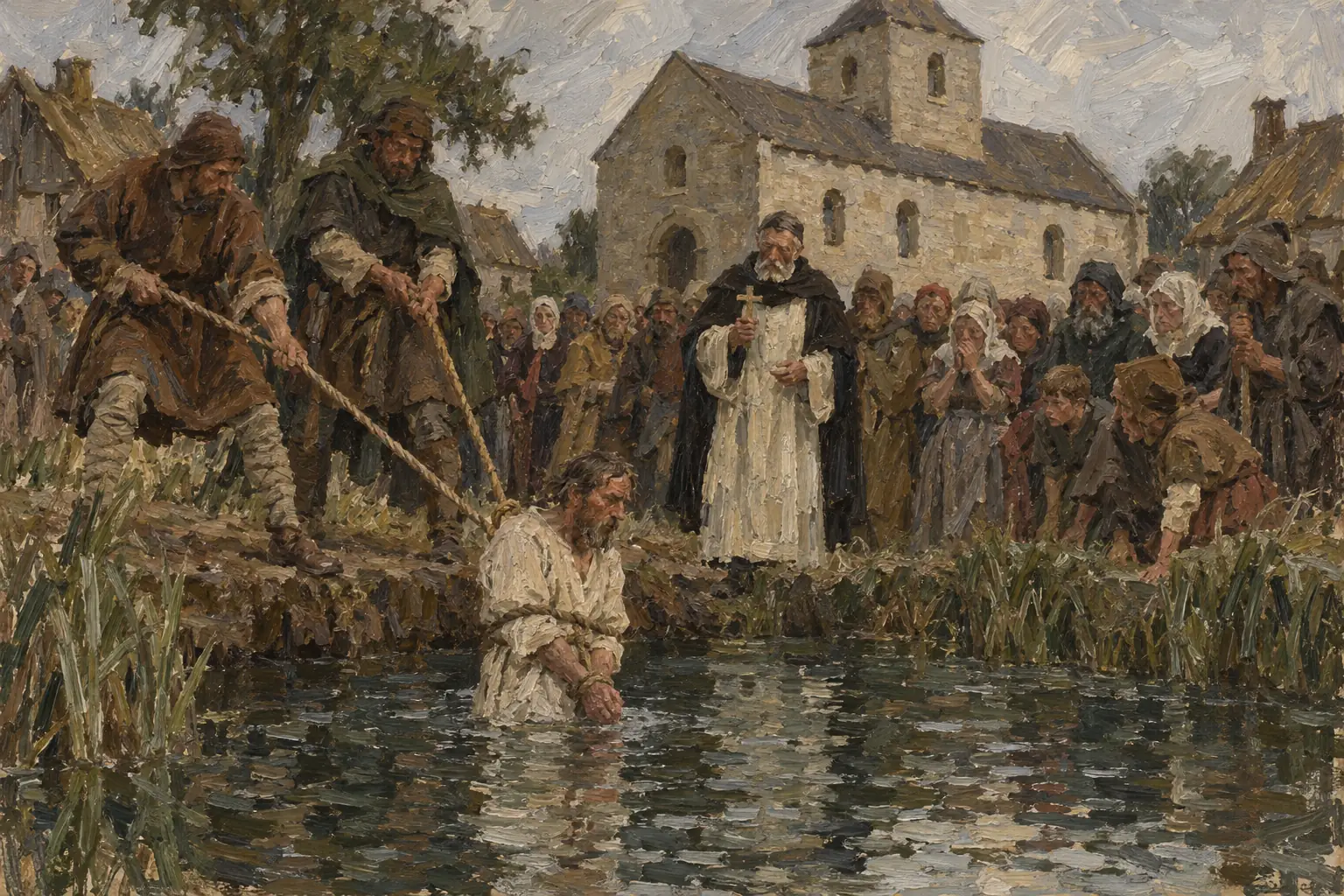
In early 13th-century England, the Christian Church played a central role in the administration of justice, particularly through practices that intertwined religious belief with legal processes. One key method was trial by ordeal, which relied on the idea that God would intervene to reveal the truth about an accused person's guilt or innocence.
Features of trial by ordeal
- Nature of the tests - Accused individuals faced painful or hazardous challenges, such as grasping a heated metal bar and walking several paces, or being bound and lowered into a body of water to see if they floated (indicating guilt) or sank (indicating innocence).
- Divine judgement - These ordeals were based on the belief that God would protect the innocent or punish the guilty, making the outcome a form of holy verdict.
- Supervision by priests - Clergy members oversaw the proceedings, blessing the instruments used and interpreting the results, which reinforced the Church's authority in matters of crime and morality.
The end of trial by ordeal in 1215
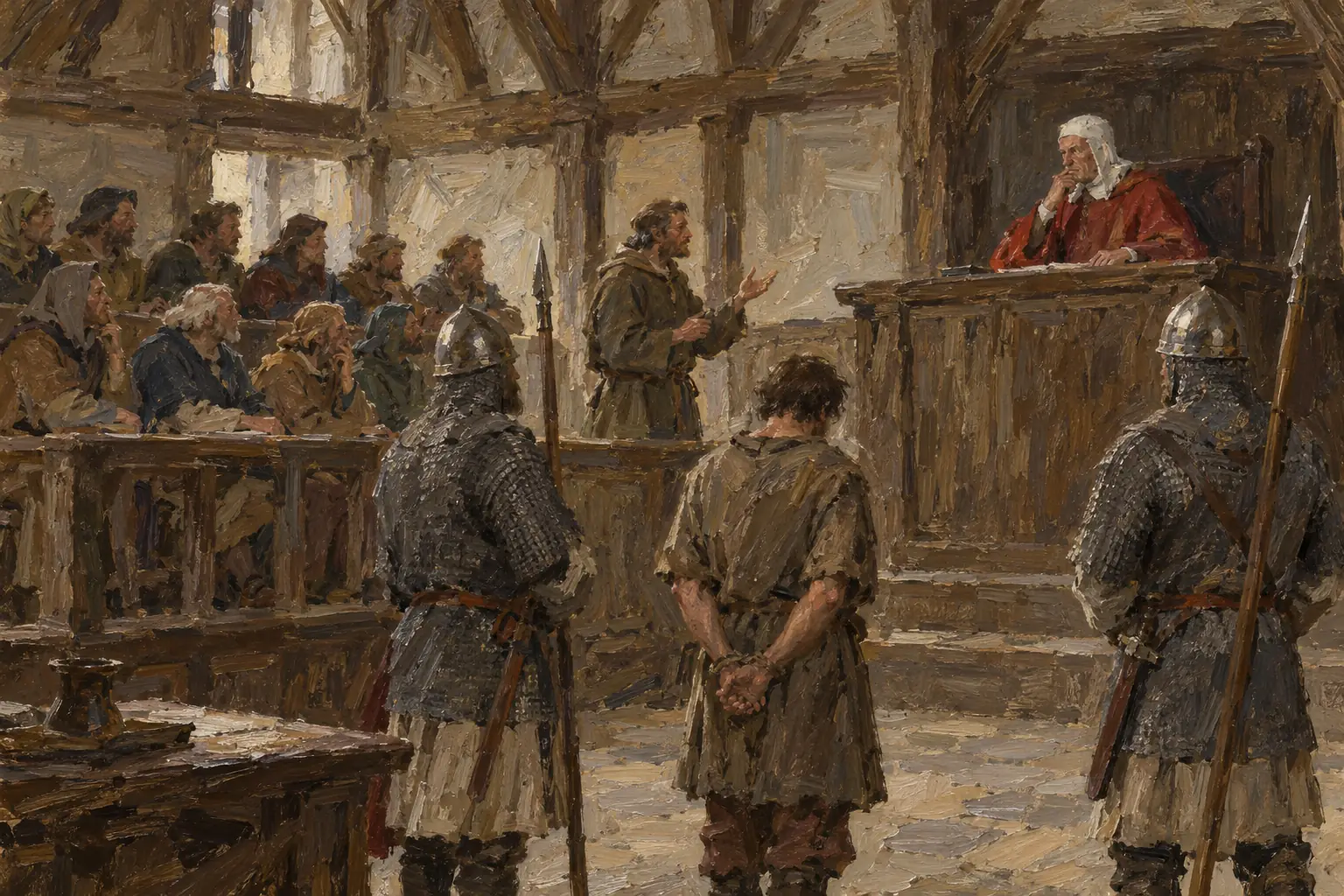
The practice of trial by ordeal came to an abrupt halt in 1215 due to a significant intervention by the Church hierarchy. This change marked a pivotal shift in how justice was delivered in England, moving away from religious rituals towards more secular methods.
Reasons for and consequences of the end of ordeals
- Papal decree - The Pope issued an order prohibiting priests from participating in ordeals, effectively removing the Church's endorsement and making the practice unsustainable.
- Impact on secular courts - Without clerical involvement, royal courts adopted alternative systems, such as trials by jury, where groups of local men decided guilt based on evidence rather than divine signs.
- Broader implications - This development highlighted growing tensions between Church and state, as it forced kings to strengthen their own judicial processes independent of religious oversight.
The Church's offering of sanctuary
Image 1 of 2: A fugitive claims sanctuary at a church door, safe from arrest for 40 days
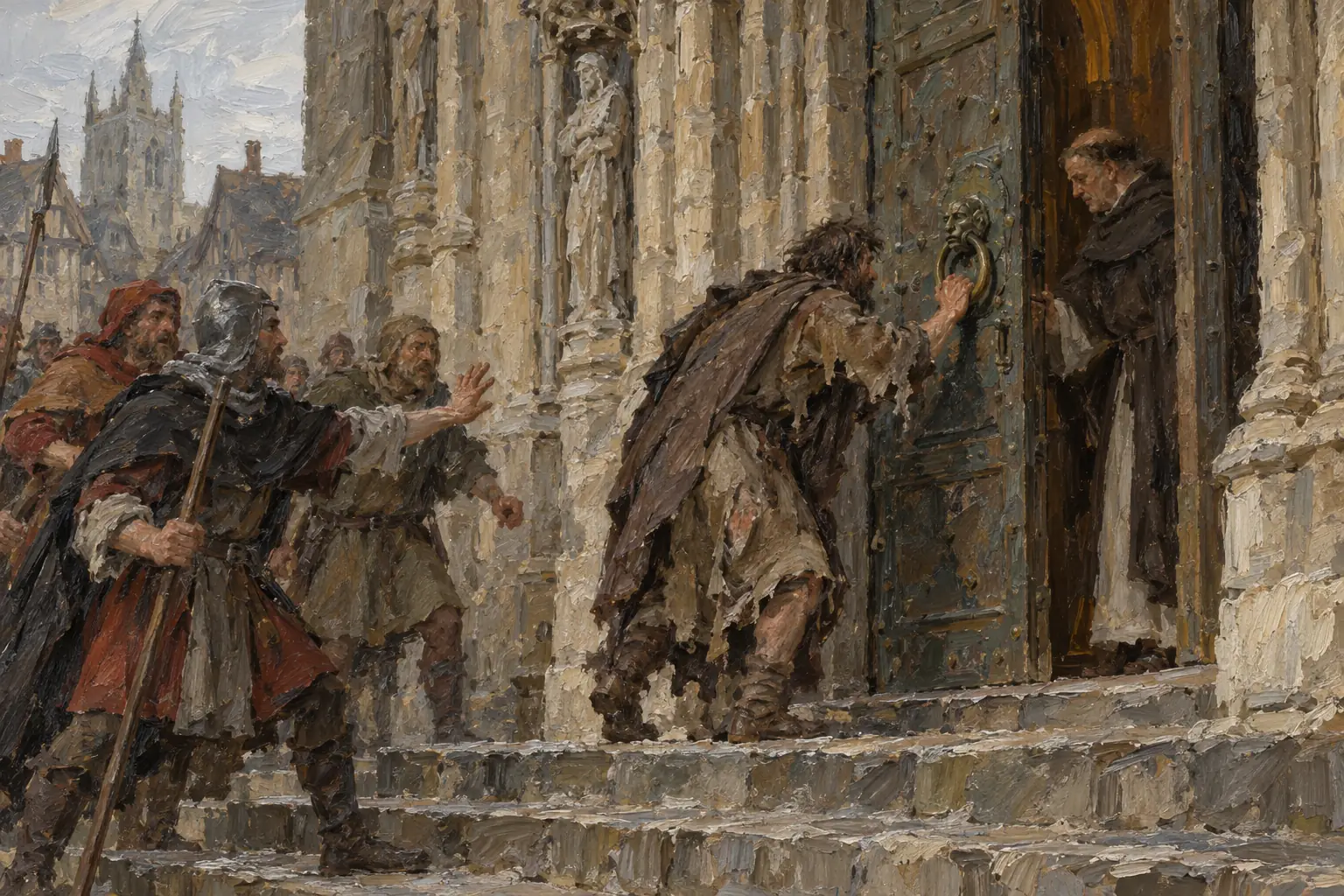
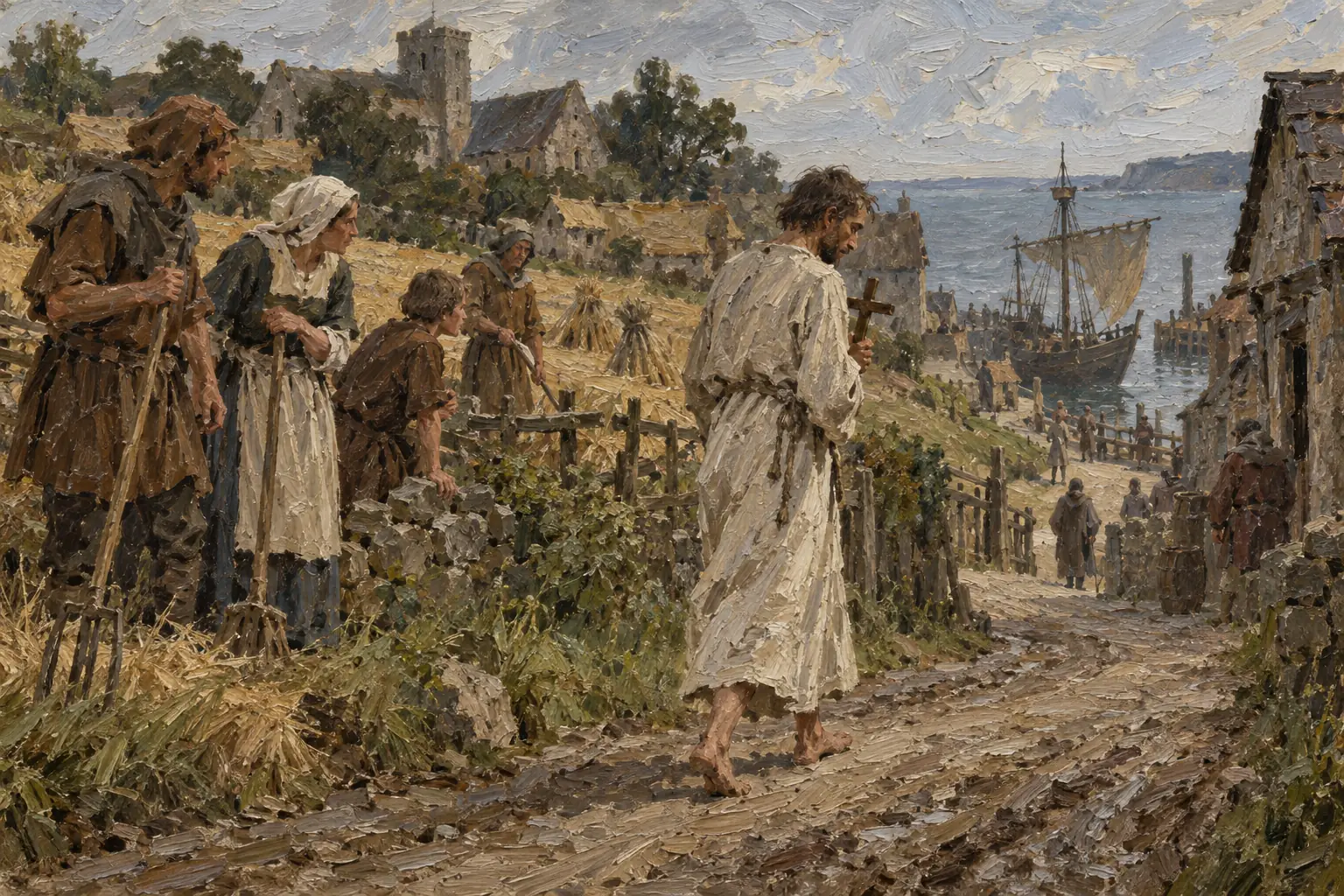
The Church provided a form of protection known as sanctuary, which allowed those accused of crimes to seek temporary refuge and avoid immediate punishment under royal law. This practice demonstrated the Church's commitment to mercy and its ability to challenge secular authority.
How sanctuary functioned
- Seeking refuge - Fugitives could enter a church or designated holy site and claim sanctuary, granting them immunity from arrest for a standard period of 40 days.
- Options after sanctuary - At the end of this time, individuals could opt to face trial in a royal court or confess and agree to permanent exile, often leaving the country via a specified port.
- Limitations and purpose - While it offered a chance for reflection and potential forgiveness, sanctuary was not indefinite and aimed to encourage repentance rather than enable permanent escape from justice.
Benefit of clergy and its implications
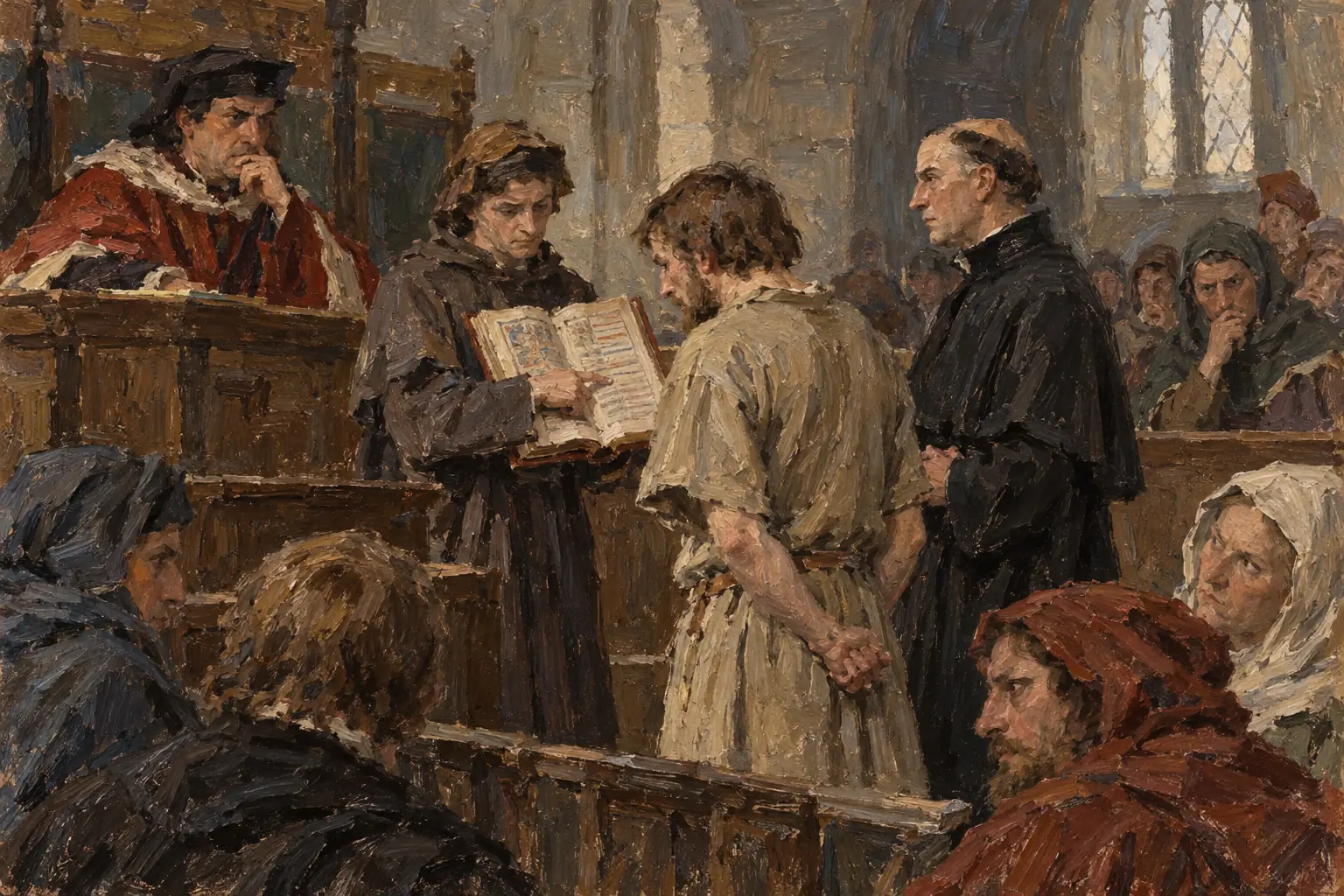
Benefit of clergy was a privilege that allowed certain individuals to be tried in Church courts rather than harsher royal ones, reflecting the Church's lenient approach to punishment. Over time, this became a way for some to evade severe penalties.
Key aspects of benefit of clergy
- Eligibility and process - Originally for ordained priests, it extended to anyone who could prove literacy by reciting a specific Bible passage (often Psalm 51, known as the "neck verse"), allowing them to claim clerical status.
- Differences in courts - Church courts emphasised spiritual reform and avoided executions, typically imposing lighter sentences like fines or penance, in contrast to royal courts' use of capital punishment for serious crimes.
- Abuse as a loophole - Many non-clergy exploited this by memorising the verse, leading to inconsistencies in justice and criticism that it undermined the king's authority.
Overall influence of the Church on justice
The Church's involvement in crime and punishment during the early 13th century created a dual system of justice, where religious authority often competed with or tempered royal power. Practices like sanctuary and benefit of clergy introduced elements of mercy but also led to uneven application of the law.
Effects of Church interventions
- Provision of mercy - By offering alternatives to harsh secular penalties, the Church positioned itself as a source of compassion, allowing for rehabilitation over retribution in some cases.
- Undermining uniform justice - These privileges could protect the guilty or create perceptions of favoritism, especially when exploited, which sometimes frustrated royal efforts to enforce consistent laws.
- Shift in power dynamics - As kings consolidated authority in later centuries, the Church's influence waned, leading to more centralised secular control over legal matters and a decline in religious loopholes.