2.1 - Changing Definitions of Criminal Activity
Key facts and dates
The period from 1500 to 1700 saw both continuity in traditional crimes and significant changes in how criminal activity was defined, largely influenced by religious reforms and social upheavals. These developments reflected broader anxieties about order, morality, and authority in early modern England.
Timeline of key events
- Early 1500s – English Reformation begins, leading to heresy becoming a punishable crime under Tudor monarchs.
- 1534 – Act of Supremacy under Henry VIII equates refusal to accept monarch's religious authority with treason.
- 1542 – First Witchcraft Act passed, making witchcraft a criminal offence punishable by death.
- 1563 – Updated Witchcraft Act strengthens penalties amid growing fears of magic and harm.
- Late 1500s – Vagabondage laws intensify, with punishments like whipping for unemployed wanderers.
- 1604 – Final major Witchcraft Act under James I reinforces death penalty for sorcery.
Continuity in common crimes
Many types of criminal activity in the period from 1500 to 1700 showed strong similarities to those in the medieval era. Everyday offences such as theft, assault, and murder continued to form the core of criminal behaviour, with little change in their basic definitions or the ways they were addressed by authorities.
Persistent common crimes
- Theft - Stealing property or goods remained a widespread offence, often punished through fines or physical penalties, much as in earlier times.
- Assault - Physical violence against others continued to be a common crime, typically handled through local courts with sanctions like imprisonment.
- Murder - Intentional killing stayed a severe offence, carrying the death penalty in serious cases, reflecting ongoing societal condemnation.
These enduring crimes highlight how fundamental breaches of personal safety and property rights persisted across centuries, even as other aspects of criminality evolved.
Emergence of heresy during the English Reformation
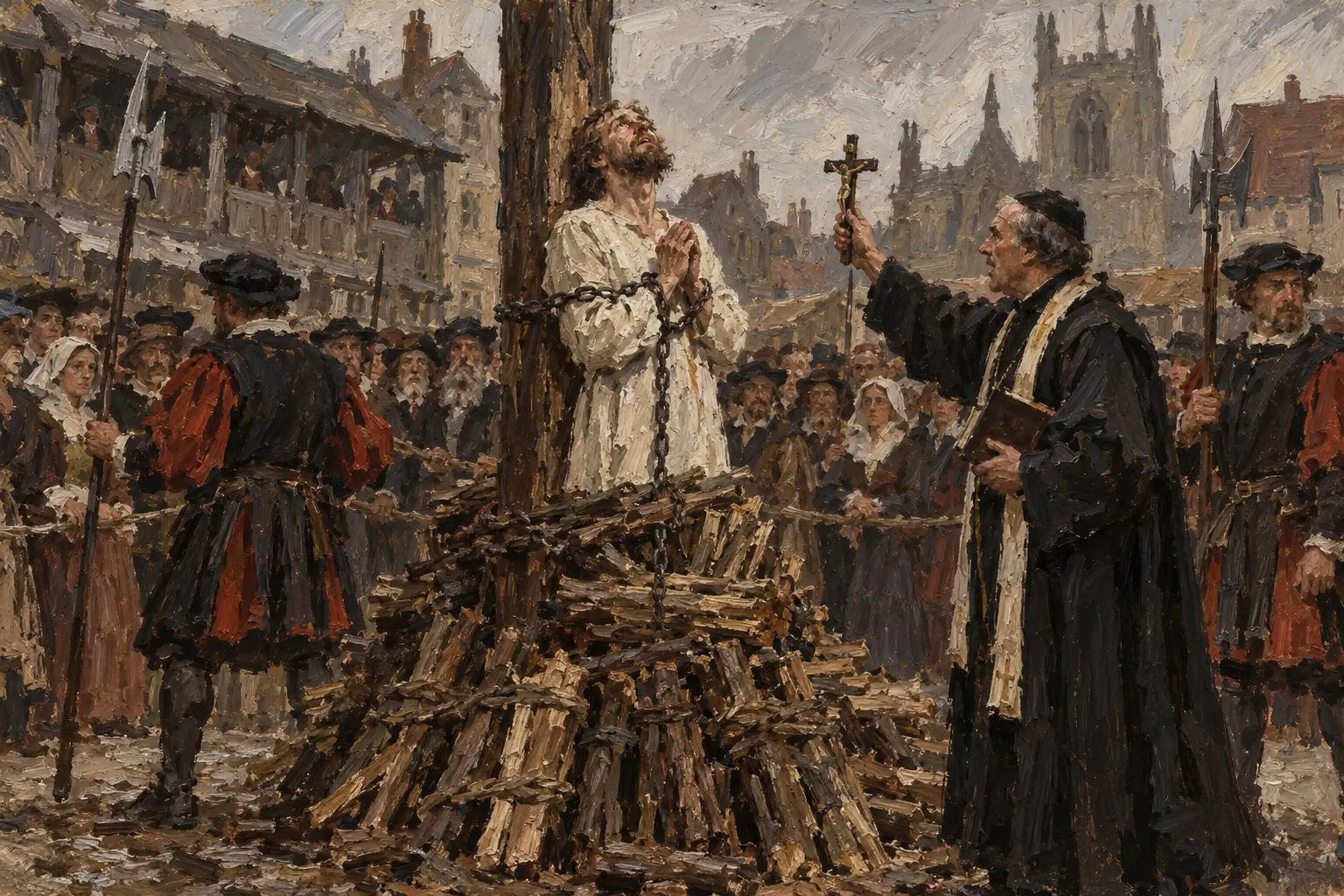
The English Reformation in the 16th century introduced heresy as a major crime, shifting it from a purely religious matter to one enforced by the state. Beliefs that contradicted the official Church doctrine were criminalised, particularly under Tudor rulers who linked religious conformity to political loyalty.
Key aspects of heresy as a crime
- Definition and enforcement - Heresy involved holding or expressing views against the established religion, leading to trials and executions for those who refused to align with the monarch's faith.
- Tudor examples - Monarchs like Henry VIII and Mary I used heresy laws to suppress dissent, with penalties including burning at the stake for persistent offenders.
- Religious drivers - The split from the Catholic Church created divisions, making non-conformity a threat to national unity and royal authority.
This change expanded the scope of crime to include ideological offences, reflecting the era's turbulent religious landscape.
Treason and its overlap with religious issues
Treason, defined as actions aimed at harming or plotting against the monarch or government, gained heightened importance during this period. Its severity increased due to frequent overlaps with religious conflicts, where disloyalty in faith was often equated with betrayal of the state.
Characteristics of treason in the era
- Expanded definition - Treason encompassed not just direct plots but also religious non-compliance, such as refusing to acknowledge the monarch's supremacy over the Church.
- Overlap with heresy - Under Henry VIII, denying the king's religious authority was treated as both heresy and treason, punishable by execution or attainder (loss of rights and property).
- Political context - Religious divisions, like those between Catholics and Protestants, fueled treason accusations, with trials often serving to eliminate perceived threats to stability.
This intensification underscored how treason became a tool for maintaining control amid religious and political unrest.
New crimes of vagabondage and witchcraft
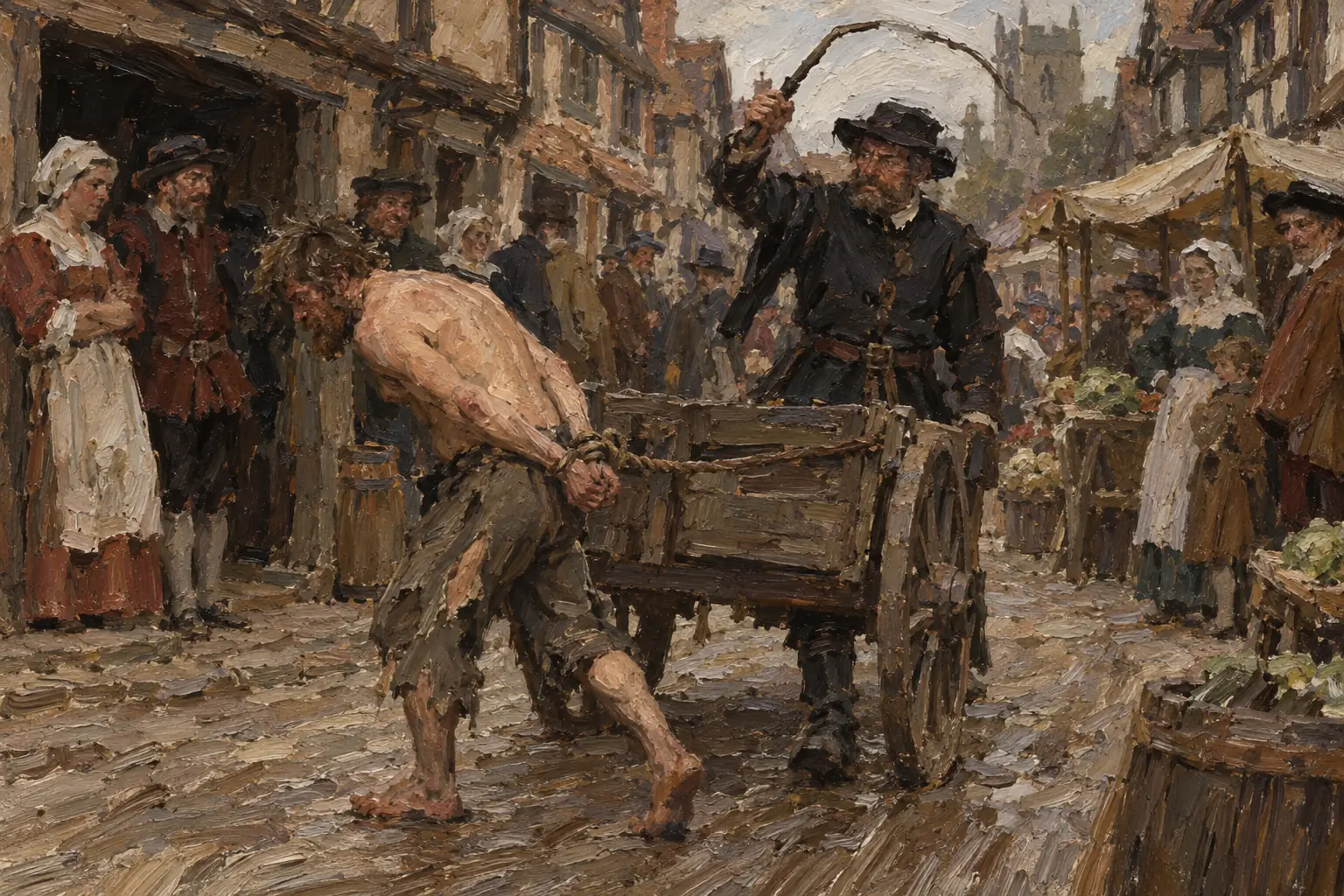
Social and economic pressures led to the criminalisation of new behaviours, notably vagabondage and witchcraft. These were seen as threats to the social order, prompting specific laws to address them.
Vagabondage as a crime
- Context and definition - Vagabondage referred to wandering without employment, viewed as a danger due to rising poverty and unemployment, which authorities feared could lead to disorder.
- Punishments - Tudor laws imposed harsh penalties, such as whipping, branding, or compulsory labour in Houses of Correction, to deter vagrancy and enforce work.
Witchcraft as a criminal offence
- Shift in handling - Witchcraft, involving the use of magic to cause harm, moved from ecclesiastical oversight to state prosecution, with death sentences for those convicted.
- Key legislation - Acts in 1542, 1563, and 1604 formalised witchcraft as a capital crime, reflecting growing societal paranoia about supernatural threats.
These new crimes illustrate how definitions expanded to target perceived moral and social dangers.
Factors influencing changing definitions of crime
While core crimes remained consistent, the period's religious, social, and economic upheavals drove expansions in what was considered criminal. This reflected deeper societal anxieties about maintaining order and morality.
Key influences on crime definitions
- Religious changes - The Reformation heightened fears of dissent, criminalising heresy and linking it to treason to enforce uniformity.
- Social and economic pressures - Poverty, unemployment, and plagues increased vagabondage, prompting laws to control the itinerant poor.
- Moral and cultural fears - Religious zeal and superstitions amplified witchcraft prosecutions, with economic hardships fueling accusations against suspected witches.
- Broader societal anxieties - Overall, these factors expanded crime to include offences against the social and moral order, beyond traditional physical harms.