5.3 - Western Front: Medical Roles & Evacuation
Key facts and dates
Medical treatment on the Western Front during the First World War evolved to handle massive casualties through structured organisation and evacuation processes. The system expanded rapidly as the conflict intensified, incorporating new technologies and volunteer support to improve survival rates.
Timeline of key events
- 1914 – Initial reliance on small medical corps and horse-drawn ambulances, with public pressure leading to introduction of motor ambulances by late in the year.
- 1915–1916 – Motor ambulances become more widespread, often donated by civilians and groups like the Red Cross; X-ray machines appear in casualty clearing stations.
- 1916–1917 – Construction of the underground hospital at Arras, equipped for 700 patients, in preparation for major offensives.
- 1917 – Underground hospital operates during the Battle of Arras but is evacuated after shell damage.
- Late war years – Blood transfusion facilities emerge in some casualty clearing stations, alongside use of hospital trains and canal barges for smoother transport.
Organisation and roles of the RAMC and nurses
Image 1 of 2: Trained nurses of the QAIMNS cared for the wounded alongside RAMC orderlies and VAD volunteers
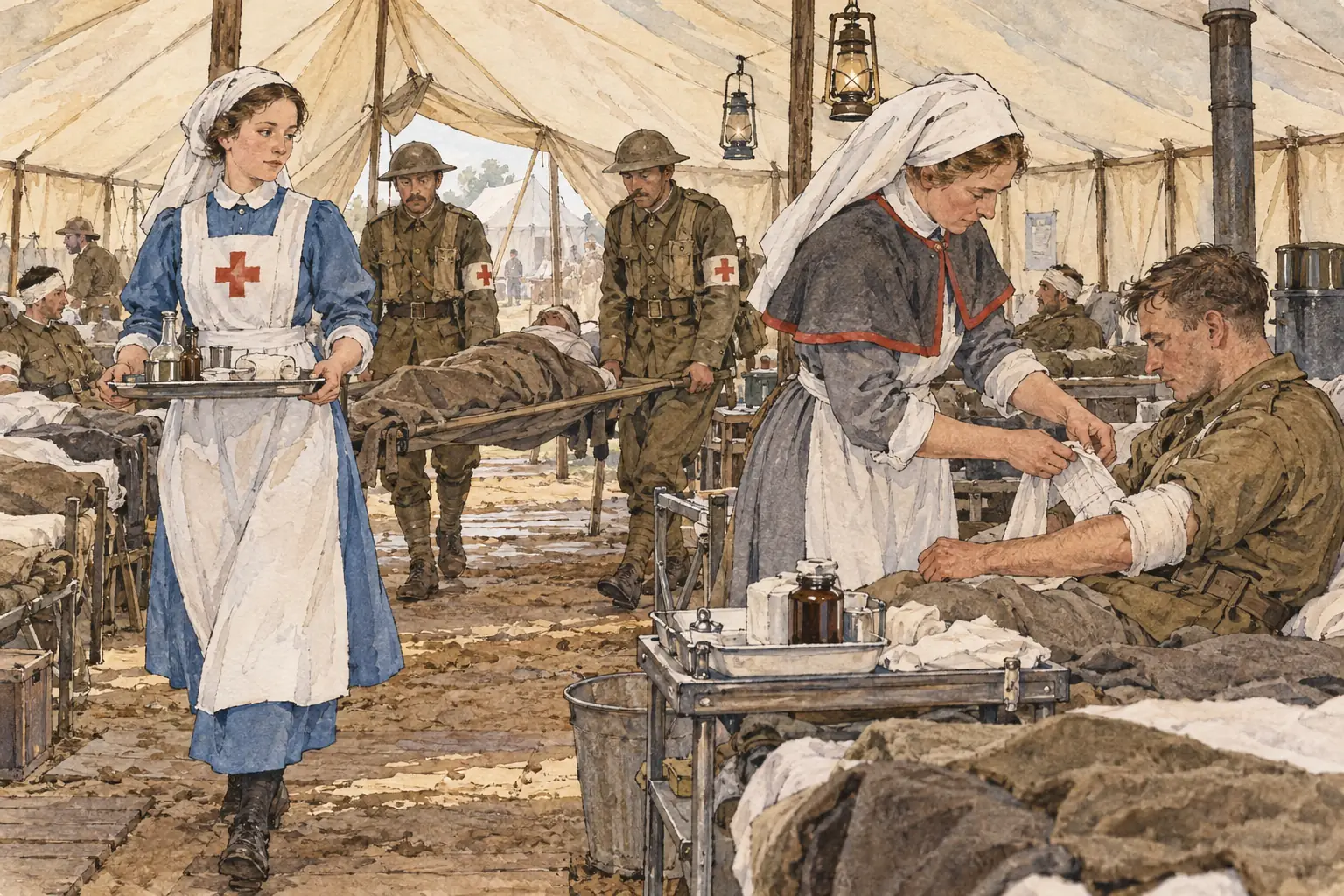
The British Army's medical services on the Western Front were coordinated to manage high volumes of wounded soldiers. At the war's outset, resources were limited, but they grew substantially as the conflict progressed, involving both professional and volunteer personnel.
Key components of medical organisation
- Royal Army Medical Corps (RAMC) - This formed the backbone of army medical care, encompassing doctors, orderlies, stretcher-bearers, and administrative staff. It expanded from a modest size in 1914 to handle the demands of trench warfare.
- Nursing services - Trained nurses from the Queen Alexandra’s Imperial Military Nursing Service (QAIMNS) provided essential care, particularly in surgical assistance and patient comfort at advanced facilities. Volunteer groups, such as Voluntary Aid Detachments (VADs), contributed by staffing hospitals, while the First Aid Nursing Yeomanry (FANY) supported through ambulance driving and unit assistance, later becoming formally integrated.
Roles in medical care
- Doctors and medical officers - Focused on diagnosis, emergency procedures, and triage decisions to prioritise treatment.
- Orderlies and stretcher-bearers - Handled immediate aid, transport of casualties, and basic support under hazardous conditions.
- Nurses - Delivered ongoing care, managed wards, assisted in operations, and offered emotional support, playing a vital role in recovery at stations and hospitals.
The chain of evacuation system
A structured evacuation process was developed to transport injured soldiers from the front lines to advanced medical care. This multi-stage approach ensured progressive treatment, starting with basic stabilisation and escalating to specialised interventions, adapting to the challenges of battlefield conditions.
Purpose and structure of the evacuation chain
The system aimed to minimise delays in care while protecting medical staff and patients from enemy fire. Wounded personnel moved through several levels, with resources increasing at each step to cope with severe injuries during intense fighting.
Key stages in the chain of evacuation
Image 1 of 3: At the regimental aid post, near the front line, a medical officer gave immediate first aid
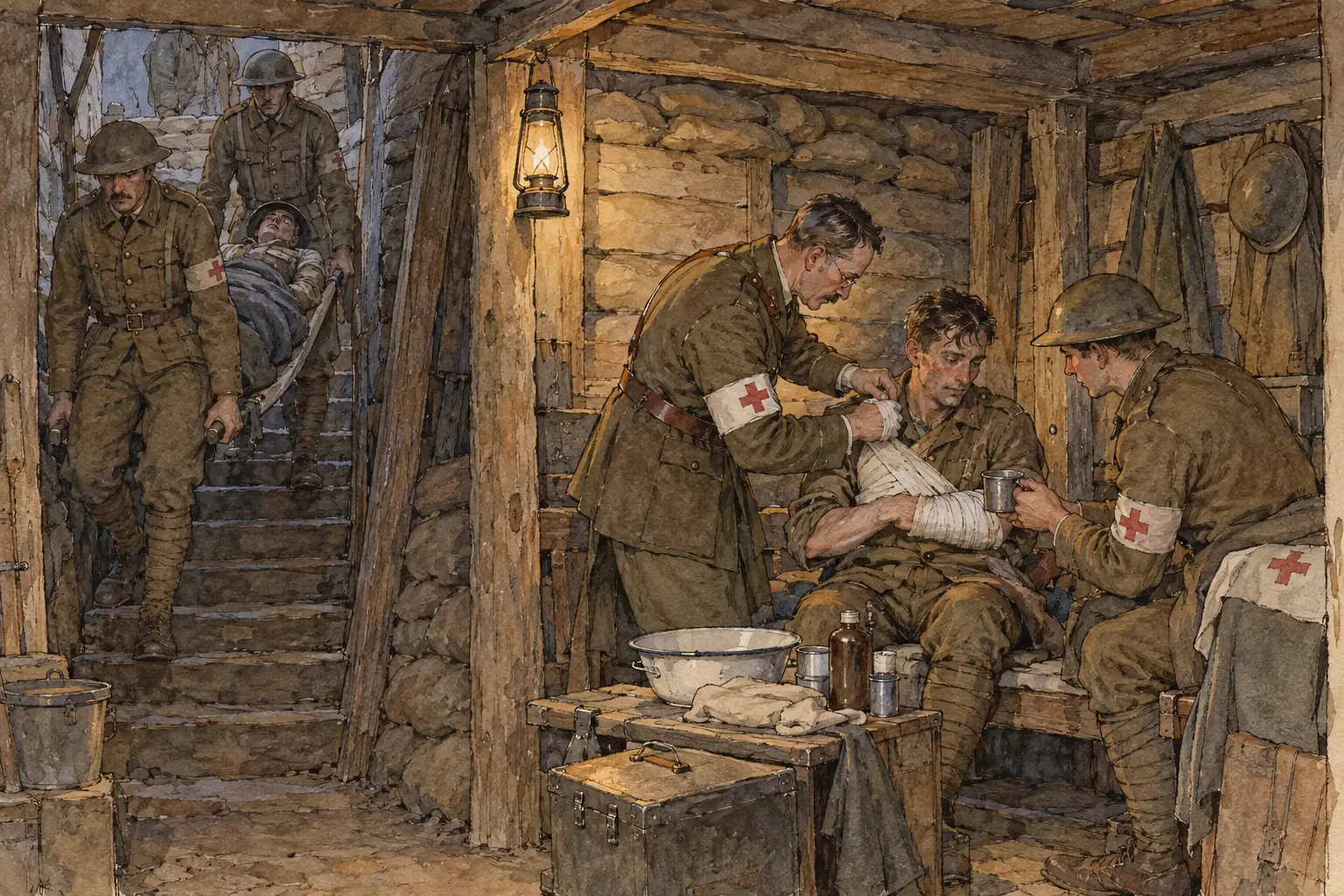
The evacuation chain consisted of distinct stages, each providing escalating levels of medical intervention. These facilities were positioned at varying distances from the trenches to balance accessibility and safety.
Stages of medical treatment and evacuation
| Stage | Location and setup | Key treatments and roles | Distance from front |
|---|---|---|---|
| Regimental aid post (RAP) | In trenches or dugouts near the front line | Immediate first aid, such as bandaging wounds, controlling bleeding, and administering pain relief; run by a medical officer with orderlies | Very close (within trenches) |
| Dressing stations (advanced and main) | Slightly behind lines in bunkers or ruined buildings | Triage of casualties, emergency fixes like limb splinting or anti-tetanus injections; operated by field ambulance units | A few hundred metres to 1.5 kilometres |
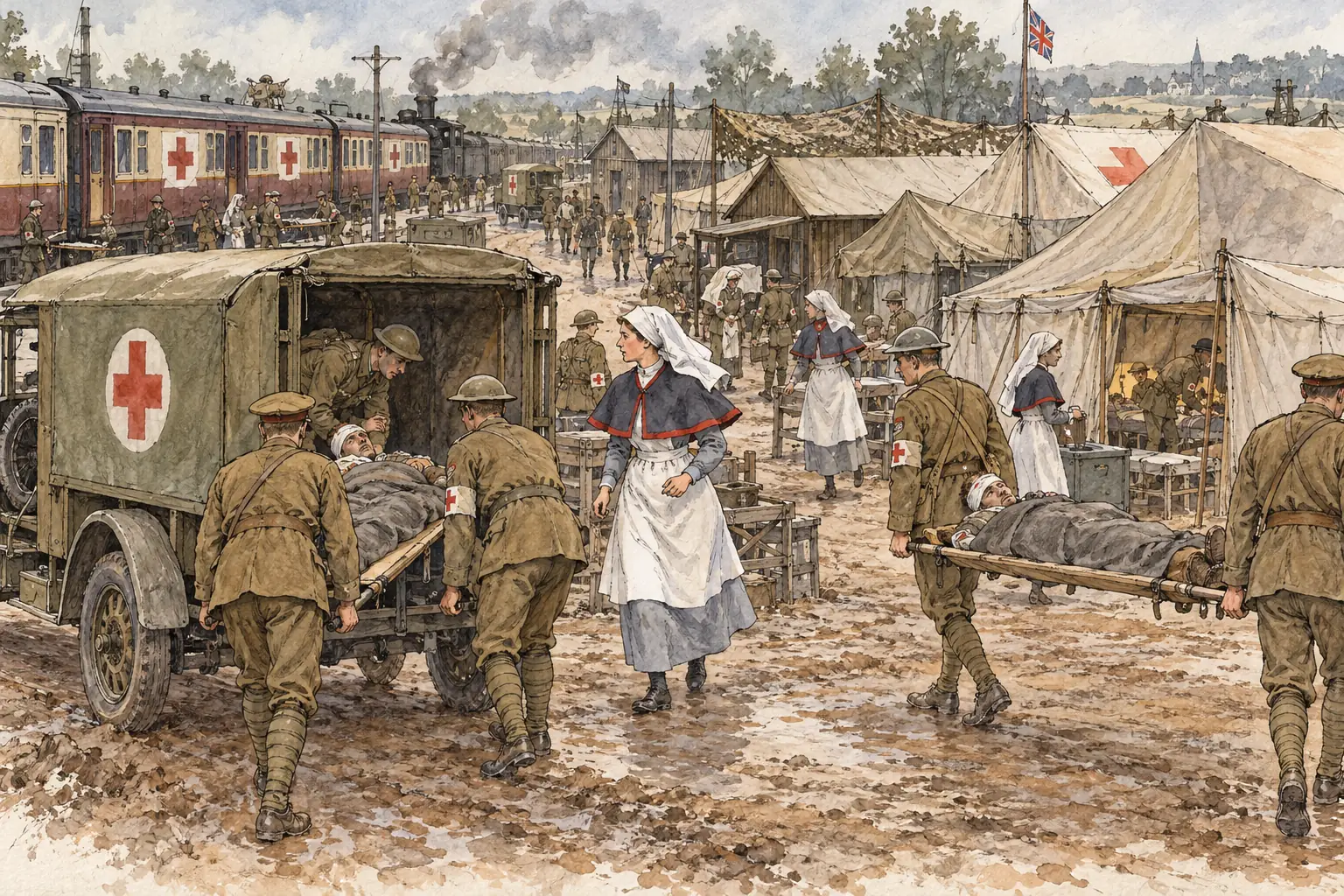
| Casualty clearing station (CCS) | A few kilometres back, often in tents or huts near rail lines | Major surgeries including amputations and shrapnel removal; equipped with X-rays and later blood transfusions; staffed by doctors and nurses | Several kilometres |
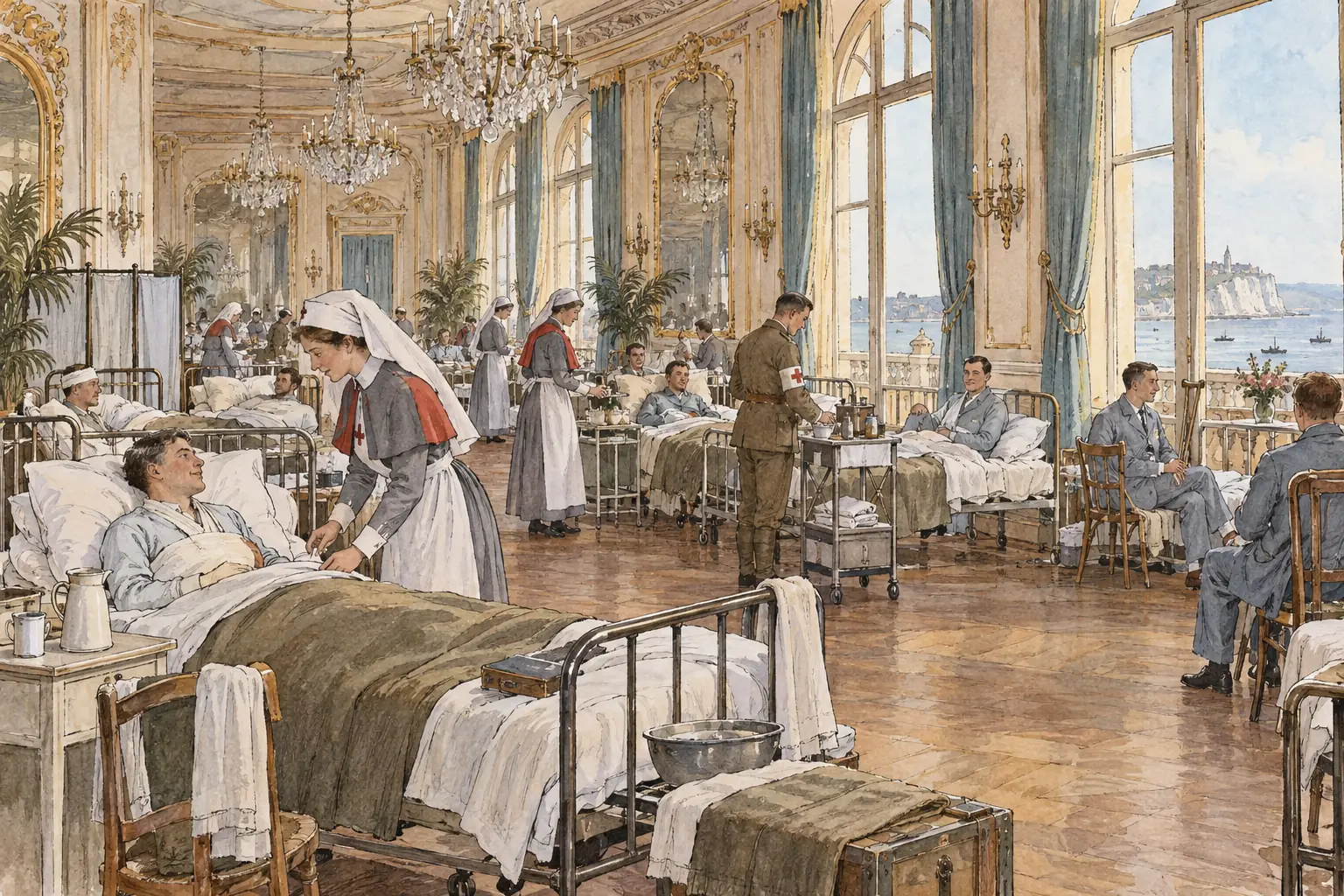
| Base hospitals | In coastal towns or ports, using buildings like hotels or large tent complexes | Long-term care in specialised wards (e.g., for burns or eye injuries); included labs and recovery facilities | 30–80 kilometres |
From base hospitals, stable patients could be transferred to Britain via ships or trains for extended rehabilitation.
Transport methods used in evacuation
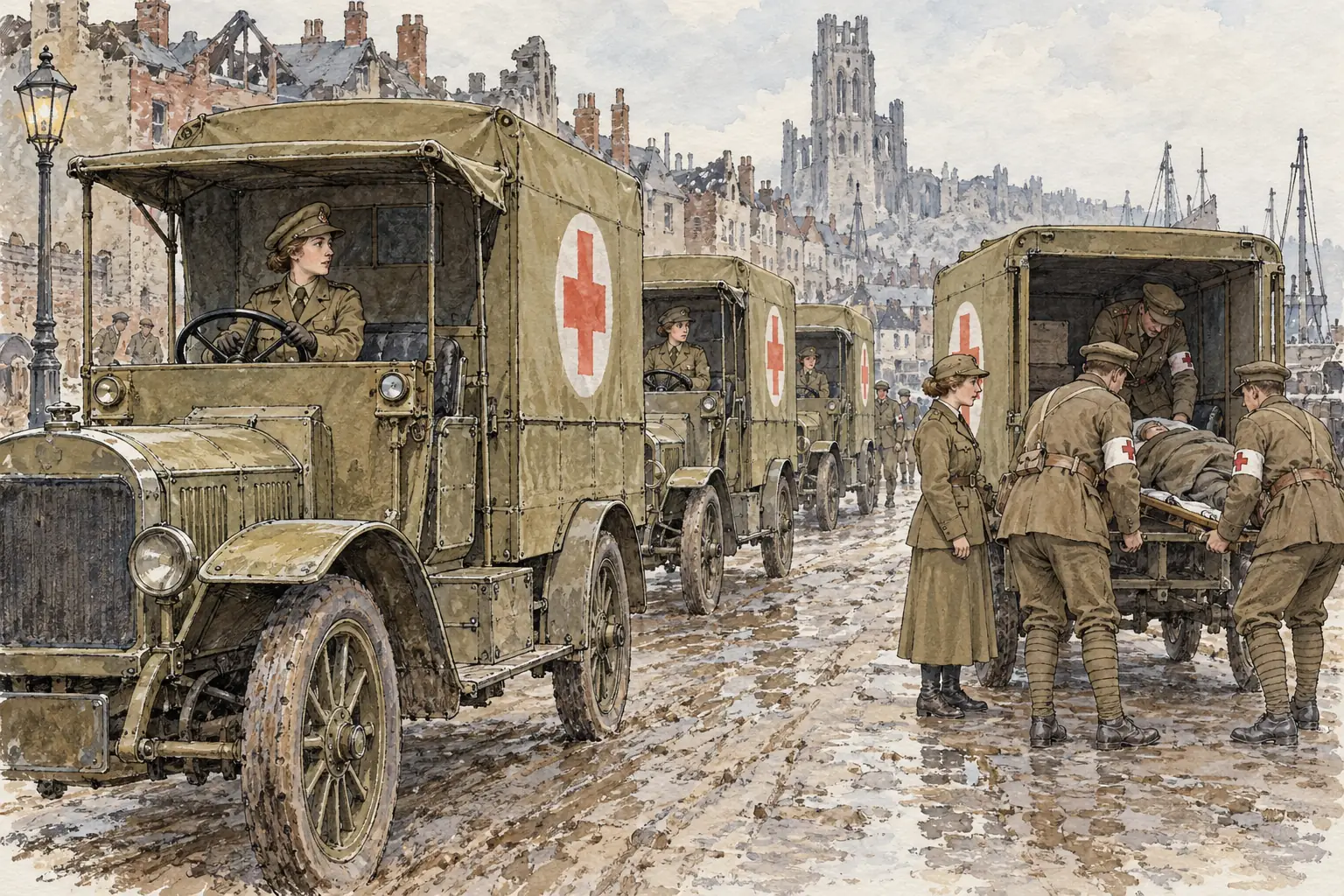
Image 1 of 2: Motor ambulances, many donated by civilians, were increasingly common by 1915
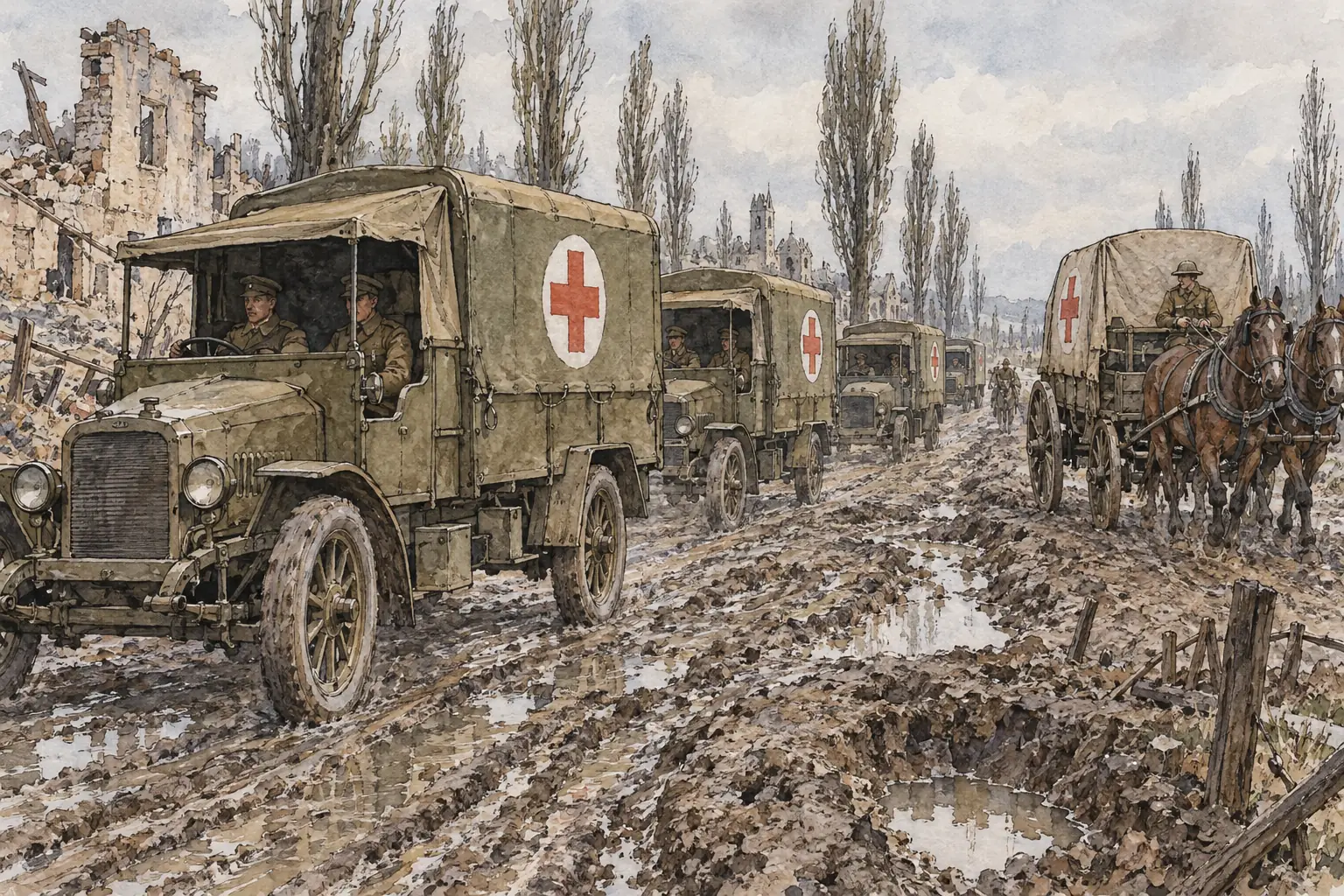
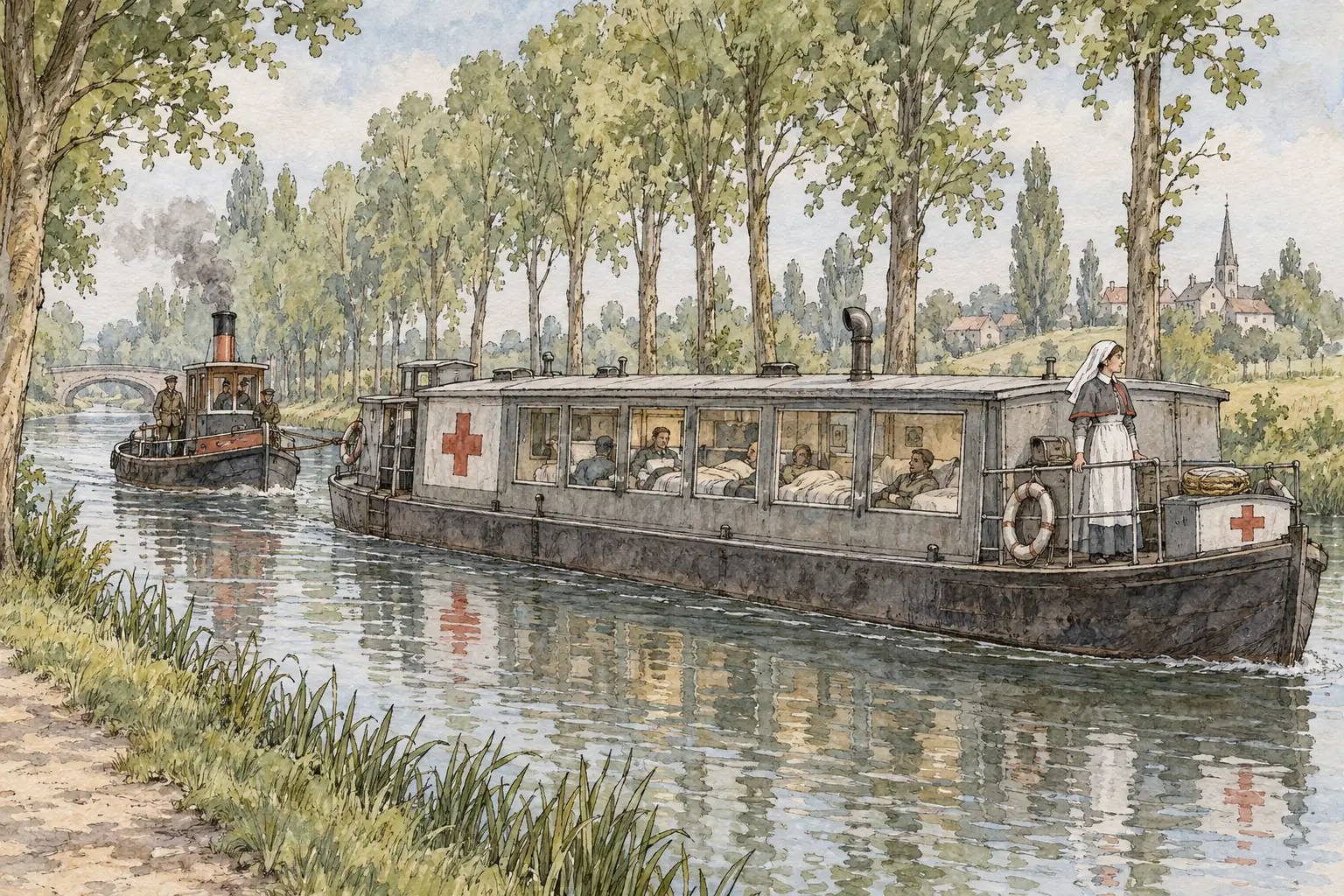
Efficient transport was essential for the evacuation chain, evolving from basic methods to more advanced options as the war continued. Initial approaches were slow and uncomfortable, but improvements reduced mortality by speeding up movement.
Evolution of transport options
| Transport method | Description and use |
|---|---|
| Stretcher-bearers | Teams of four carried casualties manually from the front to initial aid posts, often enduring shellfire and fatigue. |
| Horse-drawn ambulances | Used early on for short distances, though they were bumpy and inefficient on rough terrain. |
| Motor ambulances | Introduced from late 1914 due to civilian donations and pressure from reports of untreated wounded; faster on roads and increasingly common by 1915. |
| Hospital trains and canal barges | Trains with bunks and surgical cars moved patients from clearing stations to bases; barges provided gentler transport for severely injured over waterways. |
Special facilities: Arras underground hospital
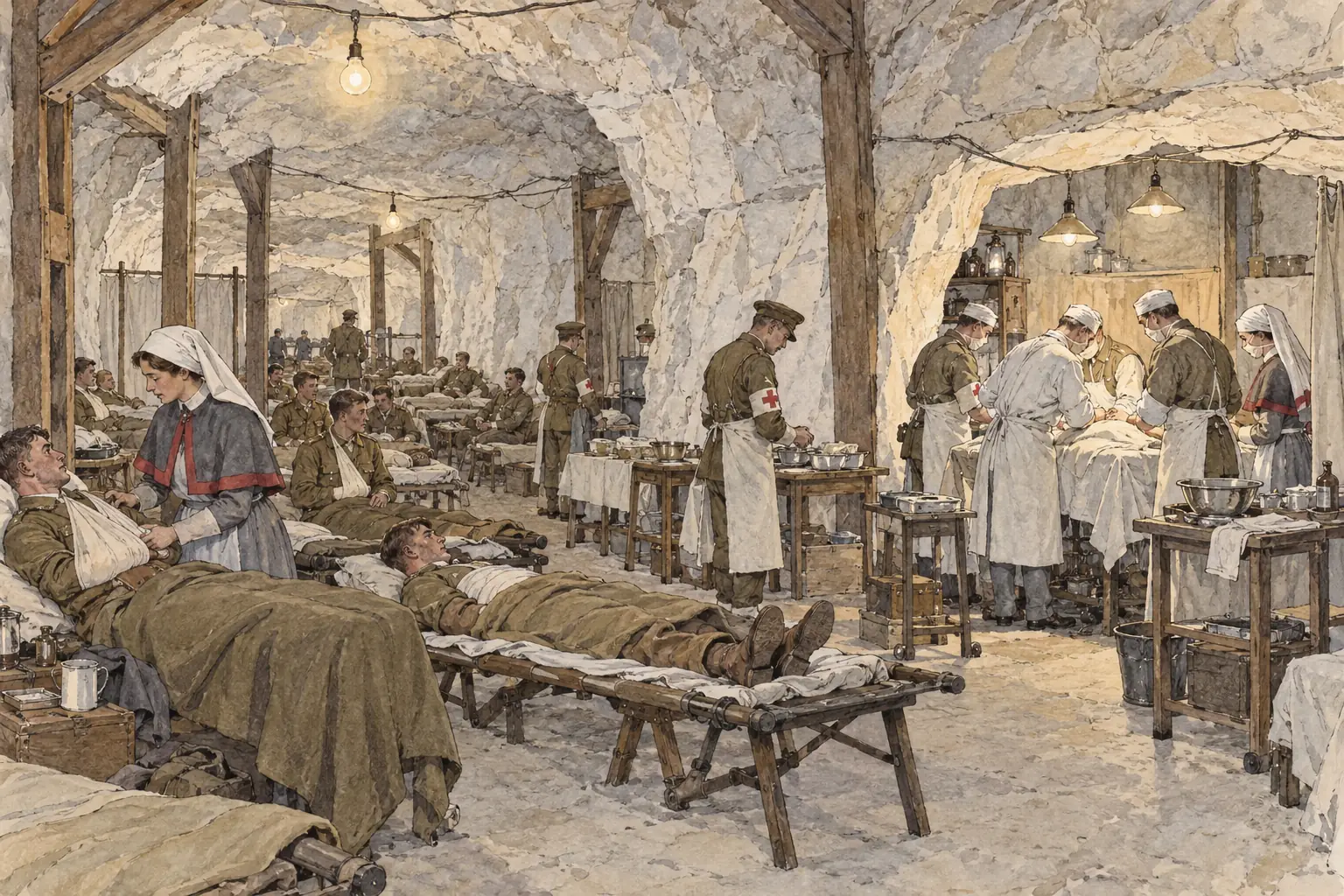
Certain innovations addressed the dangers of surface-level treatment during major battles. One notable example was a subterranean medical centre created to protect casualties and staff from artillery bombardment.
Features of the underground hospital at Arras
- Development and capacity - Built in 1916–1917 within existing tunnels beneath Arras, it accommodated up to 700 beds, complete with operating theatres, lighting, and water systems.
- Operational use - Served during the 1917 Arras offensive, offering sheltered care close to the action.
- Challenges and legacy - Evacuated after sustaining shell damage, it demonstrated the adaptability of medical services but highlighted ongoing risks in frontline healthcare.