5.1 - Western Front: Context & Terrain
Key facts and dates
The British sector of the Western Front during the First World War was characterised by static trench warfare across Belgium and northern France, where geography and infrastructure heavily influenced military operations and medical responses. The following timeline outlines major battles and developments that shaped this theatre of war.
Timeline of key events
- 1914 – First Battle of Ypres establishes the Ypres Salient, marking the start of entrenched positions in waterlogged Flanders terrain.
- 1916 – Battle of the Somme results in over a million casualties along the Somme River, highlighting the scale of trench-bound attrition.
- 1917 – Battle of Arras features extensive underground tunnelling for troop movements and medical evacuations beneath the city.
- 1917 – Third Battle of Ypres (Passchendaele) sees devastating mud conditions, with heavy rain turning the battlefield into impassable quagmires.
- 1917 – Battle of Cambrai introduces the first large-scale use of tanks, improving some aspects of mobility and medical logistics.
Overview of the British sector
The Western Front formed a continuous line of static warfare stretching approximately 700 kilometres from the North Sea coast through Belgium and northern France to the Swiss border. British forces, alongside their allies, occupied a significant portion of this front, engaging in prolonged trench-based campaigns from 1914 to 1918. This sector became synonymous with attritional battles, where advances were minimal and casualties immense, creating unique demands on medical services that had to adapt to entrenched positions and limited mobility.
Key locations and battles in the British sector
Image 1 of 2: The Ypres Salient's low-lying clay soil became waterlogged, and at Passchendaele in 1917 heavy rain turned the battlefield into mud
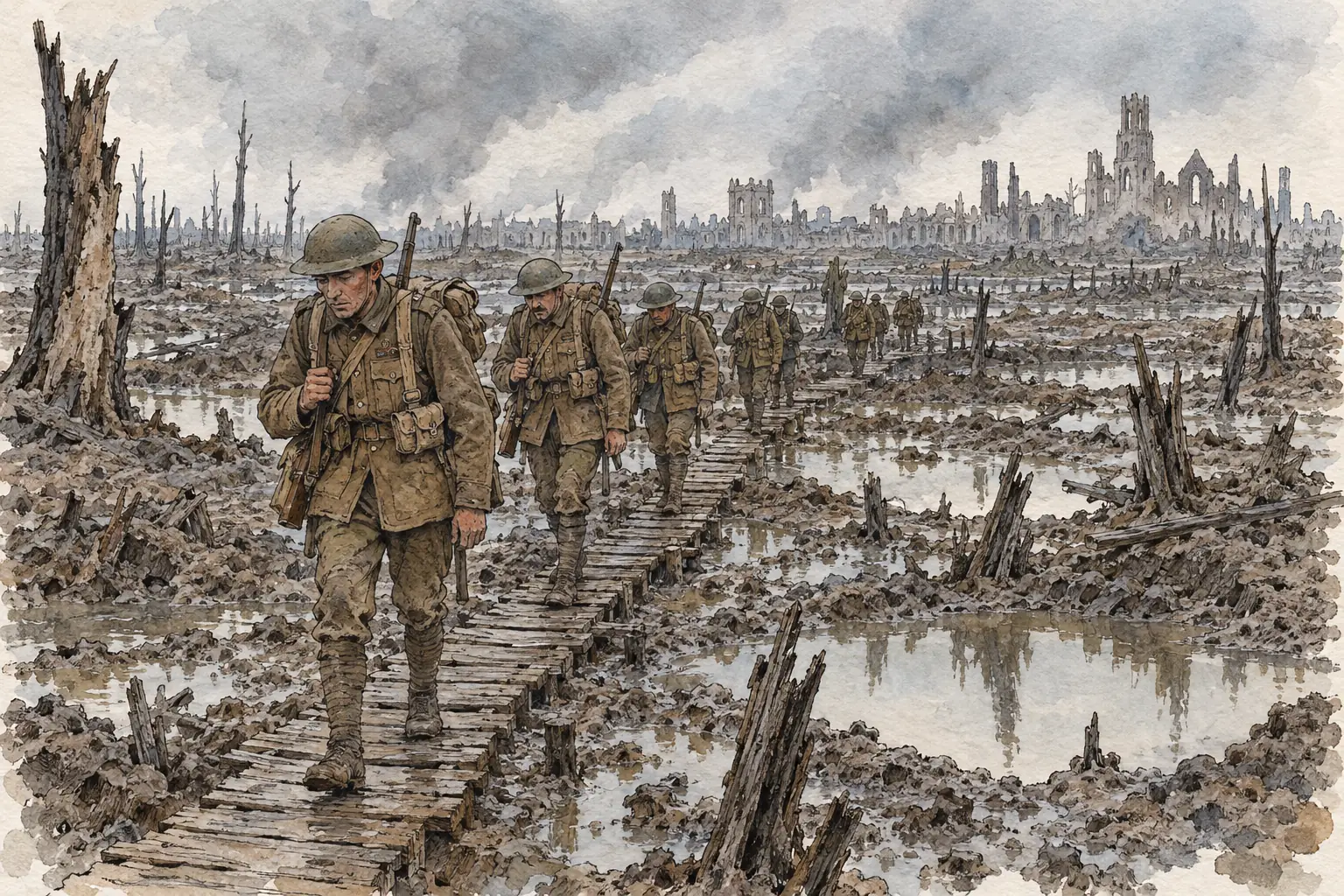
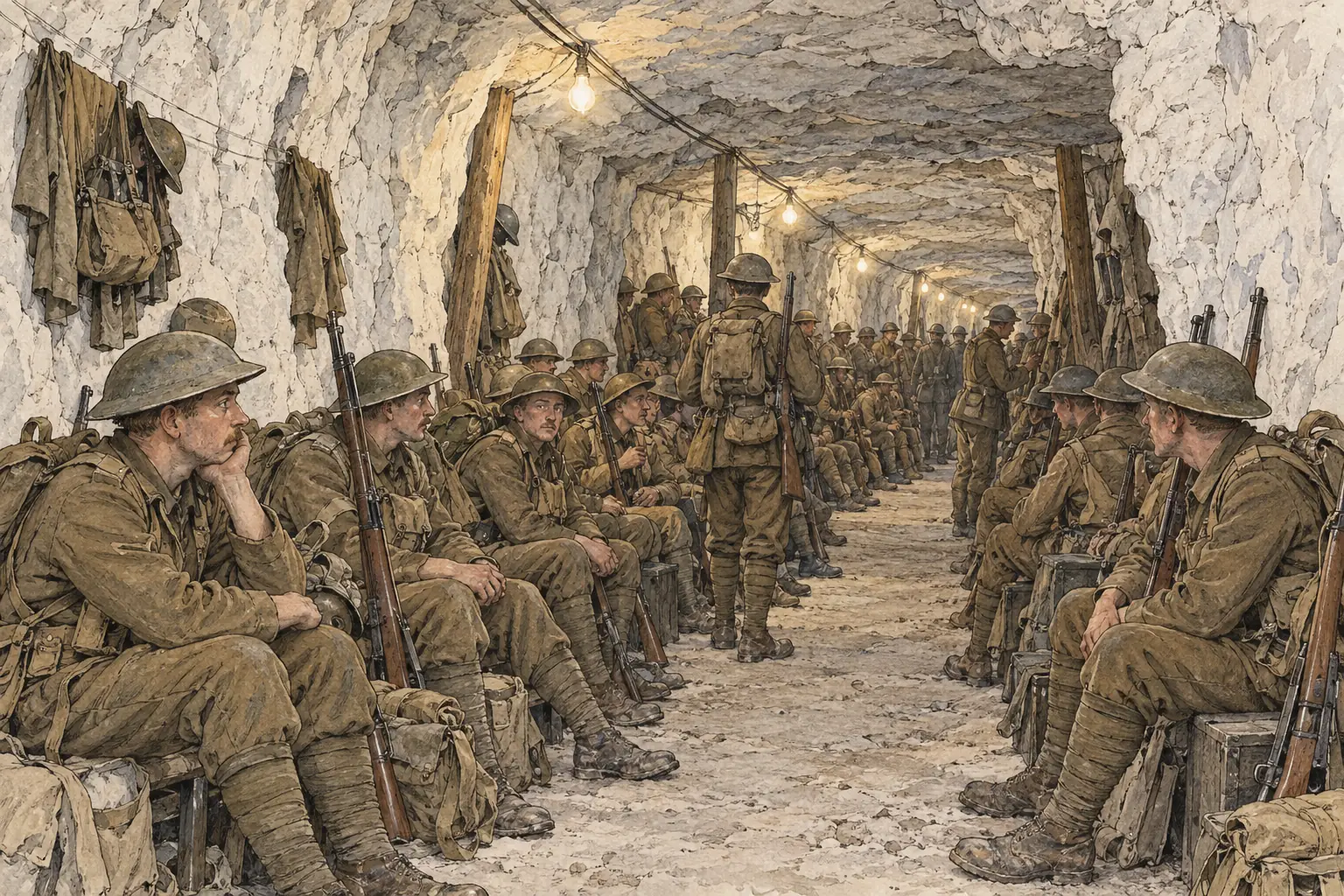
Several key areas in the British sector highlighted the geographical diversity and tactical challenges of the Western Front. These locations not only defined major offensives but also influenced how medical care was delivered amid varying terrains and combat intensities.
Significant sites and their characteristics
- Ypres Salient in Flanders (1914-1917) - A bulging frontline around Ypres, scene of multiple battles; its low-lying, clay-heavy soil became notoriously waterlogged, complicating evacuations and increasing infection risks from contaminated wounds.
- Somme River area (1916) - Site of the Battle of the Somme, involving chalky downlands that turned to mud under bombardment; the offensive produced hundreds of thousands of casualties, overwhelming medical facilities with the sheer volume of injured soldiers.
- Arras (1917) - Featured urban combat with ancient quarries repurposed as tunnels for shelter and movement; these underground networks aided in protecting medical posts from shellfire and facilitating quicker casualty transport.
- Cambrai (1917) - Known for the inaugural mass deployment of tanks on flatter terrain; this innovation briefly enhanced mobility, allowing better coordination of medical evacuations and marking progress in logistical support for the wounded.
Structure and organisation of the trench system
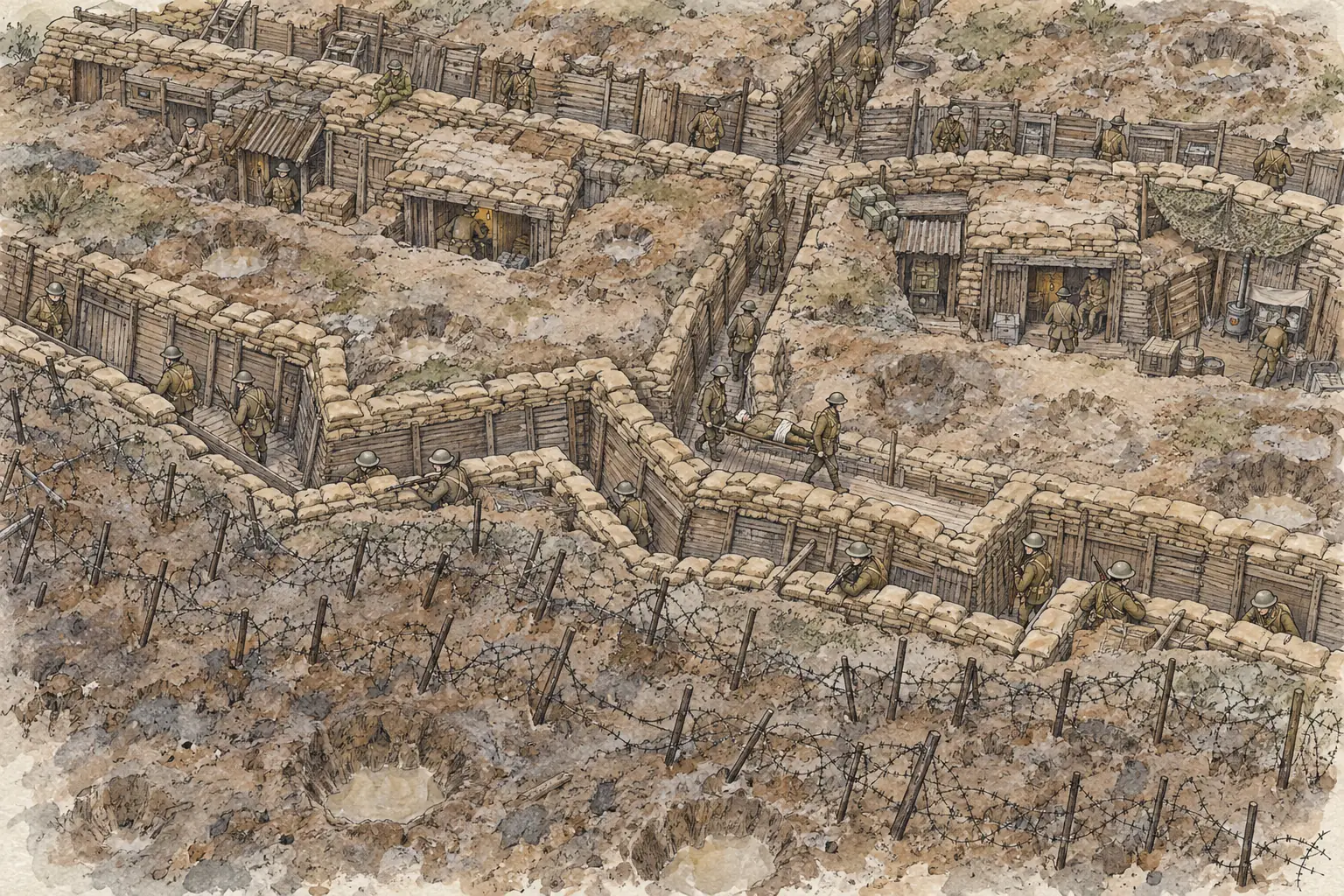
Trenches served as the primary defensive structures on the Western Front, designed to protect soldiers from artillery and small-arms fire while enabling supply and reinforcement movements. The system was meticulously organised to maintain frontline integrity and support operations.
Components of the trench network
- Frontline trenches - Positioned closest to the enemy, these were where active fighting occurred, often exposed to direct assaults and requiring rapid medical responses for immediate casualties.
- Support trenches - Located just behind the frontline, providing a fallback position for retreats and staging areas for supplies, including basic medical aid stations.
- Reserve trenches - Further back, housing reinforcements and more established facilities like dressing stations for initial wound treatment.
- Communication trenches - Narrow passages linking the main trenches, allowing safe movement of troops, equipment, and stretcher-bearers under cover.
Trenches followed a zig-zag pattern to contain explosions and prevent enfilade fire. They were reinforced with sandbags for stability, fronted by dense barbed wire entanglements to deter attacks, and included dugouts—underground shelters—for protection during bombardments.
Harsh conditions within the trenches
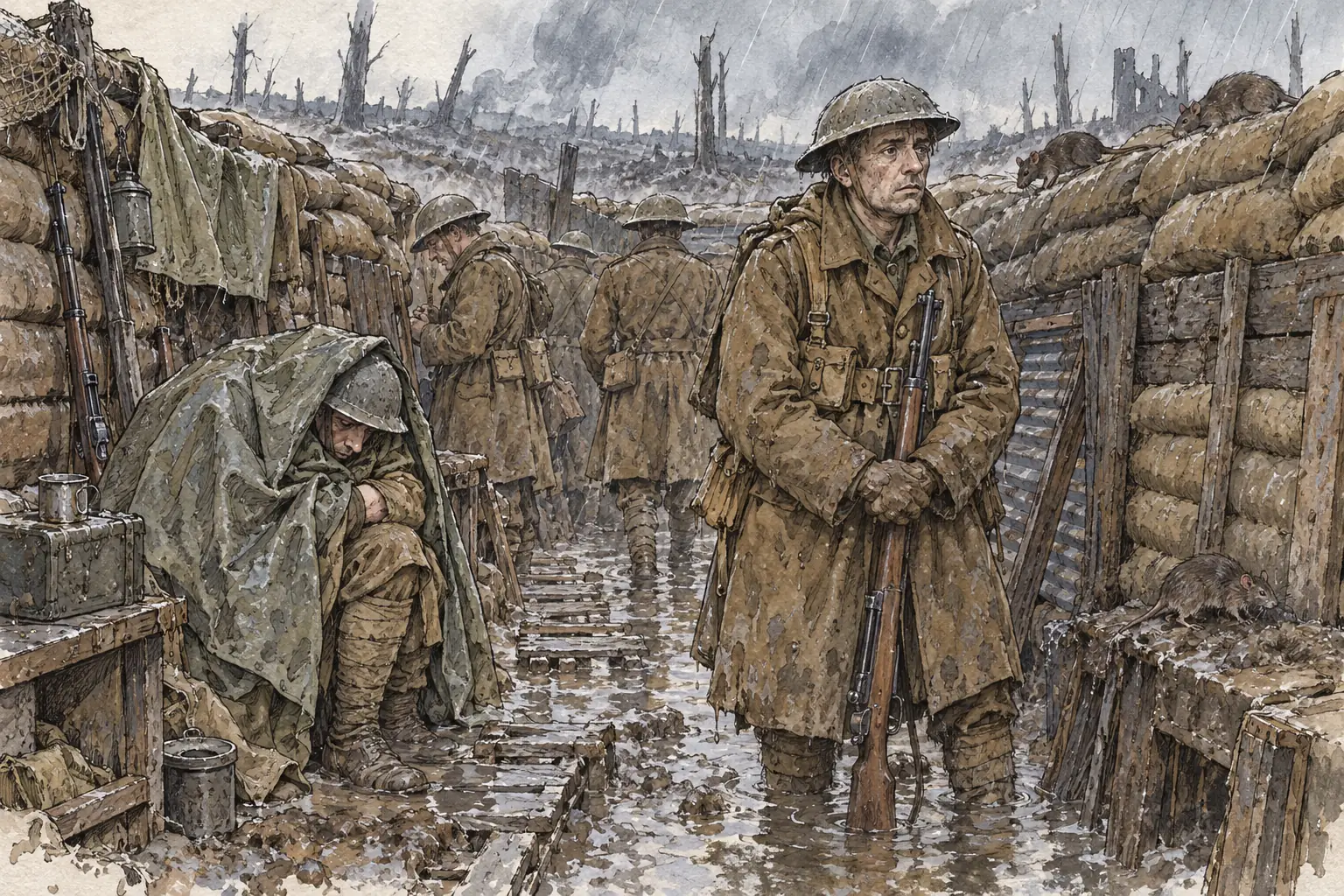
Life in the trenches exposed soldiers to extreme environmental and health hazards, which directly impacted medical needs. These conditions fostered diseases and complicated wound care, turning minor injuries into serious threats.
Common challenges in trench environments
- Mud and flooding - Persistent rain caused water to accumulate, leading to trench foot—a painful condition from prolonged exposure to dampness—and increasing the risk of infections in open wounds.
- Pests and hygiene issues - Rats proliferated, spreading diseases like leptospirosis, while lice caused trench fever, adding to the medical burden and weakening soldiers' overall health.
- Exposure to elements - Cold winters and wet conditions without adequate shelter led to hypothermia and respiratory illnesses, with trenches offering limited protection against the weather.
- Psychological strain - Constant shelling and proximity to danger contributed to shell shock, a form of psychological trauma that required specialised medical attention.
Terrain and transport challenges for medical care
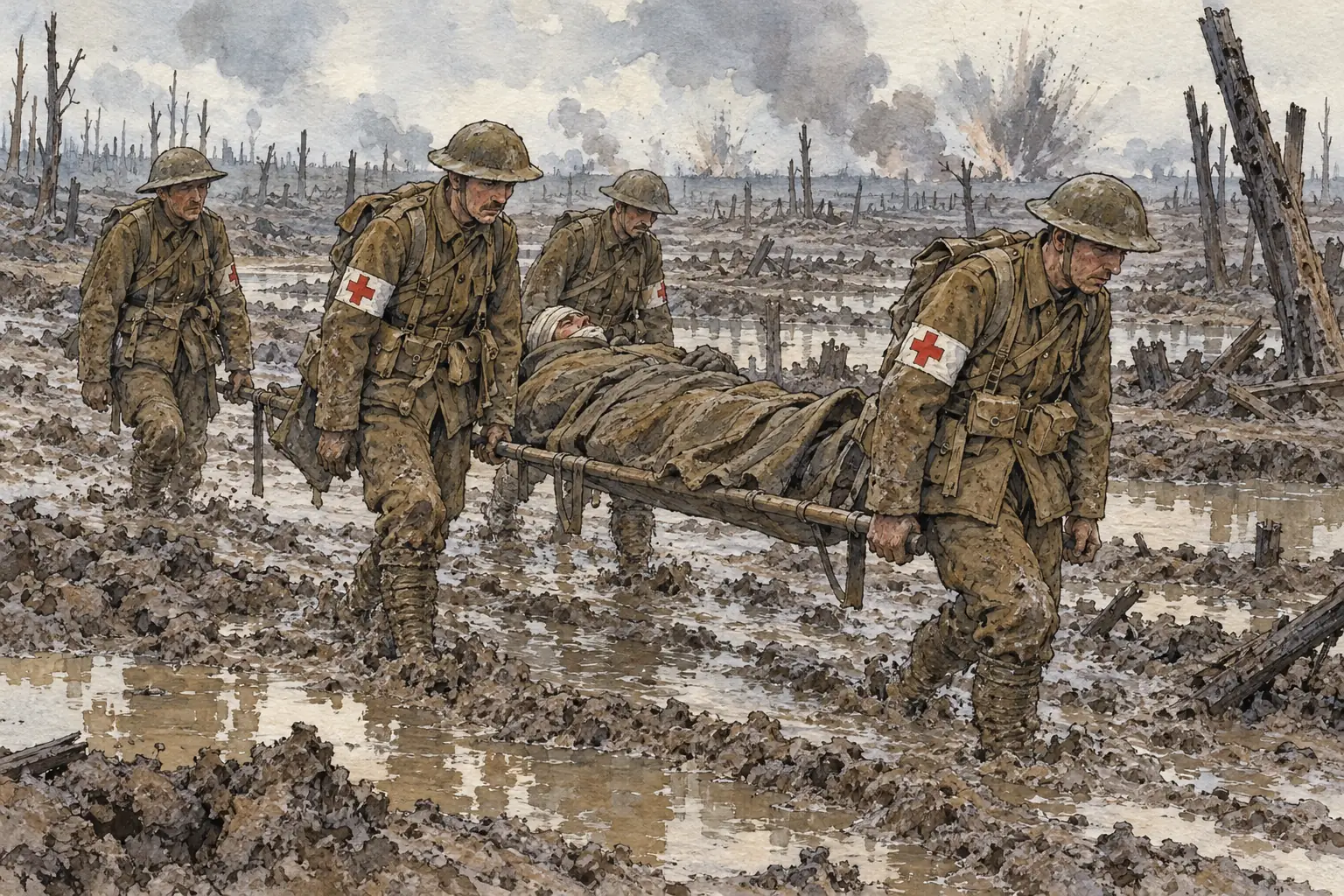
The geography of the British sector, combined with wartime destruction, created formidable obstacles for evacuating and treating the wounded. Flat, low-lying lands in regions like Flanders exacerbated these issues, demanding innovative medical strategies to bridge the gap between frontlines and rear facilities.
Impacts of terrain on medical operations
- Flat and waterlogged landscapes - Areas prone to flooding, especially after heavy artillery barraged the ground into craters, turned fields into impassable mud; during battles like Passchendaele in 1917, this resulted in soldiers and animals sinking, severely delaying stretcher evacuations.
- Destroyed infrastructure - Shelling obliterated roads and tracks, making motor ambulances ineffective on uneven, muddy terrain; early in the war, reliance on horse-drawn carts or manual carrying prolonged journeys, often worsening injuries.
- Logistical difficulties - Railway lines existed further back for transporting casualties to base hospitals, but reaching these from trenches involved navigating dangerous No Man's Land—the hazardous zone between opposing lines—under fire.
- Communication barriers - Coordinating evacuations relied on runners or fragile telephone lines frequently cut by shells, leading to delays in medical aid and requiring a structured chain of evacuation points to improvise solutions.