5.2 - Western Front: Conditions & Injuries
Key facts and dates
The Western Front during the First World War presented unprecedented medical challenges due to harsh trench conditions, advanced weaponry, and chemical warfare. Medical services had to adapt quickly to treat a range of illnesses and injuries that caused widespread suffering among soldiers.
Key facts to remember
- Trench foot – Painful foot condition from prolonged exposure to cold, wet mud, often leading to gangrene and amputation.
- Trench fever – Lice-spread illness causing high fever and muscle pain, with recovery taking weeks.
- Gas gangrene – Deadly infection from soil bacteria in shrapnel wounds, producing toxic gas in tissues.
- Brodie helmet (1915) – British steel helmet that reduced fatal head injuries from shrapnel and bullets.
- Chlorine gas (1915) – First used by Germans at Ypres, causing lung fluid buildup and choking.
- Phosgene and mustard gas – Later gases causing severe burns, blindness, and respiratory damage.
- Artillery casualties – Shells responsible for around 60% of injuries, including crush wounds and deep infections.
Diseases and ill health from the trench environment
Image 1 of 2: Feet kept in cold water and mud for long periods developed trench foot, which could lead to gangrene and amputation
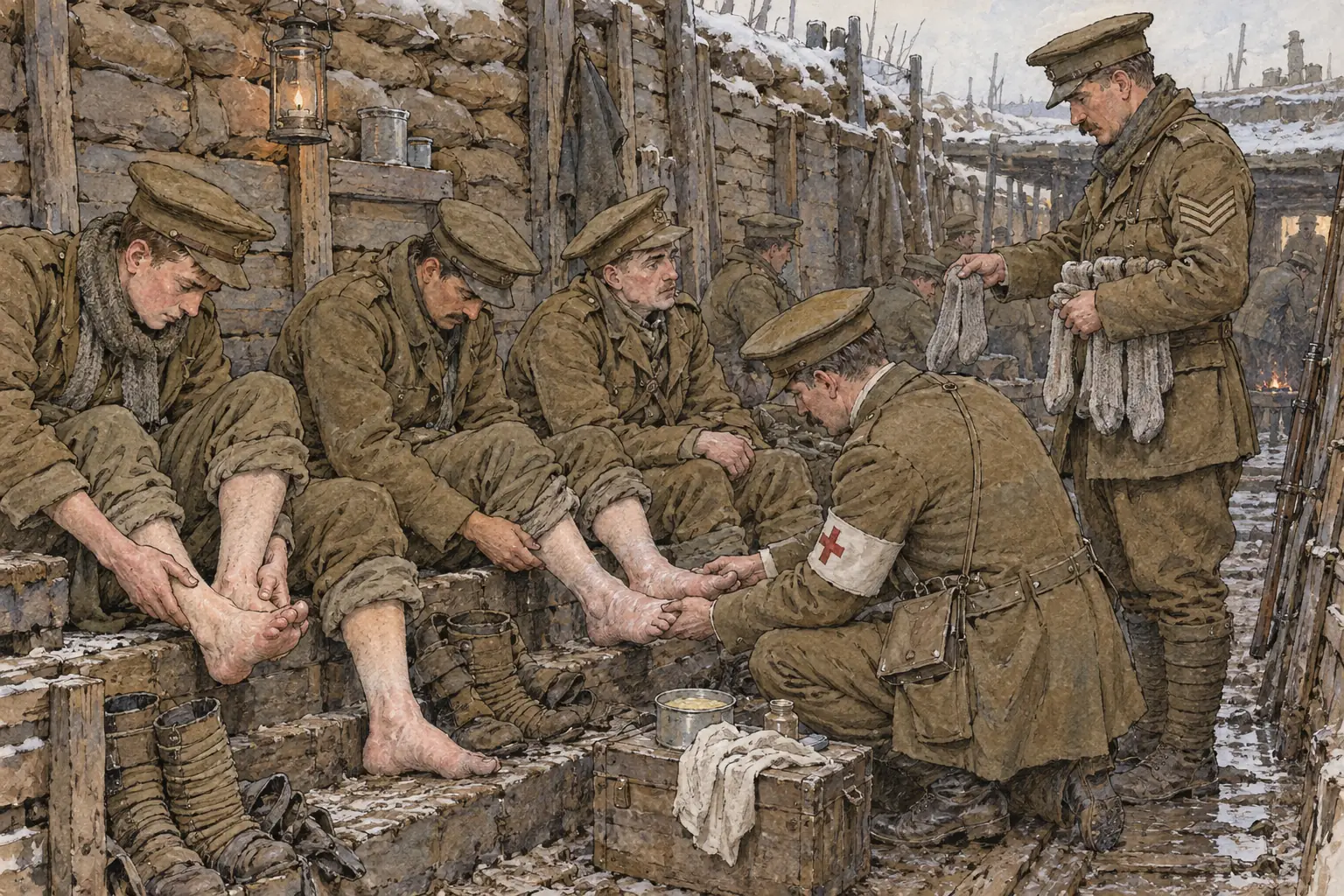
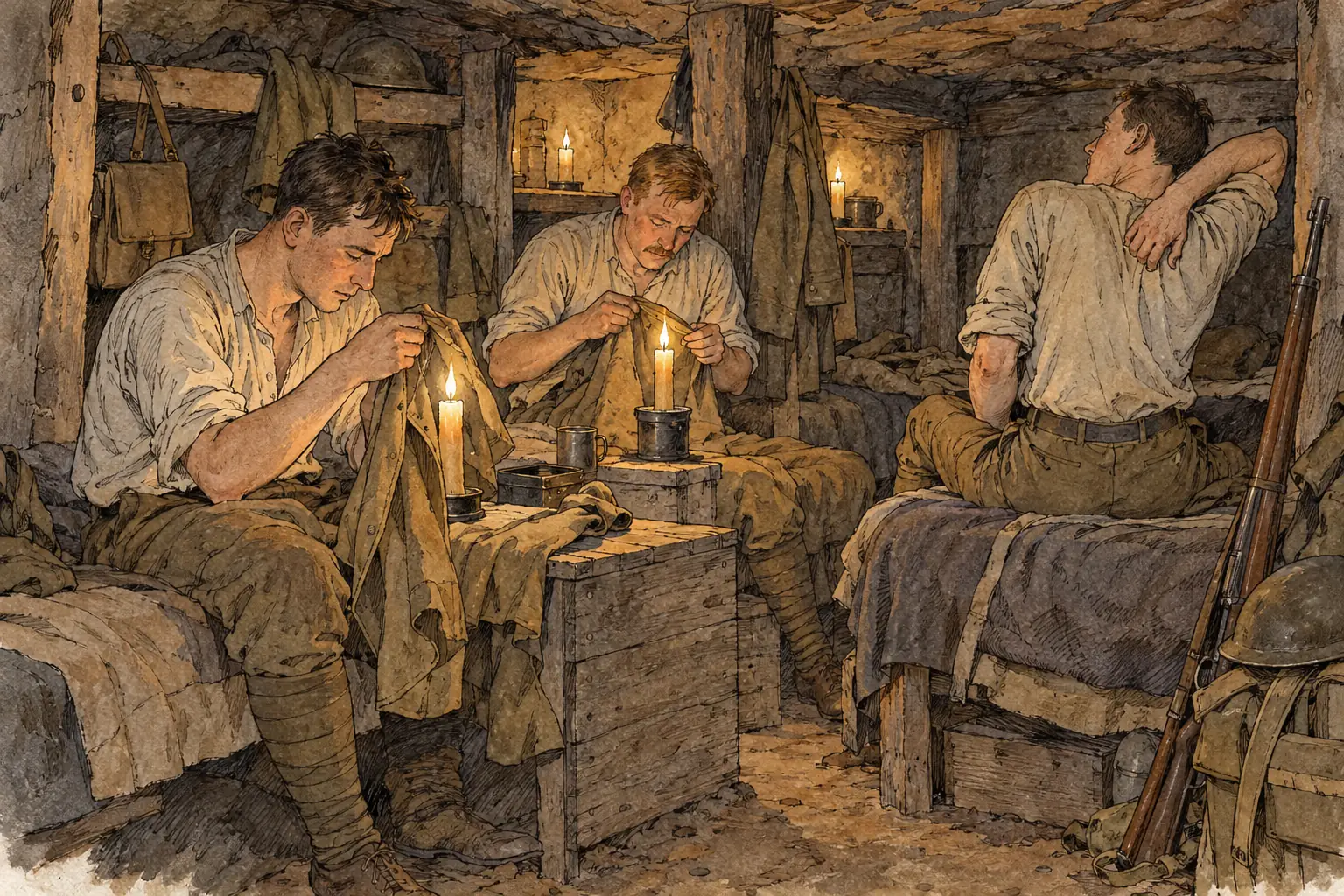
Trenches on the Western Front were frequently waterlogged and unsanitary, creating ideal conditions for various illnesses. Soldiers endured constant exposure to mud, vermin, and contaminated water, which weakened their health and required ongoing medical attention.
Common trench-related health issues
- Trench foot - This condition arose from feet being immersed in cold water and mud for extended periods, causing swelling, infection, and tissue death (gangrene) that sometimes necessitated amputation to prevent spread.
- Trench fever - Spread by lice in overcrowded trenches, it produced symptoms similar to influenza, including intense fever and joint pain, often sidelining troops for several days or weeks before recovery.
- Dysentery and water-borne diseases - Poor sanitation, with rudimentary latrines and polluted drinking water, led to gastrointestinal infections that caused severe diarrhoea and abdominal cramps.
- Dehydration and malnutrition - Disruptions in supply chains resulted in shortages of clean water and food, exacerbating weakness and vulnerability to other illnesses among the troops.
Nature of wounds from weapons
The First World War introduced powerful weapons that inflicted severe and complex injuries. Artillery and firearms caused the majority of casualties, with wounds often contaminated by battlefield dirt, leading to high infection rates.
Types of injuries from artillery and firearms
- High-explosive artillery shells - These accounted for approximately 60% of casualties, generating blasts that could tear limbs, embed shrapnel deep in tissues, or cause crush injuries from collapsing earth.
- Shrapnel wounds - Jagged metal fragments from exploding shells penetrated the body, carrying soil and bacteria that triggered infections like gas gangrene, a condition where bacteria from fertilised fields produced foul-smelling gas and tissue decay.
- Bullet wounds - Rifles and machine guns created deep punctures, internal organ damage, or bone fractures; bullets sometimes lodged inside the body, complicating treatment.
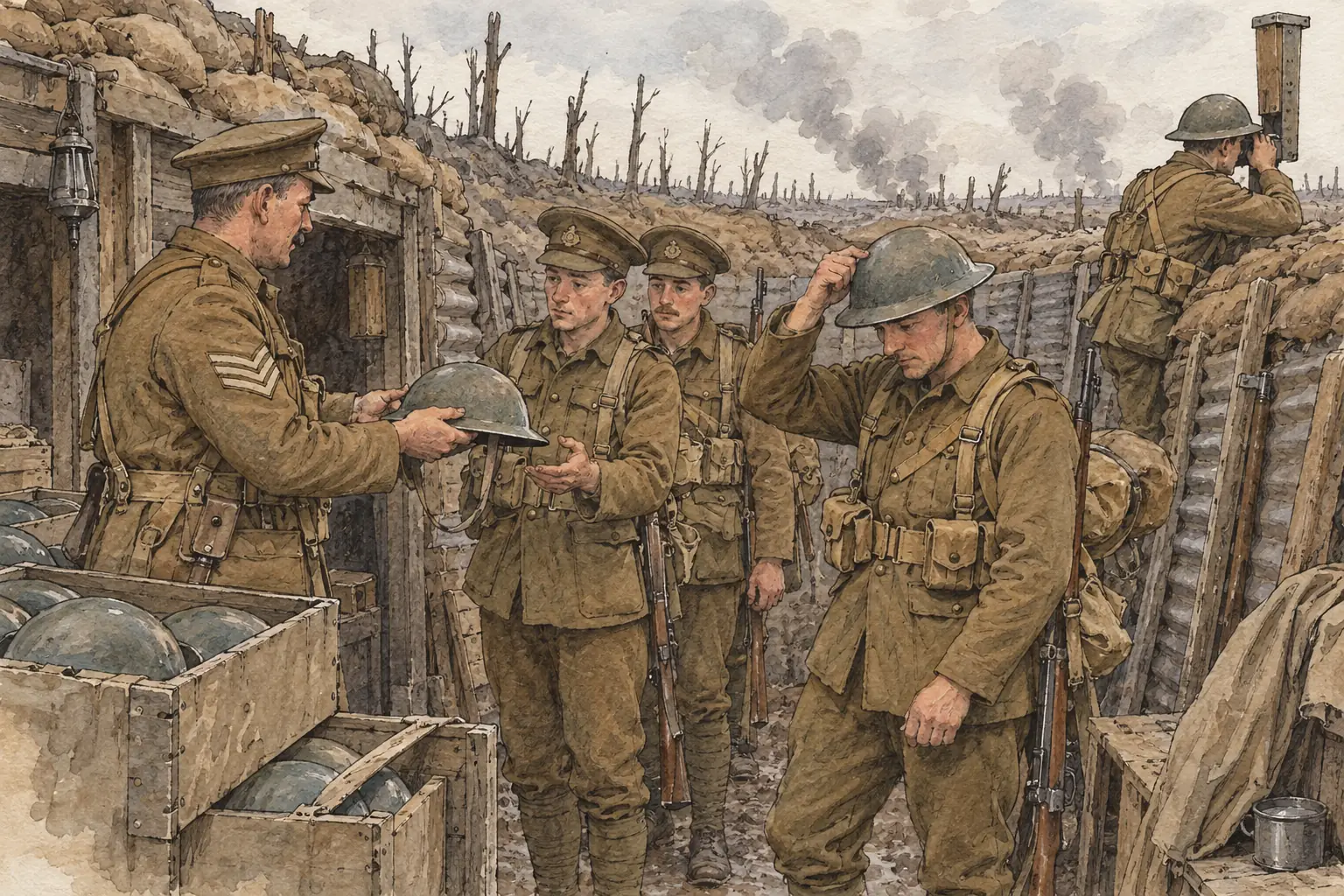
- Head injuries - Trench warfare exposed soldiers' heads during observations or advances, leading to skull fractures or brain trauma; the introduction of the Brodie steel helmet in 1915 helped lower mortality from such wounds, though neurosurgery was still needed in advanced cases.
Impact of poison gas attacks
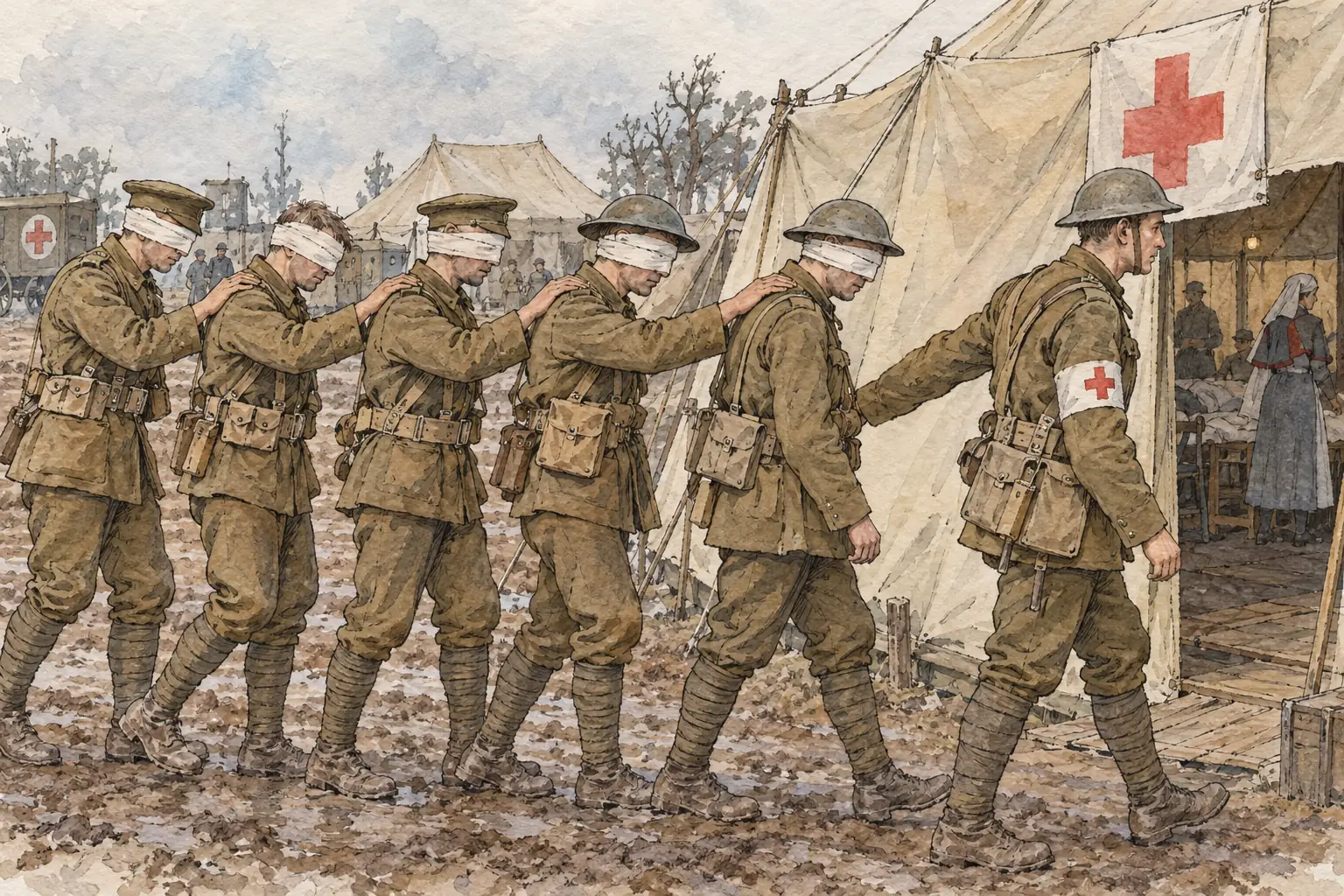
Poison gas emerged as a terrifying weapon on the Western Front, first deployed by the Germans in 1915 and later used by both sides. Although it caused fewer deaths than other methods, it inflicted acute suffering and required specialised immediate care.
Effects of different poison gases
- Chlorine gas - Initially used at Ypres in 1915, it irritated the respiratory system, causing lungs to fill with fluid and leading to choking or drowning-like symptoms.
- Phosgene gas - More potent than chlorine, it damaged lung tissues subtly at first, then caused severe breathing difficulties and fluid buildup hours after exposure.
- Mustard gas - This agent burned the skin, eyes, and airways upon contact, resulting in painful blisters, temporary blindness, or long-term respiratory issues.
Treatment approaches for gas victims
- Immediate actions included washing affected eyes with water, removing tainted uniforms to prevent further exposure, and administering oxygen where possible to aid breathing.
- Despite prompt intervention, many survivors endured lasting effects like scarred lungs or vision impairment, adding to the psychological terror of gas warfare.
Challenges in treating these conditions
Medical teams on the Western Front faced diverse obstacles in managing trench illnesses, weapon injuries, and gas effects. Infection control was a major issue, prompting innovations in care to improve survival rates.
Key treatment difficulties
- Infection management - Wounds from shrapnel or bullets, often dirt-contaminated, led to rapid bacterial spread; gas gangrene required urgent debridement (removal of dead tissue) to halt progression.
- Environmental health issues - Trench foot and fever demanded preventive measures like regular foot inspections and delousing, alongside treatments such as rest and antibiotics when available.
- Gas-related care - Victims needed quick decontamination and respiratory support, but limited resources meant many cases relied on basic rinsing and monitoring.
- Overall adaptations - The variety of conditions necessitated new surgical techniques, better sanitation protocols, and specialised units to handle everything from amputations to chemical burns effectively.