1.4 - The Norman Invasion
Key facts and dates
The Norman invasion of 1066 marked a pivotal moment in English history, as William, Duke of Normandy, challenged Harold Godwinson for the throne following Edward the Confessor's death. This conflict culminated in the decisive Battle of Hastings, reshaping England's leadership and society.
Timeline of key events
- September 1066 – William's forces land unopposed at Pevensey Bay, establishing a base before advancing towards Hastings.
- Late September 1066 – Harold's army, fresh from victory at Stamford Bridge, marches south to confront the Normans.
- 14 October 1066 – Battle of Hastings begins, with Harold's troops positioned on Senlac Hill.
- Mid-battle 1066 – Normans employ feigned retreats to break the English shield wall.
- Late afternoon 1066 – Harold is killed, leading to the collapse of English resistance.
- Christmas Day 1066 – William is crowned King of England in Westminster Abbey.
Events leading to the Battle of Hastings
Image 1 of 2: William landed unopposed at Pevensey in late September 1066 while Harold was in the north
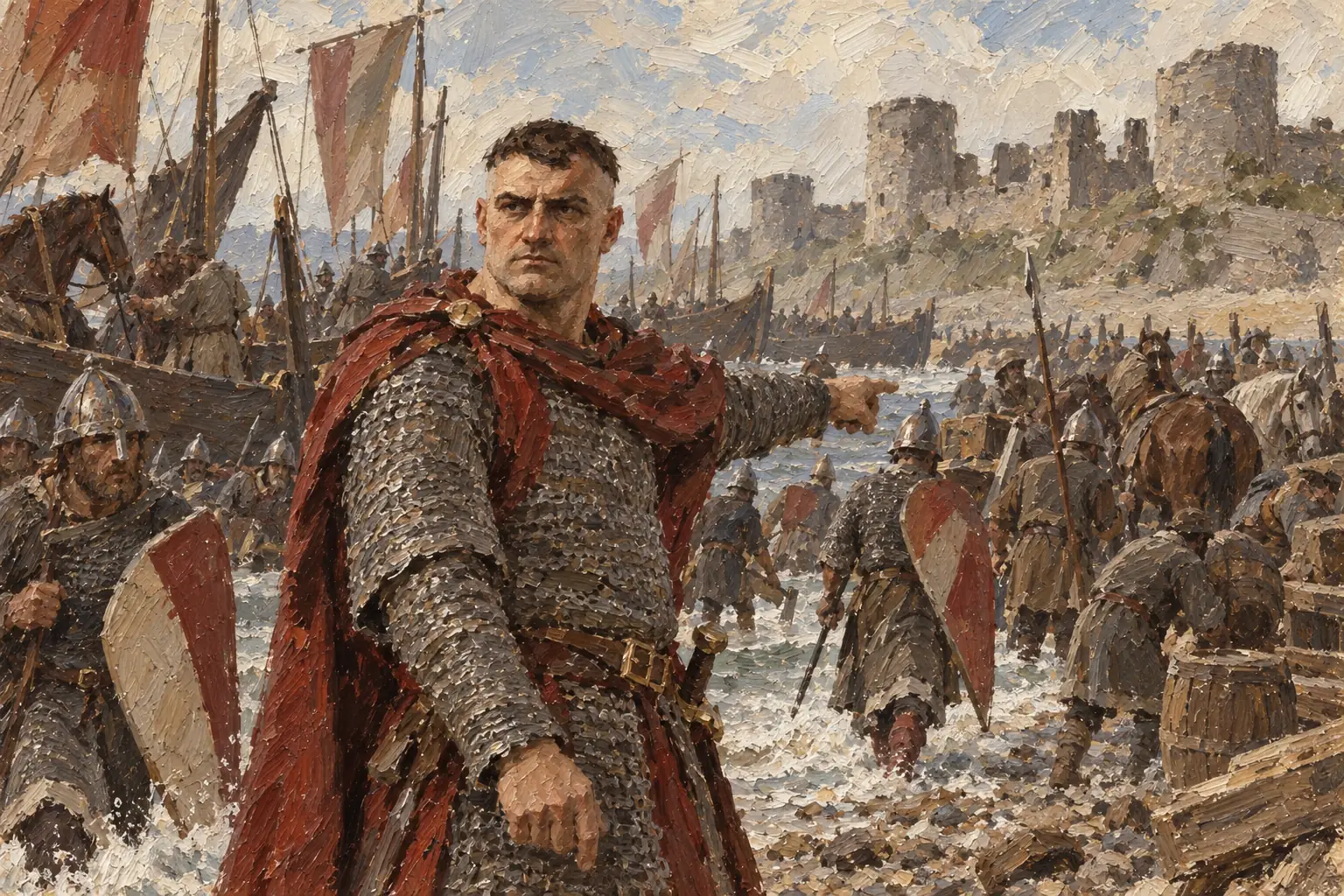
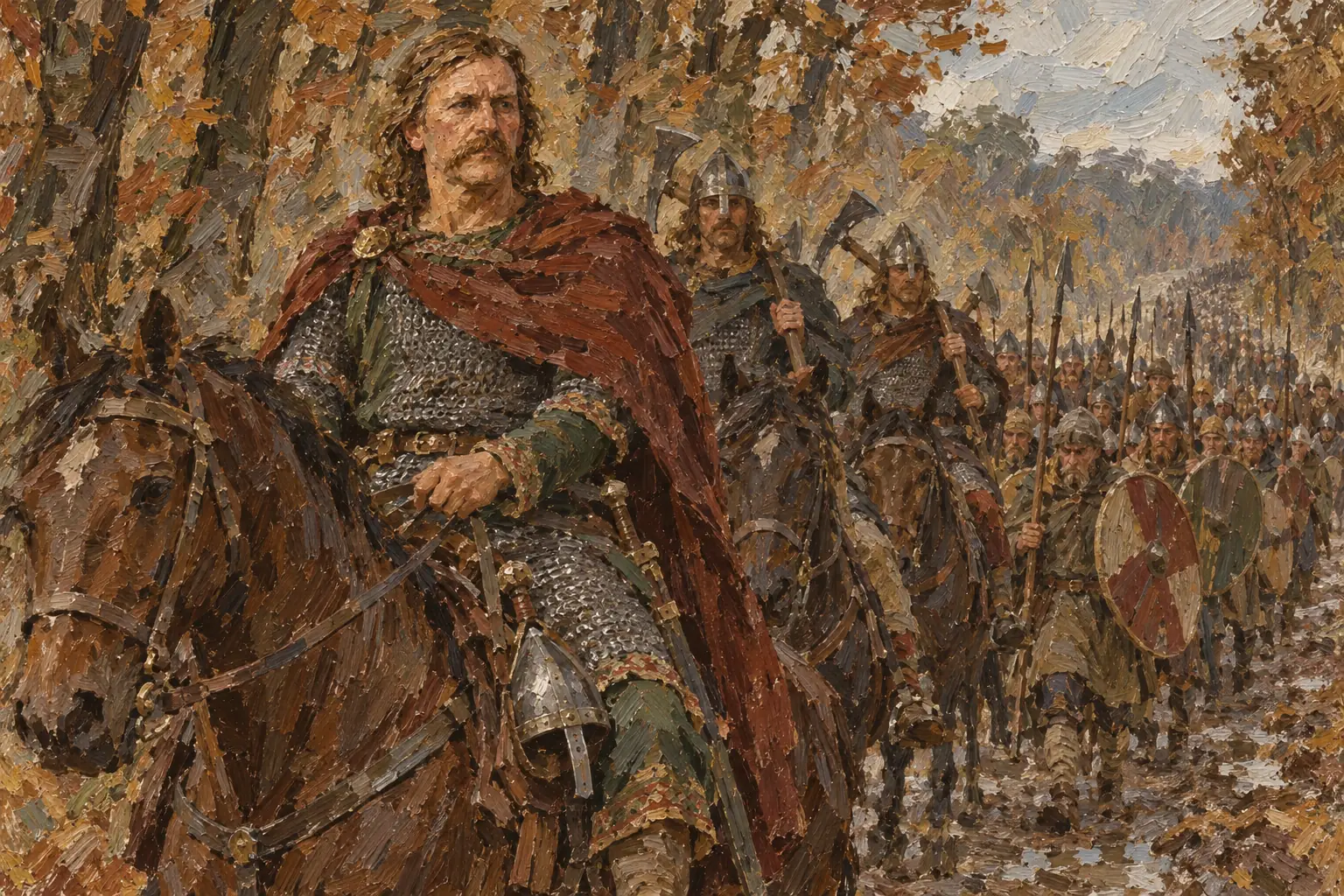
The Norman invasion stemmed from disputes over the English throne after King Edward the Confessor died without heirs in January 1066. William, Duke of Normandy, claimed Edward had promised him the crown, while Harold Godwinson, a powerful English earl, was elected king by the Witan (a council of nobles).
William assembled an army and fleet, crossing the English Channel in late September 1066. He landed at Pevensey Bay without resistance, as Harold was occupied defeating a Norwegian invasion led by Harald Hardrada at the Battle of Stamford Bridge in the north. Harold then rushed his forces south, covering over 200 miles in a week to meet the Normans.
The decisive confrontation occurred on 14 October 1066 at Senlac Hill near Hastings. The battle lasted from morning until dusk, with intense fighting that tested both sides' endurance.
Comparison of the opposing forces and tactics
Image 1 of 2: The English held a shield wall on high ground against Norman archers, infantry and cavalry
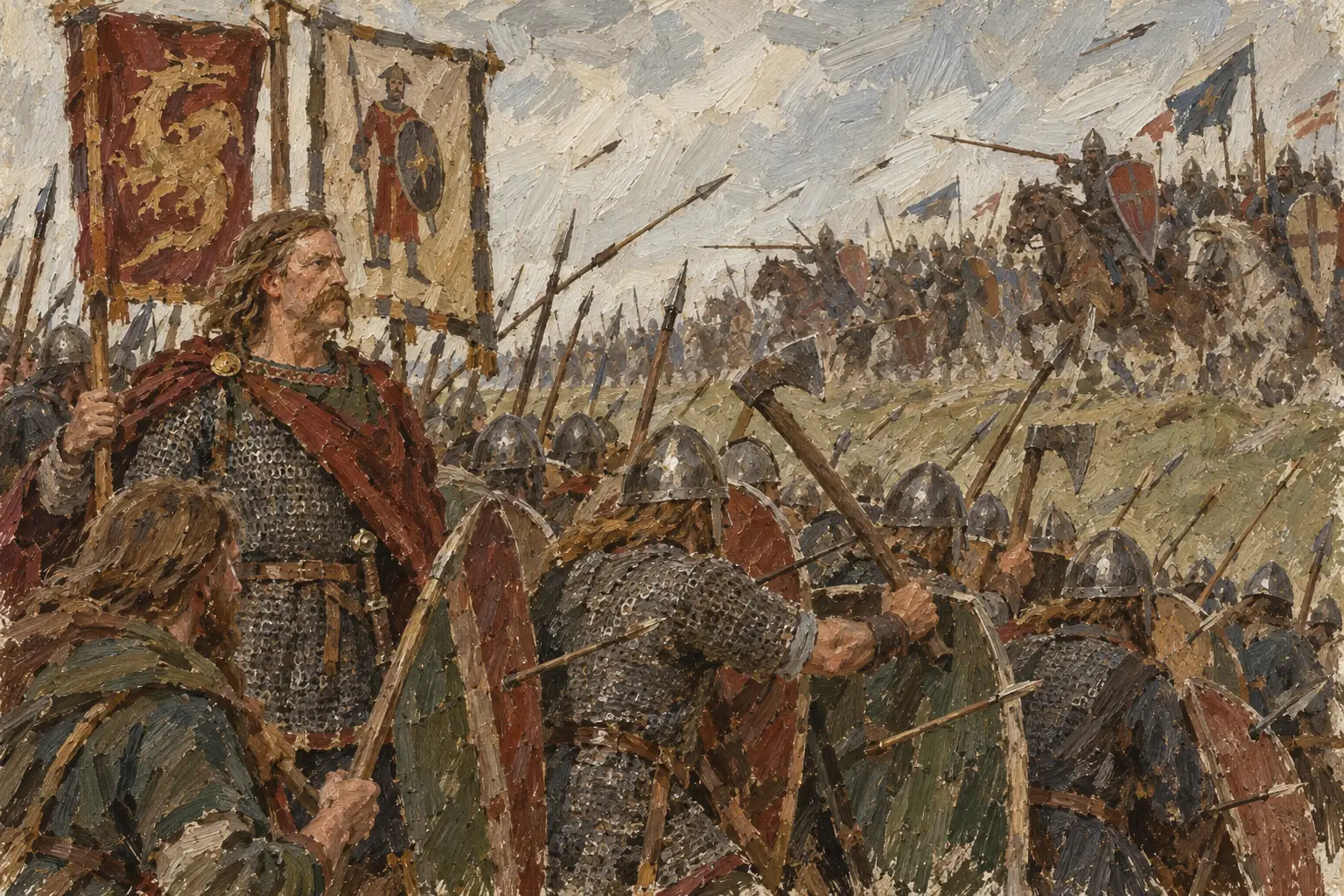
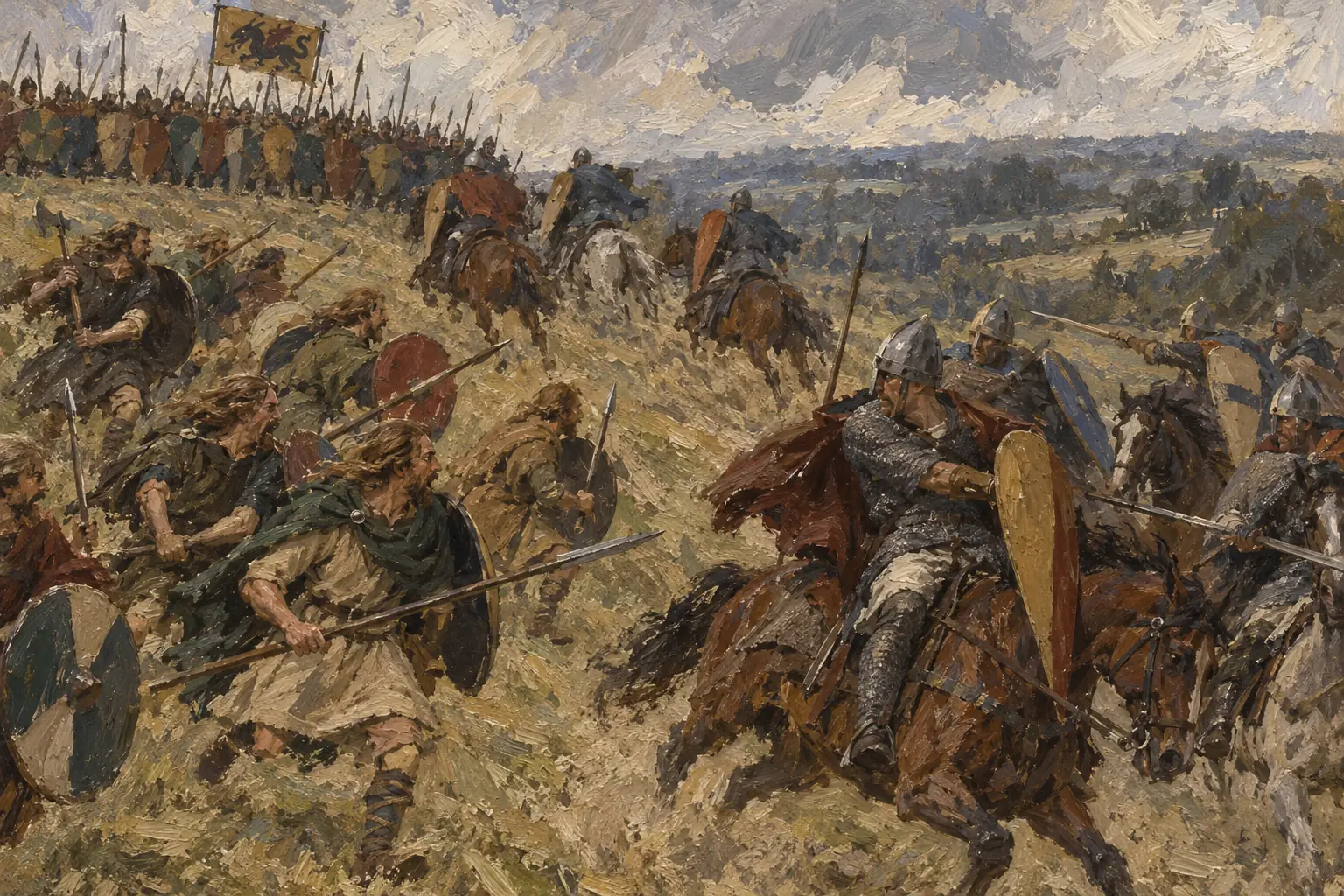
William's Norman army and Harold's Anglo-Saxon forces differed significantly in composition, equipment, and battlefield strategies, influencing the battle's dynamics.
Composition and strengths of the armies
- Norman's forces - Numbered around 7,000-8,000 men, including professional knights, cavalry, and archers. They were well-disciplined and drawn from Normandy and allied regions like Brittany and Flanders.
- Anglo-Saxon forces - Also approximately 7,000-8,000 strong, consisting of elite housecarls (professional warriors) and the fyrd (part-time militia levied from local communities). Most fought as infantry.
Tactics employed during the battle
Harold's army adopted a defensive approach, forming a shield wall on high ground to repel attacks. This involved interlocking shields and using axes or spears to hold the line.
In contrast, William's tactics were more varied and adaptive:
- Archers initiated volleys to weaken the enemy.
- Infantry charged uphill, followed by cavalry assaults.
- Feigned retreats lured parts of the English line into breaking formation, allowing Norman cavalry to counter-attack effectively.
These differences highlighted the Normans' mobility and tactical flexibility against the Anglo-Saxons' static defence.
Key reasons for William's victory at Hastings
Image 1 of 2: William rallied his fleeing troops by pushing back his helmet to show he was still alive
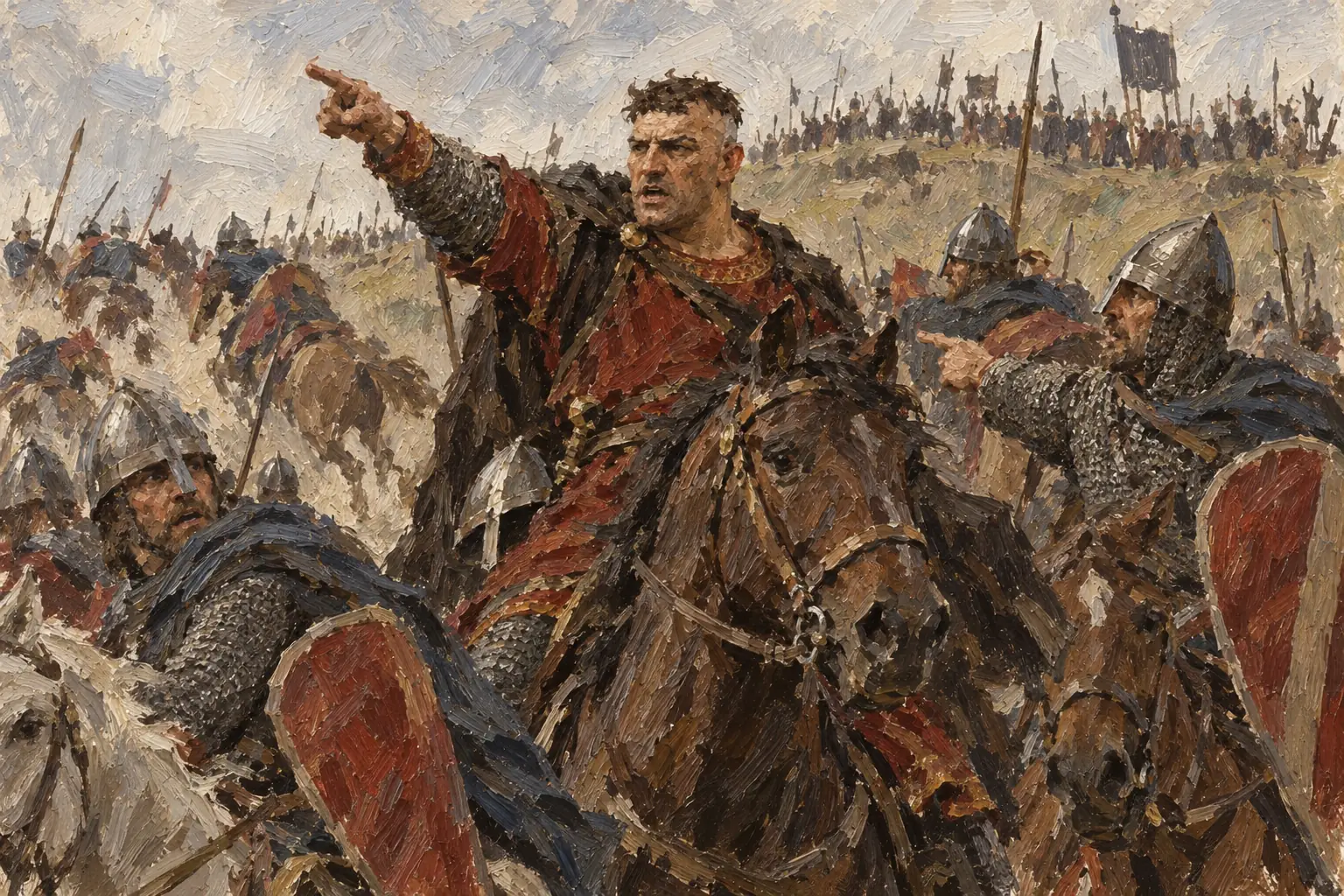
William's success at the Battle of Hastings resulted from a combination of leadership, military advantages, and Harold's misfortunes, turning the tide despite an initially strong English position.
Factors contributing to the Norman triumph
- William's leadership and tactics - William demonstrated strong command, rallying his troops during setbacks and using innovative strategies like feigned retreats to disrupt the shield wall.
- Discipline and variety of Norman troops - The mix of cavalry, archers, and infantry provided tactical options, with disciplined knights executing coordinated attacks that overwhelmed the English line.
- Harold's disadvantages - Harold's army was exhausted from the long march after Stamford Bridge, reducing their effectiveness. The fyrd's inexperience compared to housecarls weakened overall cohesion.
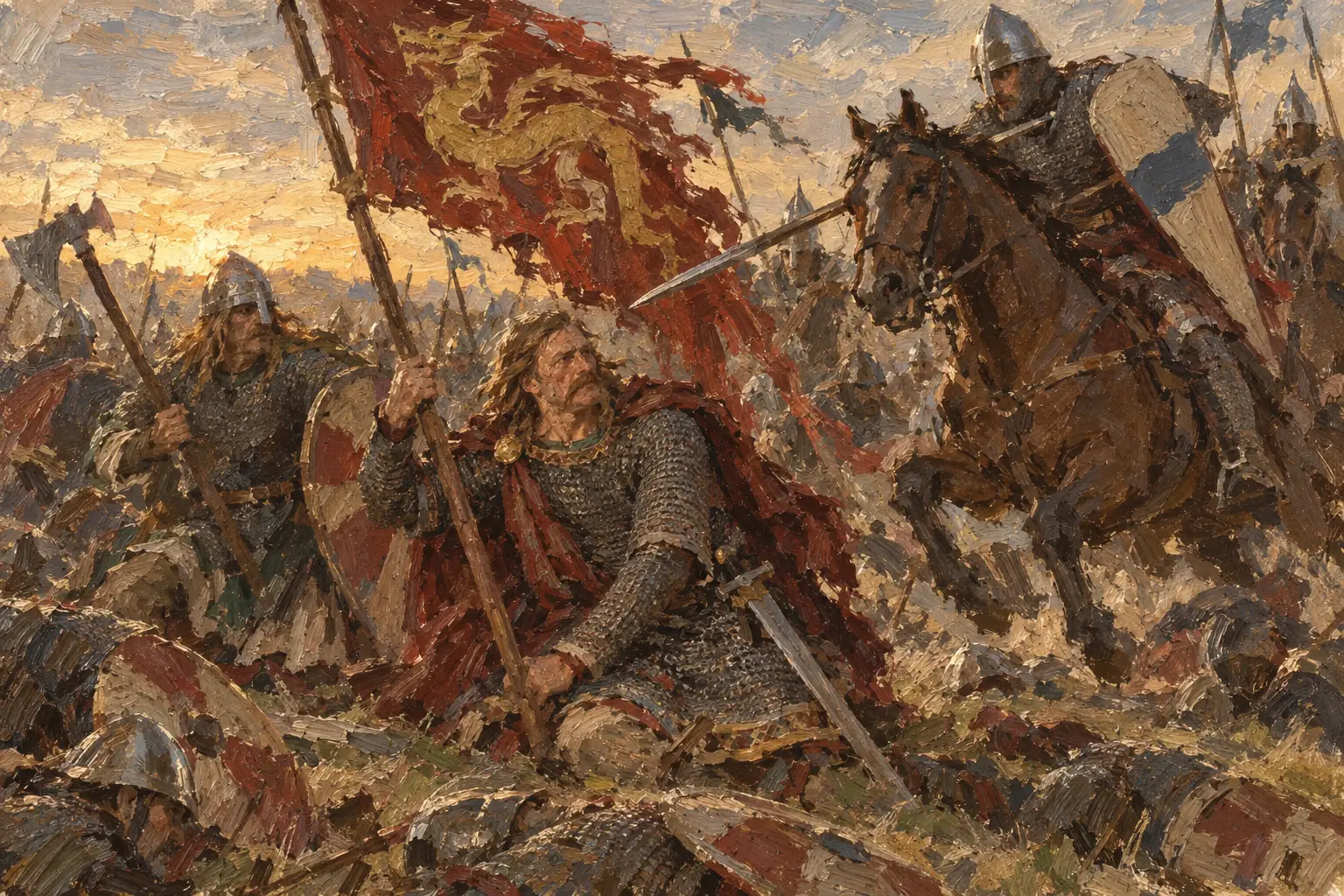
- Harold's death - Struck by an arrow and then cut down by knights, Harold's demise caused panic and desertions among his forces, leading to a rout.
Outcome of the battle and seizure of the throne
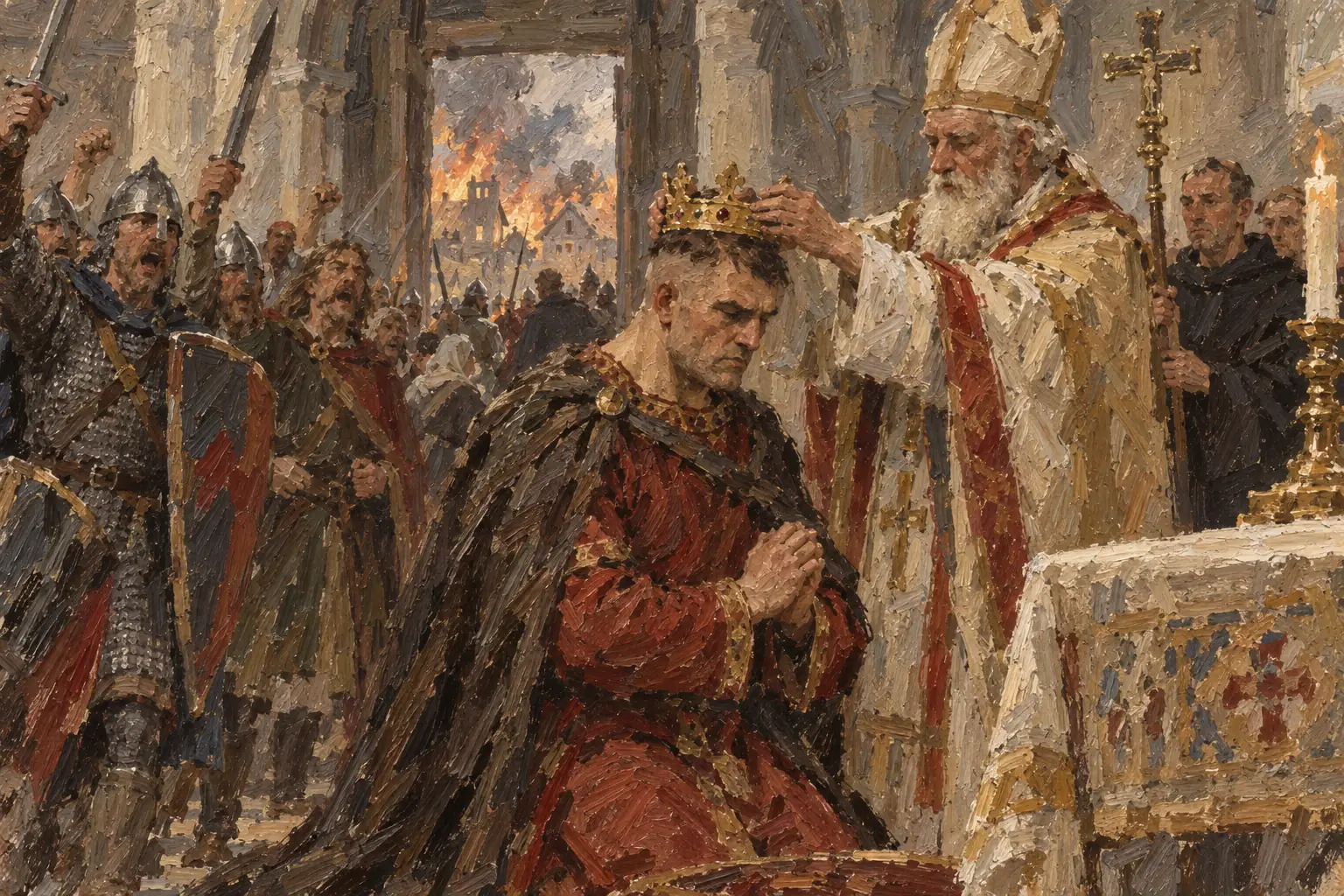
Harold's defeat and death at Hastings shattered organised English resistance, paving the way for William to claim the throne. With key English leaders killed or fleeing, no unified opposition remained.
William marched to London, suppressing minor uprisings en route. He was crowned King William I on Christmas Day 1066 in Westminster Abbey, establishing Norman rule. This event marked the end of Anglo-Saxon dominance and the beginning of significant changes in English governance, law, and society under Norman influence.