2.1 - Establishing Control
Key facts and dates
Following his victory at Hastings in 1066, William the Conqueror moved quickly to consolidate power in England, combining political submissions, land grants, and military fortifications to establish Norman dominance. These actions laid the foundation for long-term control amid potential resistance from the English nobility and populace.
Timeline of key events
| Date | Event |
|---|---|
| Late 1066 | English earls, including Edgar Ætheling, Edwin, and Morcar, submit to William at Berkhamsted and swear oaths of loyalty. |
| 25 December 1066 | William is crowned king of England at Westminster Abbey. |
| 1066 onwards | William distributes English estates to loyal Norman supporters as rewards. |
| 1067 | Establishment of new Marcher earldoms along the Welsh border, centred on Hereford, Shrewsbury, and Chester. |
| 1066–1070s | Construction of numerous motte-and-bailey castles across England to secure Norman authority. |
Submission of English earls
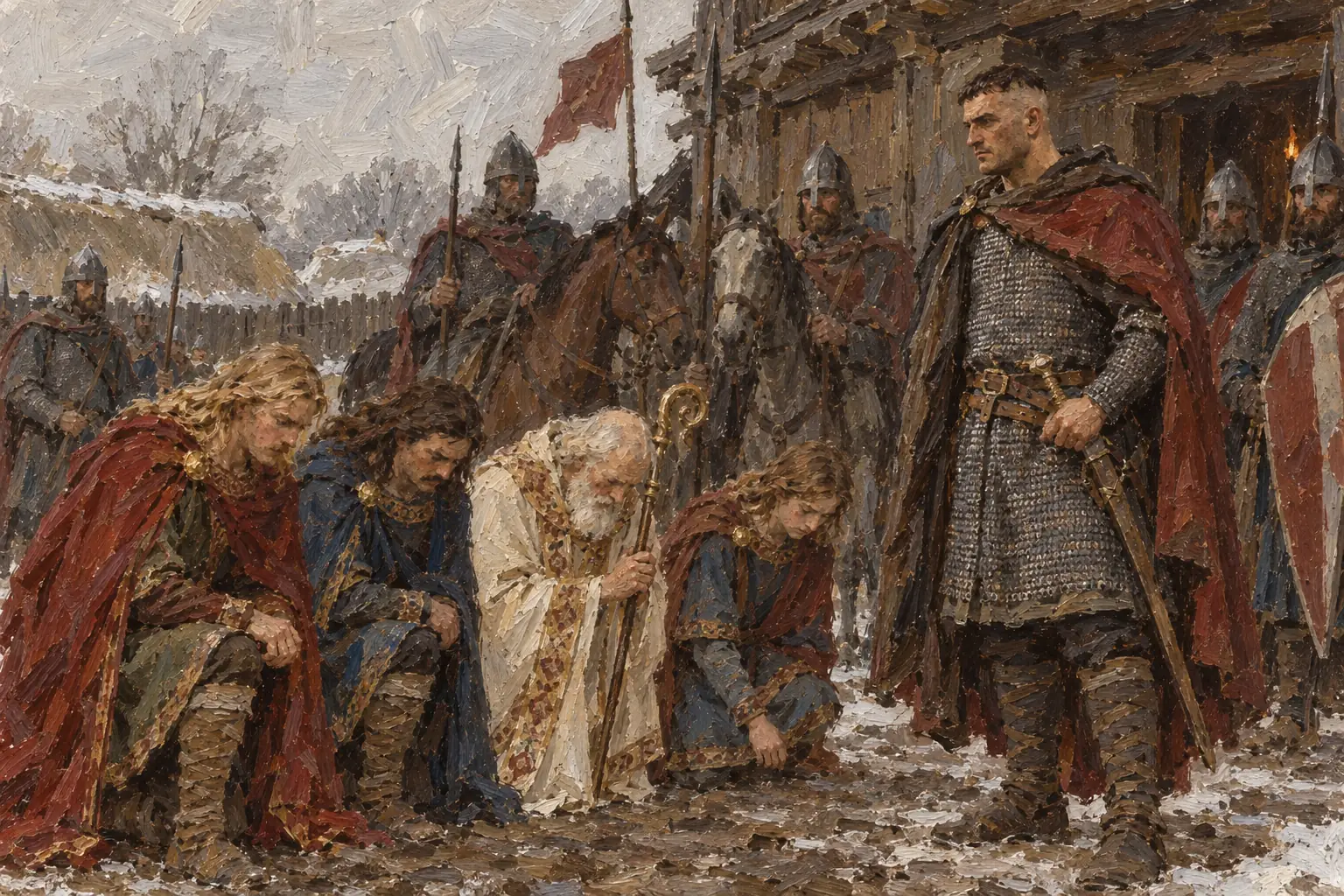
In the immediate aftermath of the Battle of Hastings, William the Conqueror prioritised gaining the allegiance of key English nobles to prevent organised resistance. This involved securing oaths from prominent figures who might otherwise challenge his claim to the throne.
Key submissions and their significance
- Edgar Ætheling - As the uncrowned heir to the Saxon throne, his surrender at Berkhamsted marked a symbolic end to potential Saxon claims and helped legitimise William's rule.
- Earls Edwin and Morcar - These powerful northern earls also submitted at Berkhamsted, pledging loyalty through formal oaths, which neutralised immediate threats from the north and demonstrated William's growing authority.
- Broader impact - These submissions allowed William to consolidate power without further large-scale conflict in 1066, paving the way for his coronation and the integration of English elites into the new regime.
Rewards to Norman followers
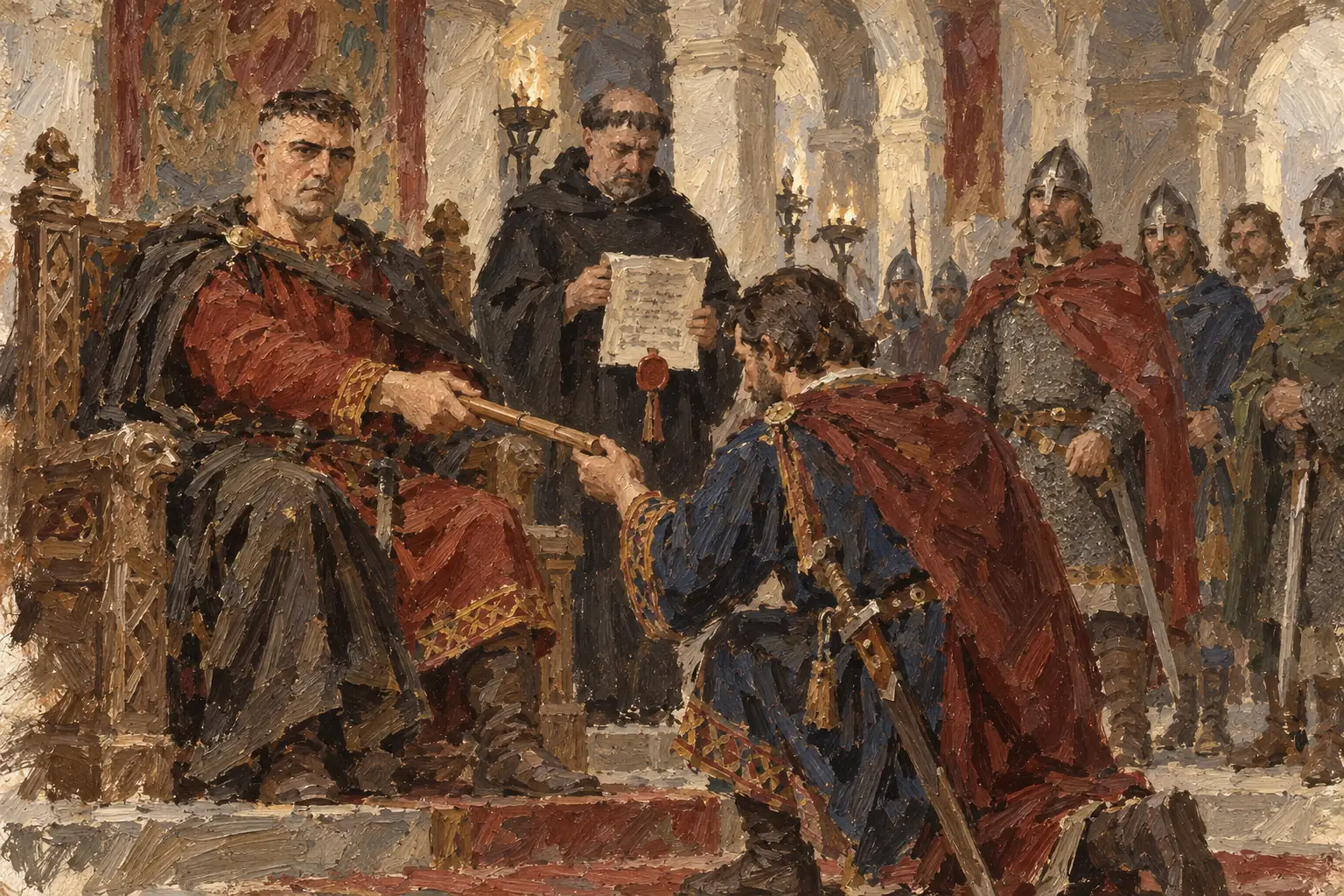
To ensure the loyalty of his supporters and stabilise his conquest, William distributed confiscated English lands and titles among his Norman allies. This system of rewards created a network of vested interests tied to his rule.
Distribution of lands and titles
- Estate grants - Loyal followers received large portions of land taken from defeated English nobles, providing them with wealth and incentives to defend the new order.
- Cementing allegiance - By tying personal fortunes to William's success, these rewards fostered a committed class of Norman lords who helped enforce control across the kingdom.
- Long-term effects - This redistribution shifted power dynamics, replacing much of the old English aristocracy with Normans and establishing a feudal structure that underpinned William's authority.
Creation of Marcher earldoms
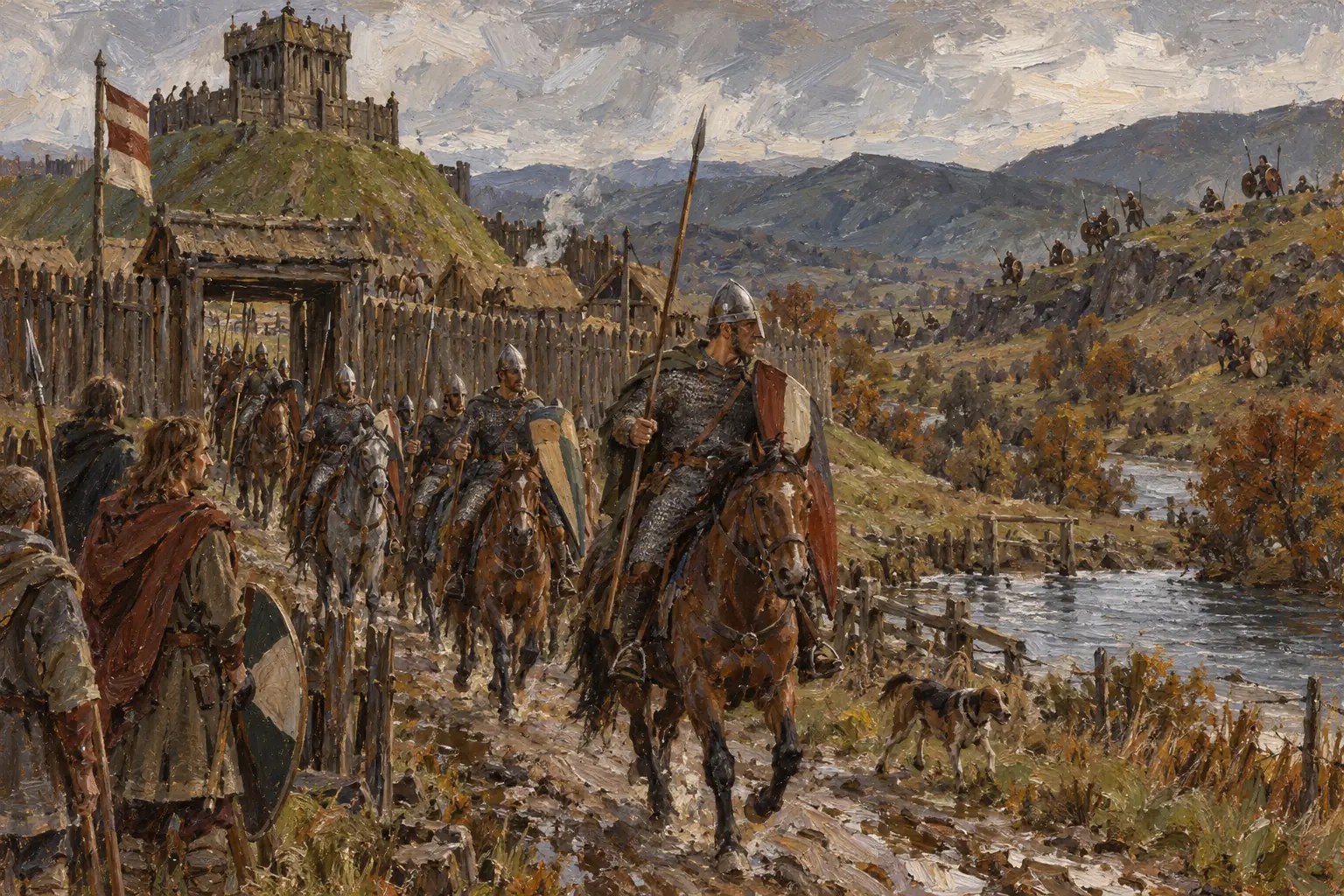
William established specialised earldoms along the Welsh border to protect England's western frontiers from raids and unrest. These Marcher earldoms were granted to trusted allies with enhanced powers to maintain security.
Features of Marcher earldoms
- Locations - Centred on strategic towns such as Hereford, Shrewsbury, and Chester, these earldoms formed a buffer zone against Welsh incursions.
- Special rights - Earls were permitted to construct castles, administer local justice, and govern with greater autonomy than standard earls, enabling rapid responses to threats.
- Purpose and rewards - Awarded to reliable supporters, these earldoms served both as incentives for loyalty and as a means to secure turbulent border regions, strengthening overall Norman control.
Building of castles
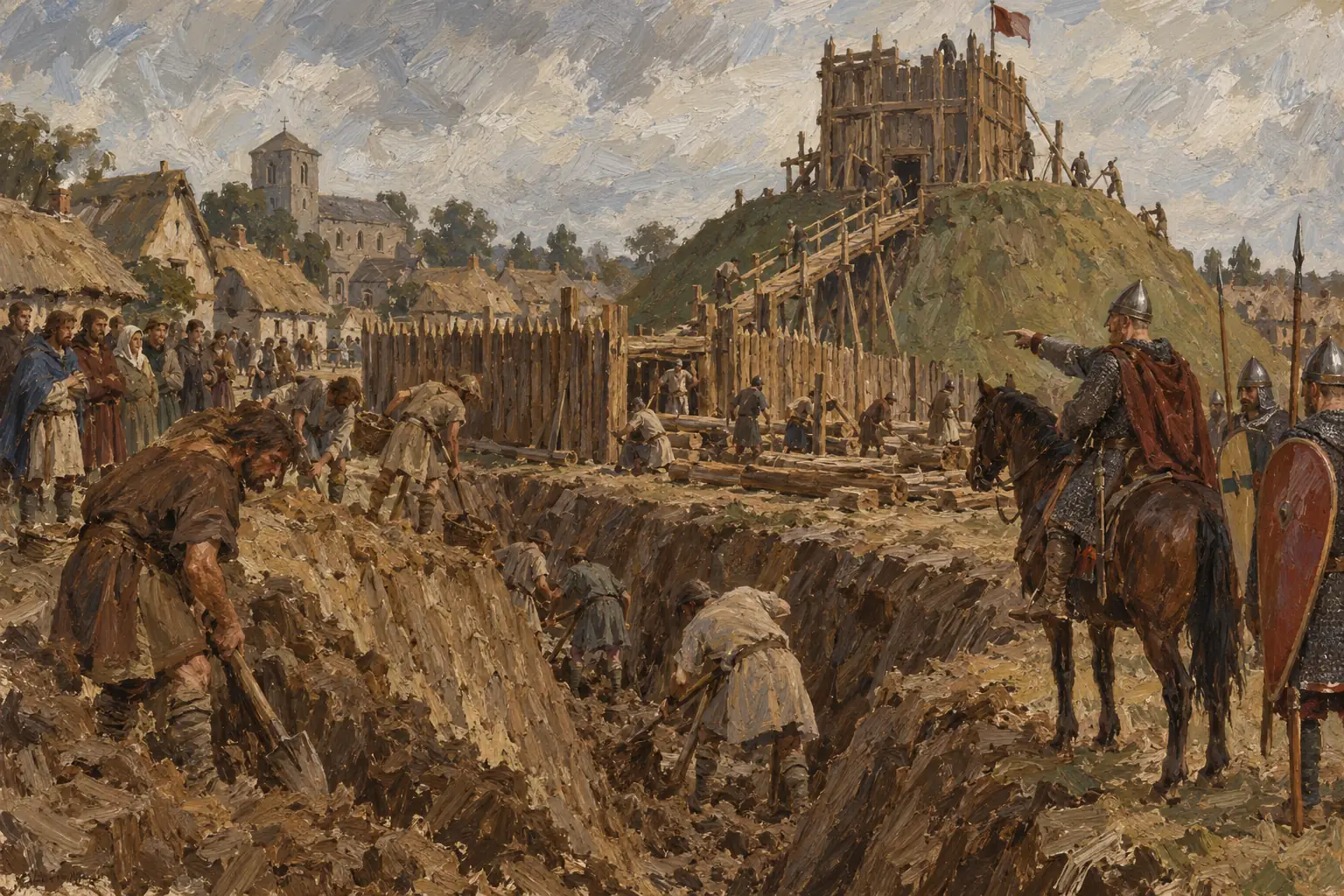
Castles were a cornerstone of William's strategy for establishing and maintaining control, providing military strongholds and visible symbols of Norman power. Construction began soon after the conquest, focusing on quick-to-build designs.
Characteristics and roles of early Norman castles
- Motte-and-bailey design - These structures featured an earthen mound (motte) topped with a wooden tower, surrounded by a defended enclosure (bailey) with palisades, allowing for rapid erection using local materials.
- Military function - Served as bases for Norman troops to garrison key areas, suppress dissent, and launch operations against potential rebels.
- Symbolic and deterrent role - Their imposing presence reminded the English population of Norman dominance, discouraging uprisings and reinforcing William's authority across the landscape.
- Widespread construction - Hundreds were built in strategic locations, from urban centres to rural frontiers, forming a network that helped pacify the country.