2.6 - From Largest Party to Chancellor
Key facts and dates
The period from 1932 to early 1933 marked a critical phase in German politics, characterised by electoral contests, economic turmoil, and behind-the-scenes manoeuvring that ultimately elevated Adolf Hitler to power. These events unfolded amid the Weimar Republic's instability, paving the way for the Nazi seizure of control.
Timeline of key events
- March-April 1932 – Presidential election where Paul von Hindenburg defeats Adolf Hitler, securing 53% of the vote in the second round.
- July 1932 – Reichstag election results in the Nazi Party becoming the largest with 37% of seats, but no majority forms a government.
- November 1932 – Second Reichstag election sees Nazi support drop to 33%, yet they remain the biggest party amid ongoing political deadlock.
- December 1932 – Kurt von Schleicher appointed Chancellor, but his brief tenure fails to resolve the crisis.
- January 1933 – Franz von Papen negotiates with conservative elites to form a coalition, convincing Hindenburg to appoint Hitler as Chancellor on 30 January.
The 1932 Presidential election
The 1932 Presidential election represented a pivotal contest in the Weimar Republic, pitting the ageing incumbent Paul von Hindenburg against Adolf Hitler, the rising leader of the Nazi Party. Held amid economic depression and political unrest, it highlighted the growing polarisation in German society.
Key aspects of the Presidential election
- Candidates and context - Hindenburg, a conservative war hero, ran for re-election to prevent extremist takeover, while Hitler campaigned on promises of national revival and anti-communist rhetoric, appealing to disillusioned voters.
- Election process - The first round in March saw no candidate gain an absolute majority, leading to a runoff in April where Hindenburg won with 53% of the vote against Hitler's 37%.
- Significance of the outcome - Hindenburg's victory temporarily blocked Hitler's direct path to power, but it also exposed the Nazis' broad support base, setting the stage for further political intrigue.
The July and November 1932 Reichstag elections
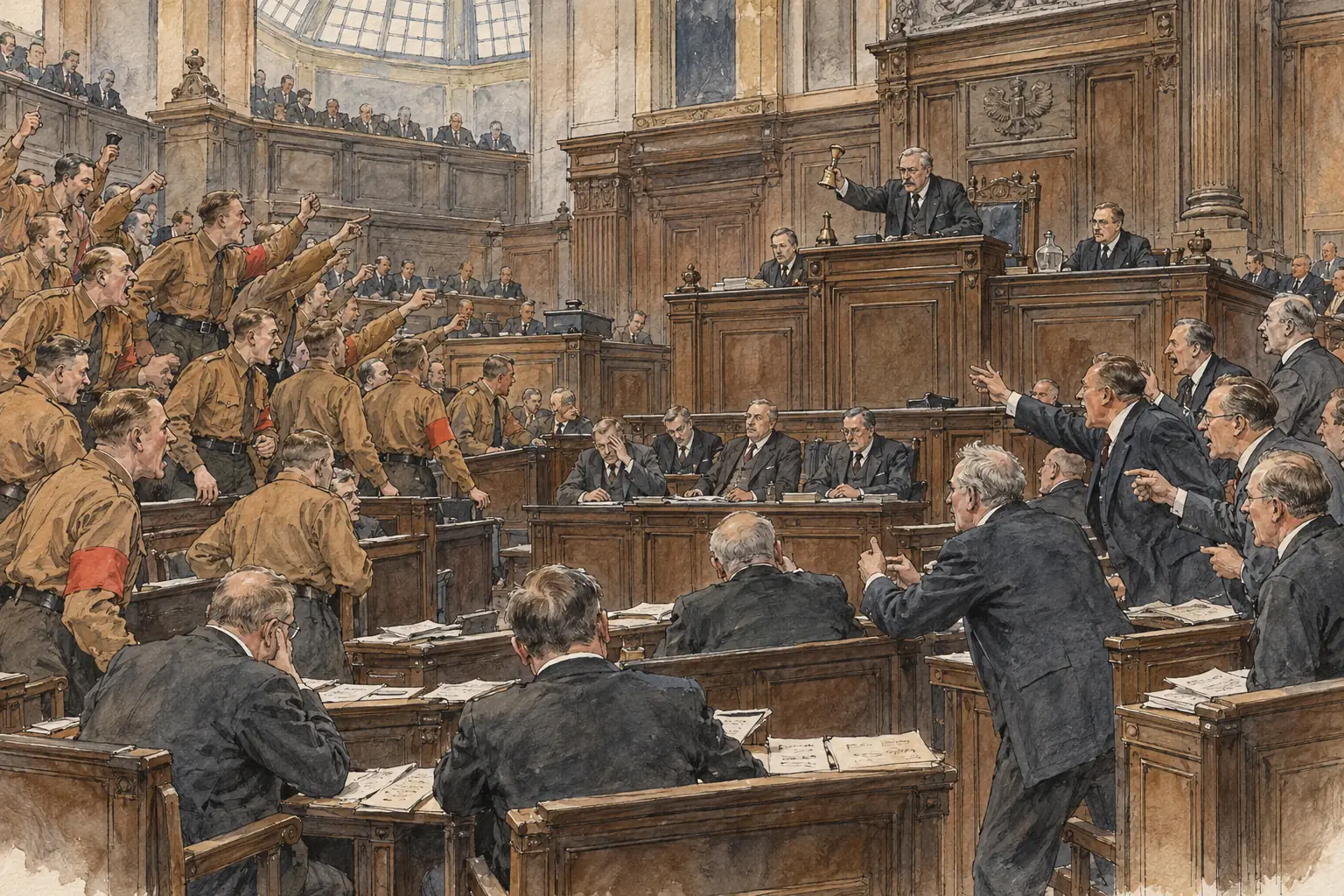
Two Reichstag elections in 1932 underscored the Nazi Party's rising influence while revealing the Weimar system's inability to form stable governments. These votes occurred against a backdrop of mass unemployment and social discontent, boosting extremist parties.
Results and implications of the July election
- Nazi breakthrough - The Nazis secured 37% of the vote and 230 seats, making them the largest party in the Reichstag, though short of a majority.
- Political fragmentation - No coalition could form, leading to continued instability and reliance on presidential decrees under Article 48 of the Weimar Constitution.
- Campaign factors - Aggressive Nazi propaganda and street violence contributed to their gains, capitalising on economic woes.
Results and implications of the November election
- Slight Nazi decline - Support fell to 33% and 196 seats, reflecting voter fatigue from prolonged uncertainty, yet the Nazis remained the dominant force.
- Ongoing deadlock - The election again failed to produce a workable majority, intensifying calls for authoritarian solutions among elites.
- Broader context - Communist gains alarmed conservatives, pushing them towards alliances with the Nazis to counter left-wing threats.
The 'backstairs intrigue' to appoint Hitler
Image 1 of 3: Papen and Schleicher schemed for power away from parliament
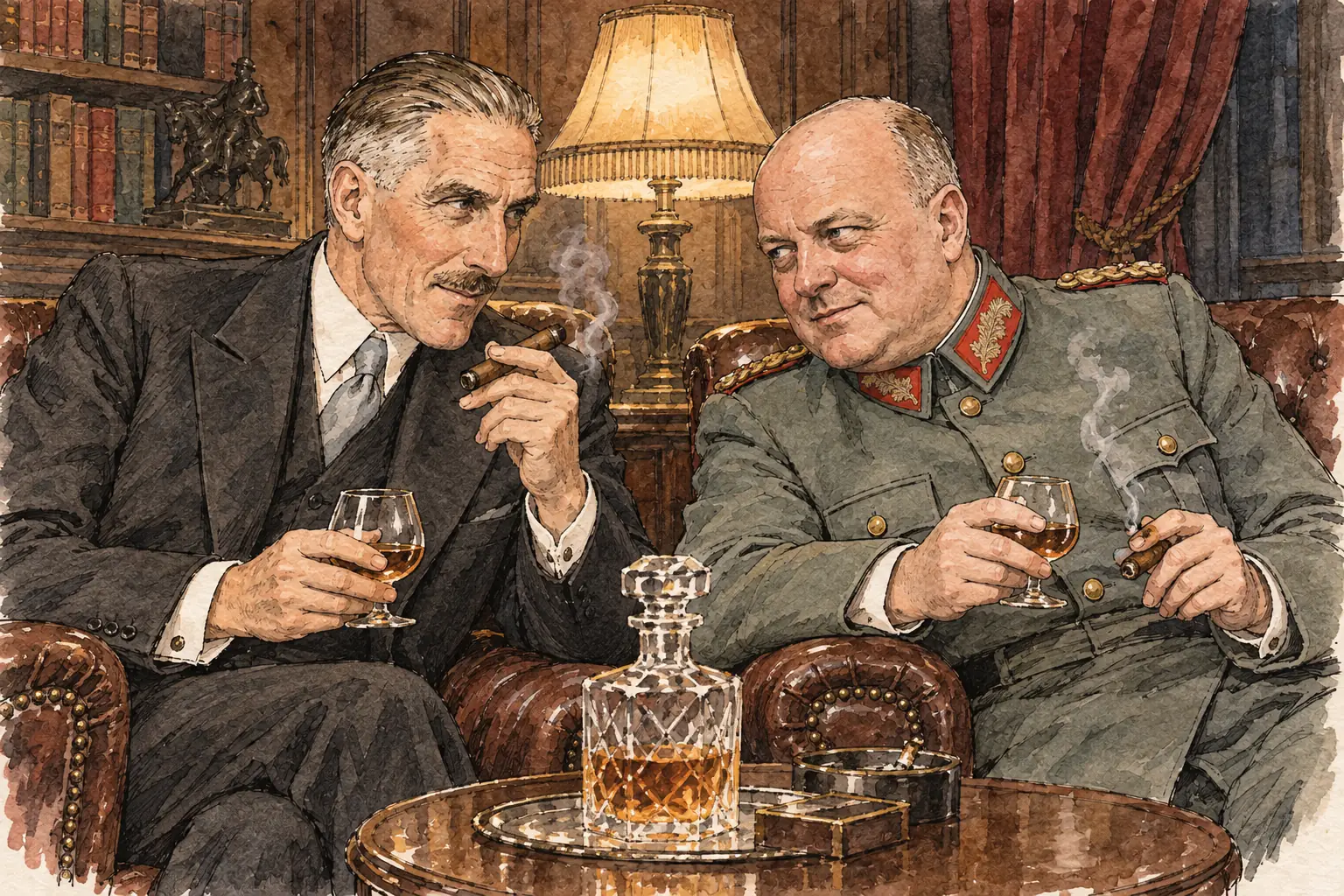
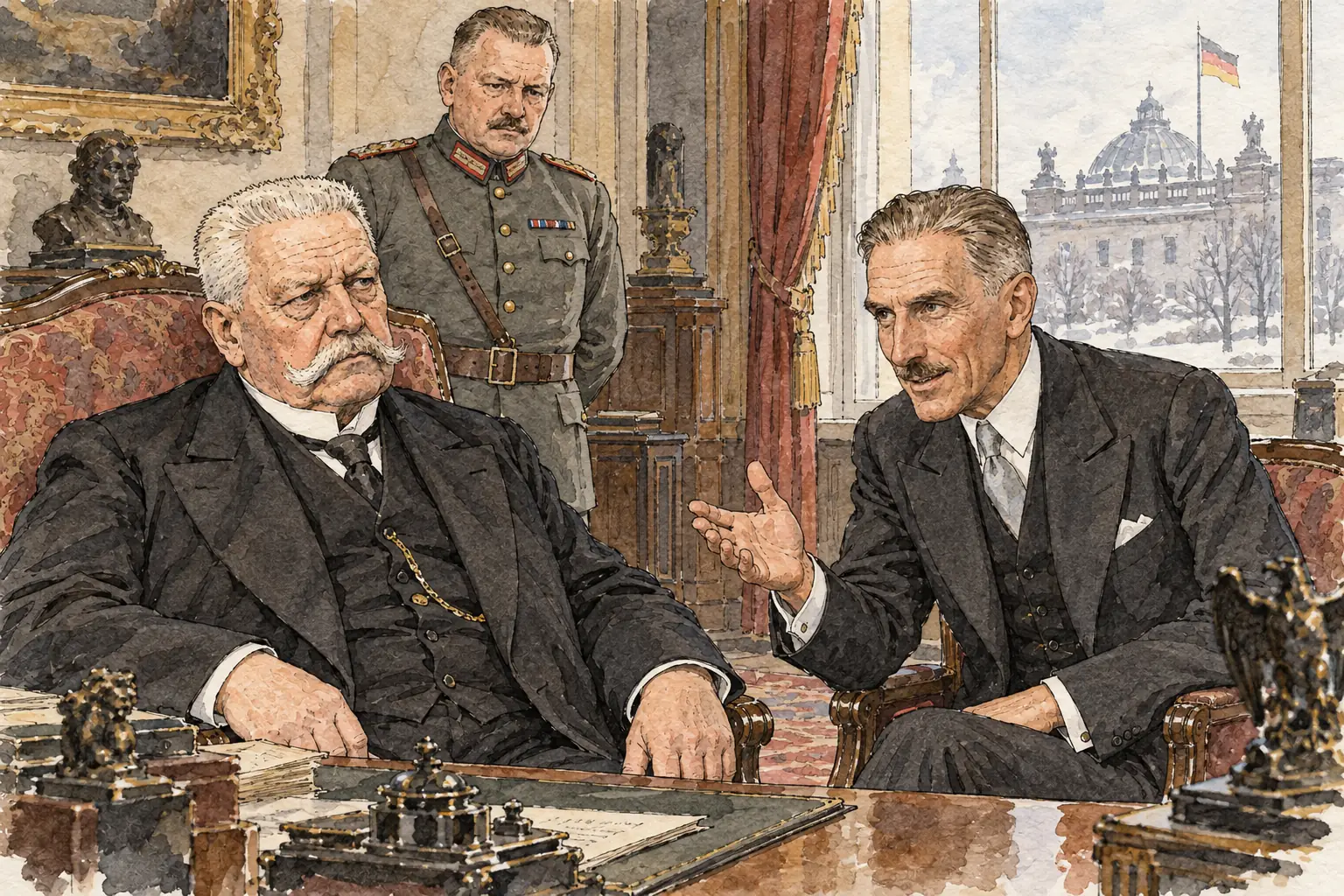
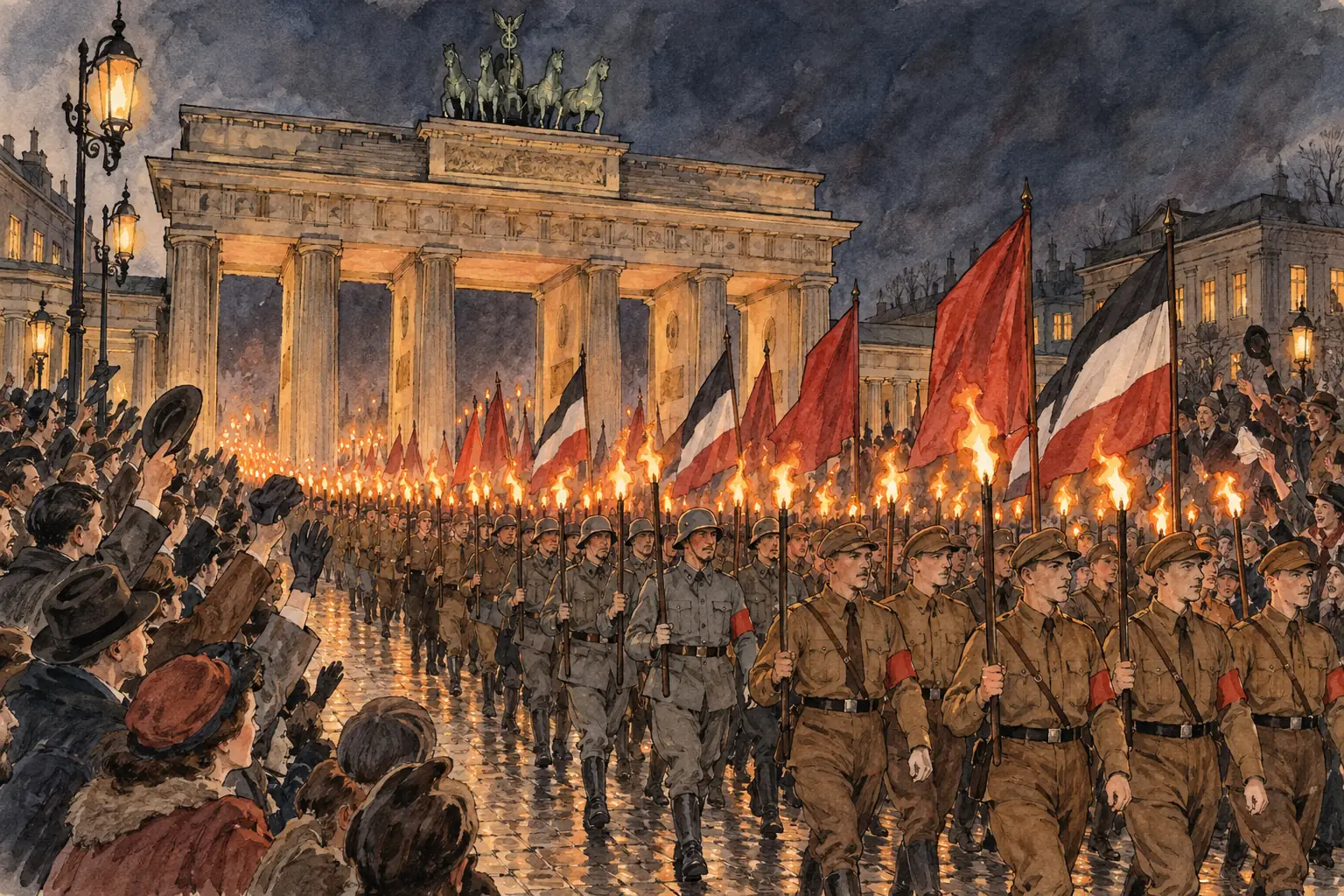
Behind-the-scenes negotiations, often termed 'backstairs intrigue', involved conservative elites manipulating the political crisis to their advantage. This process culminated in Hitler's appointment as Chancellor on 30 January 1933, despite his party's lack of a parliamentary majority.
Key figures and deals in the intrigue
- Papen's role - Former Chancellor Franz von Papen brokered deals with industrialists and landowners, proposing a conservative-led coalition with Hitler to stabilise the government and exclude socialists.
- Schleicher's failure - Kurt von Schleicher, appointed Chancellor in December 1932, attempted land reforms that alienated elites, leading to his resignation after losing Hindenburg's support.
- Hindenburg's decision - President Hindenburg, initially reluctant, was persuaded by Papen that Hitler could be controlled within a cabinet dominated by conservatives, resulting in his appointment in a coalition government.
How the Chancellorship led to dictatorship
Although Hitler initially held limited power in a cabinet with only two other Nazi members, the Chancellorship provided strategic advantages that enabled the rapid consolidation of Nazi control. This position, intended as a containment measure, instead facilitated the erosion of democratic structures.
Factors enabling the shift to dictatorship
- Control over key institutions - As Chancellor, Hitler influenced the police and could use presidential emergency powers, allowing suppression of opposition through violence and decrees.
- Manipulation of coalitions - The conservative majority in the cabinet underestimated Hitler's ambitions, enabling him to outmanoeuvre allies and push for new elections to gain leverage.
- Exploitation of crises - Events like the Reichstag Fire in February 1933 were used to justify emergency measures, suspending civil liberties and paving the way for totalitarian rule.
- Broader weaknesses - The Weimar Constitution's flaws, such as Article 48, combined with economic despair, made the system vulnerable to authoritarian takeover despite the Nazis' minority status..