3.1 - Chancellor to Dictator, 1933
Key facts and dates
The period from February to March 1933 was pivotal in Adolf Hitler's consolidation of power in Germany, transforming his role from chancellor to dictator through a series of events that eroded democratic structures. Key milestones included the Reichstag Fire, emergency legislation, and the Enabling Act, which facilitated the Nazi regime's control over the state.
Timeline of key events
- 27 February 1933 – Reichstag building set on fire, blamed on communists, providing pretext for emergency measures.
- 28 February 1933 – Decree for the Protection of People and State issued, suspending civil liberties and enabling arrests.
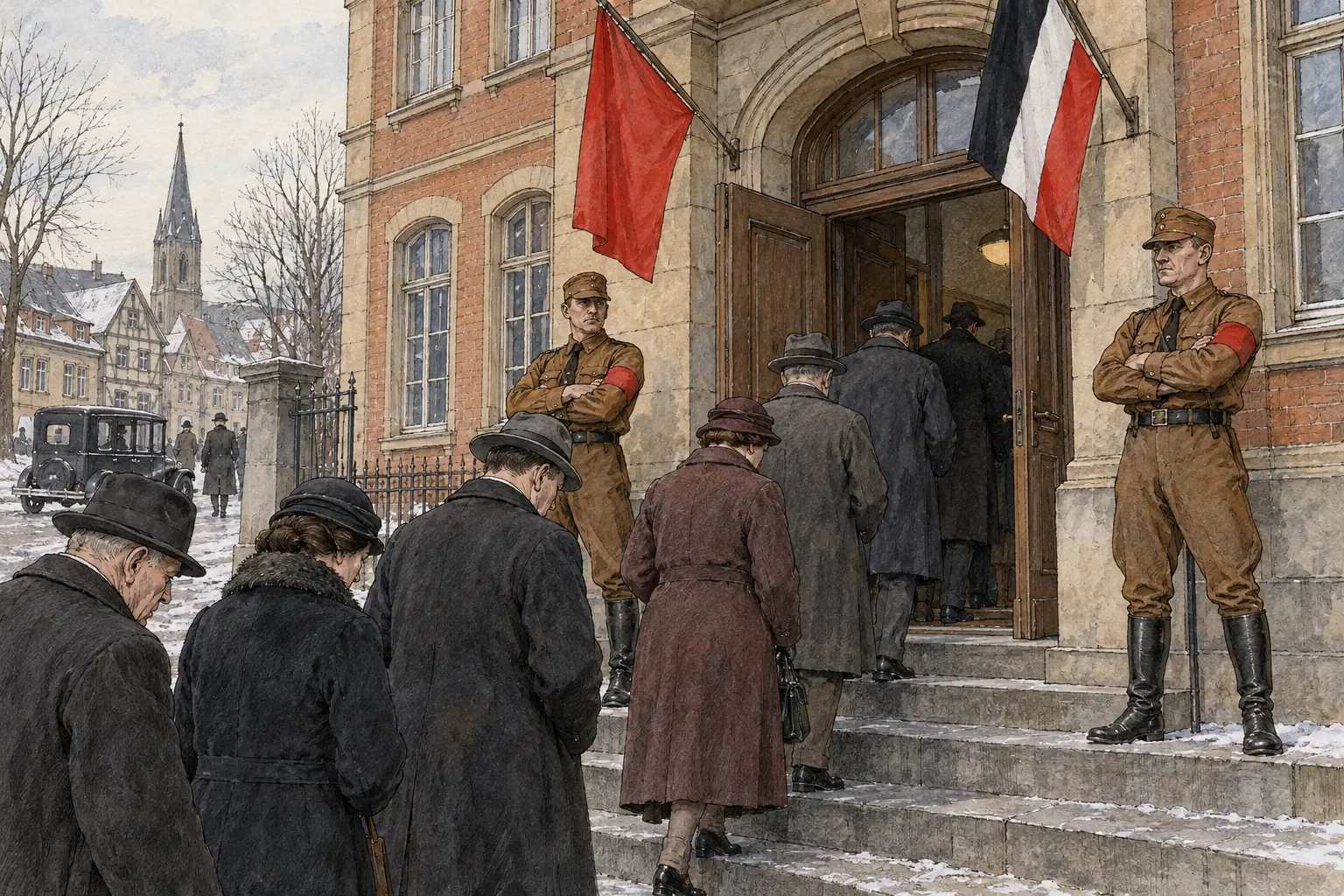
- 5 March 1933 – Reichstag elections held amid suppression of opposition, with Nazis gaining 44% of votes.
- 23 March 1933 – Enabling Act passed, granting Hitler's cabinet legislative powers without parliamentary approval.
- From April 1933 – Beginning of Gleichschaltung, coordinating all aspects of German society under Nazi control.
The Reichstag Fire and its immediate consequences
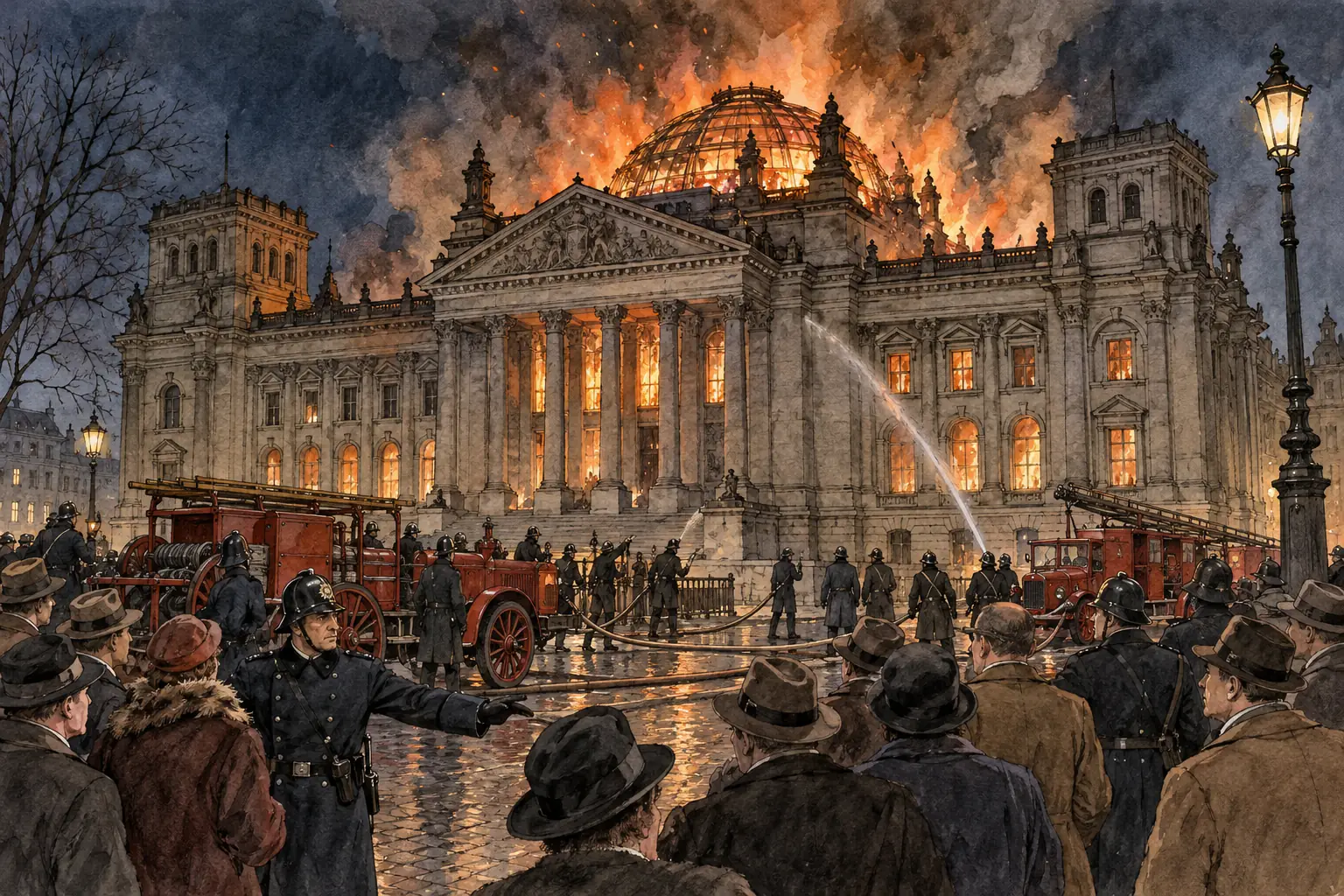
On 27 February 1933, the Reichstag building in Berlin was engulfed in flames, an event that the Nazis quickly exploited to justify repressive actions against political opponents. This arson attack, attributed to a Dutch communist named Marinus van der Lubbe, created a climate of fear and urgency that Hitler used to his advantage.
Circumstances and exploitation of the Reichstag Fire
- The incident - The fire destroyed much of the parliament building, and van der Lubbe was arrested at the scene, confessing to the act as a protest against the government.
- Nazi response - Hitler and the Nazis immediately claimed it was part of a wider communist plot to overthrow the state, using it to portray themselves as defenders of order.
- Immediate actions - Thousands of communists, including party leaders, were arrested in the following days, severely weakening the opposition ahead of upcoming elections.
- Creation of panic - Propaganda amplified the event to suggest an imminent communist uprising, rallying public support for strong measures to restore stability.
The Decree for the Protection of People and State
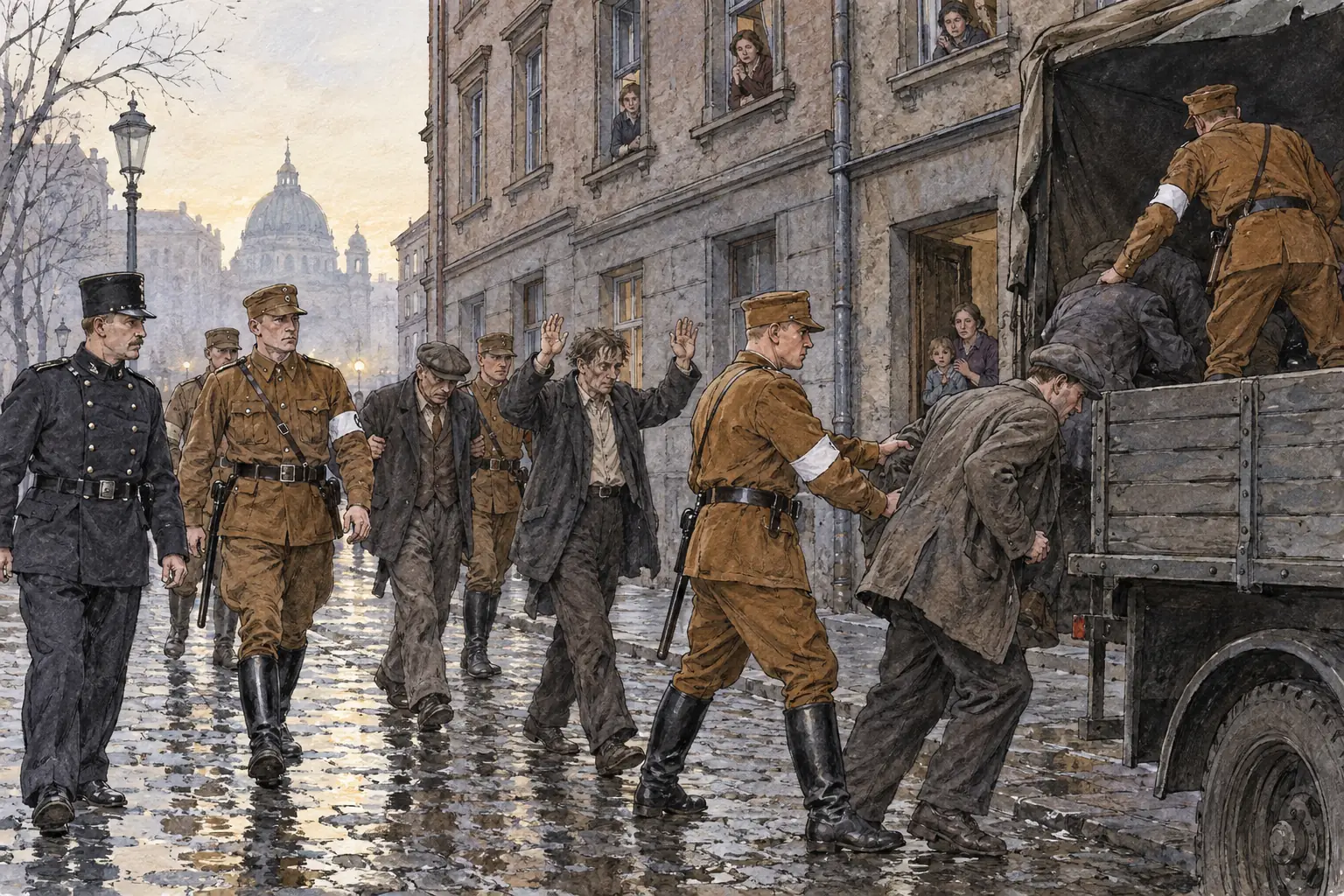
Issued on 28 February 1933, just one day after the Reichstag Fire, this emergency decree marked a significant erosion of democratic rights in Germany. Signed by President Hindenburg at Hitler's urging, it was presented as a temporary measure to safeguard the nation but became a tool for long-term Nazi control.
Key provisions and effects of the decree
- Suspension of civil liberties - Freedoms such as speech, press, assembly, and privacy were indefinitely halted, allowing the government to censor media and monitor communications.
- Mass arrests and detention - Police powers were expanded to detain suspects without trial, leading to the imprisonment of over 4,000 communists and other perceived threats in makeshift camps.
- Centralisation of power - The decree enabled the national government to override state authorities, concentrating control in Berlin and diminishing regional autonomy.
- Impact on opposition - By targeting communists specifically, it dismantled their organisational structure, preventing effective campaigning in the March 1933 elections.
Passing the Enabling Act by intimidation and deals
Image 1 of 2: SA men watched polling stations in the election of 5 March 1933, in which the Nazis won 44% of the vote
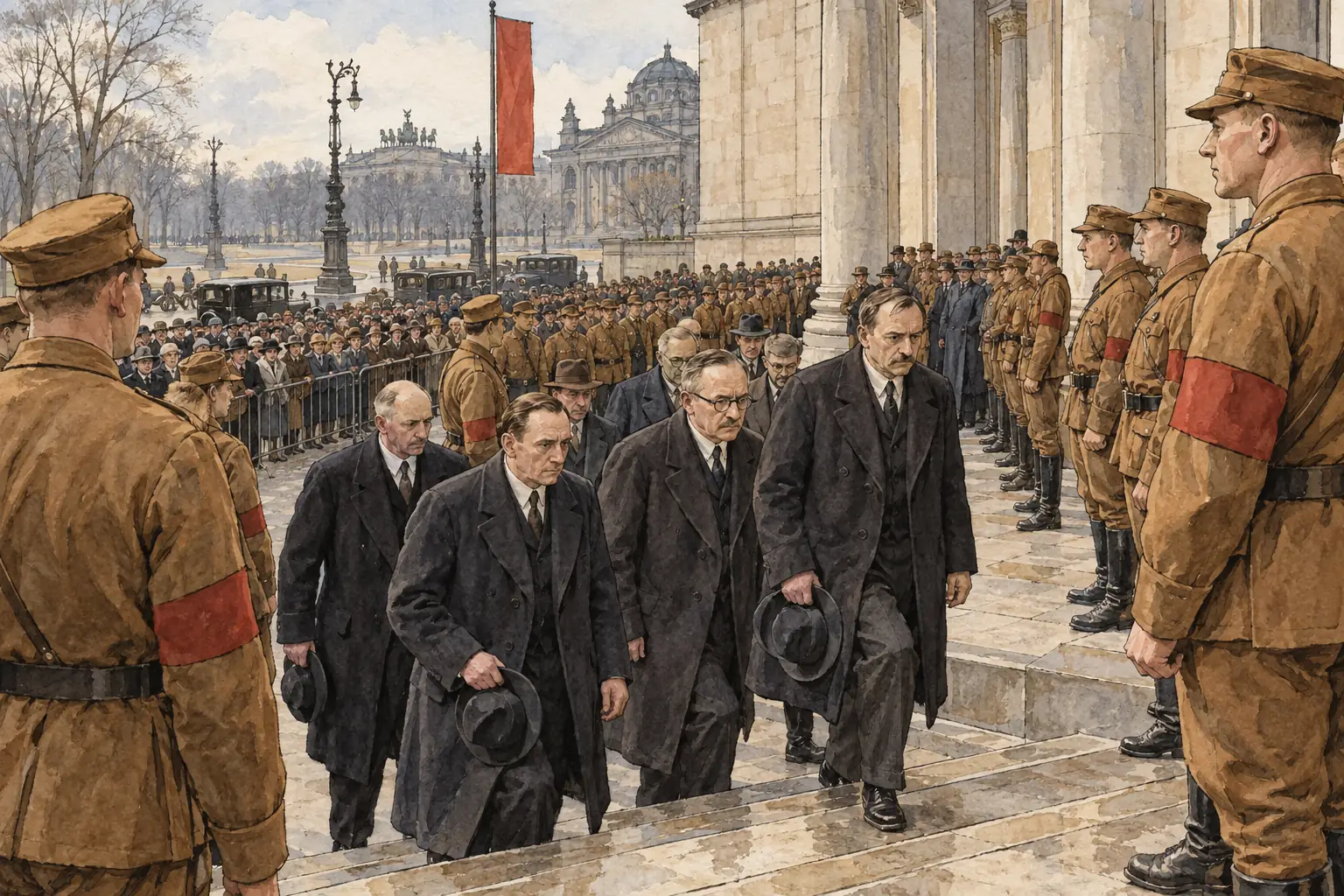
The Enabling Act, formally known as the Law to Remedy the Distress of People and Reich, was passed on 23 March 1933 following the Reichstag elections. It required a two-thirds majority, which the Nazis achieved through a combination of coercion, alliances, and manipulation of the political environment.
Strategies used to secure the Enabling Act
- Electoral context - In the 5 March elections, the Nazis won 44% of seats but needed support from other parties; alliances with nationalists added enough votes for a simple majority, but more was required for the act.
- Intimidation tactics - SA stormtroopers surrounded the Kroll Opera House (temporary Reichstag venue), creating a threatening atmosphere; communist deputies were barred or arrested, reducing opposition numbers.
- Political deals - Hitler negotiated with the Catholic Centre Party, promising to protect church rights in exchange for their votes, which proved crucial in reaching the two-thirds threshold.
- Outcome of the vote - The act passed with 444 votes in favour and 94 against, primarily from social democrats, marking a legal transfer of power.
Impacts of the Enabling Act and Gleichschaltung
Once passed, the Enabling Act empowered Hitler's cabinet to enact laws without Reichstag approval for four years, effectively sidelining parliament and laying the foundation for dictatorship. This initiated Gleichschaltung (coordination), a process that aligned all institutions with Nazi ideology.
Consequences of the Enabling Act
- Legislative independence - The cabinet could pass laws, including those altering the constitution, without parliamentary or presidential consent, enabling rapid policy changes.
- Suppression of dissent - Remaining opposition parties were banned or dissolved by July 1933, with trade unions and other groups forcibly integrated into Nazi structures.
- Expansion of Gleichschaltung - This "coordination" extended to media, education, and cultural organisations, ensuring uniformity under Nazi control and eliminating alternative viewpoints.
- Path to total control - By centralising authority, the act facilitated the creation of a one-party state, setting the stage for further consolidations like the Night of the Long Knives in 1934.