3.6 - Little Big Horn & Wounded Knee
Key facts and dates
The period from 1876 to 1890 saw escalating conflicts between the US government and indigenous Plains peoples, triggered by territorial disputes and cultural clashes. Key battles and movements during this time marked a turning point in the control of the Plains, leading to the effective end of organised indigenous resistance.
Timeline of key events
- 1874 – Gold discovered in the Black Hills, sparking a rush of miners into sacred Sioux territory despite treaty protections.
- 1875 – US government attempts to buy the Black Hills fail, leading to orders for Sioux bands to move to reservations.
- June 1876 – Battle of the Little Big Horn results in the defeat of Lieutenant Colonel Custer's forces by Sioux and Cheyenne warriors.
- Late 1876 – US military intensifies campaigns, forcing many indigenous groups onto reservations after Custer's defeat.
- 1889 – Wovoka's Ghost Dance vision spreads among Plains tribes, promising restoration of traditional ways.
- 1890 – US bans the Ghost Dance, heightening tensions on reservations.
- 29 December 1890 – Wounded Knee Massacre kills around 300 Lakota people, symbolising the end of armed resistance.
Battle of the Little Big Horn in 1876
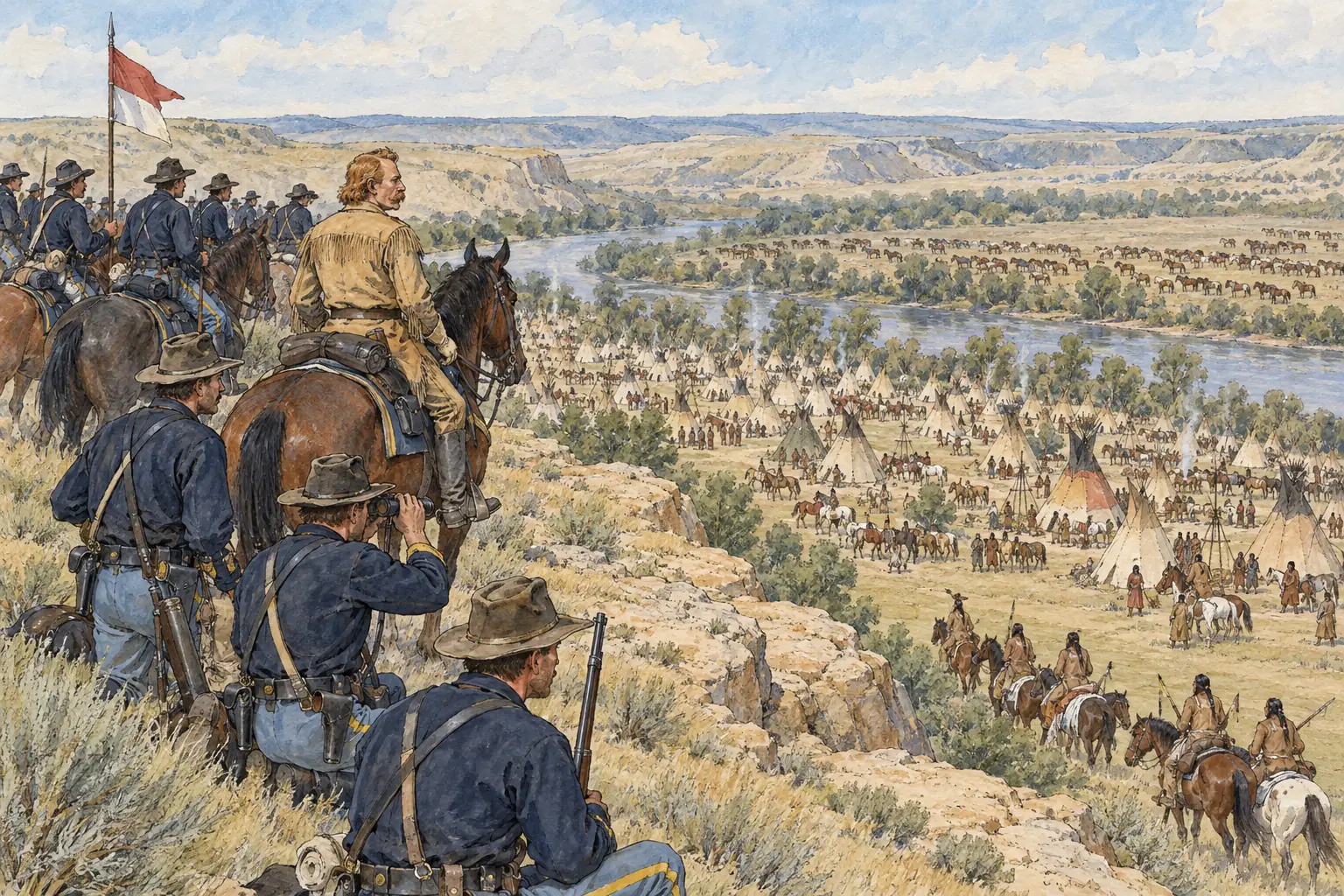
The Battle of the Little Big Horn arose amid growing tensions over land rights in the Black Hills region, which held deep spiritual significance for the Sioux. Gold discoveries there attracted thousands of prospectors, violating existing treaties and prompting a military response from the US.
Factors leading to the battle
- Gold rush in the Black Hills - Prospectors flooded the area after 1874 discoveries, ignoring the 1868 Treaty of Fort Laramie that reserved the land for the Sioux, leading to government pressure to seize control.
- Failed land negotiations - In 1875, the US offered to purchase the Black Hills, but Sioux leaders refused, prompting orders for all bands to relocate to reservations by early 1876 or face military action.
- Indigenous resistance - Leaders like Sitting Bull and Crazy Horse rallied Sioux and Cheyenne groups, forming large encampments to defy relocation and protect their territories.
Key events during the battle
- Divided US command - The US army split its forces into three columns to surround indigenous camps, but poor coordination left Lieutenant Colonel George Custer's 7th Cavalry isolated.
- Custer's defeat - On 25 June 1876, Custer attacked a vast village along the Little Big Horn River, underestimating the number of warriors; his 600 troops were overwhelmed by around 2,000 fighters, resulting in the death of Custer and over 250 soldiers.
- Indigenous victory - Warriors led by Crazy Horse and Gall repelled the assault, marking a significant but temporary triumph against US expansion.
Impact of the Battle of the Little Big Horn
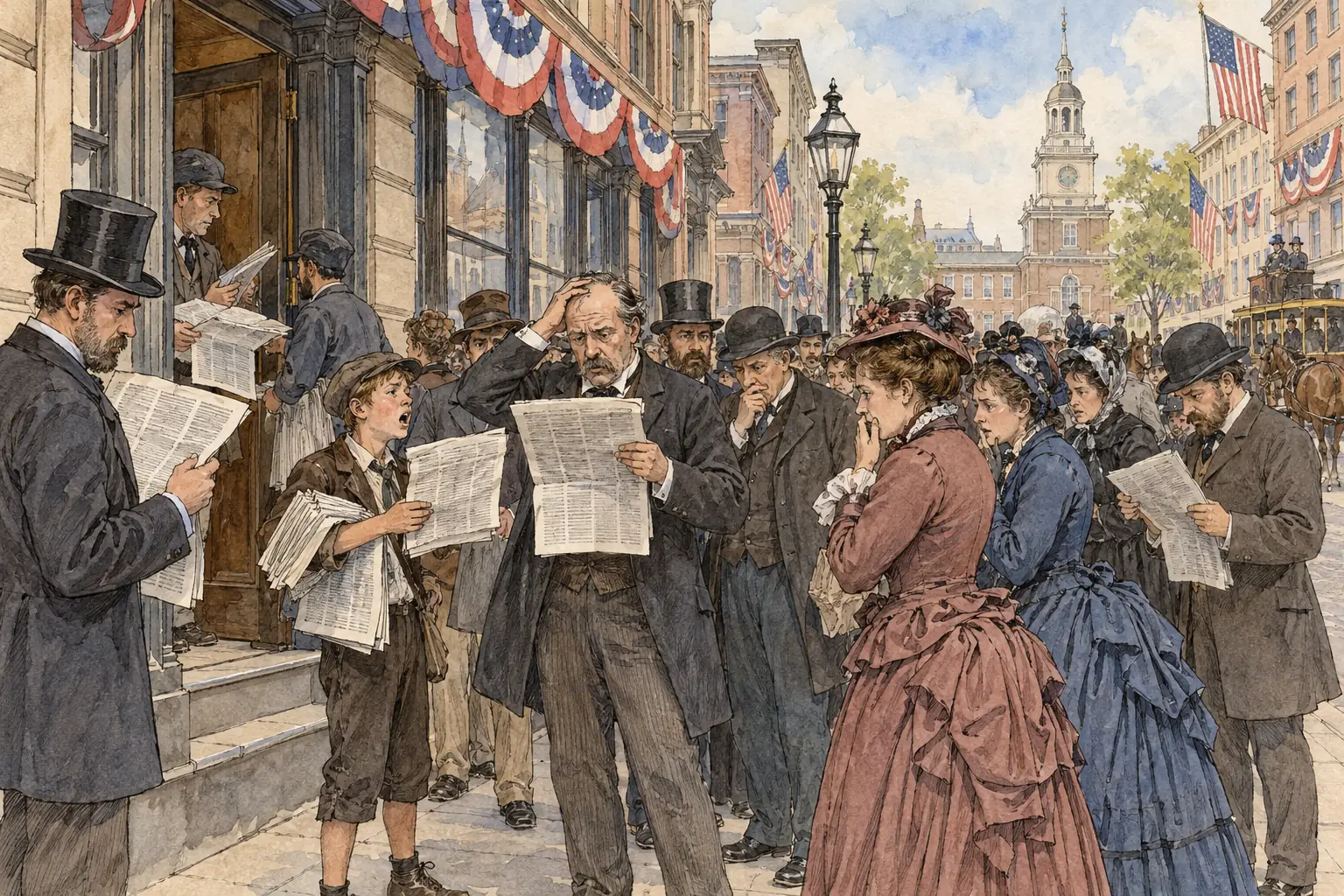
The defeat at Little Big Horn stunned the American public and government, transforming perceptions of the conflict on the Plains. It intensified efforts to subdue indigenous groups and accelerated policies of confinement.
Consequences for US policy and indigenous peoples
- Public shock and outrage - News of Custer's annihilation spread rapidly, portraying him as a martyr and fuelling demands for revenge, with newspapers amplifying calls for stronger military action.
- Increased determination to control the Plains - The US boosted troop numbers and resources, launching relentless campaigns to break indigenous resistance and secure the region for settlement.
- Accelerated confinement to reservations - By late 1876, many Sioux bands were forced onto restricted lands, losing autonomy; the Black Hills were formally annexed in 1877, stripping away key territories.
Spread of the Ghost Dance movement on reservations
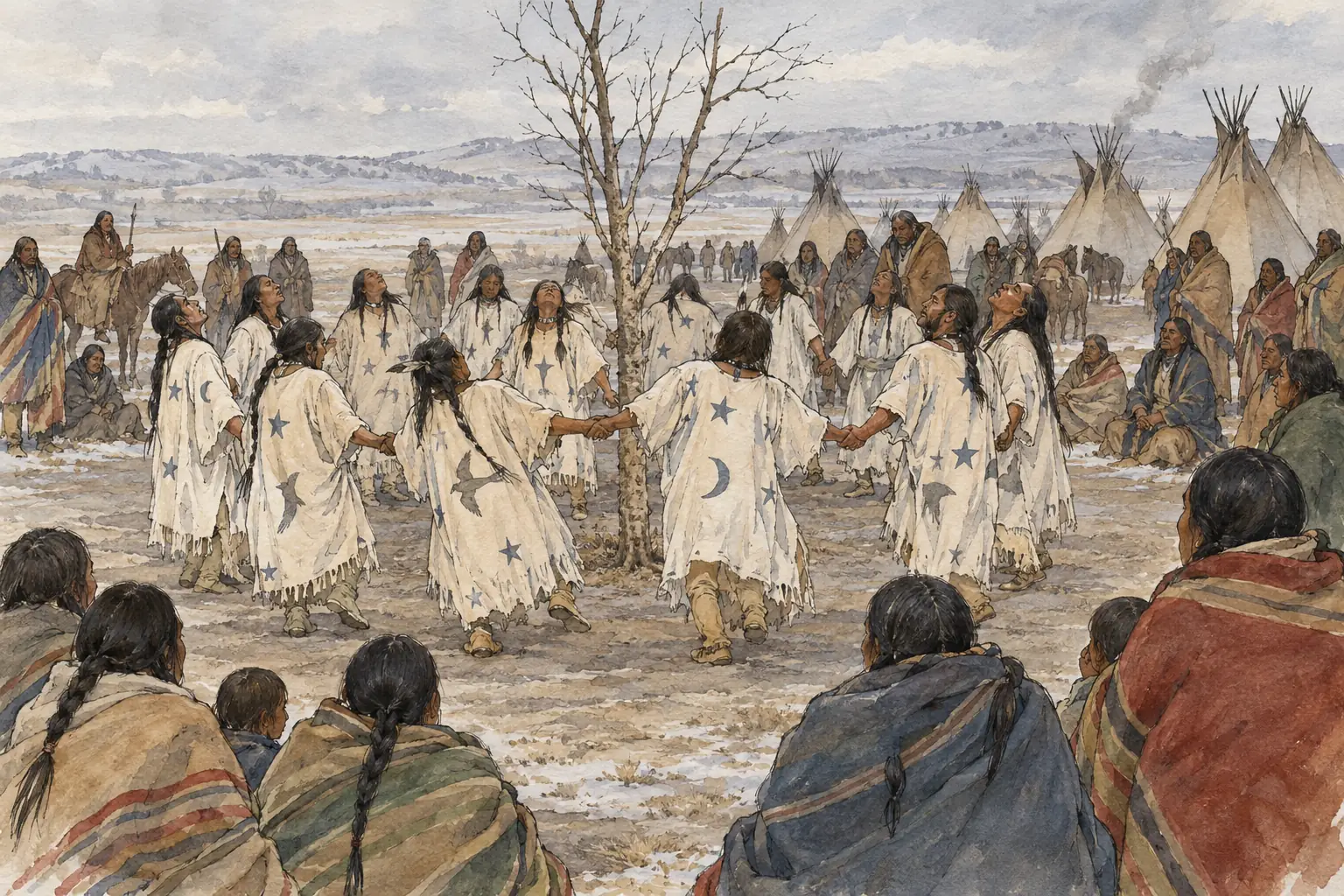
By the late 1880s, indigenous peoples confined to reservations faced poverty, disease, and cultural erosion. The Ghost Dance emerged as a spiritual response, offering hope amid desperation.
Origins and expansion of the movement
- Wovoka's vision - In 1889, Paiute prophet Wovoka experienced a vision during a solar eclipse, teaching that performing the Ghost Dance would revive ancestors, restore buffalo herds, and remove white settlers.
- Adoption by Plains tribes - The dance spread rapidly among groups like the Lakota Sioux, who adapted it to include protective 'ghost shirts' believed to repel bullets, blending traditional rituals with messianic promises.
- Role on reservations - Amid harsh conditions, including land loss and failed crops, the movement provided unity and cultural revival, attracting thousands who danced in circles to invoke spiritual renewal.
US fears leading to the Wounded Knee Massacre
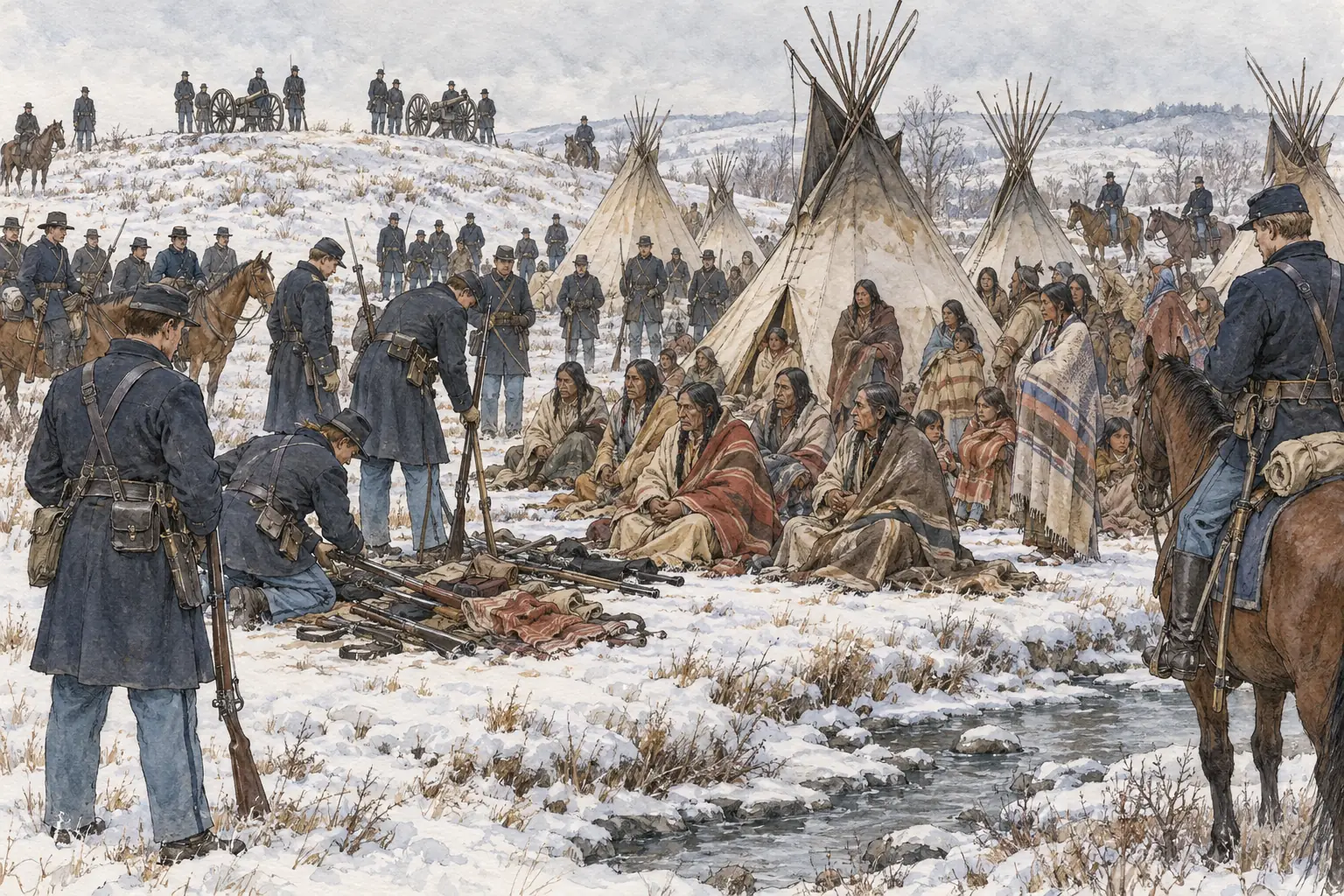
US authorities viewed the Ghost Dance with alarm, interpreting it as a potential uprising. This paranoia, combined with reservation tensions, culminated in tragedy at Wounded Knee.
Events building to the massacre
- Government concerns - Officials feared the dance signalled rebellion, especially after Sitting Bull's 1890 arrest and death during a botched attempt to suppress the movement on the Standing Rock Reservation.
- Military intervention - The US army deployed to Pine Ridge Reservation, where Big Foot's band of Miniconjou Lakota, seeking safety, was intercepted while travelling to join other dancers.
- The massacre at Wounded Knee - On 29 December 1890, troops attempted to disarm the group; a scuffle led to indiscriminate firing, killing around 300 Lakota, including women and children, in the snow-covered creek.
Significance of the Wounded Knee Massacre
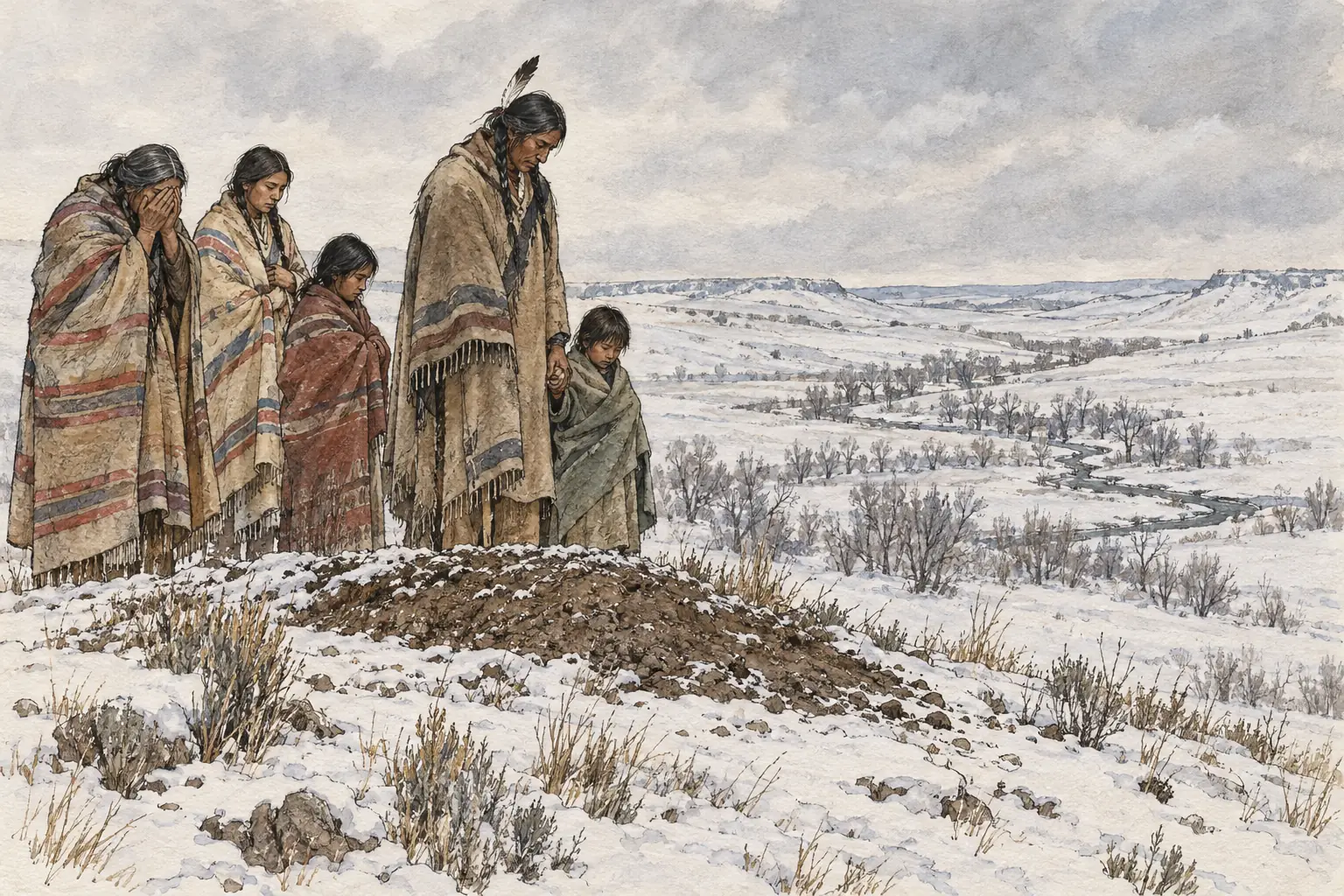
The events at Wounded Knee represented a devastating blow to indigenous resistance, marking the close of an era of open conflict on the Plains. It underscored the finality of US dominance.
Long-term implications of the massacre
- Symbolic end of armed resistance - The slaughter effectively crushed remaining hopes of rebellion, with survivors demoralised and the Ghost Dance movement largely abandoned.
- Cultural and human cost - It highlighted the brutal suppression of indigenous spirituality and autonomy, contributing to ongoing trauma and the erosion of traditional ways of life.
- Legacy in US history - Wounded Knee became a symbol of injustice, later influencing indigenous rights movements and serving as a stark reminder of the consequences of expansionist policies.