2.6 - The Spanish Armada
Key facts and dates
The Spanish Armada of 1588 represented a major attempt by Spain to invade England and restore Catholic rule, but English naval tactics, strategic errors, and adverse weather led to its failure. This event marked a turning point in European power dynamics, boosting England's naval reputation.
Timeline of key events
- July 1588 – Armada sighted approaching the English Channel in crescent formation.
- Late July 1588 – English ships harass the Armada in skirmishes off Cornwall and Devon.
- Early August 1588 – Armada anchors off Calais to link with the Duke of Parma's army.
- Night of 7-8 August 1588 – English launch fire ships, causing panic and breaking Spanish formation.
- 8 August 1588 – Decisive Battle of Gravelines forces Spanish retreat northwards.
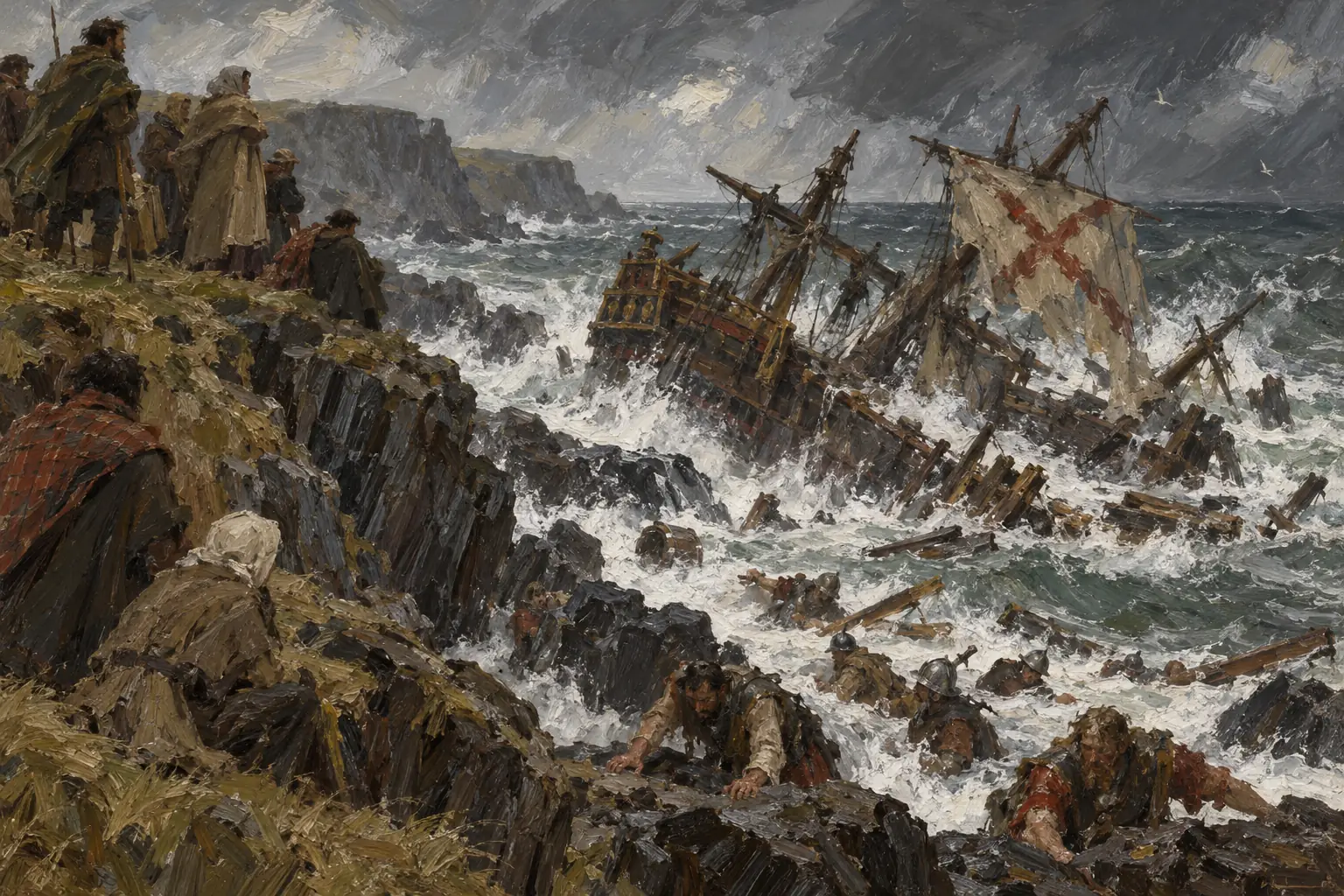
- August-September 1588 – Storms wreck many Spanish ships around Scotland and Ireland.
The Spanish Armada's composition and strategy
Image 1 of 2: The Armada sailed up the Channel in a defensive crescent formation
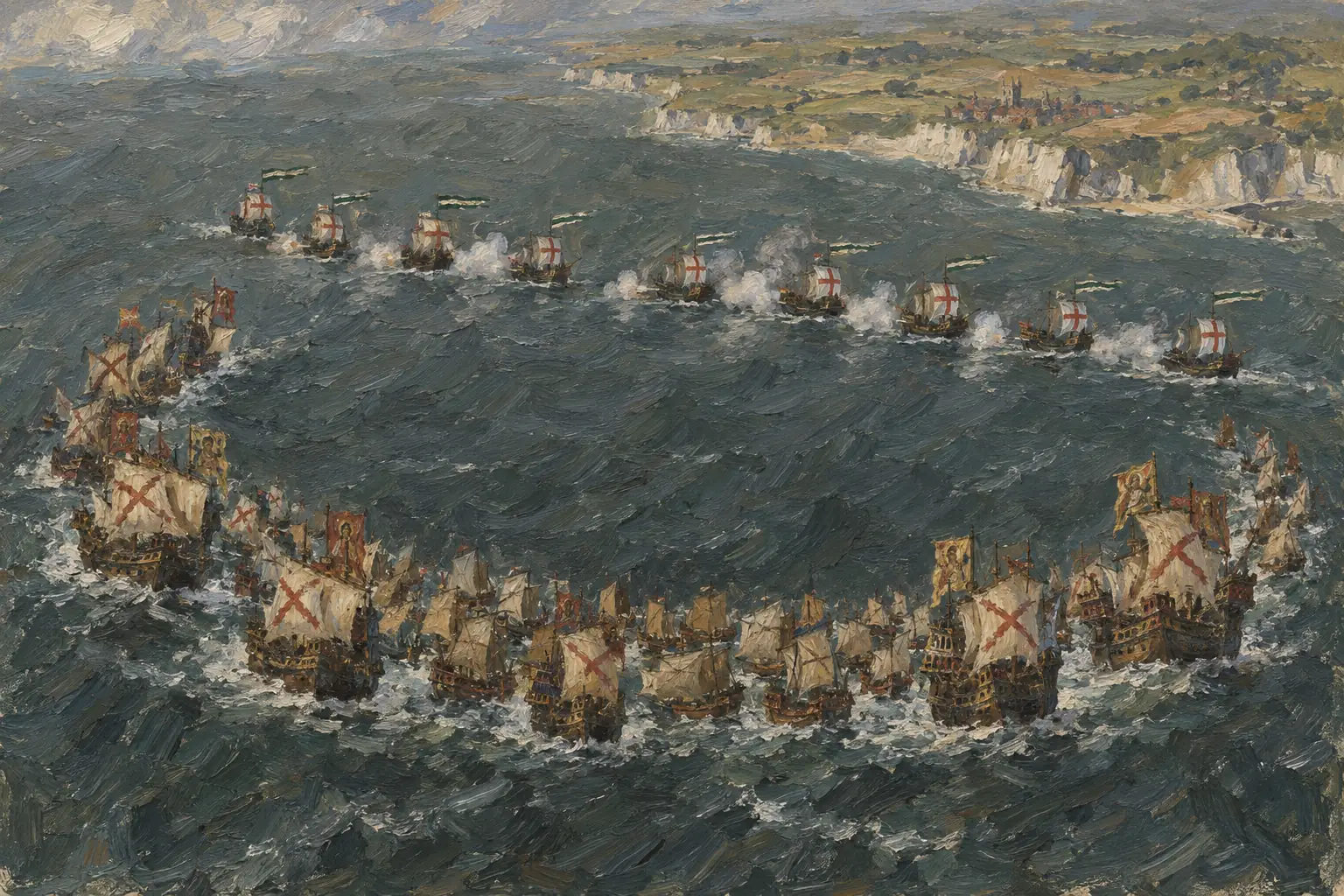
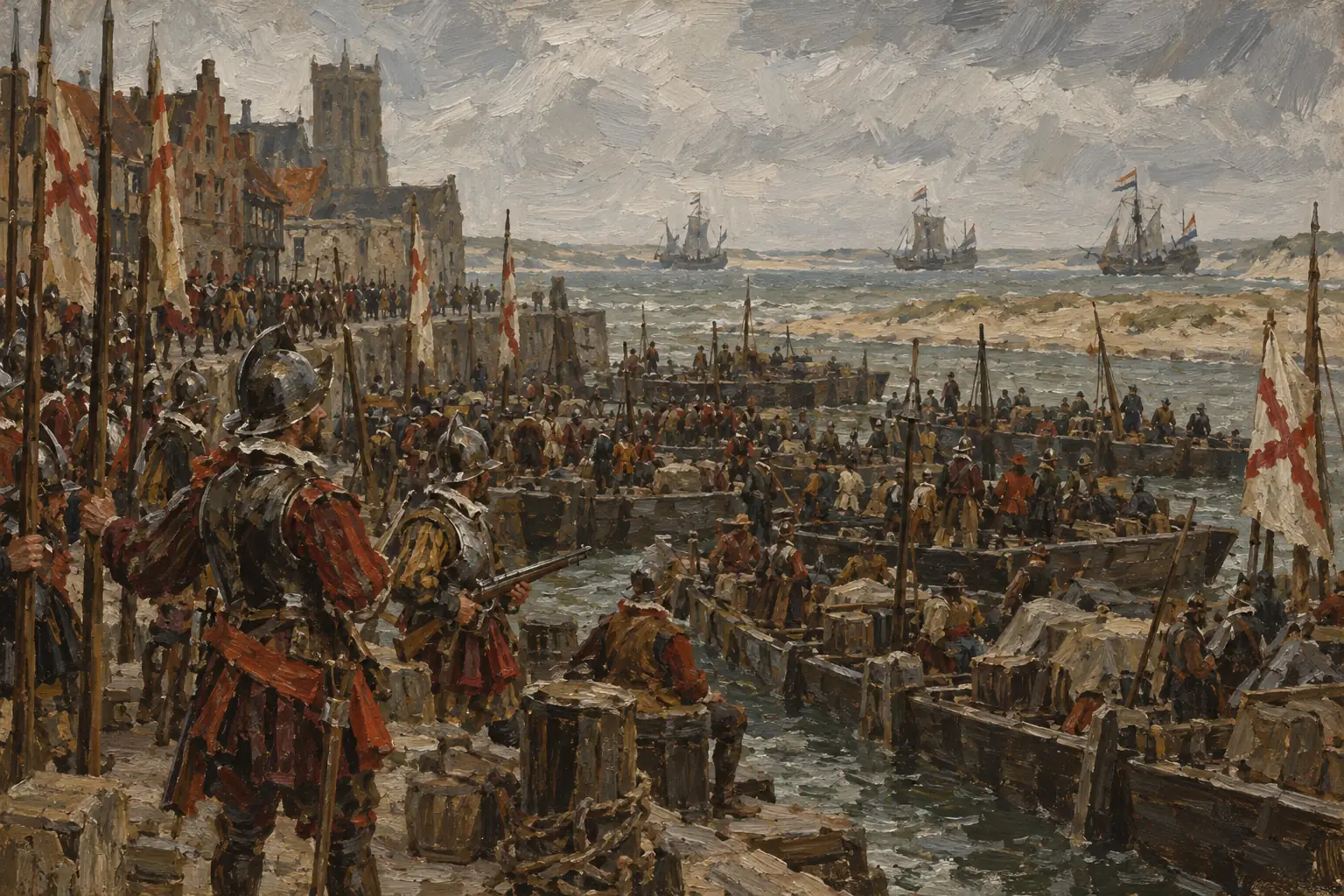
In 1588, Spain assembled a massive naval force known as the Armada to launch an invasion of England. This fleet aimed to remove Queen Elizabeth I from power and re-establish Catholicism, reflecting the ongoing religious and political tensions between the two nations.
Composition of the Armada
- Fleet size and personnel - Consisted of approximately 130 vessels, including galleons, galleys, and hulks, carrying around 27,000 sailors and soldiers under the command of the Duke of Medina Sidonia.
- Types of ships - Featured a mix of heavily armed warships designed for close-quarters combat and boarding actions, supported by transport vessels for troops and supplies.
Strategy for invasion
- Overall plan - The Armada intended to sail from Spain through the English Channel to rendezvous with additional forces in the Spanish-controlled Netherlands.
- Link-up with ground troops - Once in the Channel, the fleet would escort the Duke of Parma's army of 30,000 soldiers across to the Kent coast using barges, enabling a full-scale land invasion.
- Tactical approach - Spanish commanders planned to engage English ships in hand-to-hand fighting by boarding them, leveraging their soldiers' infantry skills over naval gunnery.
Key events leading to the Armada's defeat
Image 1 of 3: On the night of 7-8 August English fireships forced the Spanish to cut their anchors and scatter off Calais
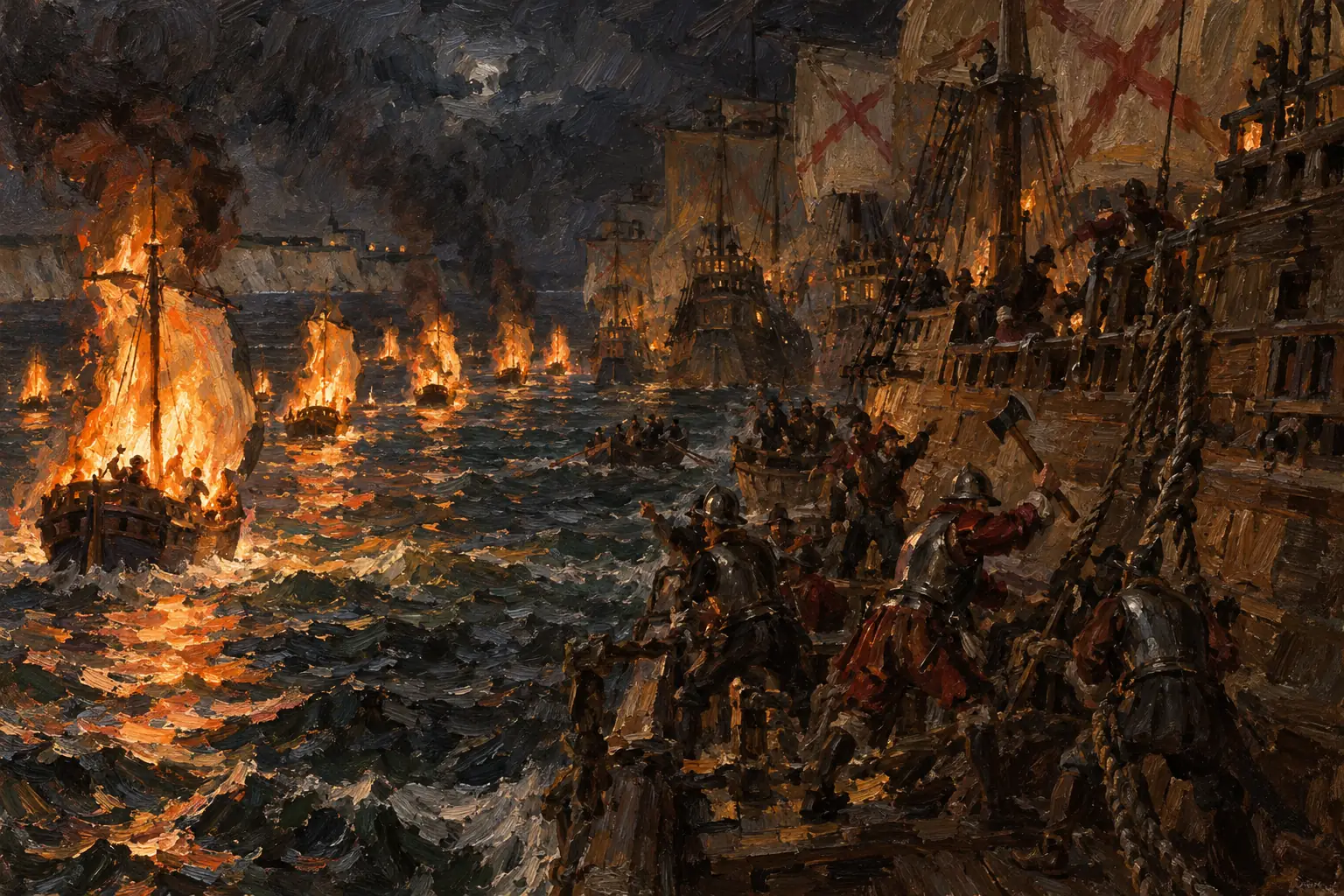
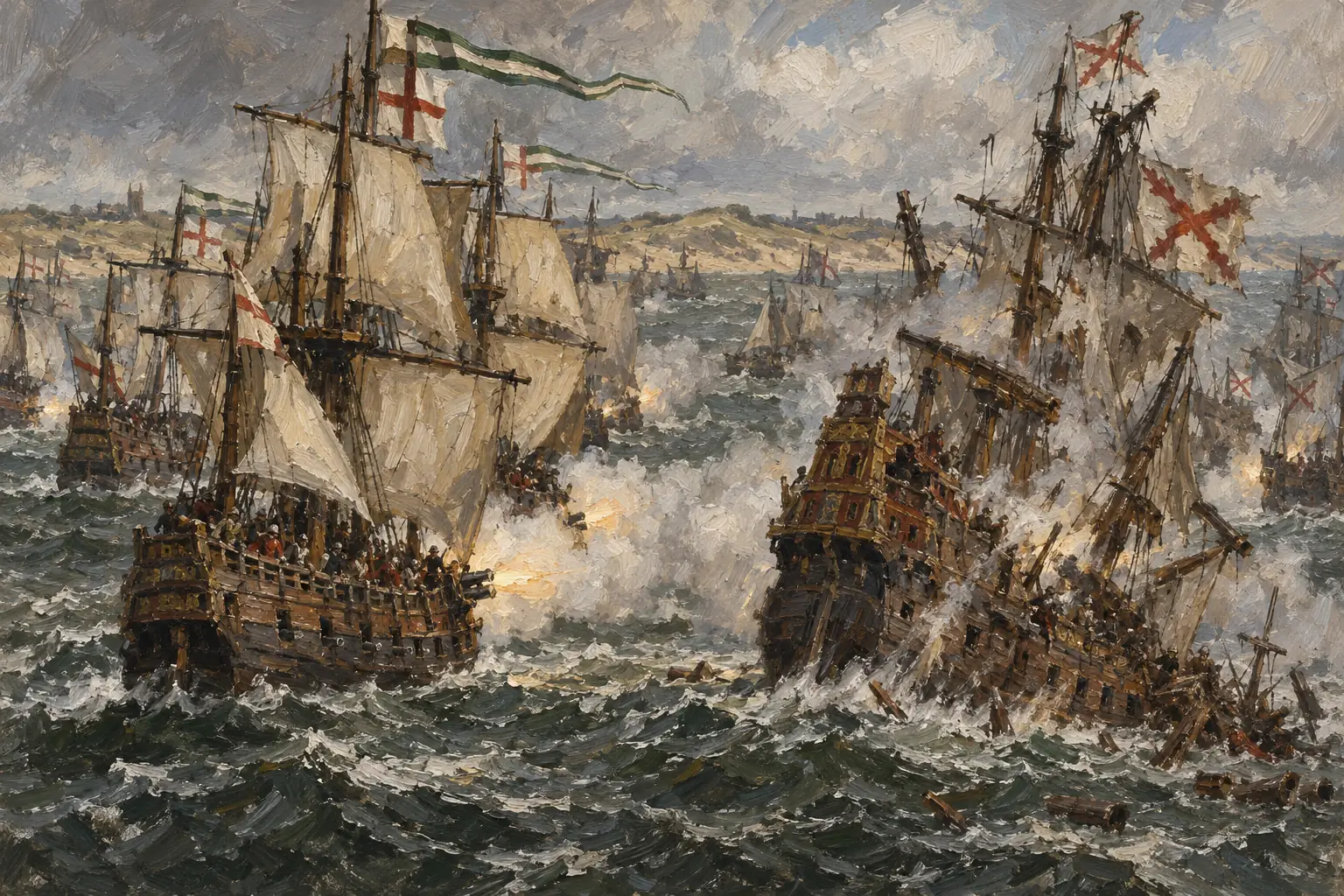
The Armada's journey through the English Channel and beyond unfolded as a series of confrontations and mishaps. English forces, led by experienced commanders, disrupted Spanish plans through aggressive tactics and opportunistic strikes.
Initial encounters and harassment
- Sighting and early skirmishes - The Armada was detected off the southwest coast of England in July 1588, prompting the English fleet, commanded by Lord Howard of Effingham with Sir Francis Drake as vice-admiral, to pursue and attack from afar.
- Engagements off the coast - Light battles occurred near Plymouth and the Isle of Wight, where English ships used their speed to avoid direct clashes while firing long-range cannons, inflicting damage without significant losses.
The fire ship attack and Battle of Gravelines
- Anchorage at Calais - In early August, the Armada paused off the French coast to await Parma's troops, but coordination issues and Dutch blockades prevented the rendezvous.
- Night-time disruption - English forces sent eight unmanned vessels packed with flammables drifting towards the anchored Spanish ships, sparking chaos as captains severed anchors to escape the flames.
- Decisive battle - On 8 August 1588, the disorganized Spanish fleet faced the English at Gravelines, where sustained cannon fire sank or damaged several ships, compelling a northward retreat.
Final retreat and losses
- Flight around the British Isles - Unable to return through the Channel, the Armada sailed north past Scotland and west of Ireland, encountering severe Atlantic gales.
- Impact of storms - Without anchors, many vessels were dashed against rocks or sank, resulting in the loss of about 40 ships and thousands of lives before survivors reached Spain.
Reasons for England's victory
England's success against the Armada stemmed from a blend of superior naval capabilities, Spanish logistical shortcomings, and environmental factors. These elements combined to prevent the invasion and scatter the enemy fleet.
English strengths in tactics and technology
- Ship design and manoeuvrability - English galleons were slimmer and faster, allowing them to outpace and outmanoeuvre the bulkier Spanish vessels in the Channel's variable winds.
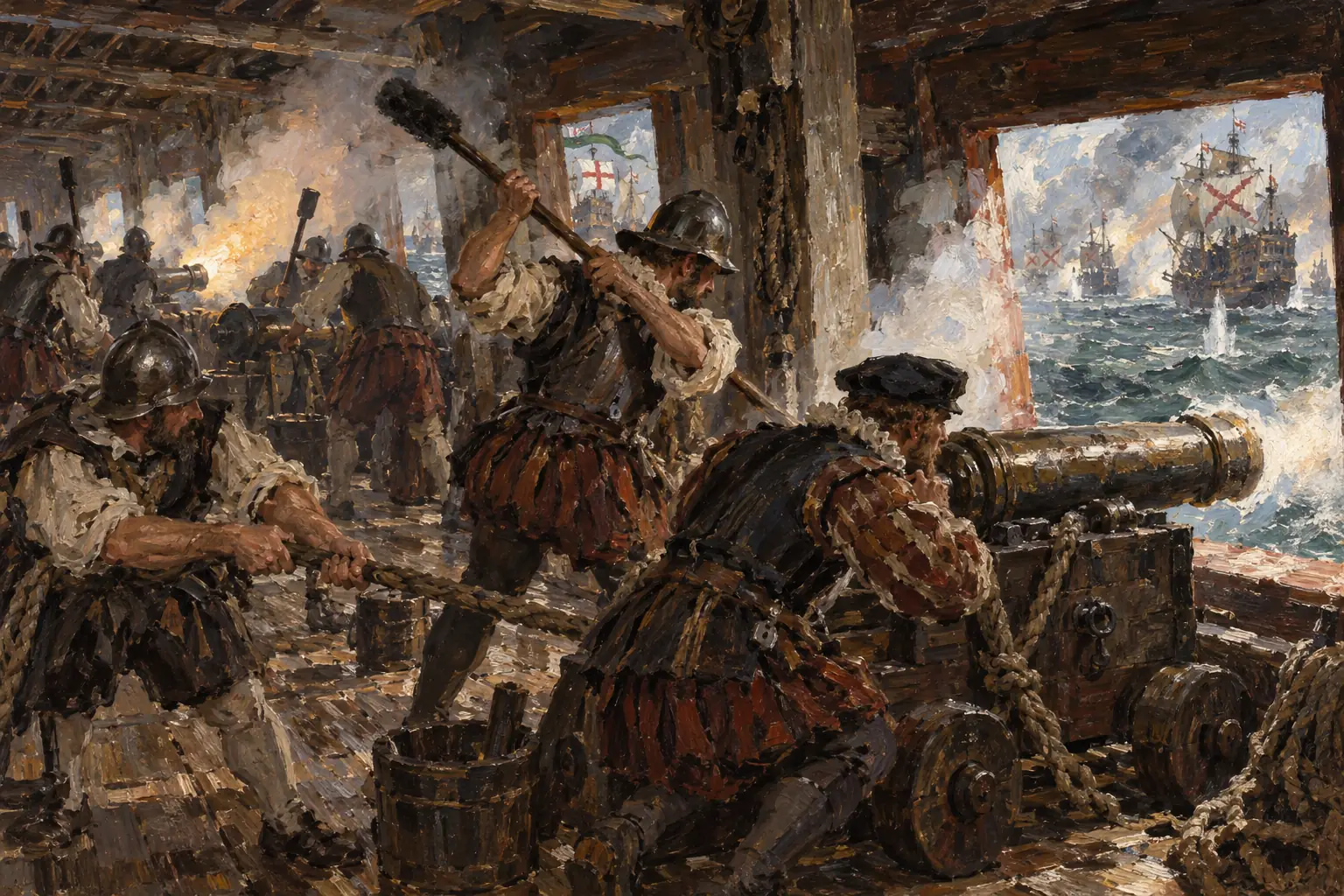
- Gunnery advantages - Longer-range cannons with quicker reloading times enabled the English to bombard from a distance, avoiding the Spanish preference for close boarding and melee combat.
- Command and adaptability - Leaders like Howard and Drake employed flexible strategies, focusing on harassment rather than direct confrontation.
Spanish weaknesses and misfortunes
- Planning and supply problems - Inadequate provisions, stored in substandard containers following prior English raids, led to spoiled food and water, weakening crew morale during the prolonged voyage.
- Coordination failures - Delays in linking with Parma's army, exacerbated by poor communication and external interference, left the Armada vulnerable at Calais.
- Weather's role - Fierce storms, later called the "Protestant Wind" by English propagandists, devastated the fleeing ships, amplifying losses from the earlier battles.
Consequences of the Armada's defeat
The Armada's failure had profound short- and long-term effects on England, Spain, and broader European affairs. It not only averted immediate danger but also reshaped perceptions of power and religion.
Immediate outcomes for England and Spain
- Preservation of independence - England avoided invasion, safeguarding Elizabeth's rule and Protestant governance from Catholic domination.
- Spanish setbacks - The loss of ships and men weakened Spain's naval dominance, though the conflict with England continued sporadically until the early 1600s.
- Boost to morale - In England, the victory was hailed as divine intervention, fostering national pride and unity.
Long-term historical significance
- Rise of English naval power - The triumph established England as a leading maritime force, encouraging further exploration and colonial ambitions.
- Shift in European dynamics - It diminished Spanish influence in Protestant regions and inspired resistance against Catholic powers elsewhere in Europe.
- Cultural legacy - The event became a cornerstone of English history, symbolizing resilience and contributing to the myth of an "island nation" defended by its seas.