3.2 - Kennedy & Strategic Hamlet Program
Key facts and dates
Kennedy's presidency marked a significant escalation in US involvement in Vietnam, shifting from limited support to deeper military and strategic engagement. This period saw increased aid to South Vietnam amid growing Vietcong influence, culminating in political upheaval. The following timeline outlines the major developments.
Timeline of key events
- 1961 – Kennedy authorises expansion of US military advisers from 700 to over 3,000 by year's end.
- Early 1962 – US supplies helicopters and expands training for the Army of the Republic of Vietnam (ARVN).
- 1962 – Launch of the Strategic Hamlet Programme to protect rural areas from Vietcong infiltration.
- May 1963 – Buddhist protests erupt in South Vietnam, triggered by religious discrimination under Diem's regime.
- June 1963 – Self-immolation of Buddhist monk Thich Quang Duc draws global attention to the crisis.
- November 1963 – US acquiesces in a military coup that overthrows and kills President Diem.
Increase in US military advisers and support
Image 1 of 2: From early 1962 US Army helicopters, flown by American pilots, carried South Vietnamese troops into battle
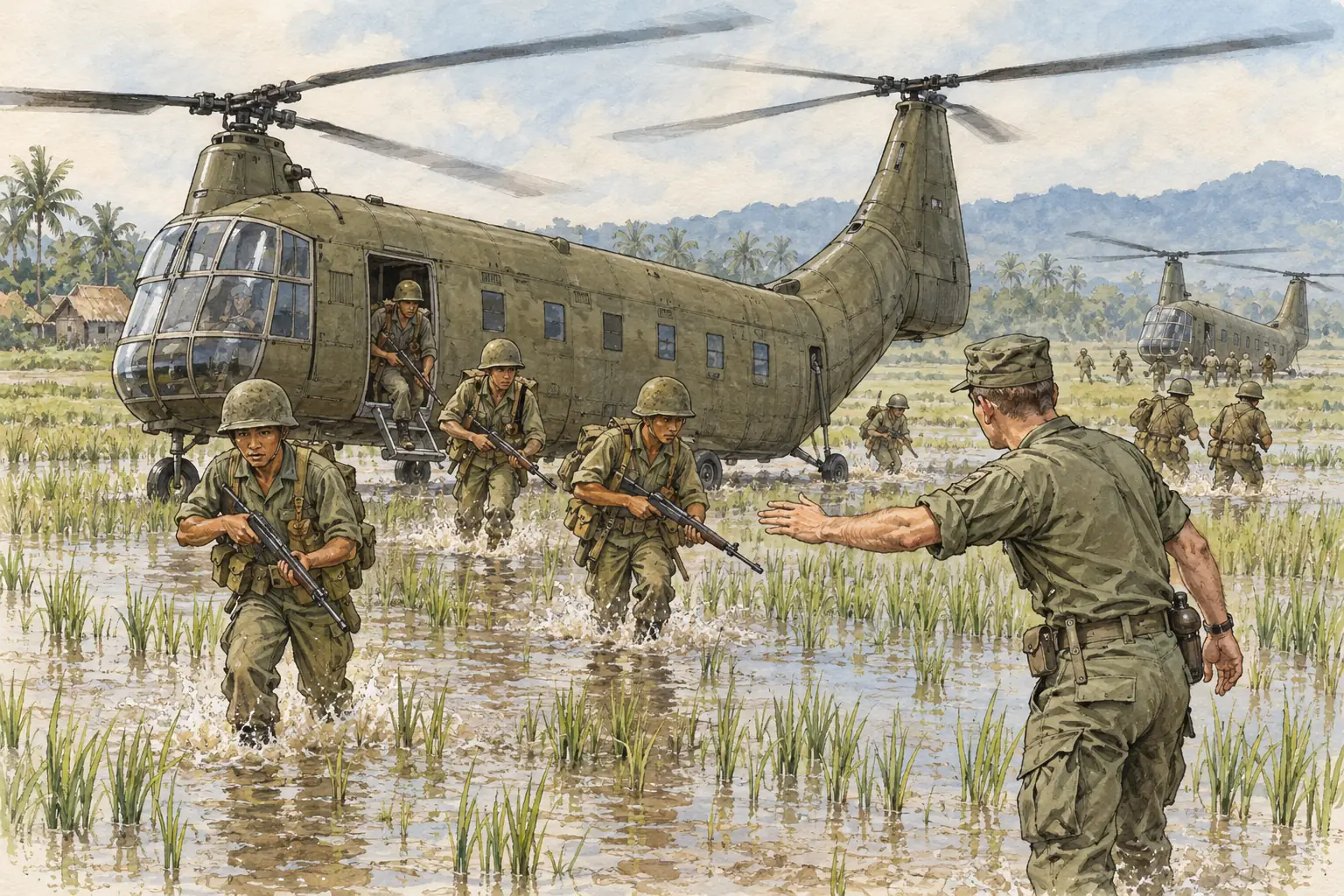
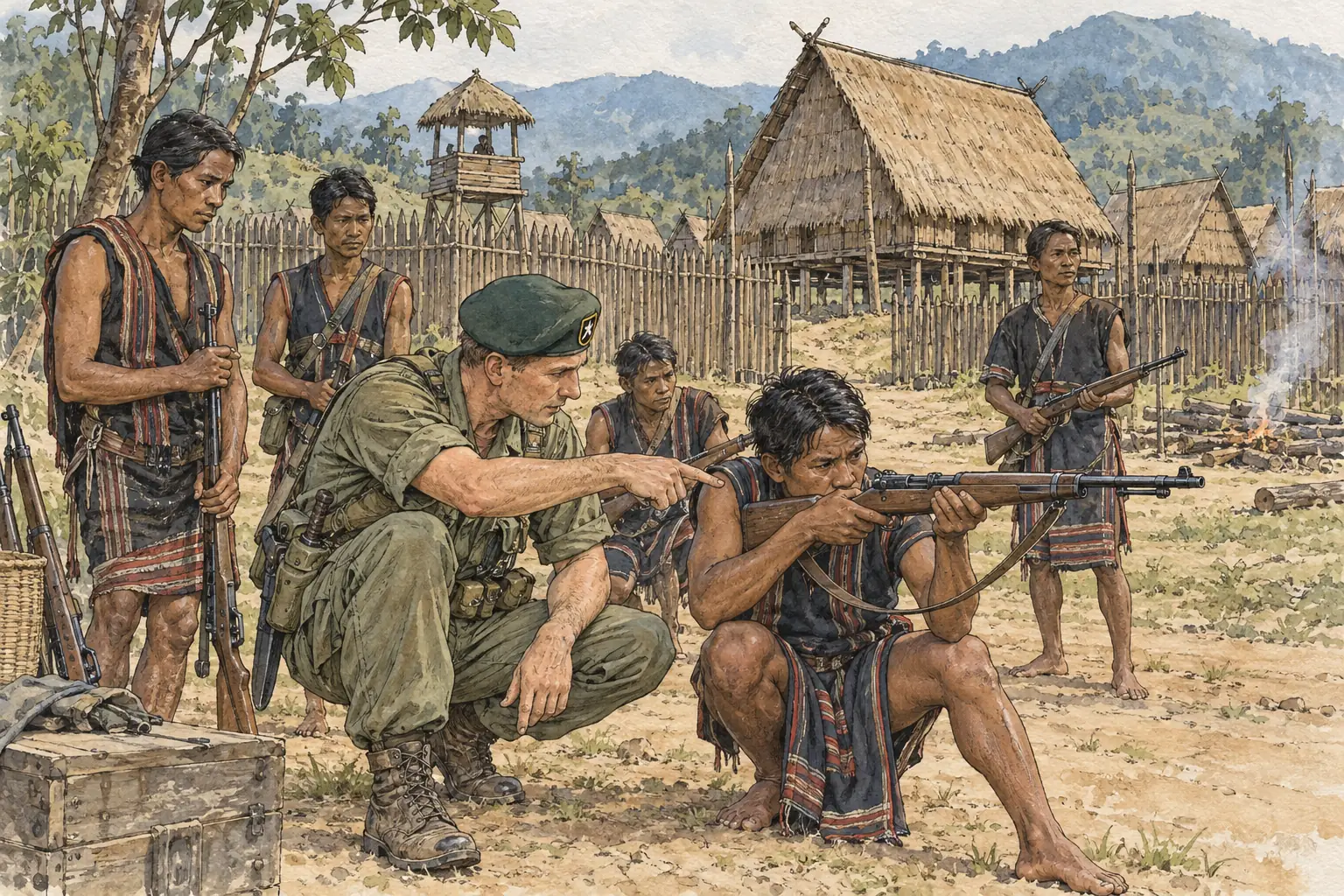
Upon taking office in 1961, President Kennedy faced mounting pressure to counter the growing influence of the Vietcong in South Vietnam. He responded by significantly ramping up United States (US) involvement, focusing on advisory and logistical aid rather than direct combat troops at this stage.
Key measures to bolster South Vietnamese forces
- Expansion of military advisers - The number of US military advisers increased from around 700 in early 1961 to more than 16,000 by 1963, providing guidance on tactics and operations to South Vietnamese troops.
- Deployment of special forces - Elite units, such as the Green Berets, were sent to conduct specialised training and counter-insurgency missions, emphasising guerrilla warfare techniques.
- Supply of equipment - The US provided helicopters for rapid troop movement and aerial support, enhancing mobility in Vietnam's challenging terrain.
- Training for ARVN - Expanded programmes focused on improving the skills and effectiveness of the Army of the Republic of Vietnam (ARVN), including joint exercises and strategic planning to combat Vietcong insurgents.
These steps represented a shift towards greater US entanglement, as advisers often participated in operations alongside ARVN forces.
Strategic Hamlet Programme aims and failures
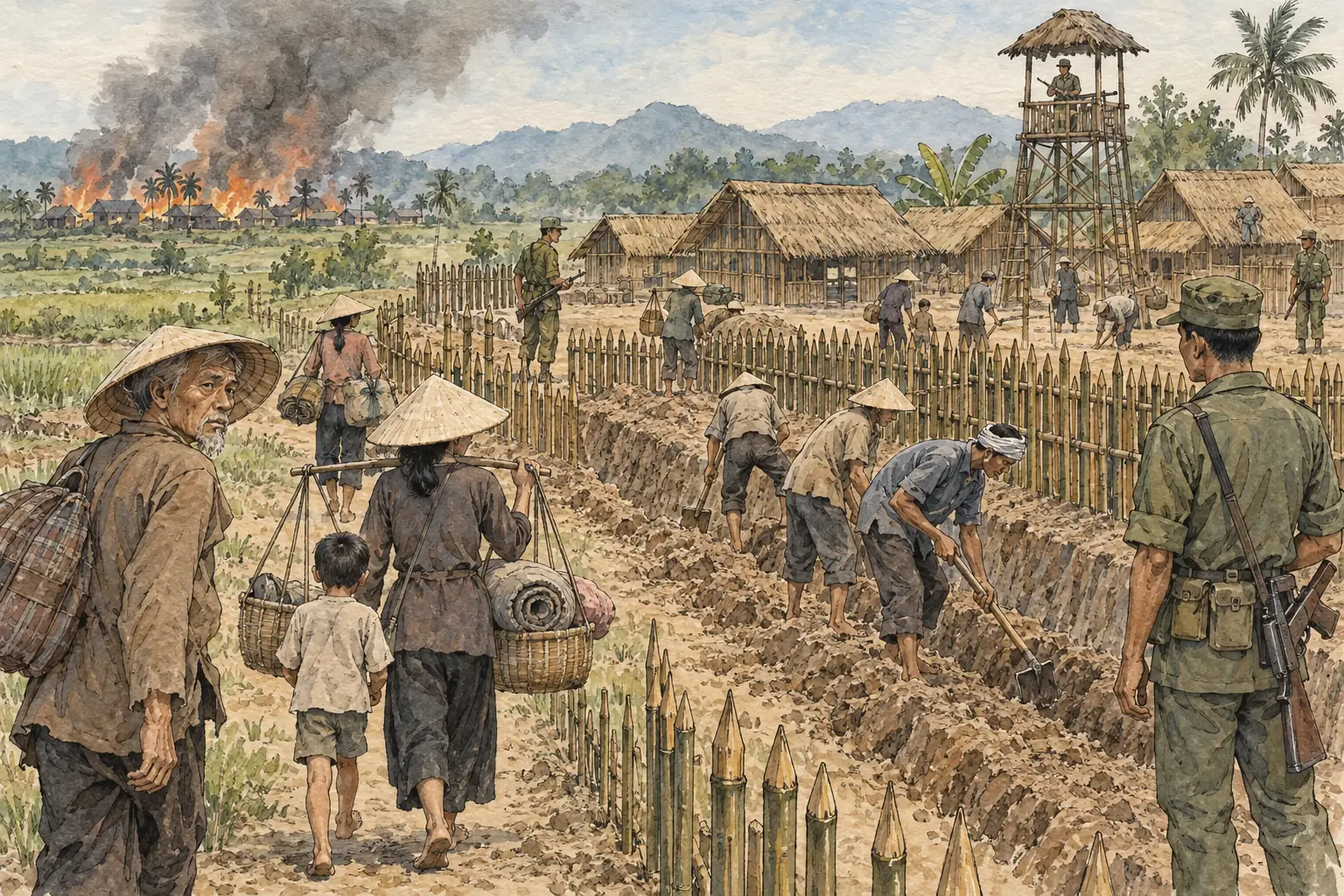
The Strategic Hamlet Programme, introduced in 1962, was a key initiative designed to undermine Vietcong support in rural areas. It involved relocating villagers into fortified settlements to separate them from insurgents and promote loyalty to the South Vietnamese government.
Objectives of the Strategic Hamlet Programme
- Isolation from insurgents - By grouping rural populations into secure hamlets surrounded by defences like moats and fences, the programme aimed to cut off Vietcong access to food, recruits, and intelligence.
- Promotion of government control - Hamlets were intended to provide services such as schools and clinics, fostering allegiance to President Diem's regime and weakening communist influence.
Reasons for the programme's failure
- Corruption within implementation - South Vietnamese officials often embezzled funds meant for hamlet construction and supplies, leading to substandard facilities and eroded trust among villagers.
- Poor planning and execution - Many hamlets were built hastily without adequate resources or local input, resulting in ineffective defences and unsuitable locations.
- Forced relocations - Villagers were compelled to leave ancestral lands, sometimes with their homes destroyed to prevent return, causing resentment and driving some to support the Vietcong instead.
- Overall impact - By 1963, the programme had alienated rural populations rather than winning their support, contributing to increased Vietcong recruitment and highlighting the limitations of US-backed strategies.
The 1963 crisis and overthrow of Diem
Image 1 of 2: From May 1963 Buddhist monks and nuns held mass protests against Diem's government
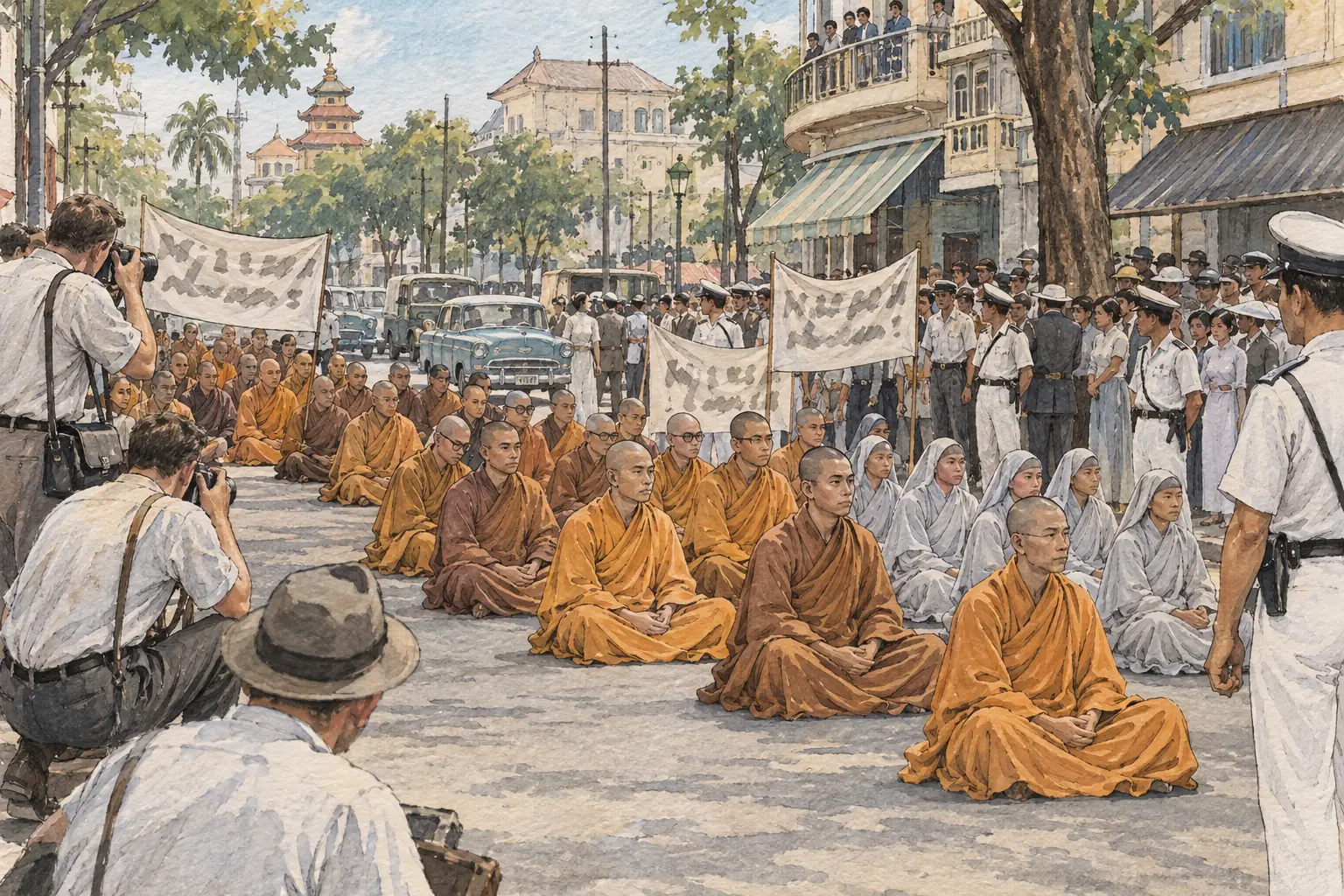
By 1963, South Vietnam was gripped by internal unrest, exacerbated by religious tensions and government repression. This crisis exposed the weaknesses of Diem's leadership and prompted US involvement in his removal.
Events leading to the coup
- Buddhist protests - Starting in May 1963, widespread demonstrations by Buddhists protested against Diem's Catholic-dominated regime, which discriminated against the Buddhist majority through policies like banning religious flags.
- Self-immolation and global outrage - The dramatic act of monk Thich Quang Duc setting himself on fire in June 1963 was captured in photographs, drawing international condemnation and pressuring the US to reconsider support for Diem.
- Government crackdowns - Diem's forces raided pagodas and arrested thousands, intensifying the crisis and revealing the regime's authoritarian nature.
US role in the coup
- Acquiescence in the overthrow - US officials, frustrated with Diem's intransigence and the failing war effort, signalled approval for a military coup by South Vietnamese generals.
- Outcome of the coup - On 1 November 1963, Diem was overthrown and assassinated, leading to a period of instability with successive military governments.
Deepened US commitment and political fragility
Kennedy's policies during 1961-63 significantly intensified US involvement in Vietnam, transforming advisory support into a more entrenched presence. However, these actions also highlighted vulnerabilities in South Vietnam's governance.
Consequences of escalation
- Increased US entanglement - The surge in advisers, equipment, and strategic programmes tied American prestige to the conflict's outcome, making withdrawal politically difficult.
- Political instability - The overthrow of Diem left a power vacuum, with frequent leadership changes weakening South Vietnam's ability to counter the Vietcong effectively.
- Strategic setbacks - Despite military aid, corruption and poor morale in the ARVN persisted, while rural alienation strengthened insurgents, setting the stage for further US intervention under subsequent presidents.