3.3 - Johnson & Escalation to War
Key facts and dates
President Lyndon B. Johnson's decision to escalate US involvement in Vietnam was driven by strategic concerns and unfolding events in 1964-1965. This period marked a shift from advisory roles to full-scale military commitment, influenced by fears of communism and domestic politics.
Timeline of key events
- 2 August 1964 – First Gulf of Tonkin incident: USS Maddox engages North Vietnamese torpedo boats in international waters.
- 4 August 1964 – Reported second incident (later questioned) involving USS Maddox and USS Turner Joy.
- 7 August 1964 – Congress passes the Gulf of Tonkin Resolution, granting broad presidential powers for military action.
- February 1965 – Launch of Operation Rolling Thunder, a sustained bombing campaign against North Vietnam.
- March 1965 – First US ground combat troops arrive in South Vietnam.
- July 1965 – Johnson approves major troop increases, committing to General Westmoreland's attrition strategy.
Reasons for escalation of US involvement
By the mid-1960s, the United States faced mounting pressures in Vietnam that prompted President Johnson to intensify military efforts. These factors stemmed from broader Cold War anxieties and the evolving situation on the ground.
Key factors driving escalation
- Perceived credibility of US commitments - Maintaining alliances and promises to South Vietnam was seen as essential to uphold America's global reputation, preventing a domino effect where other nations might fall to communism.
- Fear of communist victory - There was widespread concern that a North Vietnamese triumph would embolden communist movements worldwide, threatening US interests in Asia and beyond.
- Increasing Vietcong strength - The Vietcong's growing influence and effectiveness in South Vietnam, through guerrilla tactics and infiltration, highlighted the inadequacy of existing advisory support and necessitated a stronger response.
The Gulf of Tonkin incidents and Resolution
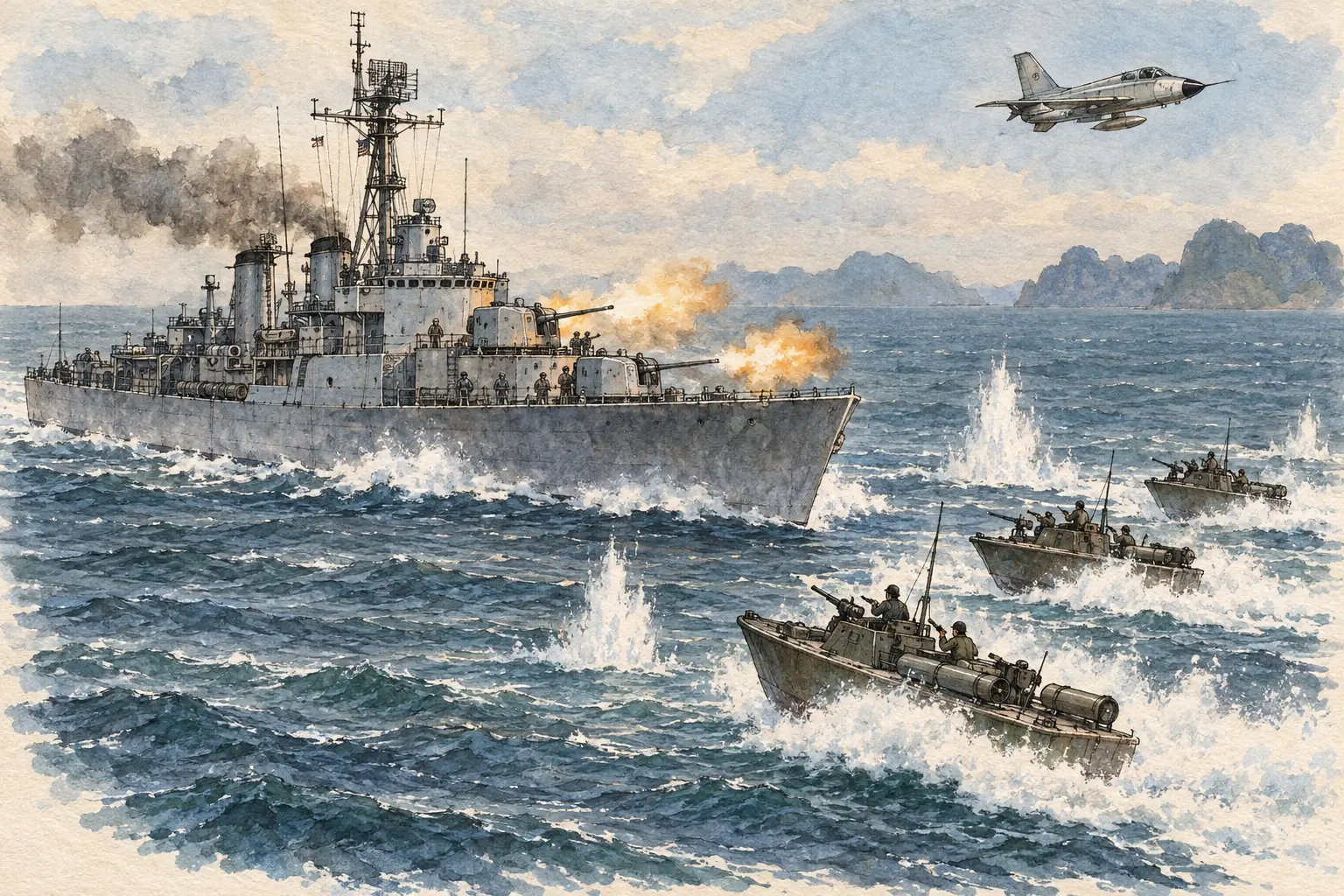
The Gulf of Tonkin incidents provided a pivotal pretext for expanding US military action. These naval confrontations, occurring in disputed waters, were portrayed as unprovoked attacks and led to significant policy shifts.
Details of the Gulf of Tonkin incidents
- First incident (2 August 1964) - The US destroyer USS Maddox, conducting intelligence operations, was approached by North Vietnamese torpedo boats; a brief skirmish ensued, with the US ship firing warning shots and the North Vietnamese launching torpedoes.
- Second incident (4 August 1964) - Reports claimed another attack on USS Maddox and USS Turner Joy amid stormy weather; later investigations suggested this may have been a misinterpretation of radar signals or sonar echoes, with no confirmed enemy action.
The Gulf of Tonkin Resolution
The incidents prompted Congress to pass the Resolution on 7 August 1964, which authorised the president to take "all necessary measures" to repel armed attacks and prevent further aggression. This effectively gave Johnson sweeping powers without a formal declaration of war, enabling rapid escalation while bypassing extensive congressional debate.
Military steps and Operation Rolling Thunder
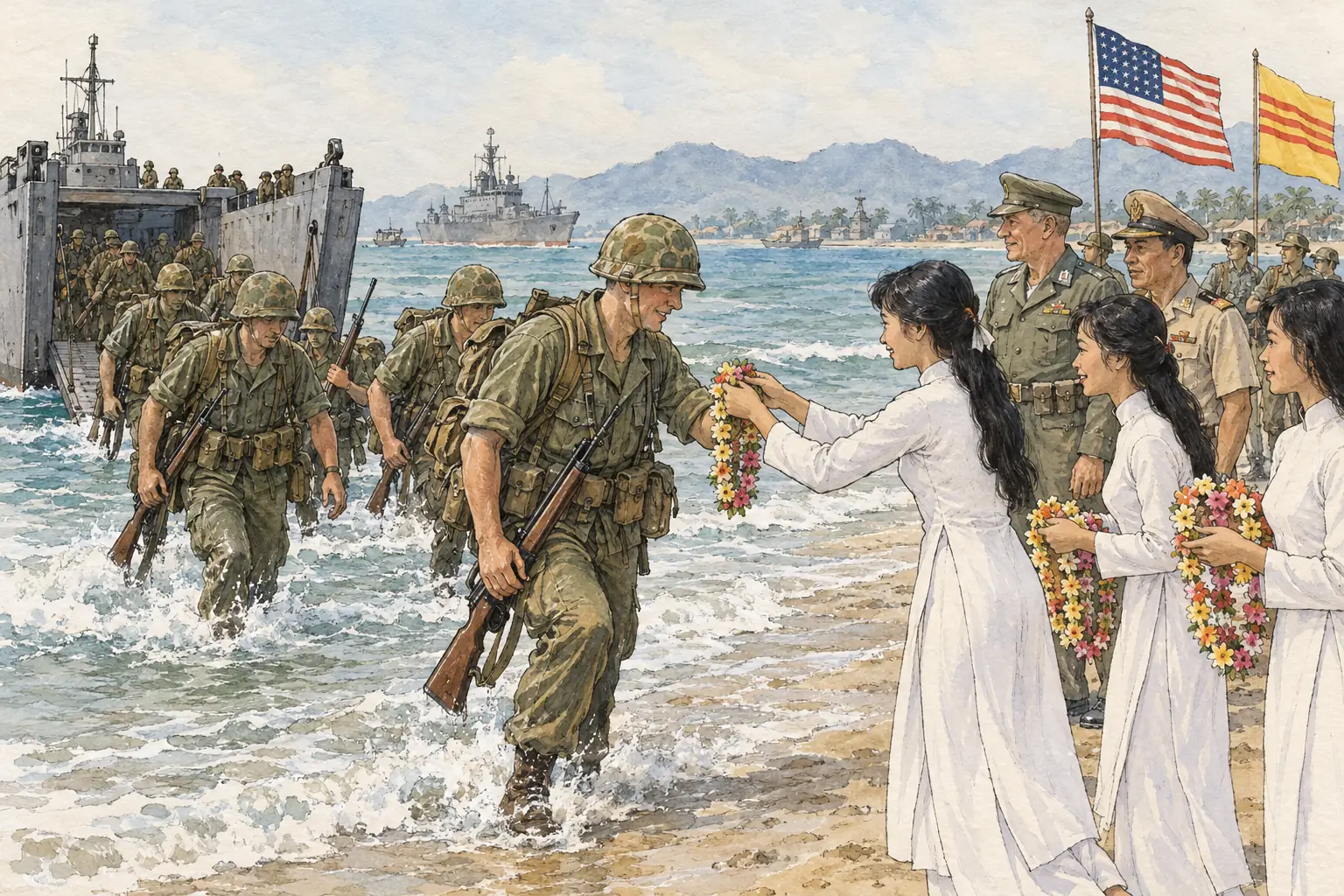
Following the Tonkin Resolution, the US shifted from limited involvement to aggressive military operations. These steps aimed to weaken North Vietnamese capabilities and support South Vietnam directly.
Major military developments
- Operation Rolling Thunder (from February 1965) - This aerial bombing campaign targeted North Vietnamese infrastructure, supply lines, and military bases; it lasted over three years, dropping more bombs than in World War II, but failed to break enemy resolve.
- Introduction of ground combat troops - In March 1965, the first Marine units landed to protect US airbases, marking the transition from advisory roles to active combat; troop numbers surged from around 23,000 in early 1965 to over 184,000 by year's end.
- Expansion of commitment - Johnson approved further reinforcements in July 1965, focusing on search-and-destroy missions to eliminate Vietcong forces and secure territory.
Strategy of attrition under General Westmoreland
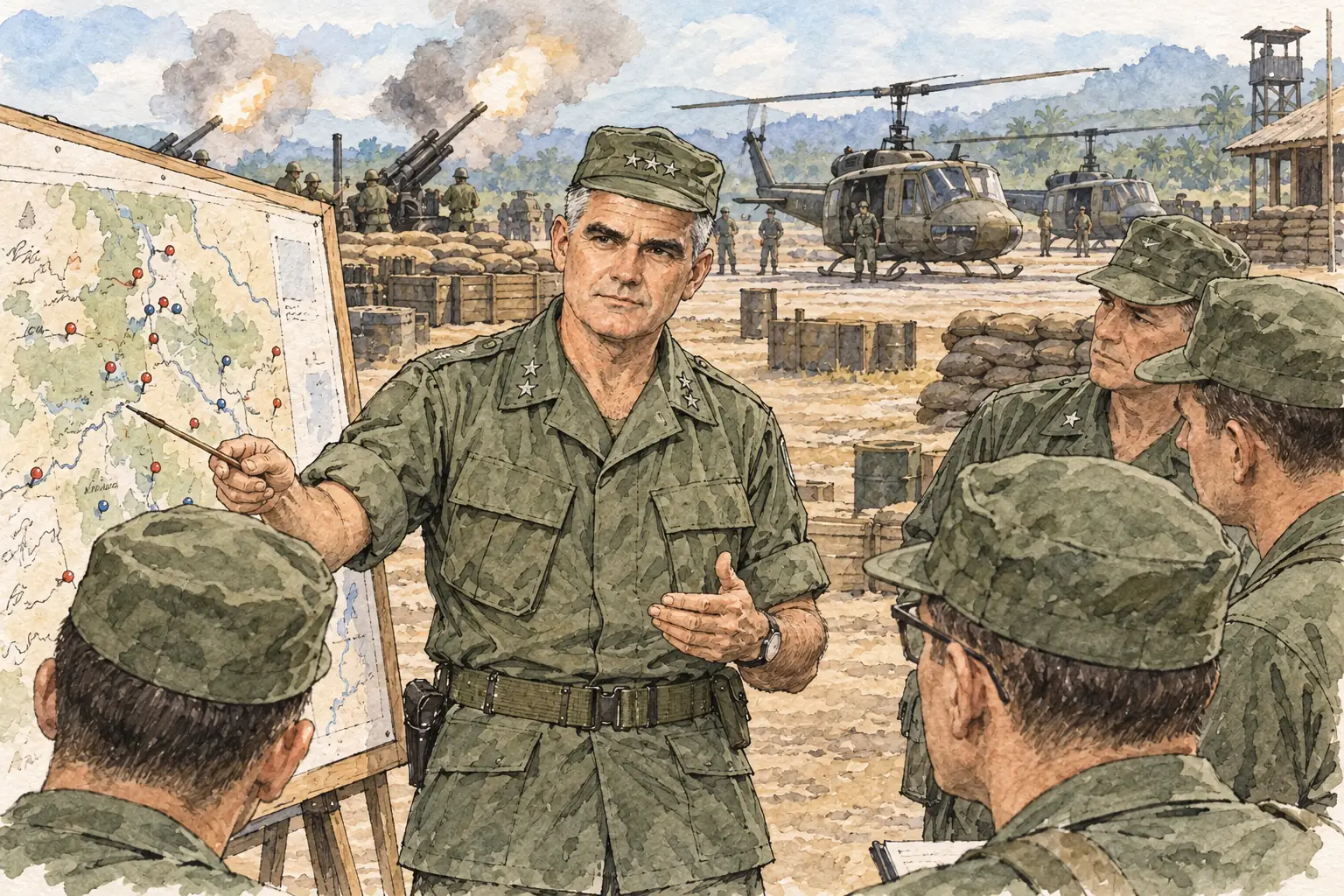
General William Westmoreland, commander of US forces in Vietnam, advocated a strategy of attrition to wear down the enemy through superior firepower and resources. This approach emphasised inflicting maximum casualties to force North Vietnam to negotiate.
Elements of the attrition strategy
- Focus on body counts - Success was measured by enemy casualties, with US forces conducting large-scale operations to kill or capture Vietcong and North Vietnamese soldiers, aiming to reach a "crossover point" where losses exceeded recruitment.
- Search-and-destroy missions - Troops swept through areas to locate and eliminate enemy units, often using helicopters for mobility and artillery for support.
- Resource-intensive tactics - The strategy relied on America's industrial might, including extensive use of defoliants like Agent Orange to clear vegetation and disrupt supply routes, though it underestimated the enemy's resilience and led to high US casualties.
Calculations behind increased involvement
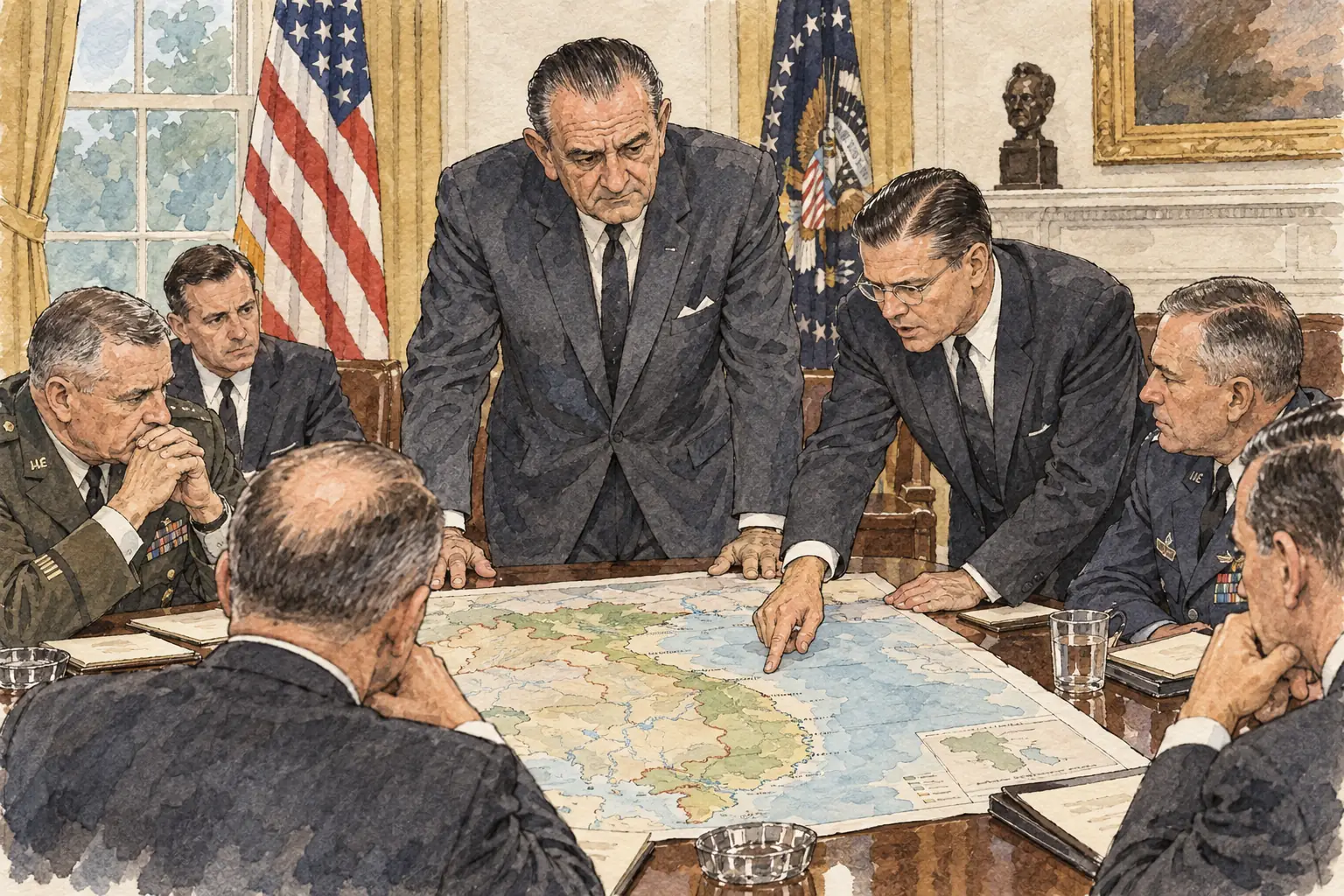
Johnson's rapid escalation involved careful weighing of domestic and international factors. These decisions balanced immediate military needs with long-term political risks.
Political considerations
- Domestic support and elections - Johnson sought to project strength without alienating voters; the 1964 presidential election loomed, and appearing tough on communism helped secure his landslide victory.
- Avoiding broader conflict - Escalation was calibrated to contain the war within Vietnam, steering clear of direct confrontation with China or the Soviet Union, while fulfilling commitments under the SEATO treaty.
Military calculations
- Response to Vietcong gains - Intelligence reports indicated South Vietnam's army was faltering, prompting US intervention to prevent collapse; Westmoreland argued that without ground troops, the South would fall within months.
- Assumptions of superiority - Leaders believed US technology and numbers would overwhelm the enemy quickly, underestimating guerrilla warfare and the North's determination, which prolonged the conflict.