3.3 - Edward Jenner & Vaccination
Key facts and dates
Edward Jenner's development of vaccination in the late 18th century marked a major breakthrough in disease prevention, addressing the widespread threat of smallpox. Although initially met with resistance, his work laid the foundation for modern immunisation practices and contributed to the eventual global eradication of the disease.
Timeline of key events
- 18th century – Smallpox causes widespread death and disfigurement; inoculation is the only prevention method but carries high risks.
- 1796 – Jenner conducts his first vaccination experiment on James Phipps using cowpox material.
- 1798 – Jenner publishes his findings on vaccination, demonstrating protection against smallpox.
- Early 1800s – Vaccination spreads internationally despite initial scepticism and opposition.
- 1802 and 1806 – Parliament awards Jenner £10,000 and £20,000 respectively for his research.
- 1850s – British government makes smallpox vaccination compulsory for infants, leading to a sharp decline in cases.
The problem of smallpox in the 18th century
Image 1 of 2: Smallpox often killed up to 30% of those infected, and children were especially vulnerable
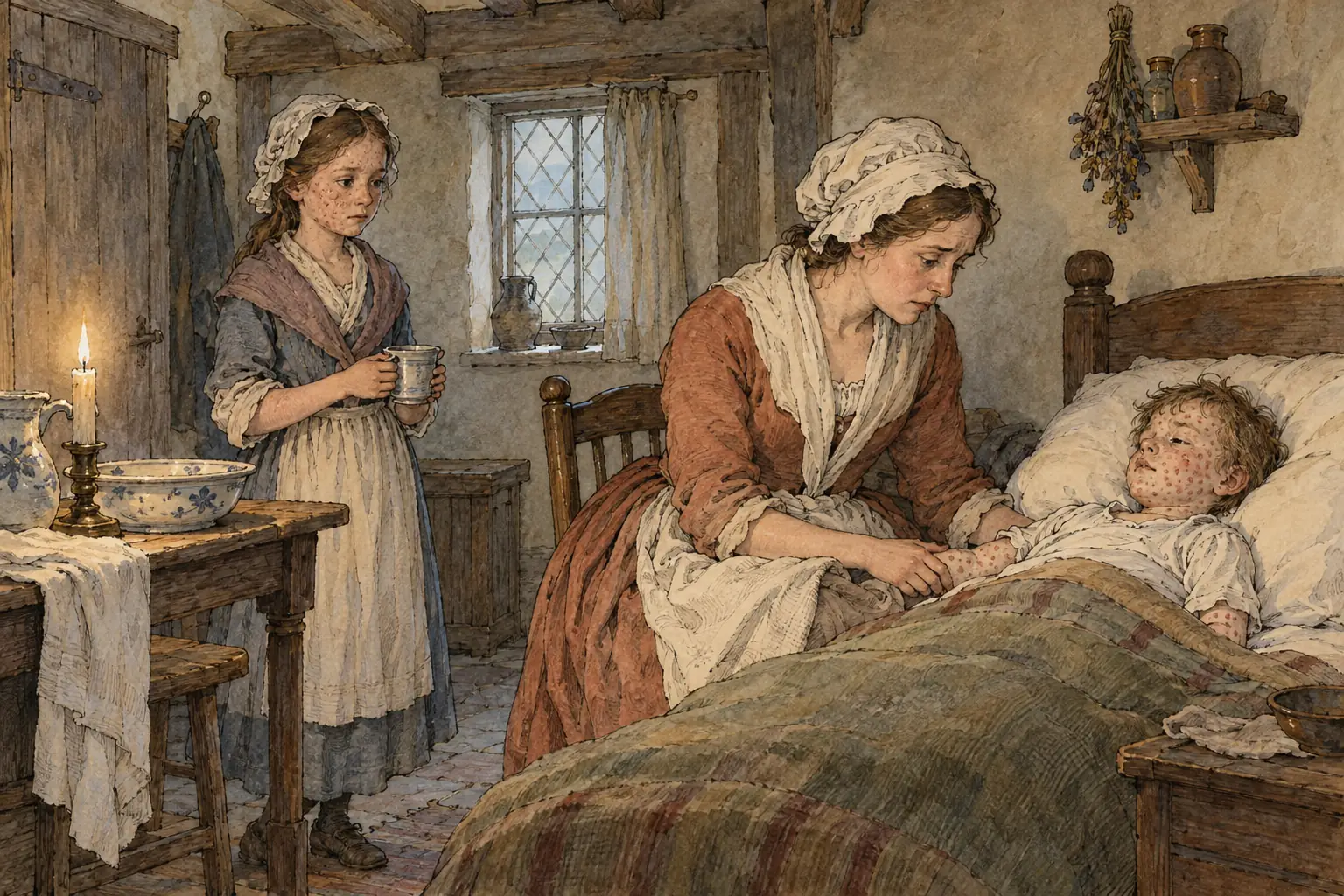
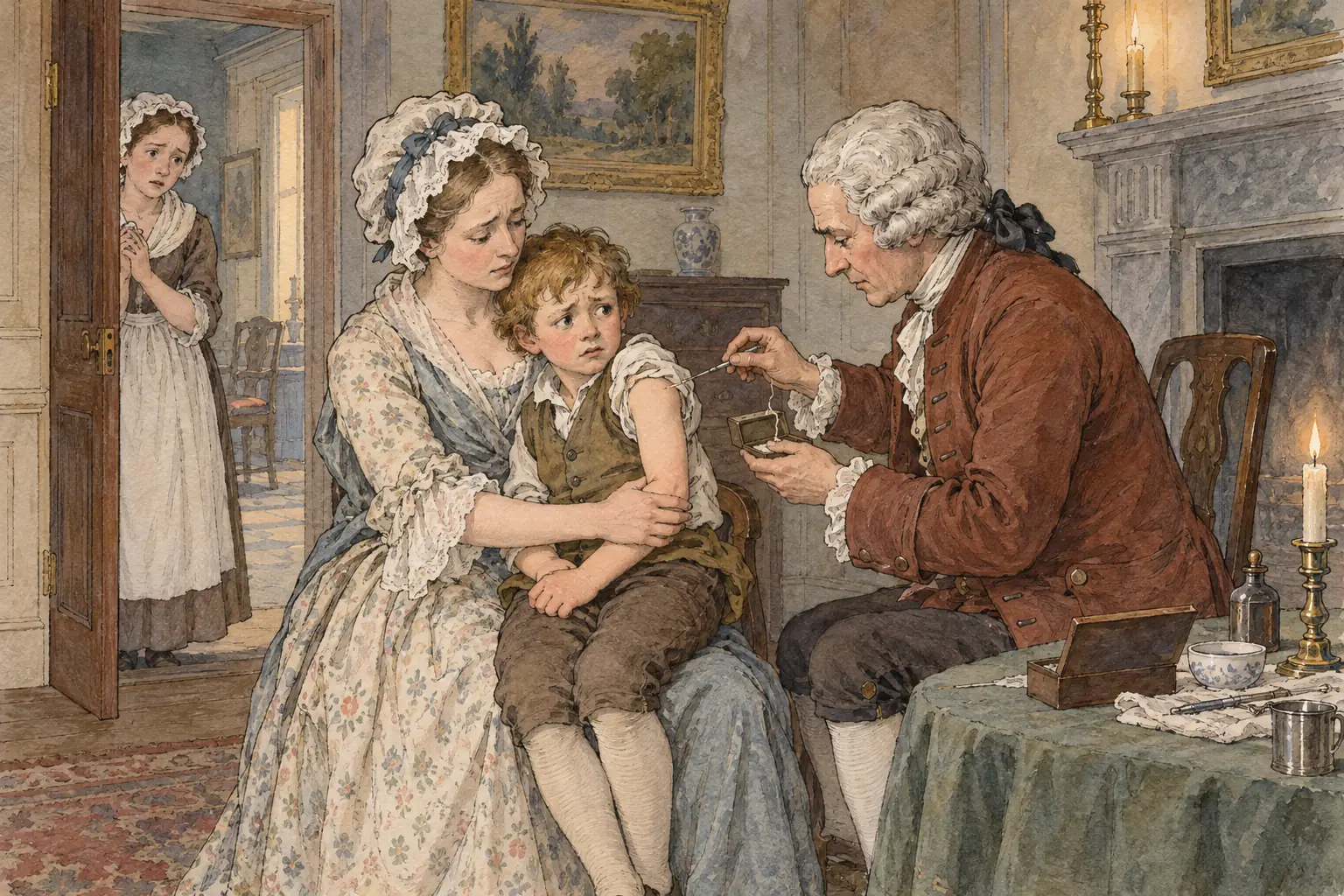
Smallpox was one of the most devastating diseases during the 18th century, affecting populations across Britain and beyond. It spread rapidly through communities, causing high mortality rates and permanent scarring for survivors.
Characteristics and impact of smallpox
- High mortality - The disease killed a significant proportion of those infected, often up to 30% in outbreaks, with children particularly vulnerable.
- Physical consequences - Survivors were frequently left with severe facial disfigurement or blindness, impacting their quality of life and social standing.
- Existing prevention method - Inoculation, also known as variolation, involved deliberately infecting a person with a mild form of smallpox to build immunity, but this carried risks including death or spreading the full disease.
- Limitations of inoculation - The procedure was expensive, making it accessible mainly to the wealthy, and its dangers deterred widespread use among the general population.
Jenner's observation and experiment
Image 1 of 2: Jenner noticed that milkmaids who caught cowpox rarely suffered from smallpox
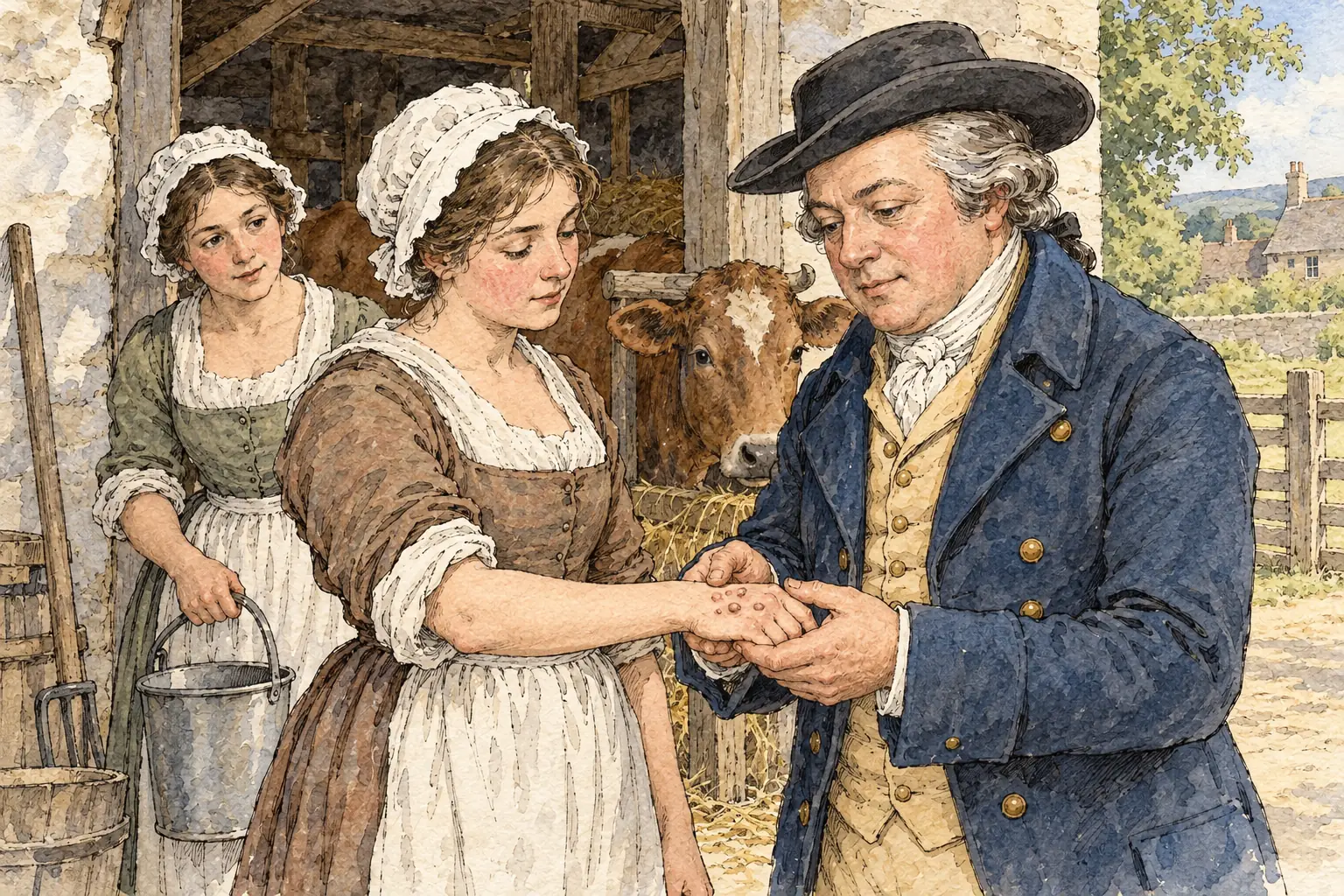
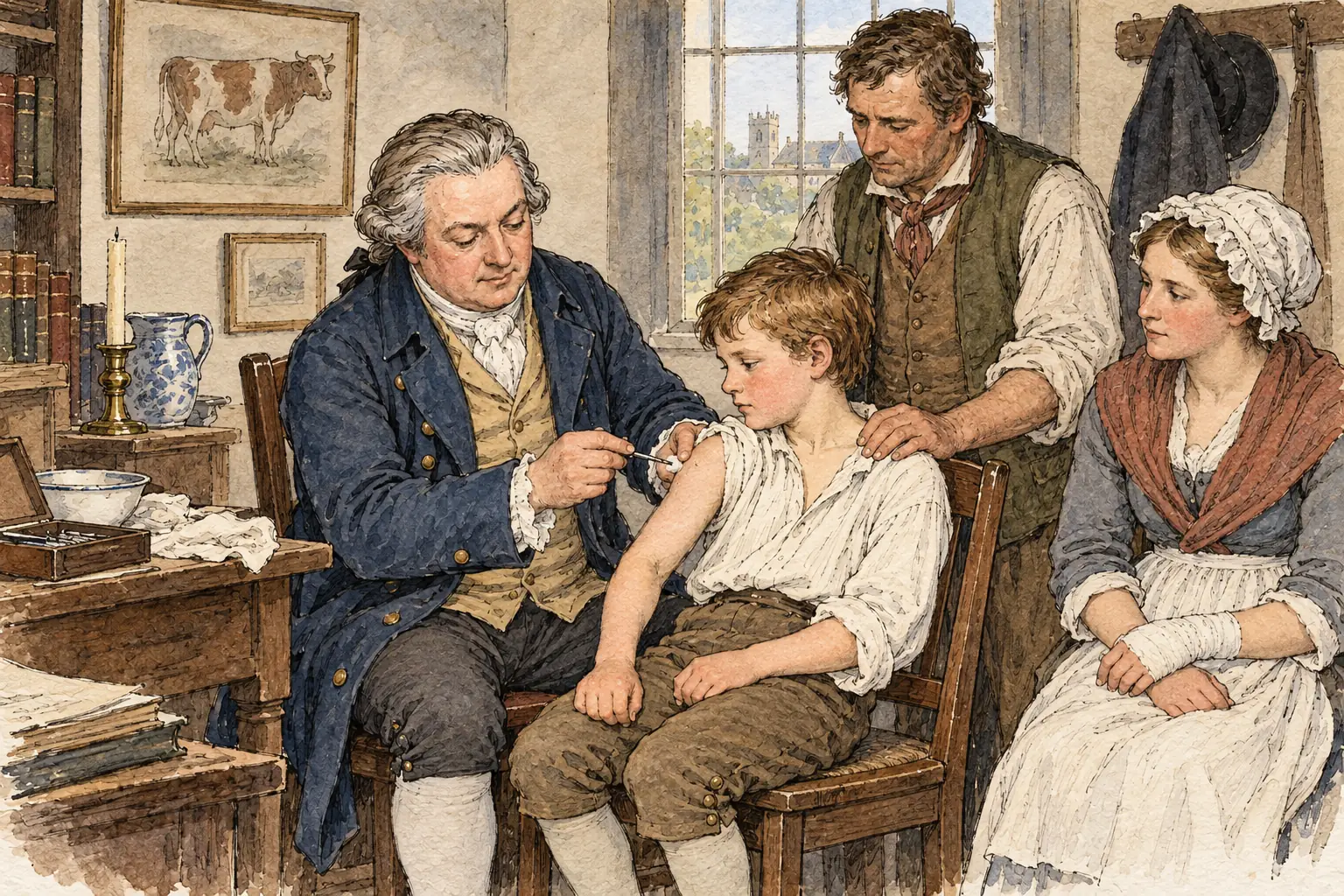
Edward Jenner, a doctor practising in Gloucestershire, made a crucial observation about immunity to smallpox. He noticed that individuals who contracted cowpox, a mild illness transmitted from cattle, appeared resistant to the more dangerous smallpox.
Development of the vaccination method
- Key observation - Milkmaids exposed to cowpox through their work rarely suffered from smallpox, suggesting a protective effect from the milder disease.
- 1796 experiment - Jenner tested his theory by taking pus from cowpox sores on a milkmaid and injecting it into a healthy boy named James Phipps.
- Follow-up exposure - Several weeks later, Jenner exposed the boy to smallpox material; the child showed no signs of infection, indicating immunity had been achieved.
- Further testing - Jenner repeated the process on other subjects, collecting evidence that cowpox infection could reliably prevent smallpox without the risks associated with inoculation.
Publication and initial reactions
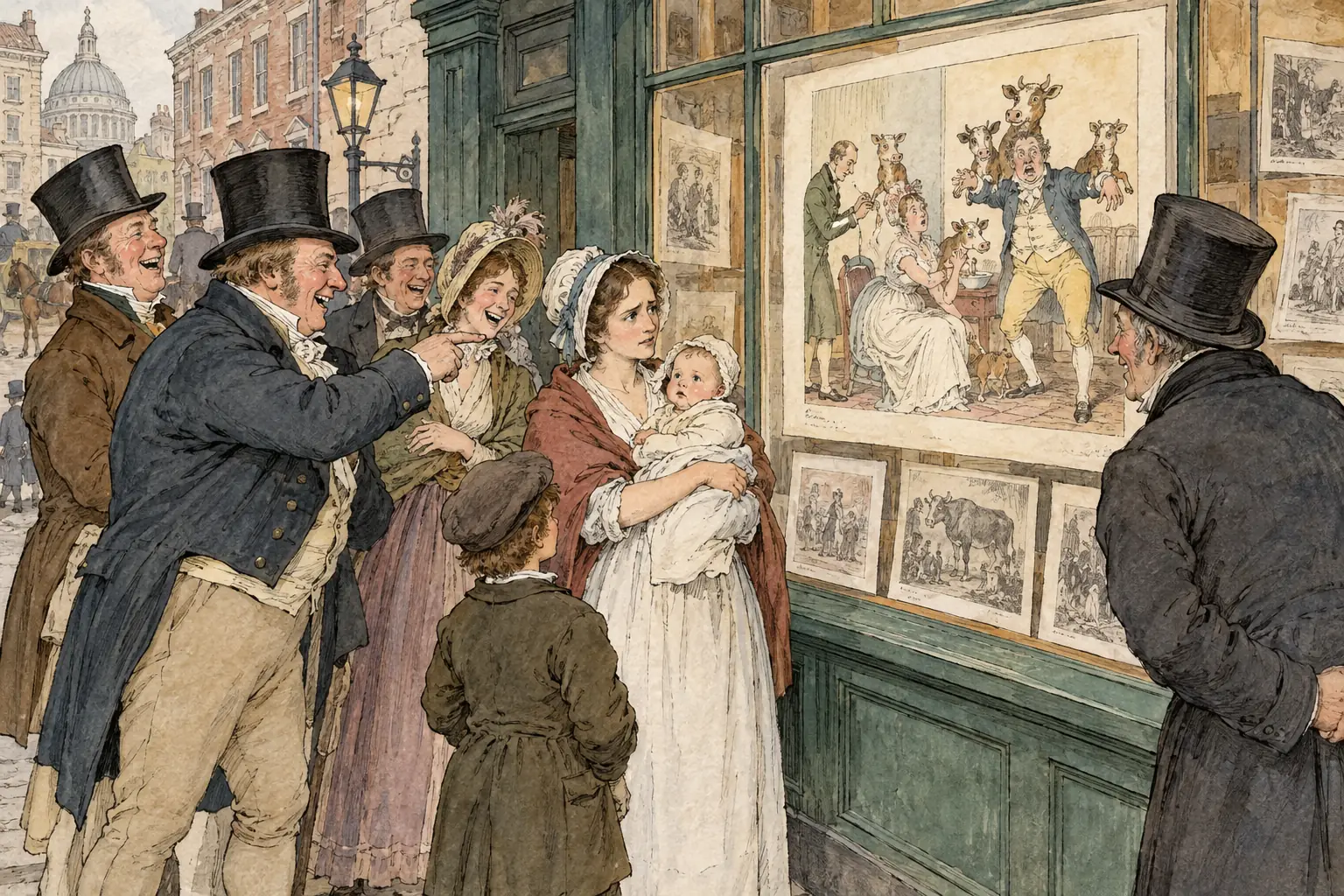
In 1798, Jenner shared his discoveries with the medical community, naming the process "vaccination" from the Latin word for cow. However, his ideas faced considerable pushback from various groups.
Challenges to Jenner's findings
- Scepticism from doctors - Many physicians doubted the effectiveness of using an animal-derived substance, questioning the scientific basis without understanding of germs.
- Opposition from inoculators - Practitioners who profited from traditional inoculation viewed vaccination as a direct threat to their income and professional status.
- Public repulsion - Some people found the concept of introducing cowpox into humans disturbing, leading to satirical cartoons depicting vaccinated individuals growing cow-like features.
- Gradual acceptance - Despite resistance, successful demonstrations and growing evidence began to convince sceptics, allowing the practice to gain traction.
Impact and government support
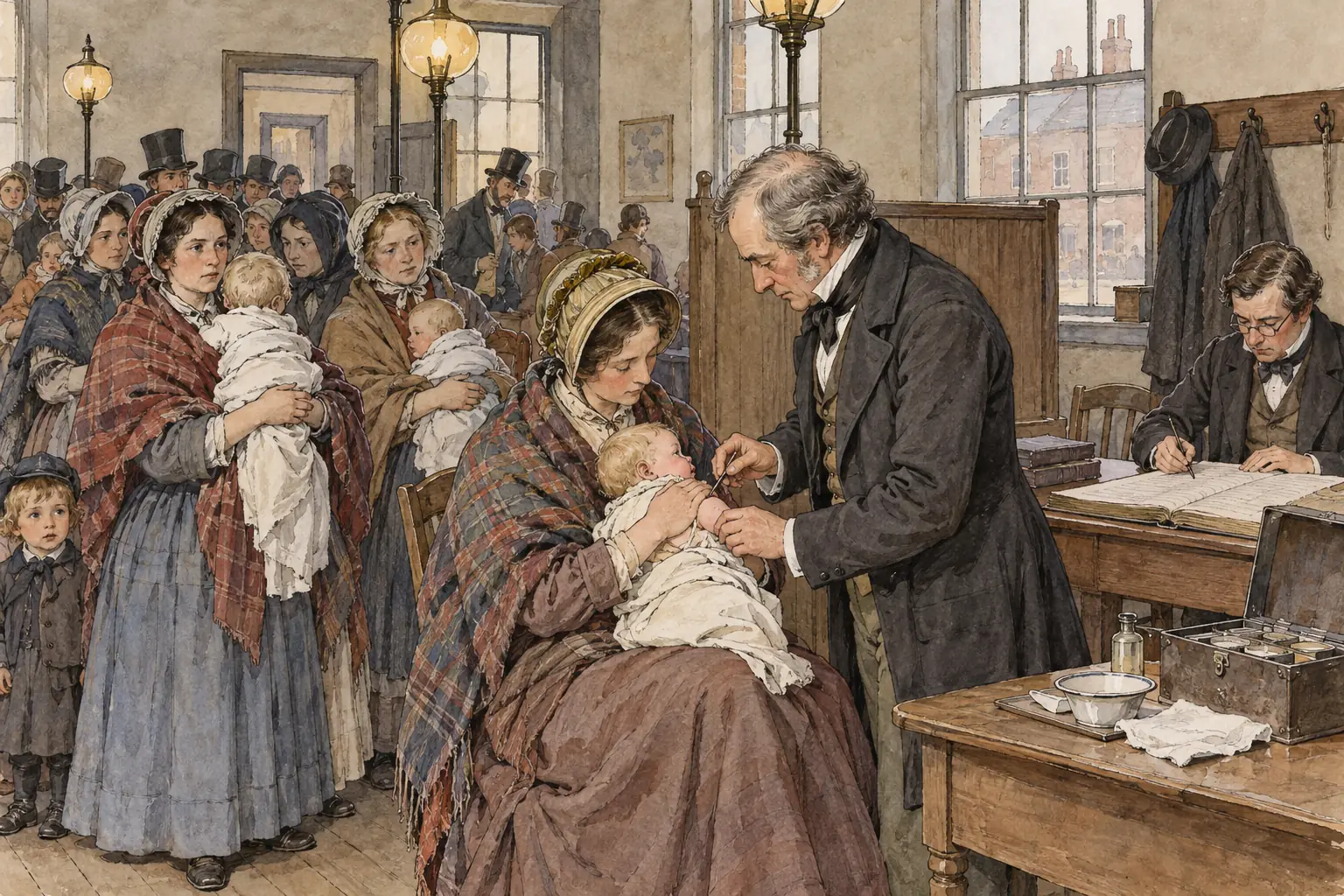
Jenner's vaccination method proved far safer and more effective than inoculation, leading to its adoption across Britain and internationally. Official backing played a key role in its widespread implementation.
Spread and official endorsement
- International adoption - News of vaccination reached Europe and other continents, with countries like France and the United States implementing programmes based on Jenner's work.
- Parliamentary funding - The British government recognised the value of his research, granting Jenner £10,000 in 1802 and an additional £20,000 in 1806 to continue his studies.
- Compulsory measures - By the 1850s, legislation required smallpox vaccination to be compulsory for all infants, significantly reducing infection rates in Britain.
- Decline in cases - These efforts led to a dramatic drop in smallpox incidents by the late 19th century, saving thousands of lives and preventing disfigurement.
Long-term significance of Jenner's work
Jenner's innovation represented a pioneering step in medical science, introducing the concept of using a related or weakened pathogen to prevent disease. Although he lacked knowledge of viruses or immunology, his empirical methods had lasting influence.
Foundations for modern vaccination
- Empirical breakthrough - Jenner demonstrated disease prevention through controlled exposure, establishing vaccination as a fundamental tool in public health.
- Delayed further developments - Without germ theory, his approach did not immediately inspire other vaccines, but it provided a model for later scientists.
- Influence on future work - Figures like Louis Pasteur built on Jenner's principles, developing vaccines for diseases such as rabies and anthrax.
- Global eradication - Jenner's method contributed to the worldwide elimination of smallpox in the 20th century, highlighting its enduring impact on disease control.