3.4 - Case Study: Cholera in London, 1854
Key facts and dates
The 1854 cholera outbreak in London highlighted both the limitations of existing medical theories and the potential of new investigative methods. While miasma theory dominated, John Snow's work demonstrated how data could trace disease sources, influencing later sanitation improvements.
Timeline of key events
| Date | Event |
|---|---|
| 1830s and 1840s | Major cholera epidemics strike Britain, killing thousands and reinforcing miasma beliefs. |
| 1854 | Cholera outbreak in Soho, London, causes over 600 deaths in weeks, centred around Broad Street pump. |
| 1854 | John Snow maps cases, interviews residents, and convinces officials to remove pump handle. |
| 1858 | Great Stink in London prompts action on river pollution and sewage. |
| 1860s | Joseph Bazalgette completes modern sewer system for London, reducing cholera risks. |
| 1875 | Public Health Act passed, mandating clean water and sanitation nationwide. |
| 1883 | Robert Koch identifies Vibrio cholerae bacterium as the cause of cholera. |
Background to cholera and the 1854 outbreak
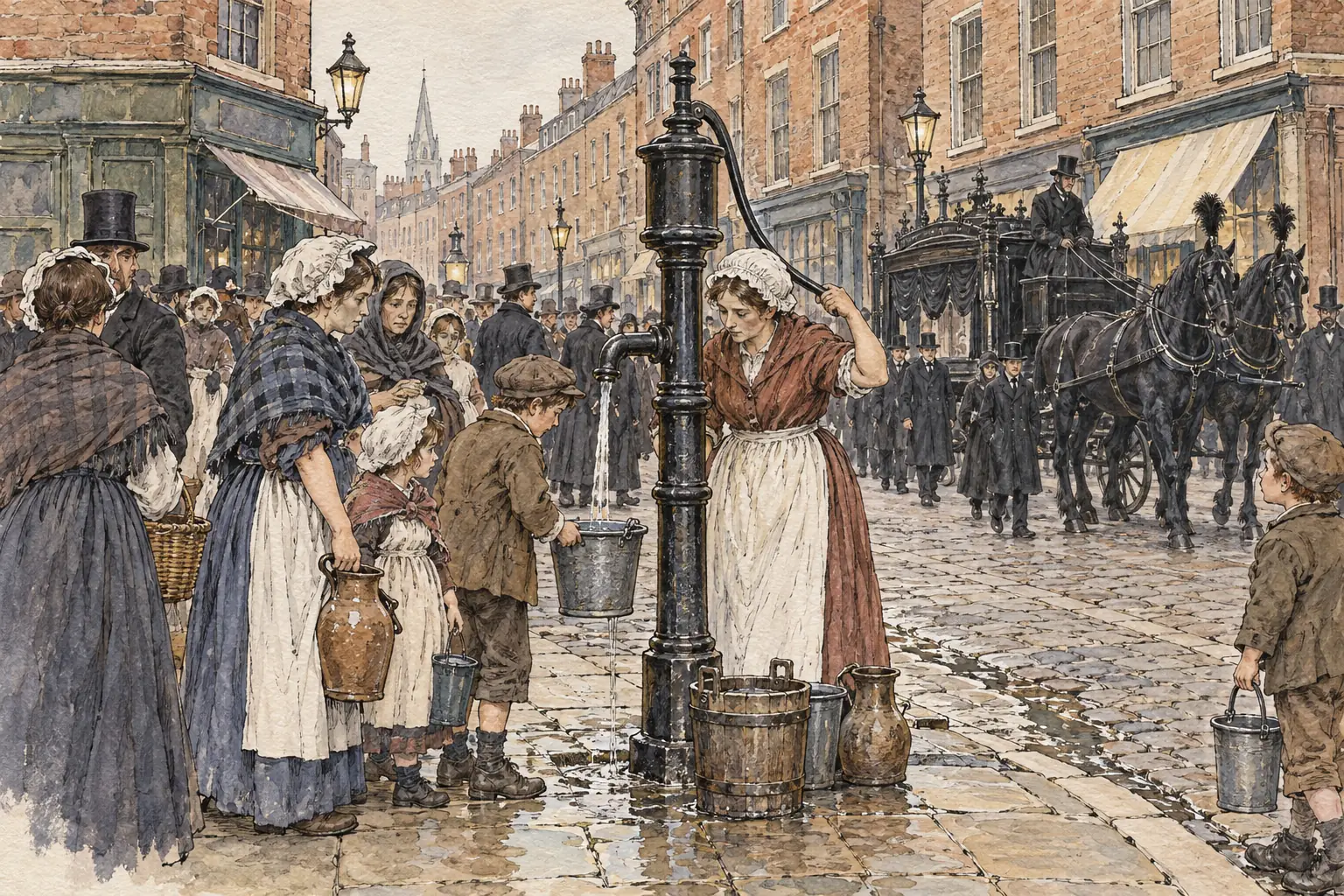
Cholera emerged as a terrifying disease in 19th-century Britain, spreading rapidly and causing high death rates. It was characterised by severe diarrhoea and dehydration, often leading to death within hours if untreated. The illness arrived in Britain via trade routes from Asia, triggering widespread fear.
Key features of cholera epidemics
- Water-borne nature - Although not understood at the time, cholera spread through contaminated water supplies, thriving in overcrowded urban areas with poor sanitation.
- Major outbreaks - Epidemics in the 1830s and 1840s killed tens of thousands, overwhelming cities and exposing weaknesses in public health systems.
- Prevailing medical beliefs - Most doctors attributed cholera to miasma, or foul-smelling air from rotting matter, leading to responses focused on cleaning streets and using deodorants rather than addressing water quality.
In 1854, a severe outbreak hit the Soho district of London, resulting in over 600 fatalities within a short period. This event occurred amid ongoing debates about disease transmission, with traditional ideas still dominant.
John Snow's investigation and findings
Image 1 of 2: John Snow questioned local residents and found that most victims had drunk from the Broad Street pump
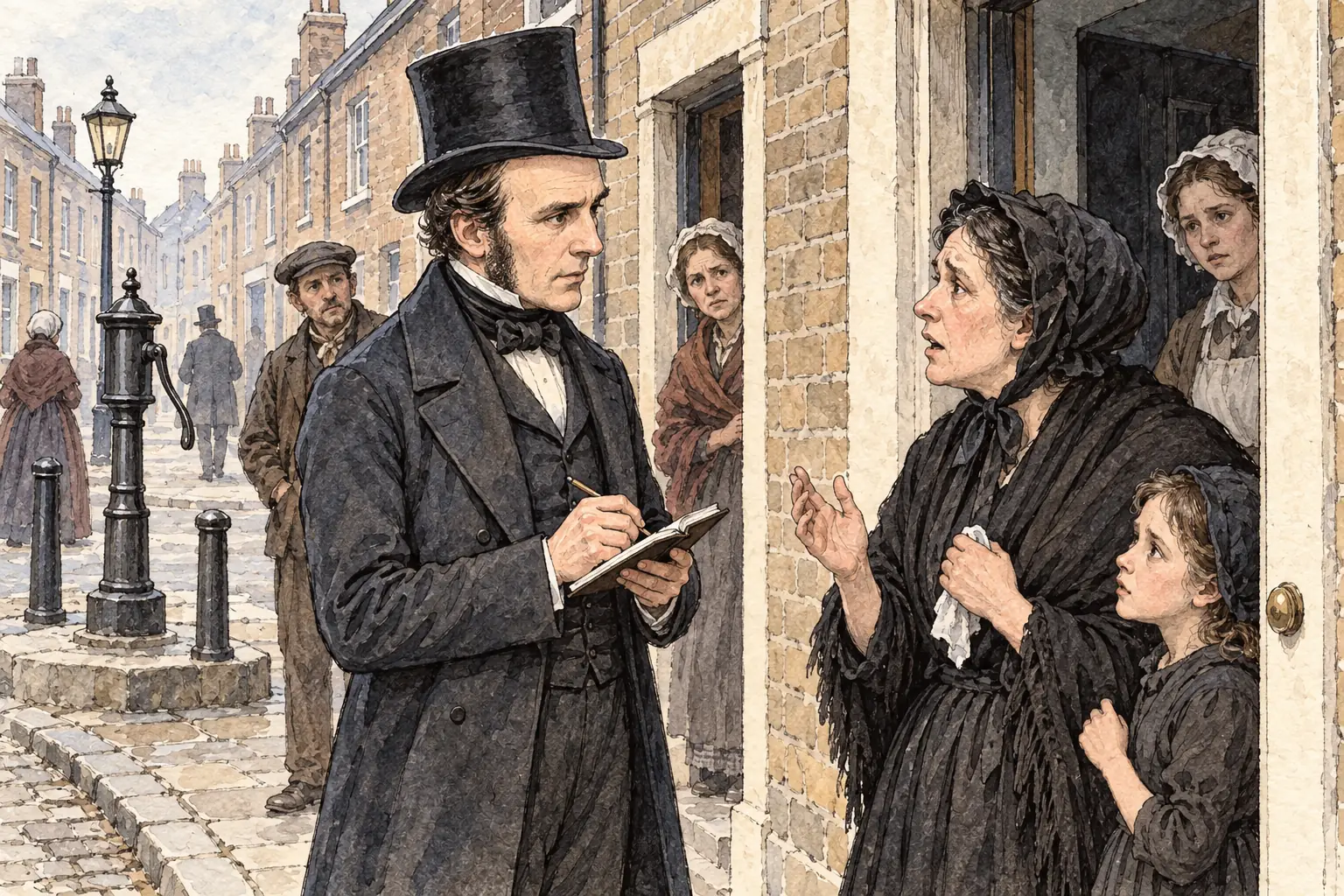
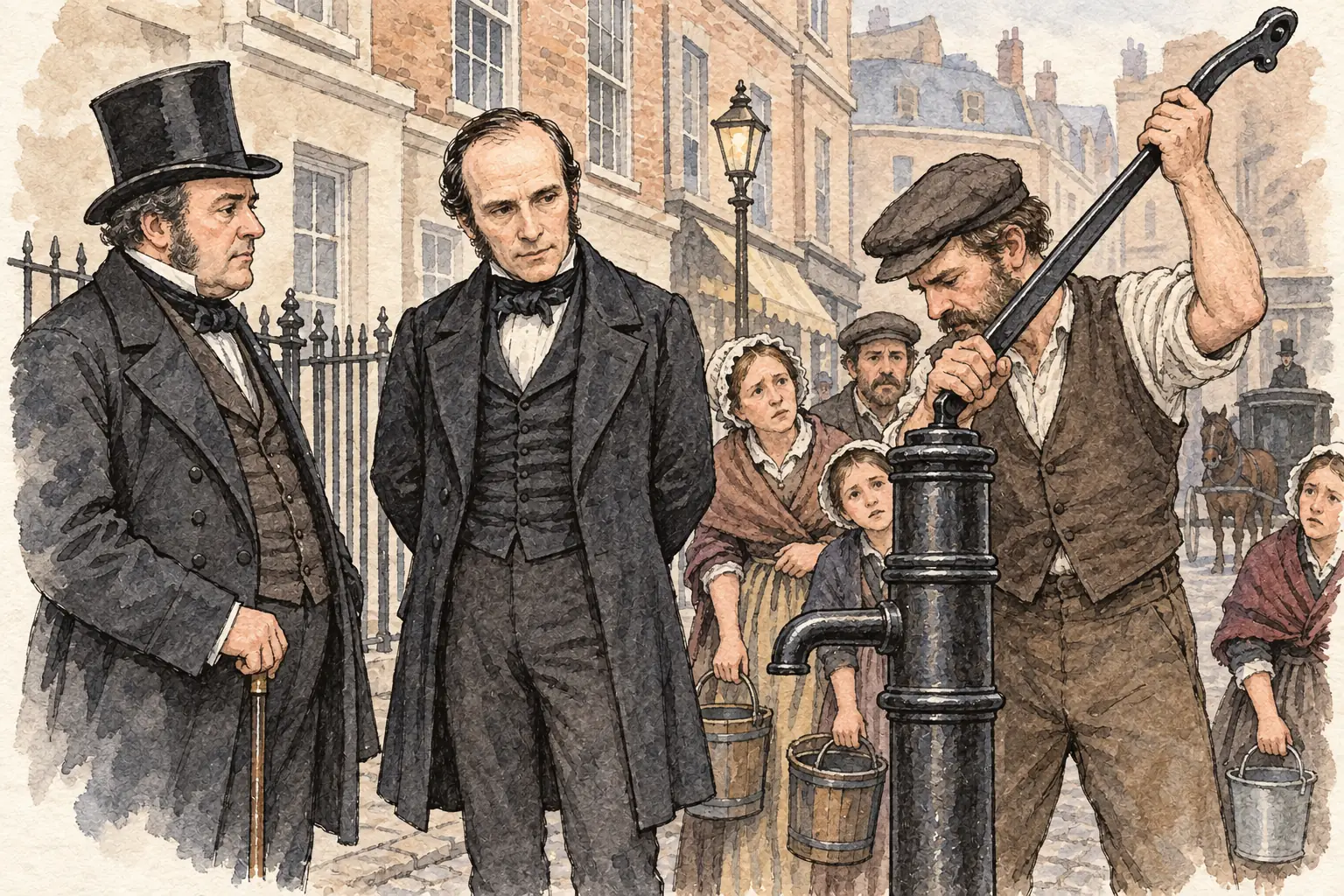
Dr John Snow, a prominent anaesthetist and researcher, challenged the miasma theory by proposing that cholera spread through polluted water. During the 1854 Soho outbreak, he conducted a detailed study to test his hypothesis.
Methods used in Snow's investigation
- Mapping cholera cases - Snow plotted the locations of deaths on a map, revealing a concentration around the Broad Street water pump, suggesting it as the infection source.
- Gathering evidence through interviews - He spoke with local residents, discovering that most victims had consumed water from the pump; in contrast, nearby brewery workers, who drank only beer, remained healthy.
- Taking decisive action - Snow persuaded local authorities to disable the pump by removing its handle, preventing further use and causing the outbreak to decline quickly.
Later analysis confirmed that a nearby cesspit had contaminated the pump's well with bacteria, validating Snow's water-borne theory. His approach marked an early use of epidemiological techniques, combining observation, data, and logic.
Immediate impact and government response
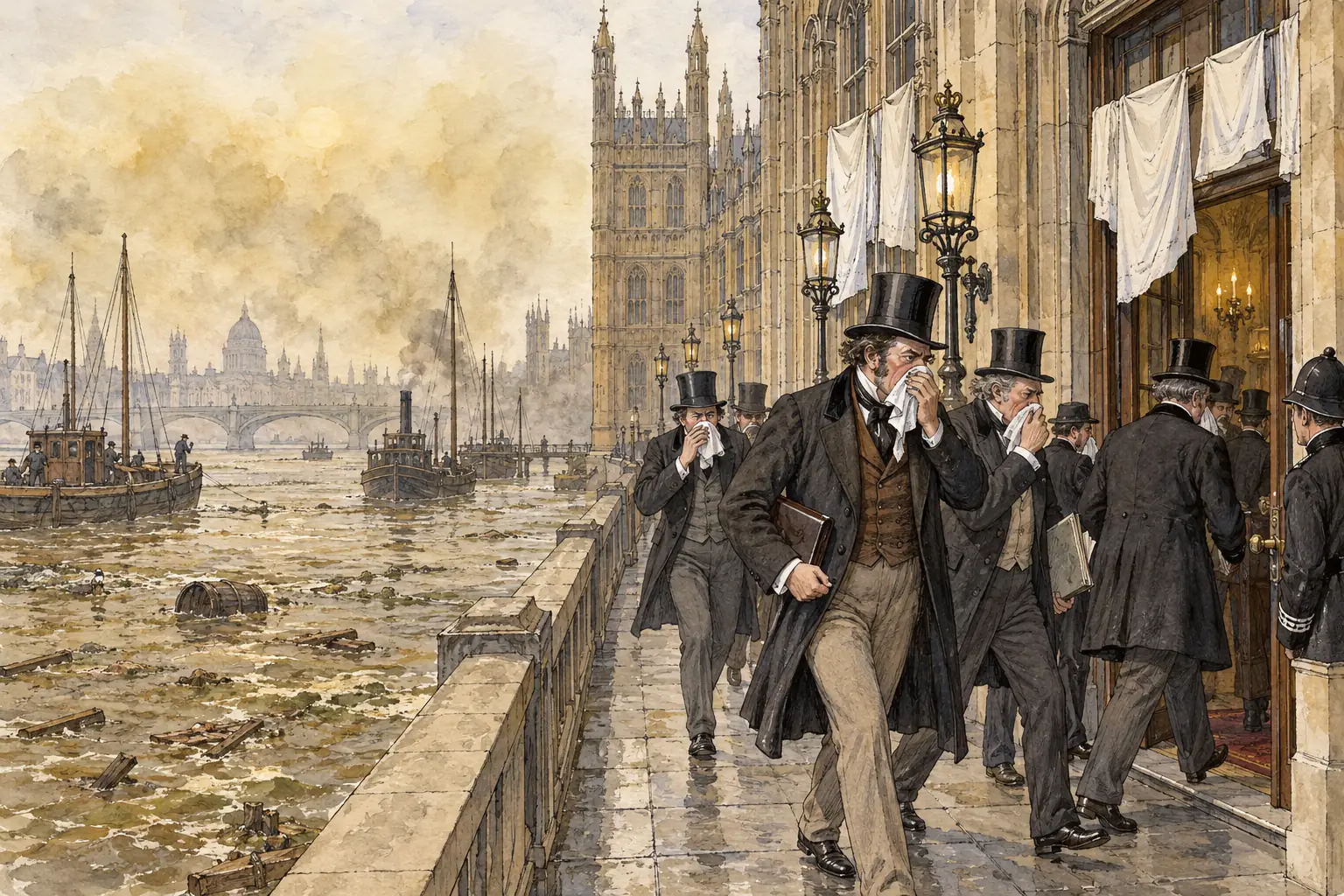
Image 1 of 2: The Great Stink of 1858, when the Thames became unbearably polluted, finally forced Parliament to act
Snow's intervention provided compelling evidence against miasma, but acceptance was limited due to the lack of biological proof. The government initially responded slowly, clinging to traditional views.
Limitations and initial reactions
- Scepticism from officials - Without knowledge of the cholera bacterium (later identified by Robert Koch in 1883), many doctors and authorities dismissed Snow's ideas, continuing to favour air-based explanations.
- Trigger for change - The Great Stink of 1858, when the River Thames became unbearably polluted, finally forced parliamentary action, highlighting the need for better infrastructure.
Key developments in sanitation
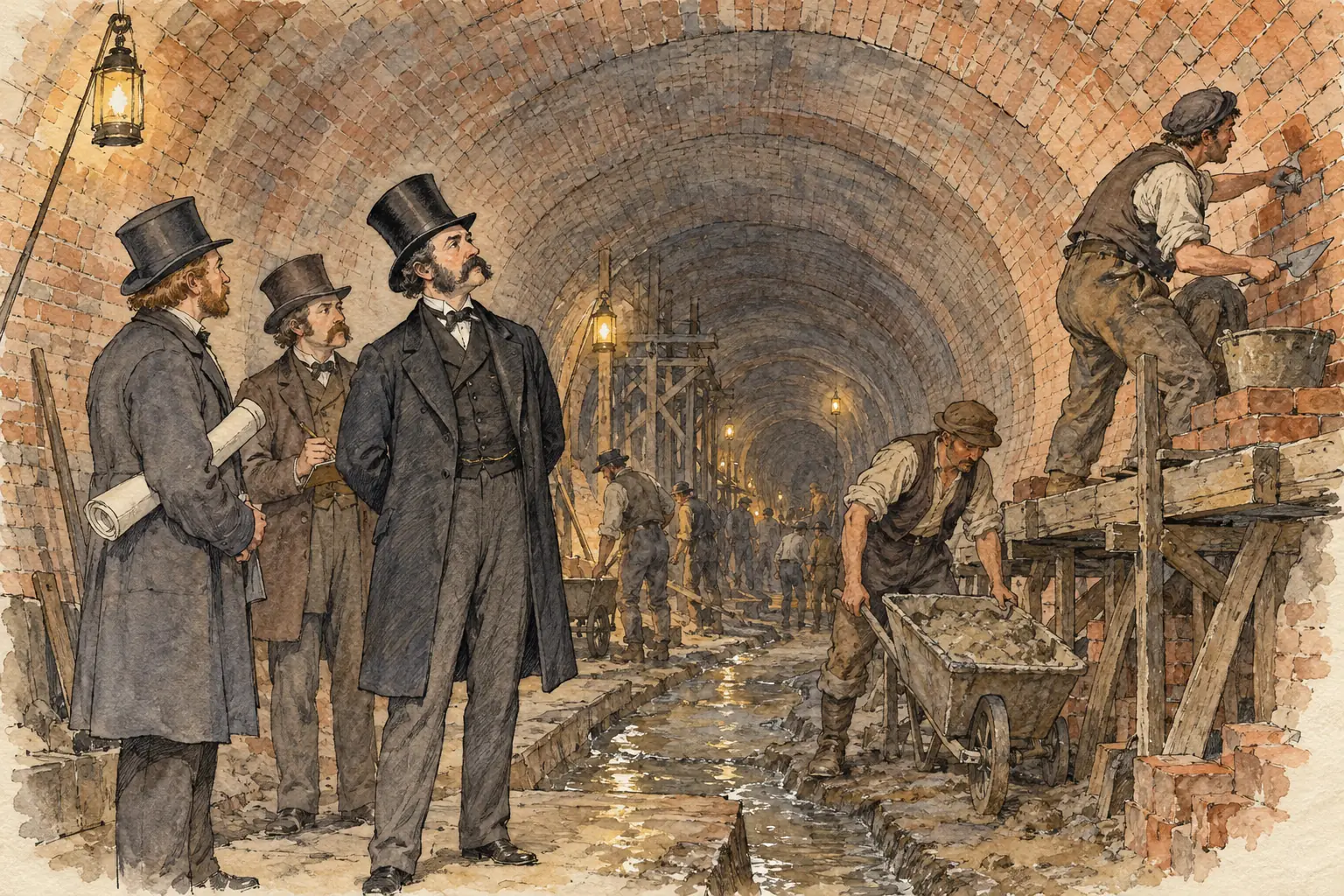
- Bazalgette's sewer system - Engineer Joseph Bazalgette designed and built an extensive network of sewers in the 1860s, diverting waste from the Thames and improving water quality.
- Effects on future outbreaks - These improvements ensured that subsequent cholera episodes were much milder, demonstrating the value of clean water in disease prevention.
Long-term significance in public health
Snow's work represented a pivotal shift in medical thinking, emphasising evidence over assumption. It laid foundations for modern epidemiology and influenced broader reforms.
Contributions to epidemiology and public health
- Pioneering data-driven methods - By using maps and statistics, Snow showed how systematic investigation could pinpoint disease sources, inspiring future researchers.
- Influence on germ theory - His findings prepared the ground for the acceptance of microbial causes of illness, even though he could not identify the pathogen himself.
- Public health reforms - The emphasis on clean water led to the Public Health Act 1875, which required local authorities to provide safe drinking supplies and sanitation, reducing urban disease rates.
Overall, the 1854 case illustrated 19th-century progress, where innovative individuals like Snow used observation to challenge outdated theories, advancing Britain's approach to disease control and urban hygiene.