1.4 - Little Rock High School, 1957
Key facts and dates
The Little Rock High School crisis of 1957 highlighted the fierce resistance to school desegregation in the American South following the 1954 Brown v. Board of Education ruling. This event demonstrated federal efforts to enforce civil rights amid widespread opposition, drawing international attention during the Cold War.
Timeline of key events
- 1954 – Brown v. Board of Education Supreme Court decision declares segregated schools unconstitutional.
- September 1957 – Arkansas Governor Orval Faubus deploys National Guard to prevent nine Black students from entering Little Rock Central High.
- Mid-September 1957 – Black students face harassment and violence from white crowds outside the school.
- 24 September 1957 – President Eisenhower federalises the Arkansas National Guard to enforce integration.
- 25 September 1957 – 101st Airborne Division escorts the Little Rock Nine into the school building.
- Late 1957 onwards – Global media coverage exposes U.S. racial tensions, embarrassing the nation during the Cold War.
Slow progress in school desegregation
The 1954 Brown v. Board of Education ruling by the Supreme Court marked a legal victory against racial segregation in public schools, declaring it unconstitutional. However, implementation across the American South proceeded at a glacial pace, with many states resisting change through legal delays and local opposition.
Barriers to implementing the Brown ruling
- State-level resistance - Southern states employed tactics like legal challenges and "massive resistance" campaigns to avoid integrating schools, often closing public institutions rather than desegregating them.
- Limited federal enforcement - Initial lack of strong national intervention allowed local authorities to ignore the ruling, resulting in minimal actual desegregation by the mid-1950s.
- Cultural and social opposition - Deep-rooted racial prejudices among white communities fuelled protests and violence, slowing progress and maintaining segregated education in practice.
Reasons for the Little Rock crisis in 1957
In Arkansas, the push for school integration at Little Rock Central High School in 1957 triggered a major confrontation. Local and state leaders, reflecting broader Southern resistance, actively worked to block Black students from attending the previously all-white institution.
Factors leading to the confrontation
- Governor Faubus's political motivations - Orval Faubus, the state's governor, sought to appeal to white voters by opposing integration, using the crisis to bolster his re-election prospects amid rising racial tensions.
- Response to the Brown decision - Arkansas initially planned limited integration, but growing white backlash prompted Faubus to intervene, claiming it was necessary to prevent disorder.
- Selection of the Little Rock Nine - Nine Black students were chosen for their academic excellence to integrate the school, but this move intensified local fears of racial mixing and social change.
Key events of the Little Rock integration
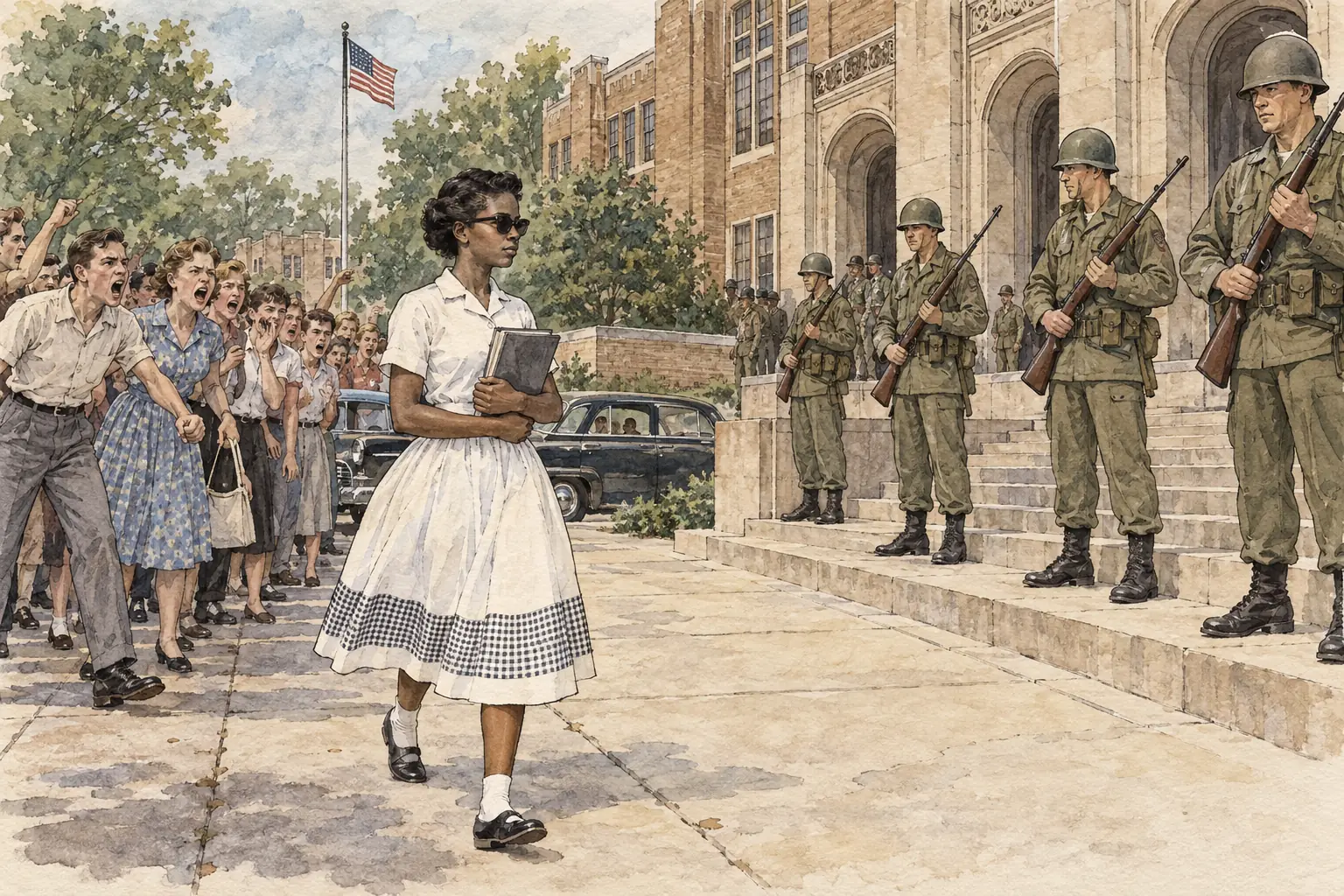
The integration attempt at Little Rock Central High School escalated into a national crisis, marked by intense harassment and public standoffs. The events unfolded over several weeks, drawing widespread attention and highlighting the human cost of desegregation efforts.
Sequence of the crisis
- Initial blockade - In early September 1957, Governor Faubus ordered the Arkansas National Guard to surround the school, physically preventing the nine Black students from entering under the pretext of maintaining order.
- Harassment of the Little Rock Nine - The students faced daily threats, verbal abuse, and physical intimidation from angry white mobs, including parents and segregationists, who gathered outside the school.
- Media spotlight - The confrontation attracted global news coverage, with images of violence broadcast worldwide, exposing American racial divisions at a time when the U.S. was promoting democracy abroad during the Cold War.
President Eisenhower's intervention
Image 1 of 2: On 24 September 1957 Eisenhower told the nation on radio and television that he was sending troops to enforce the law
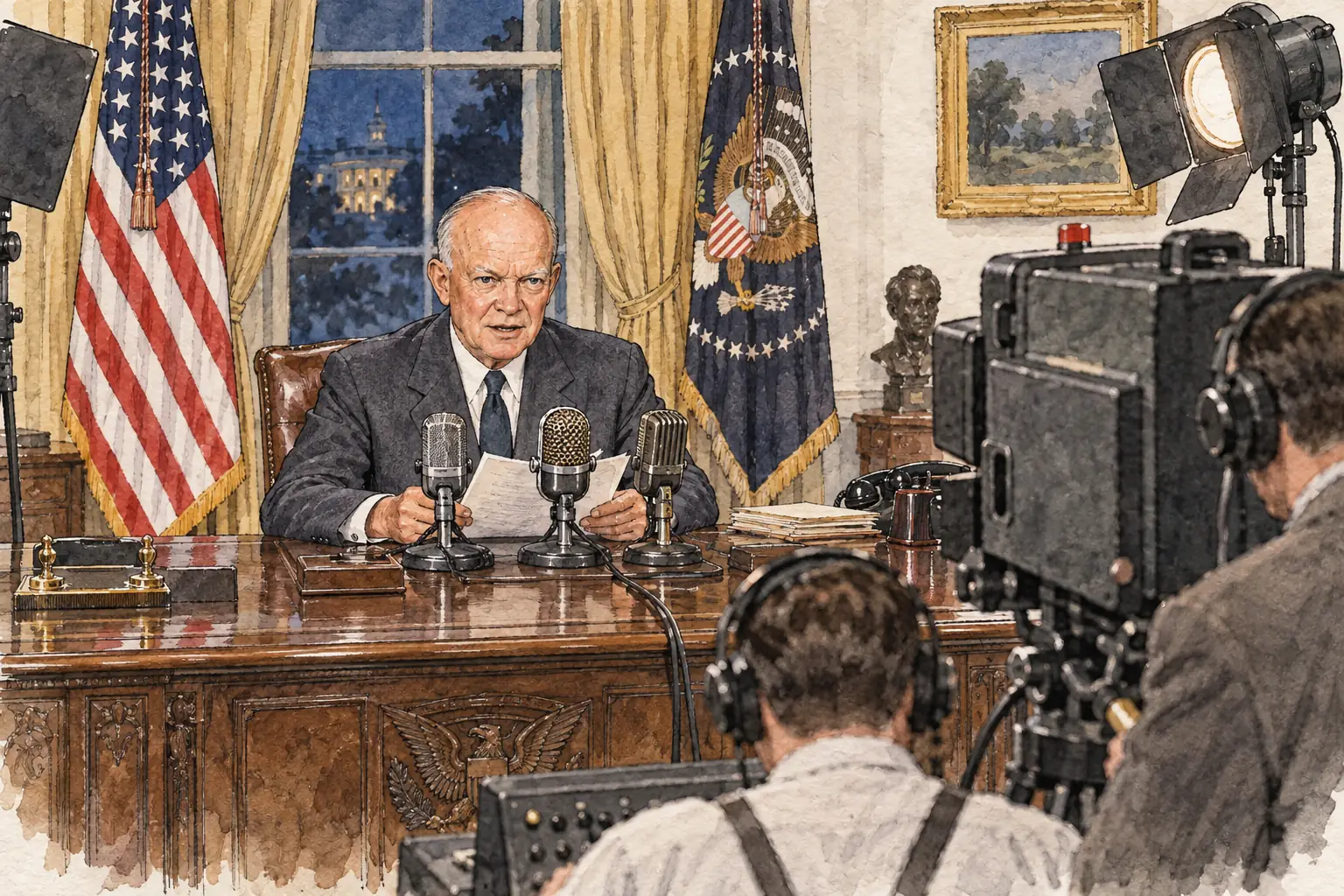
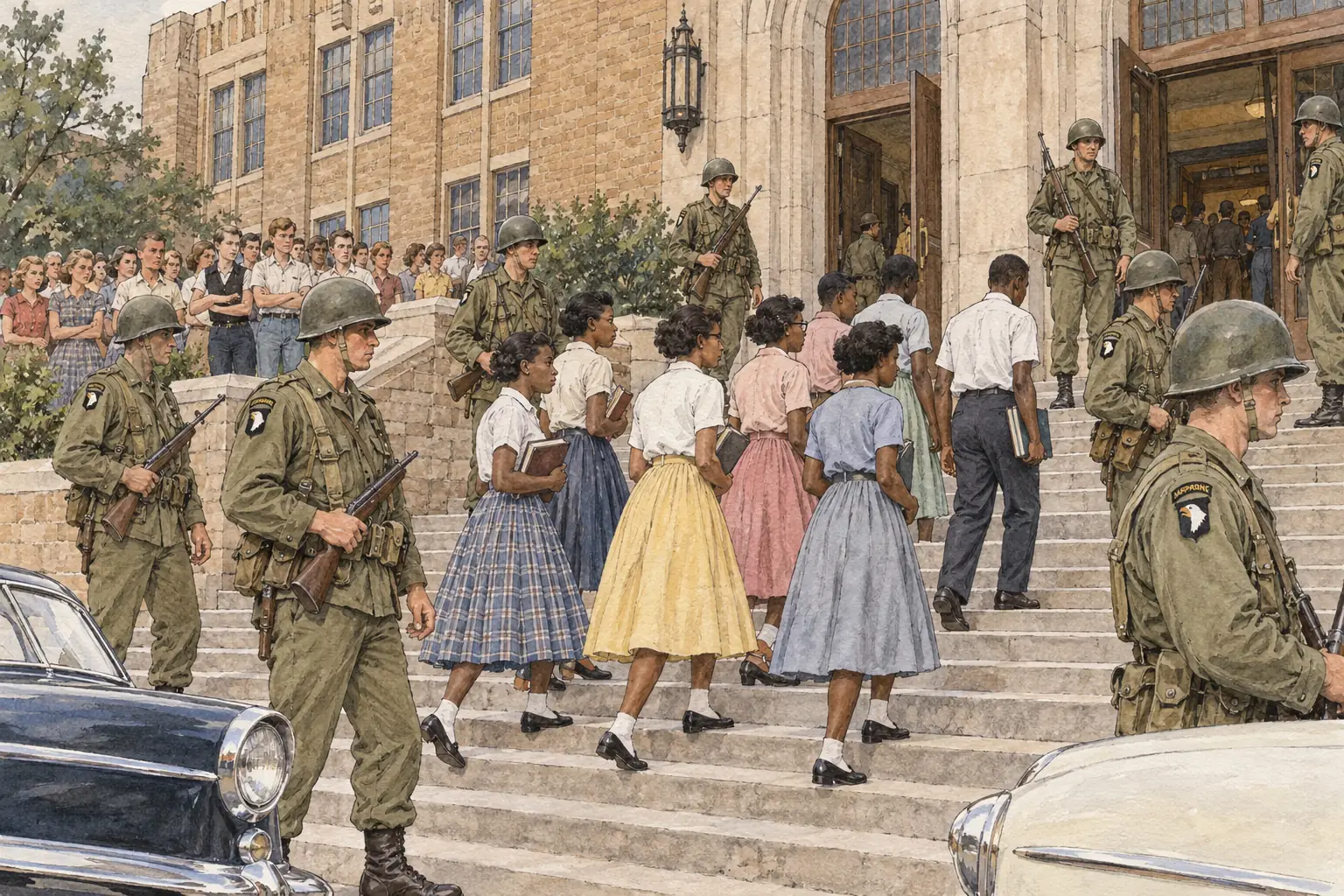
Faced with defiance of federal law, President Dwight D. Eisenhower took decisive action to uphold the Supreme Court's ruling. His response marked a rare instance of direct federal involvement in civil rights enforcement.
Steps taken by Eisenhower
- Federalisation of the National Guard - On 24 September 1957, Eisenhower issued an executive order to place the Arkansas National Guard under federal control, removing them from Faubus's command and redirecting them to support integration.
- Deployment of troops - The president sent 1,000 soldiers from the elite 101st Airborne Division to Little Rock, who escorted the nine students into the school and protected them throughout the academic year.
- Rationale for action - Eisenhower acted to enforce the law and prevent anarchy, emphasising that state obstruction could not override federal authority, though he was personally reluctant to intervene deeply in racial matters.
Significance and limitations of Little Rock
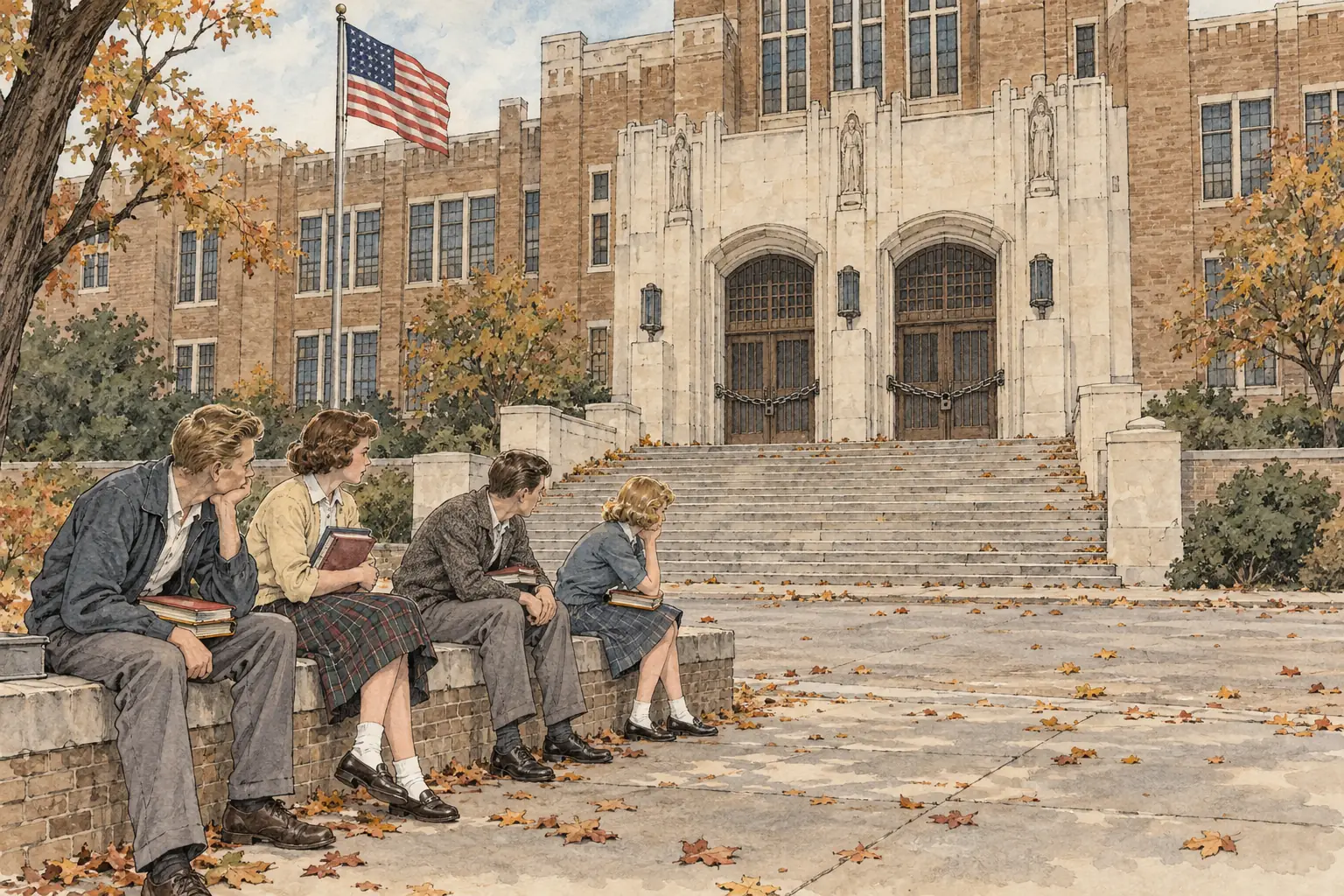
The Little Rock crisis represented a pivotal moment in the civil rights movement, demonstrating federal commitment to desegregation while exposing the persistence of resistance. Its outcomes had both immediate and long-term effects on the struggle for equality.
Impacts of the crisis
- Assertion of federal authority - The intervention established that the national government could override state resistance, setting a precedent for future enforcement of civil rights laws.
- Symbolic importance - The bravery of the Little Rock Nine and the dramatic images became powerful emblems of the fight against segregation, inspiring activists and raising international awareness.
- Ongoing limitations - Despite the success at Little Rock, white opposition continued across the South, with many schools remaining segregated and integration advancing slowly into the 1960s.