2.3 - Legacy of Resistance to 1087
Key facts and dates
The legacy of resistance to Norman rule up to 1087 involved severe reprisals against rebellions and profound shifts in land control, which solidified William's authority. These events devastated regions and restructured society, preventing further large-scale opposition.
Timeline of key events
- 1069 – Rebellions erupt in northern England, prompting William's response.
- 1069-70 – Harrying of the North: troops destroy villages, crops, and livestock.
- Post-1070 – Widespread famine follows the Harrying, weakening the region.
- 1070s – Forfeiture of Anglo-Saxon lands to Norman lords begins.
- By 1087 – Less than 5% of land remains with Anglo-Saxon aristocrats.
William's Harrying of the North (1069-70)
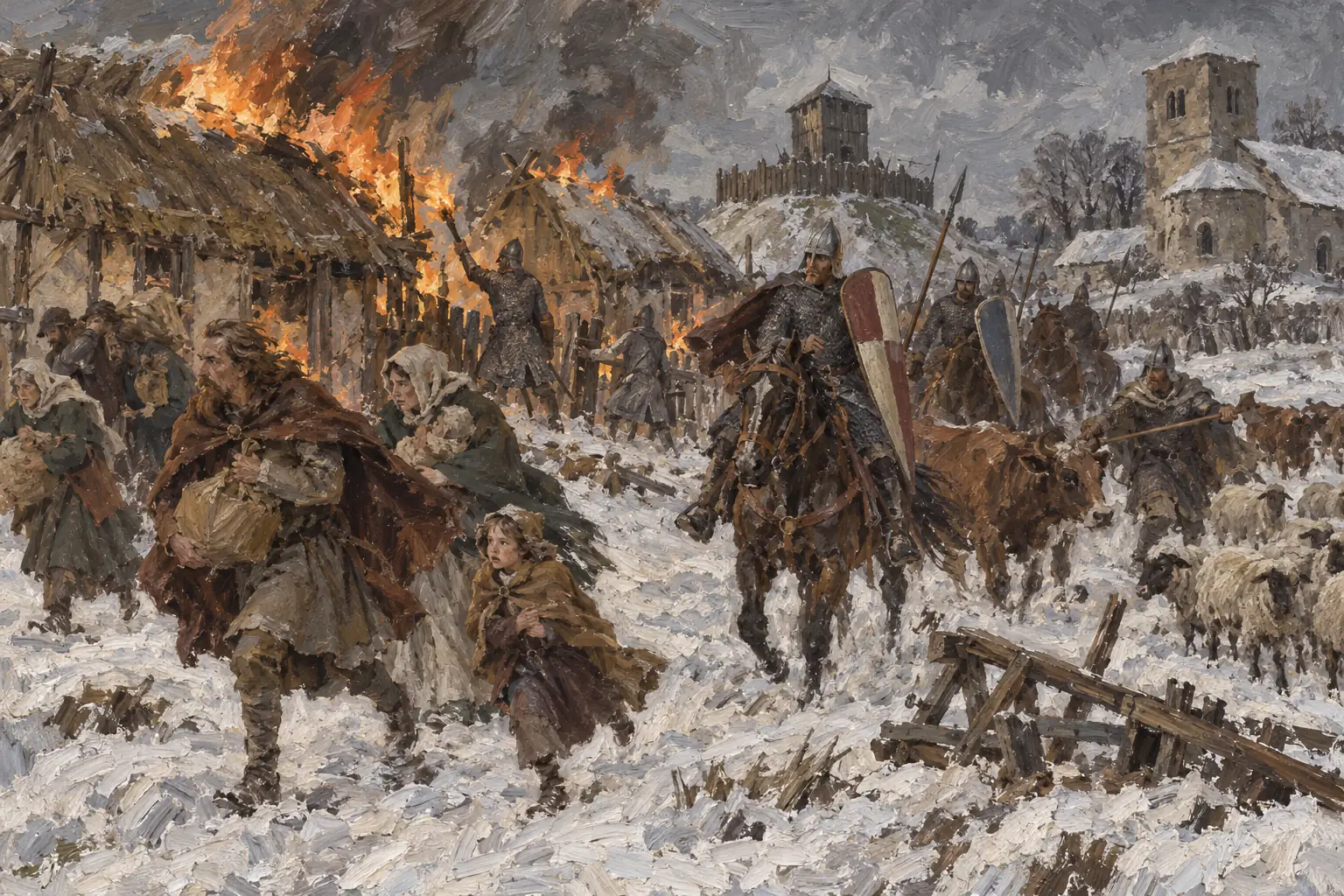
In response to uprisings in northern England during 1069, William launched a ruthless campaign known as the Harrying of the North, lasting into 1070. This operation aimed to crush dissent through total destruction, ensuring no safe havens for rebels.
Tactics used in the Harrying
- Scorched-earth policy - Soldiers systematically burned down settlements, leaving entire communities without shelter.
- Destruction of resources - Crops were ruined and animals slaughtered or scattered, deliberately creating shortages.
- Displacement and violence - Local people were killed or forced to flee, depopulating large areas to prevent future revolts.
Impact of the Harrying on northern resistance
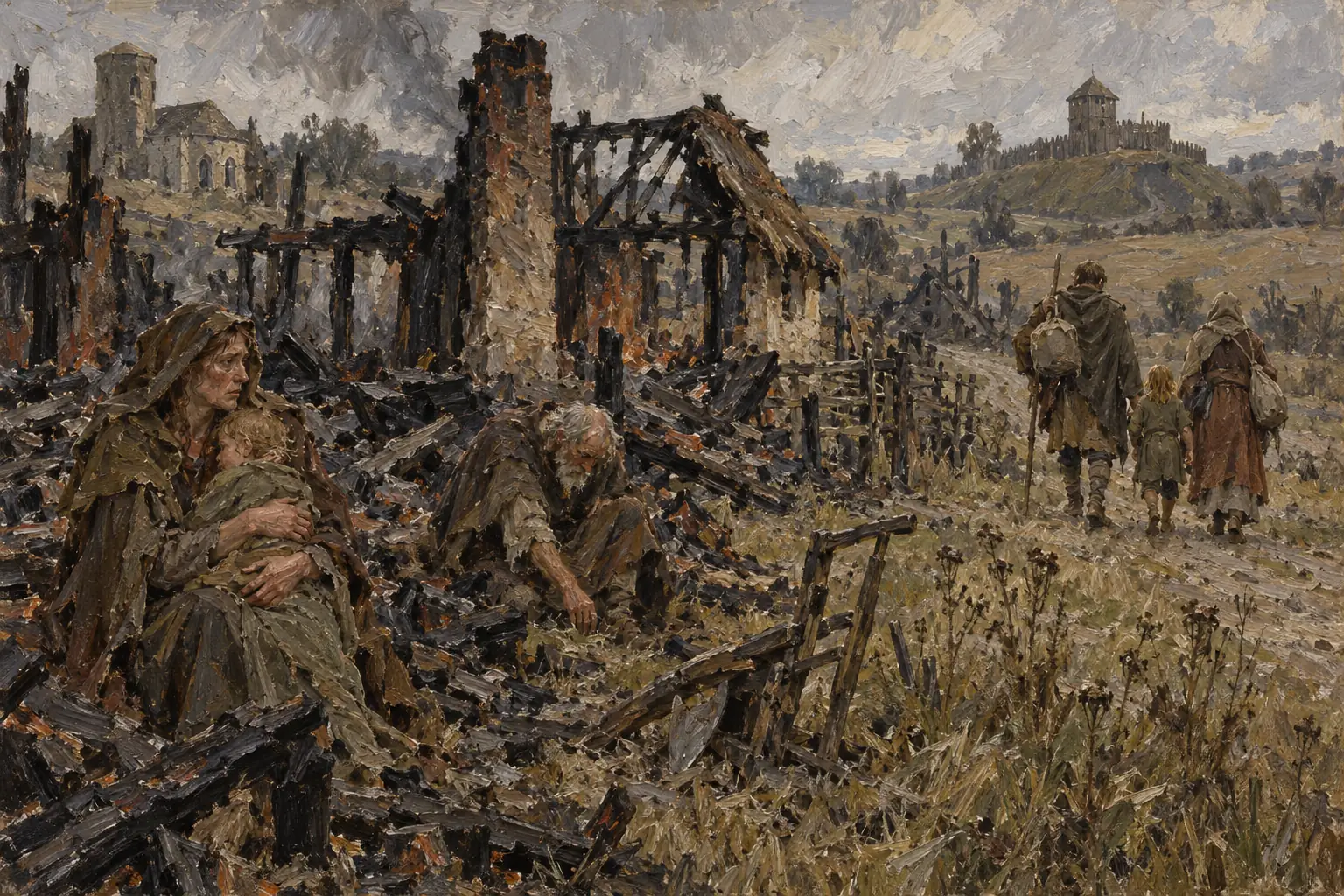
The Harrying inflicted long-lasting damage on northern England, effectively ending organised resistance in the area. The scale of the devastation ensured that the region could not recover quickly enough to challenge Norman control again.
Consequences of the Harrying
- Famine and population loss - The loss of food supplies led to starvation, with many dying in the following months.
- Economic ruin - Farmland lay waste for years, delaying recovery and reducing the area's ability to support rebellion.
- Suppression of opposition - With the North weakened, no major threats emerged thereafter, securing William's dominance.
Changes in landownership after the Conquest
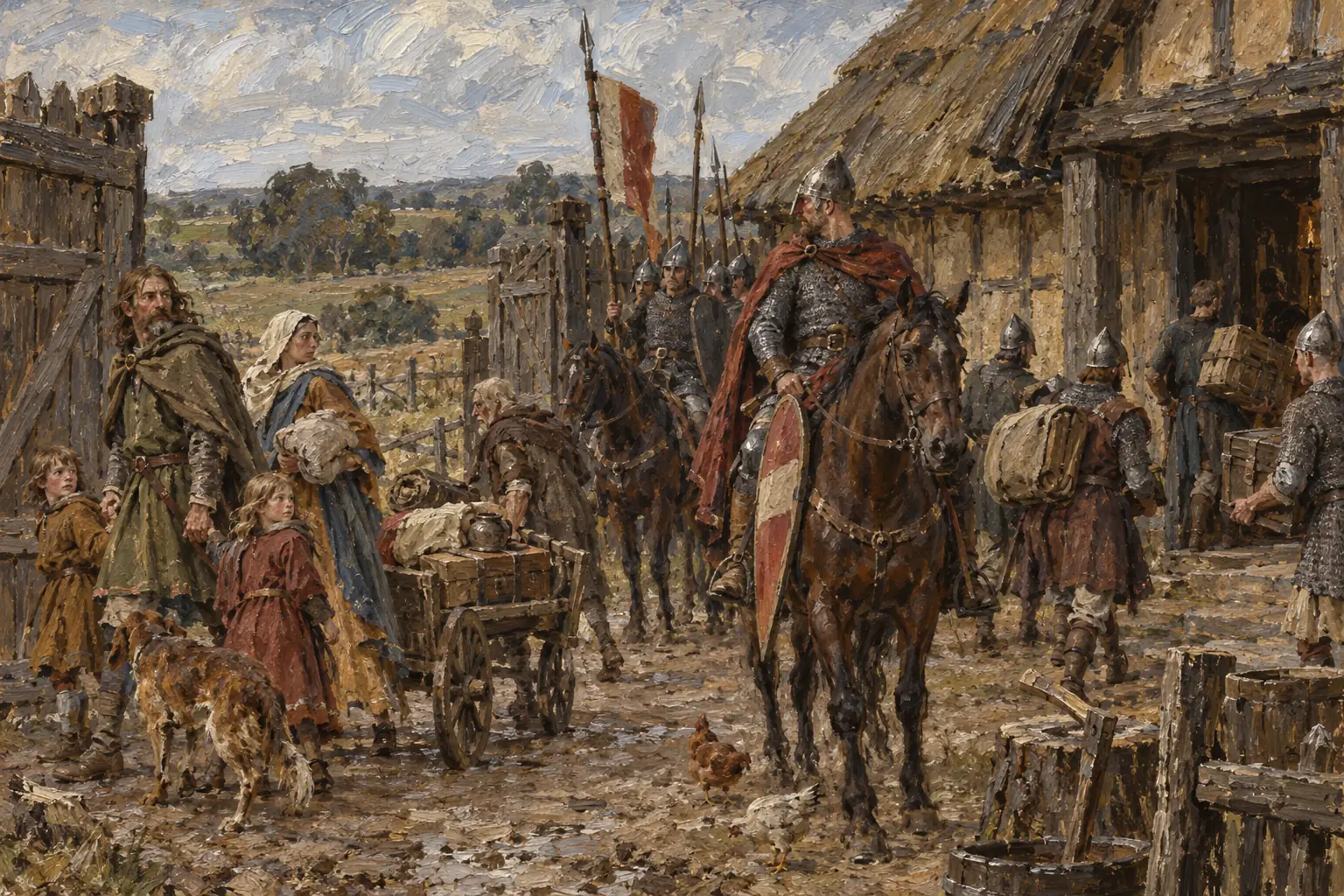
Following the Conquest and rebellions, William implemented sweeping reforms to land distribution. These changes rewarded loyal followers while punishing those who opposed him, fundamentally altering the structure of property holding.
Processes of land redistribution
- Forfeiture of estates - Anglo-Saxon lords involved in revolts lost their holdings, which were seized by the crown.
- Grants to Norman supporters - Confiscated lands were redistributed to William's Norman allies, strengthening their position.
- Centralised control - This system tied land tenure to loyalty, integrating Norman customs into English practices.
Transformation of the English nobility by 1087
By 1087, the English aristocracy had undergone a near-complete overhaul, with Norman influence dominating at all levels. This shift not only consolidated power but also reshaped social and economic structures under Norman rule.
Key features of the nobility's transformation
- Decline of Anglo-Saxon holdings - Only a tiny fraction, under 5%, of land stayed in Anglo-Saxon hands, as most were reassigned.
- Rise of Norman elites - Almost all major estates came under Norman control, creating a new ruling class.
- Societal and economic effects - The change promoted Norman language, laws, and farming methods, integrating England into a wider European framework.