3.5 - Johnson County War, 1892
Key facts and dates
The Johnson County War of 1892 exemplified the intense conflicts over land, resources, and power in the American West, pitting established cattle barons against emerging small ranchers and homesteaders. This clash highlighted broader issues of economic dominance and legal favoritism in frontier society.
Timeline of key events
- Late 1880s – Growing tensions as homesteaders fence land and water sources, leading to accusations of rustling by cattle barons.
- 1890 – Formation of the Wyoming Stock Growers Association (WSGA) to protect large ranchers' interests through vigilantism.
- April 1892 – WSGA hires gunmen, known as the Invaders, to eliminate alleged rustlers in Johnson County.
- 9 April 1892 – Invaders attack and kill Nate Champion and Nick Ray at the KC Ranch.
- 10-13 April 1892 – Siege at the TA Ranch, where Invaders are surrounded by local sheriff's posse and settlers.
- 13 April 1892 – U.S. Cavalry rescues the Invaders, leading to their arrest but no immediate trials.
- 1893 – Trials collapse due to lack of witnesses and political pressure, resulting in limited convictions.
Tensions between cattle barons and homesteaders
In the late 19th-century American West, particularly in Wyoming, established cattle barons clashed with incoming small ranchers and homesteaders over control of grazing lands and resources. These disputes arose from competing economic interests and changing land use practices.
Sources of conflict in range wars
- Accusations of rustling - Cattle barons often claimed that small operators stole their livestock, using this as a pretext to intimidate or eliminate competition.
- Fencing of land and water - Newcomers enclosed open ranges with barbed wire to secure private plots, restricting access to vital water sources and disrupting traditional open grazing.
- Economic power imbalances - Large ranchers dominated markets and politics, viewing smallholders as threats to their monopolies on cattle production and sales.
- Social class divisions - Barons represented elite interests, while homesteaders sought opportunities under laws like the Homestead Act, leading to resentment over unequal access to resources.
Causes of the Johnson County War
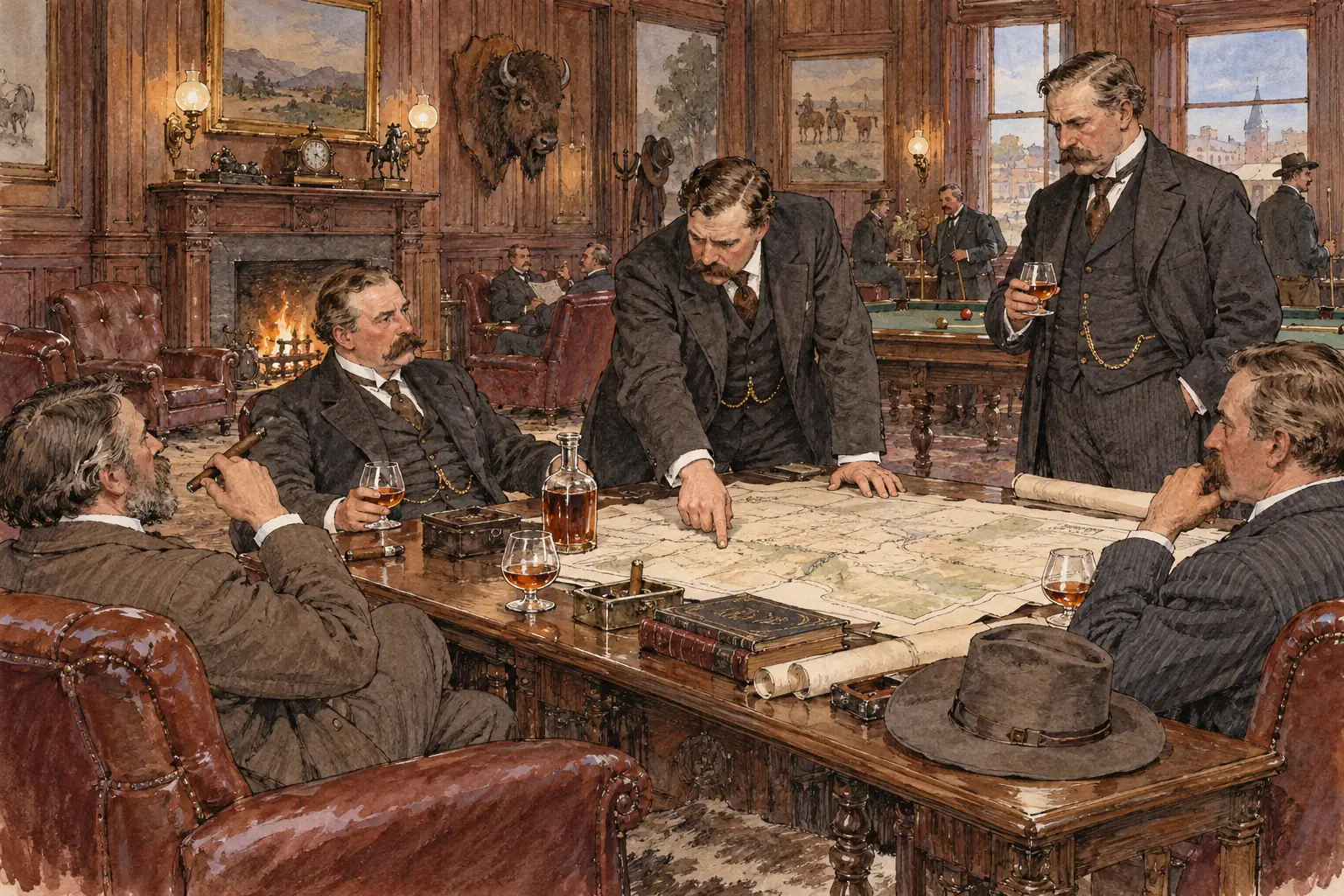
The Johnson County War erupted in Wyoming due to escalating rivalries between powerful cattle organisations and independent settlers. Rooted in economic competition and perceived threats to established operations, the conflict reflected broader struggles for control in the expanding West.
Factors leading to the outbreak
- Role of the Wyoming Stock Growers Association (WSGA) - This group of influential ranchers aimed to maintain dominance by blacklisting small operators and enforcing unofficial rules against rustling.
- Perceived threats from homesteaders - Barons feared that growing numbers of small ranchers would fragment the open range, reducing available grazing land and challenging their authority.
- Vigilante traditions - Frustrated by slow legal processes, large ranchers resorted to hired enforcers to protect their interests, escalating minor disputes into organised violence.
- Political and economic pressures - Droughts and falling cattle prices in the 1880s intensified competition, prompting barons to target those they saw as encroaching on their livelihoods.
Key events of the Johnson County War
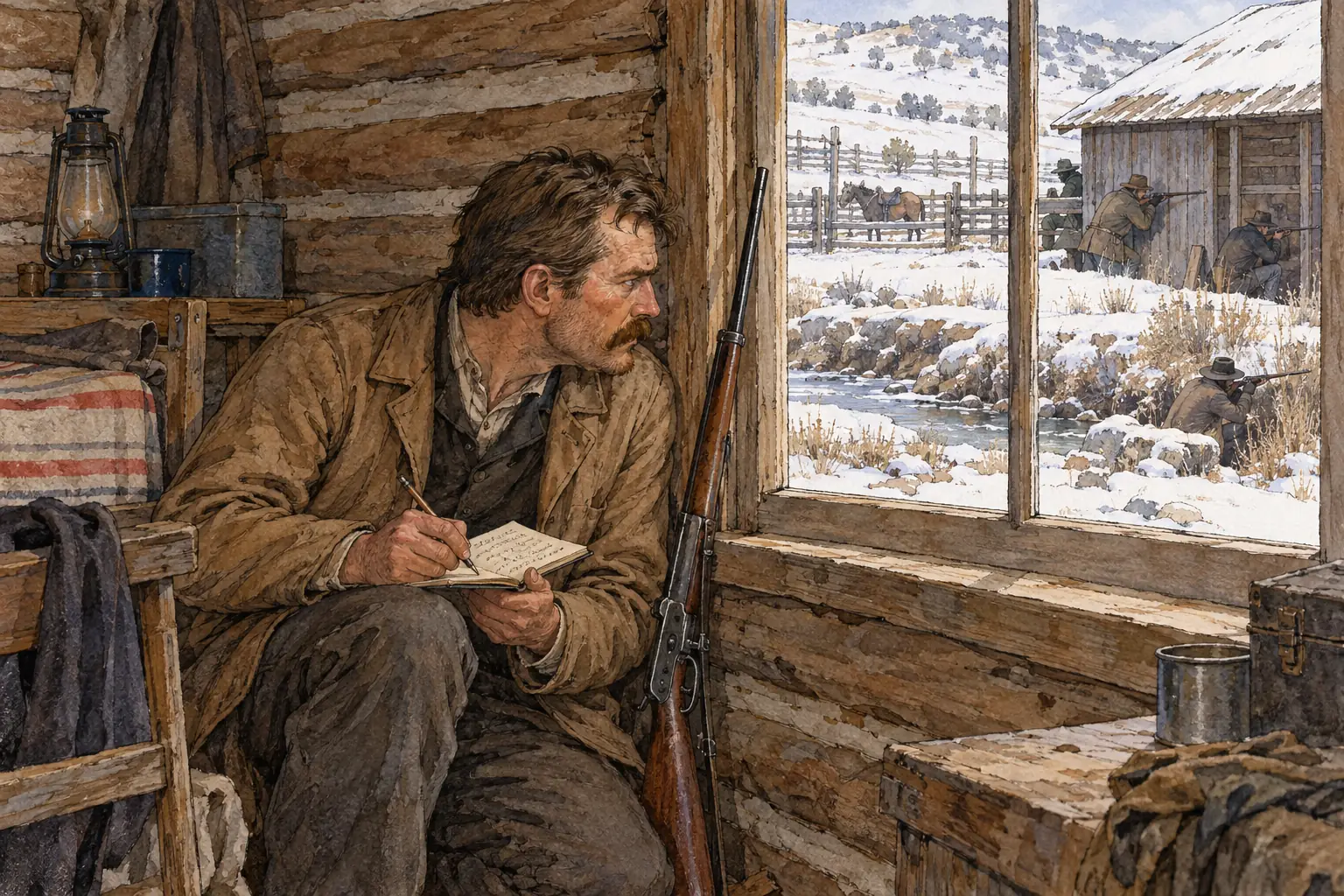
Image 1 of 2: Nate Champion keeps a diary of the attack on the KC Ranch on 9 April 1892 while the invaders surround him
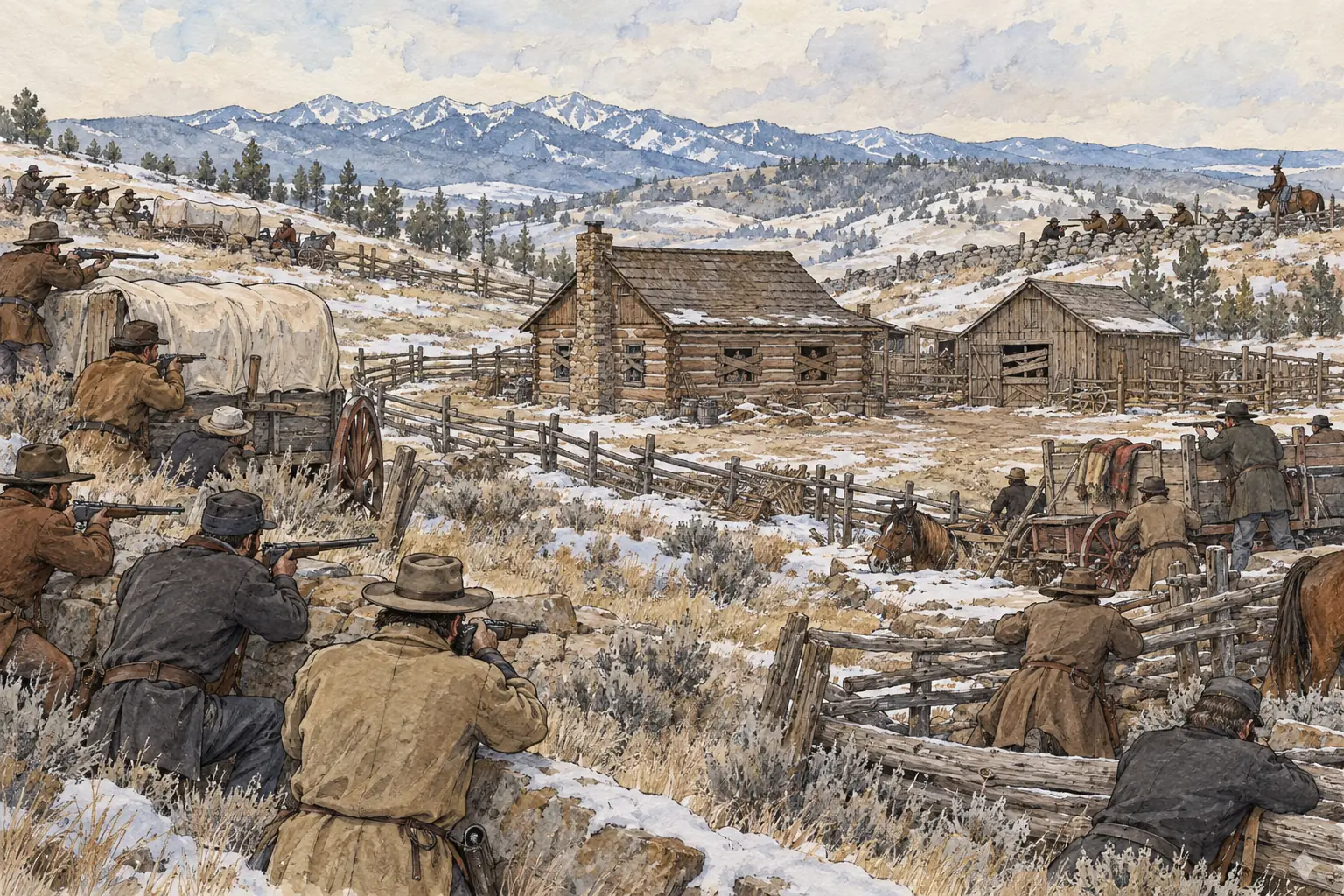
The war unfolded in April 1892 as a planned invasion by cattle barons' forces targeting alleged rustlers in Johnson County. This operation involved hired gunmen and culminated in a dramatic standoff, drawing national attention.
Sequence of major incidents
- Hiring of gunmen - The WSGA assembled a group of about 50 mercenaries, including Texas gunfighters, equipped with a list of 70 targets to eliminate small ranchers and their supporters.
- Attack on the KC Ranch - On 9 April, the invaders ambushed and killed settlers Nate Champion and Nick Ray, who resisted fiercely; Champion's dying note detailed the assault, galvanising local opposition.
- Siege at the TA Ranch - The gunmen retreated to the TA Ranch, where they were surrounded by a posse of over 400 armed locals led by the county sheriff, enduring a three-day standoff.
- Rescue and arrests - On 13 April, U.S. Cavalry troops intervened at the request of Wyoming's governor, rescuing the invaders and arresting them, though this action prevented their immediate lynching by the posse.
Outcomes and legal consequences
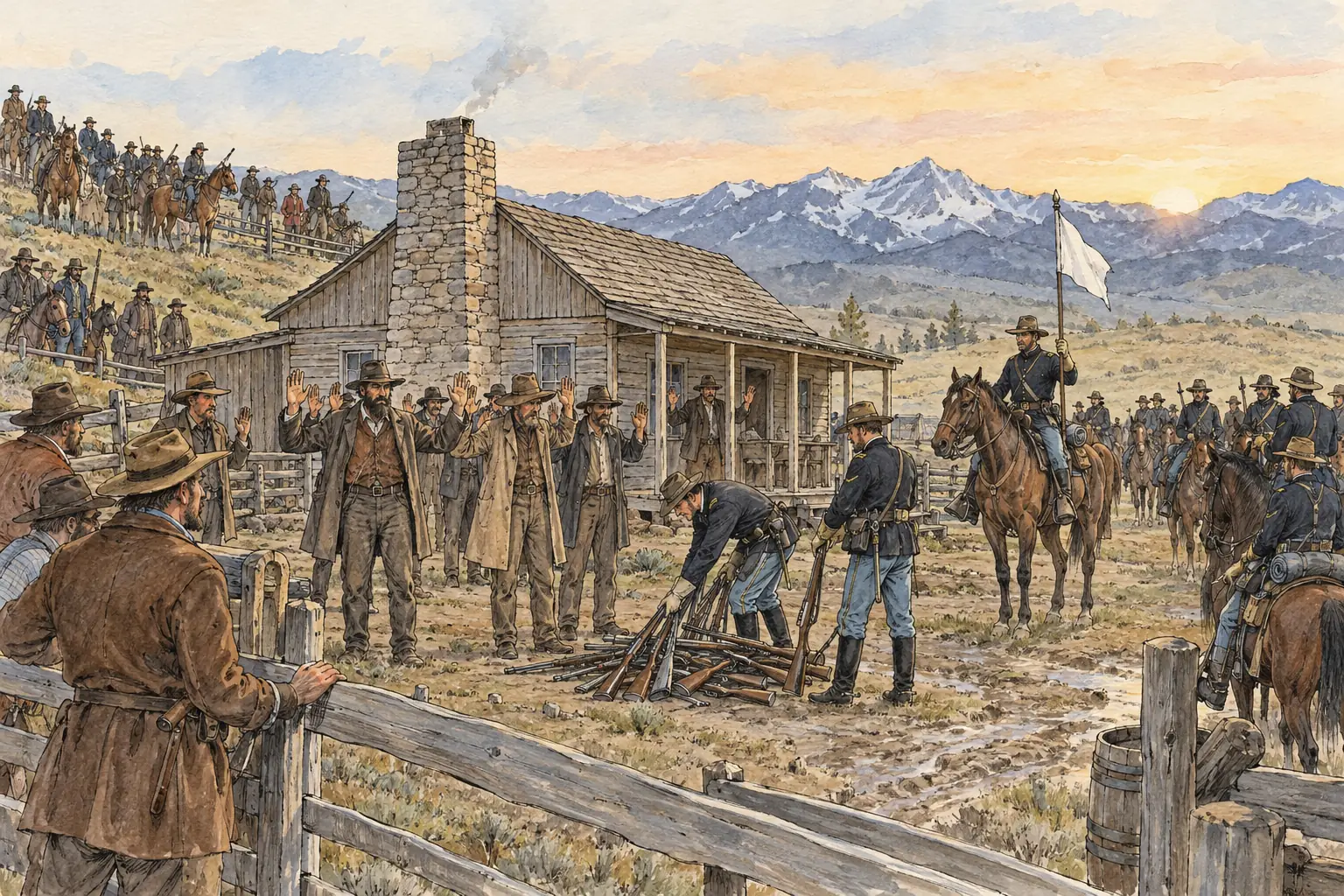
The aftermath of the Johnson County War saw minimal accountability for the invaders, underscoring the influence of wealthy ranchers. Legal proceedings dragged on, revealing biases in the justice system.
Results of the conflict and trials
- Limited convictions - Despite arrests, trials in 1893 failed due to intimidated witnesses and procedural delays, with charges eventually dropped and no major punishments imposed.
- Political influence of ranchers - WSGA members leveraged connections with state officials and President Benjamin Harrison to secure military intervention and lenient treatment.
- Impact on local communities - Small ranchers gained temporary sympathy, but the war's failure to produce justice reinforced perceptions of elite impunity.
- Broader repercussions - The event damaged the WSGA's reputation, leading to its decline, while highlighting the need for fairer law enforcement in frontier disputes.
Significance for property rights, power and bias
The Johnson County War held lasting importance for understanding power dynamics in the American West, influencing debates on land ownership, social inequality, and justice. It exposed systemic favoritism towards the powerful.
Long-term implications of the war
- Property rights - The conflict underscored tensions between open-range traditions and emerging private enclosures, contributing to reforms that strengthened individual land claims under federal laws.
- Class power - It illustrated how economic elites could manipulate politics and violence to maintain dominance, widening divides between wealthy barons and working-class settlers.
- Law enforcement bias - The military's role in protecting invaders revealed prejudices in legal systems, prompting calls for impartial policing and greater protections for ordinary citizens.
- Legacy in Western history - The war symbolised the end of unchecked vigilantism, influencing later range management policies and cultural narratives about frontier justice.