1.1 - Causes of Disease in Medieval England
Key facts and dates
In medieval England, explanations for disease blended supernatural beliefs with ancient rational theories, heavily influenced by religious authority and classical writings. These ideas shaped how people understood and responded to illness, with little innovation due to the Church's dominance.
Key facts to remember
- God's punishment – Illness often seen as divine retribution for sin, reinforced by the Church.
- Astrology – Planetary alignments blamed for widespread epidemics.
- Theory of the Four Humours – Imbalance of blood, phlegm, black bile, and yellow bile as a cause of sickness.
- Miasma theory – Bad air or foul smells believed to spread disease.
- Galen's influence – Ancient physician whose ideas, including the Theory of Opposites, were widely accepted and promoted by the Church.
- Church's role – Religious teachings aligned with traditional theories, discouraging challenges to established views.
Supernatural explanations for disease
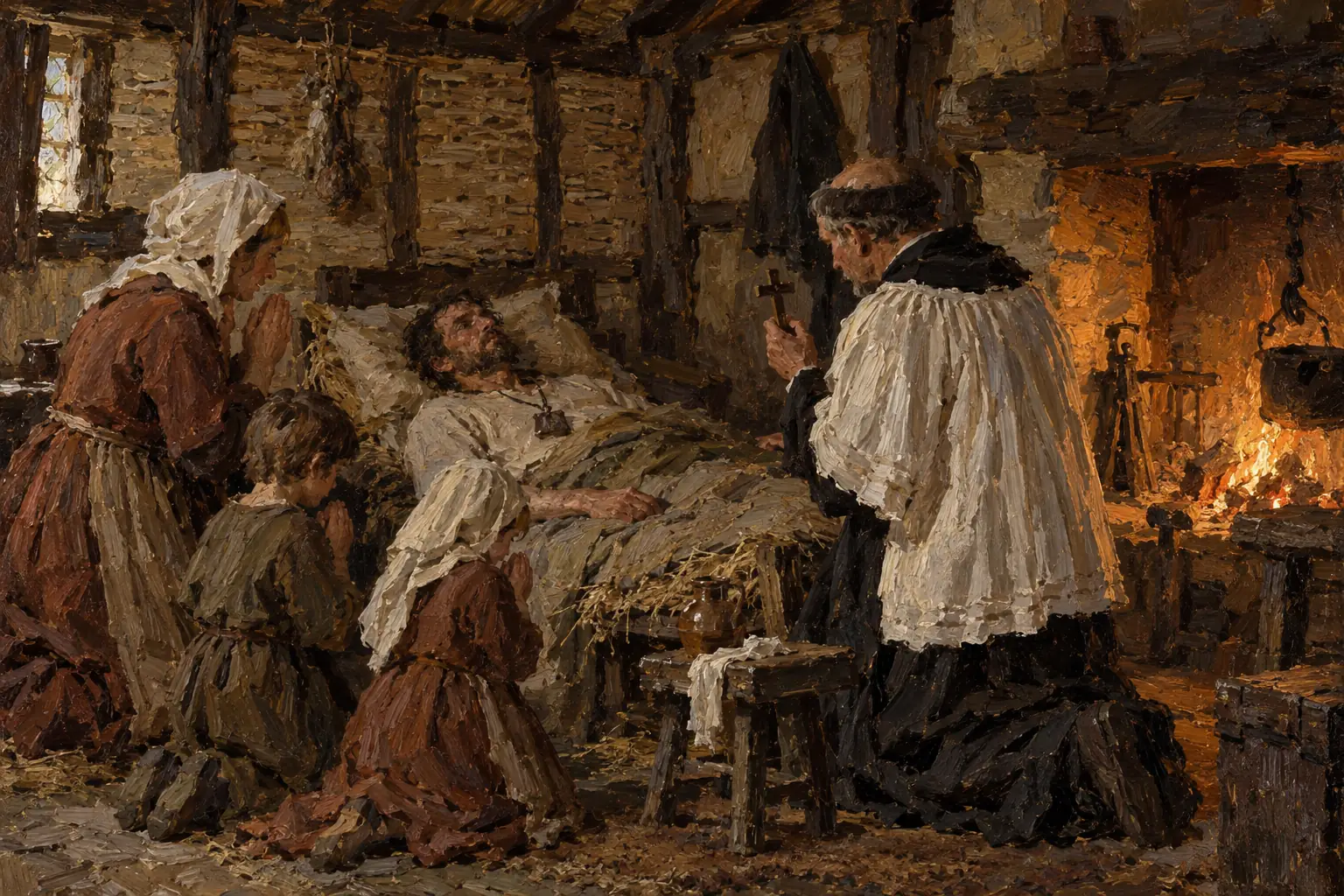
In medieval England, many people turned to supernatural ideas to make sense of illness and epidemics. These beliefs were deeply intertwined with religion and the cosmos, reflecting a worldview where divine or mystical forces controlled human health.
Religious beliefs about illness
- Divine punishment - Disease was frequently viewed as God's way of punishing individuals or communities for sinful behaviour, a perspective promoted by the influential Church.
- Role of priests - Since most people depended on priests for information and guidance, religious interpretations dominated everyday understanding of sickness.
Astrological influences on epidemics
- Planetary alignments - The positions of planets and stars were thought to trigger large-scale outbreaks, offering a supernatural rationale for widespread diseases.
Rational theories of disease causation
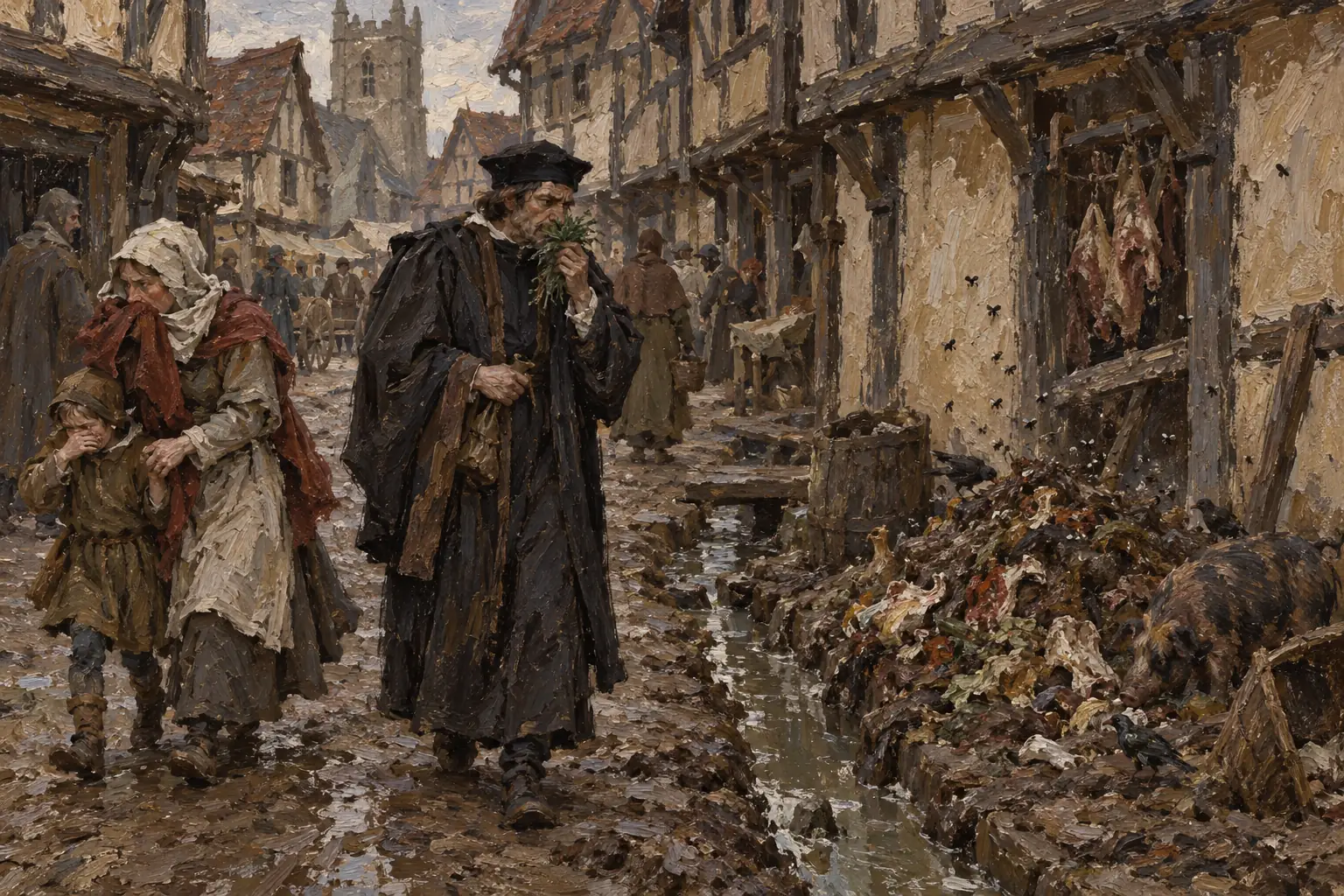
Alongside supernatural ideas, medieval England inherited rational explanations from ancient times. These focused on natural imbalances or environmental factors, providing a more systematic approach to understanding illness.
The Theory of the Four Humours
- Core concept - Health depended on maintaining balance among four key bodily fluids: blood, phlegm, black bile, and yellow bile.
- Imbalance and illness - Any disruption in this equilibrium was believed to result in various diseases, guiding treatments aimed at restoration.
The miasma theory
- Bad air as a cause - Foul-smelling vapours or polluted air were blamed for spreading sickness, especially in crowded or unsanitary areas.
Influence of Galen and the Church on medicine
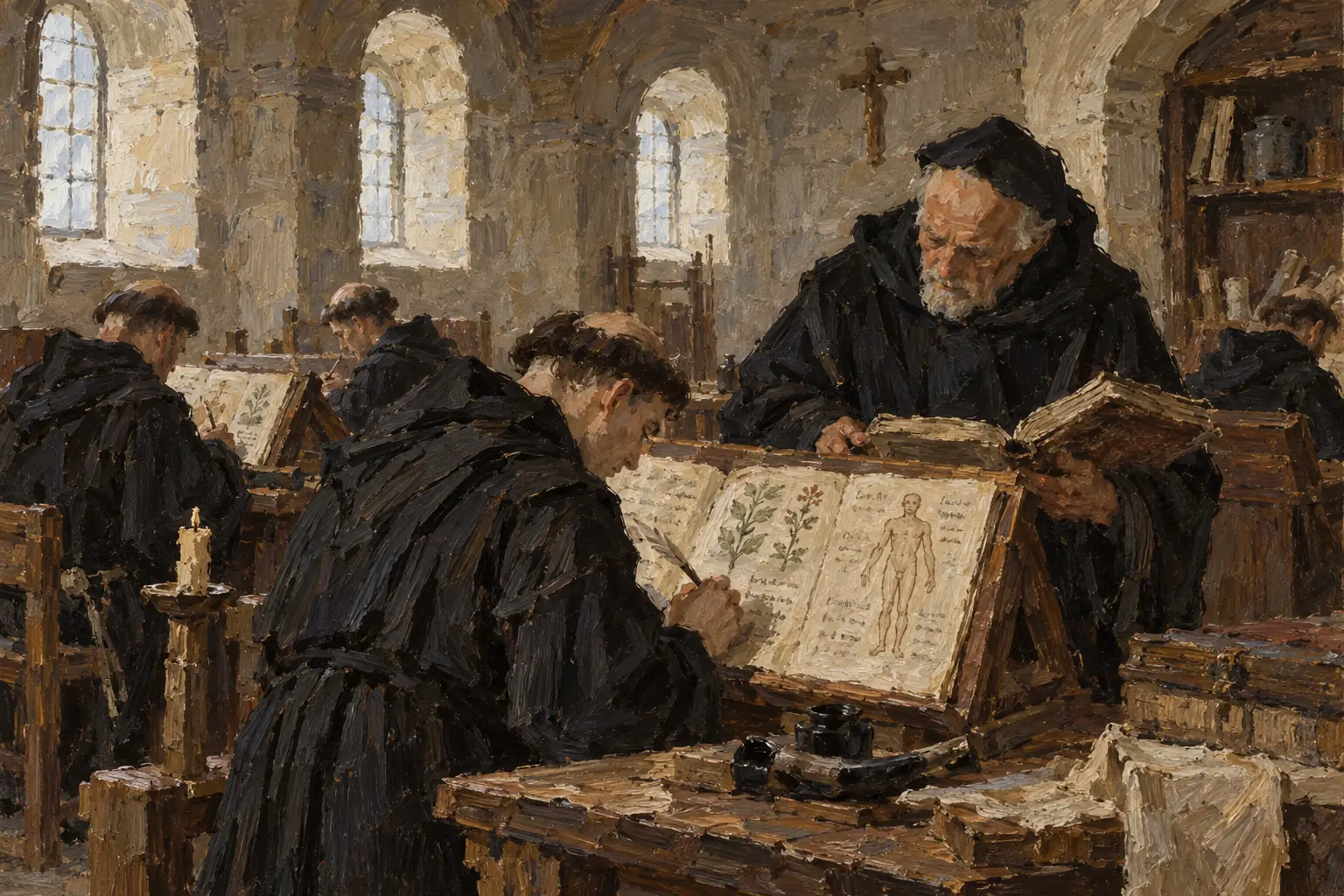
The ideas of the ancient physician Galen remained central to medieval medical thought, largely because they were endorsed by the Church. This endorsement helped preserve traditional views and limited new developments.
Galen's enduring theories
- Trusted writings - Galen's texts, developed centuries earlier, were regarded as authoritative and shaped medical practices for generations.
- Theory of Opposites - This approach suggested treating diseases by countering imbalances, such as using cooling remedies for conditions caused by excess heat.
Promotion by the Church
- Alignment with religion - The Church supported Galen's ideas because they complemented Christian teachings, integrating rational explanations with spiritual beliefs.
- Resistance to change - This religious backing meant that traditional theories faced little questioning, stifling innovation in disease understanding.