3.3 - Collapse of Soviet Control, 1985–91
Key facts and dates
The period from 1985 to 1991 saw the rapid decline of Soviet influence in Eastern Europe, driven by internal reforms and a shift away from forceful intervention. This era culminated in the dissolution of communist regimes and the Soviet Union itself, reshaping global politics.
Timeline of key events
- 1985 – Mikhail Gorbachev becomes Soviet leader, introducing glasnost and perestroika reforms.
- 1989 – Poland holds free elections in June, leading to a non-communist government; Hungary opens its border to the West.
- November 1989 – Fall of the Berlin Wall after mass protests in East Germany.
- October 1990 – German reunification formally occurs.
- 1991 – Warsaw Pact dissolves; Soviet Union breaks up with Gorbachev's resignation on 25 December.
Gorbachev's new thinking and Eastern Europe
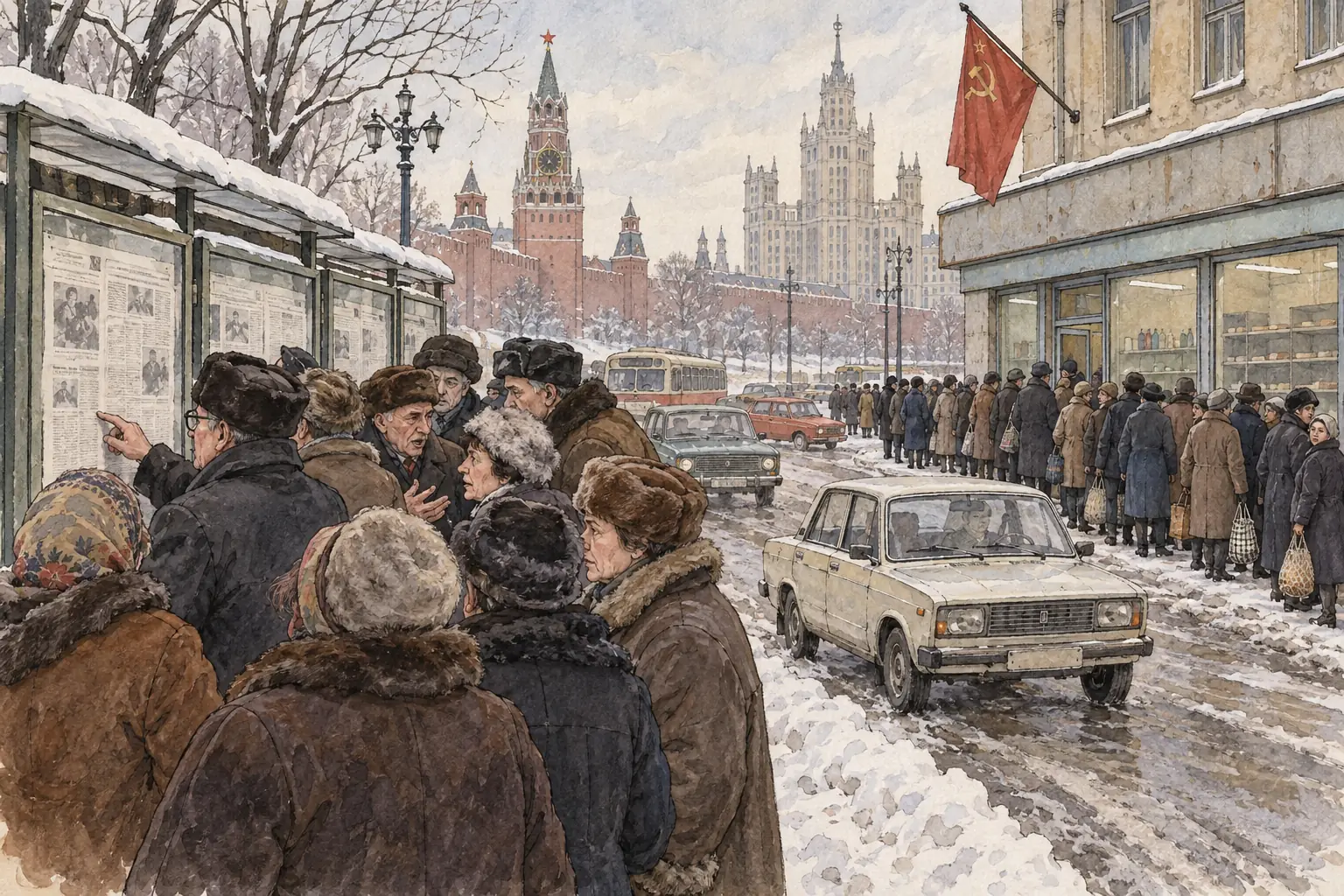
Mikhail Gorbachev's leadership from 1985 introduced a fresh approach to Soviet policy, both at home and abroad. This new thinking aimed to modernise the struggling Soviet system and reduce tensions with the West, fundamentally altering the dynamics in Eastern Europe.
Domestic reforms under Gorbachev
- Glasnost (openness) - This policy encouraged greater transparency, freedom of speech, and criticism of the government, fostering public debate and reducing censorship within the Soviet Union.
- Perestroika (restructuring) - Focused on economic reforms to improve efficiency, introduce market elements, and decentralise control, though it often led to shortages and unrest.
Changes in foreign policy
- Rejection of the Brezhnev Doctrine - Gorbachev abandoned the previous policy of using military force to maintain communist governments in Eastern Europe, signalling that the Soviet Union would not intervene to suppress reforms.
- The Sinatra Doctrine - Informally named after the song "My Way," this stance allowed Eastern European nations to pursue their own paths without fear of Soviet tanks, effectively loosening Moscow's control and empowering local movements for change.
The chain reaction of events in 1989
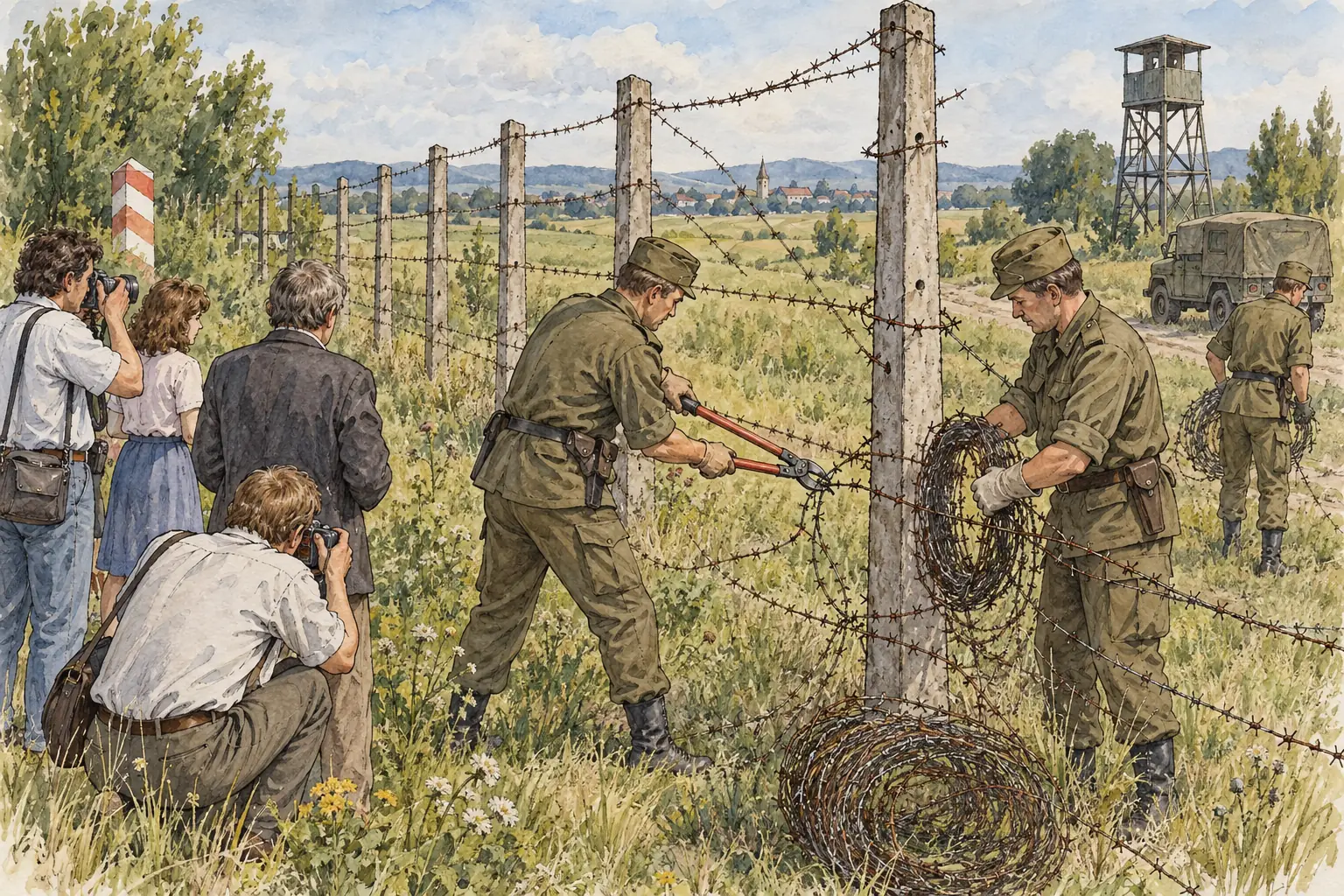
Image 1 of 3: Hungary began removing its border fence with Austria in May 1989
Gorbachev's policies created an environment where Eastern European populations could demand reforms without Soviet backlash. This sparked a series of uprisings and transitions across the region, leading to the swift downfall of communist regimes.
Key developments in Eastern European countries
- Poland - In June 1989, the first partially free elections resulted in a victory for the Solidarity movement, installing a non-communist government and inspiring similar pushes elsewhere.
- Hungary - The government dismantled border barriers with Austria, allowing thousands of East Germans to flee to the West and accelerating pressure on other regimes.
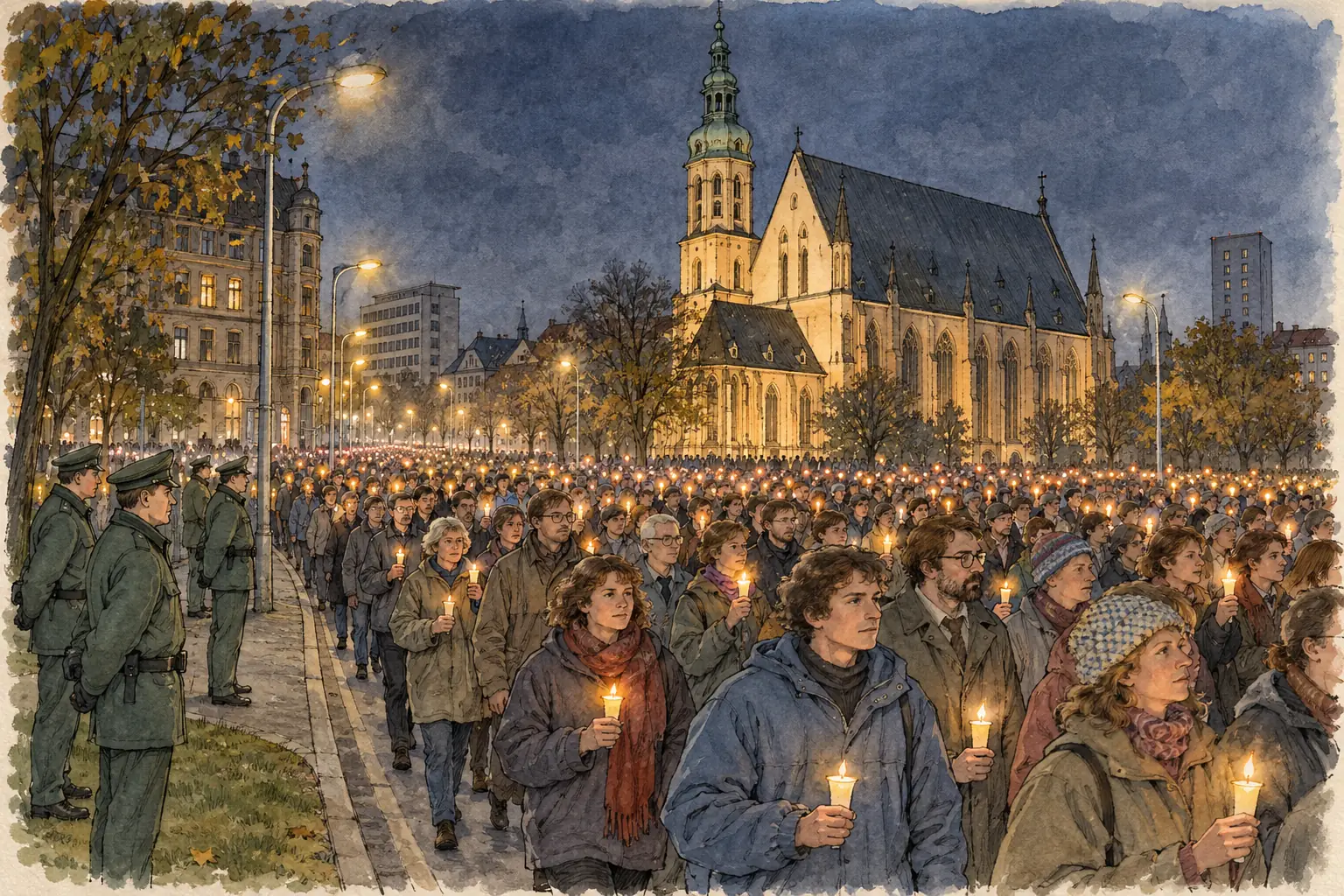
- East Germany - Mass demonstrations in cities like Leipzig forced the communist leadership to resign, culminating in border openings and the symbolic dismantling of divisions.
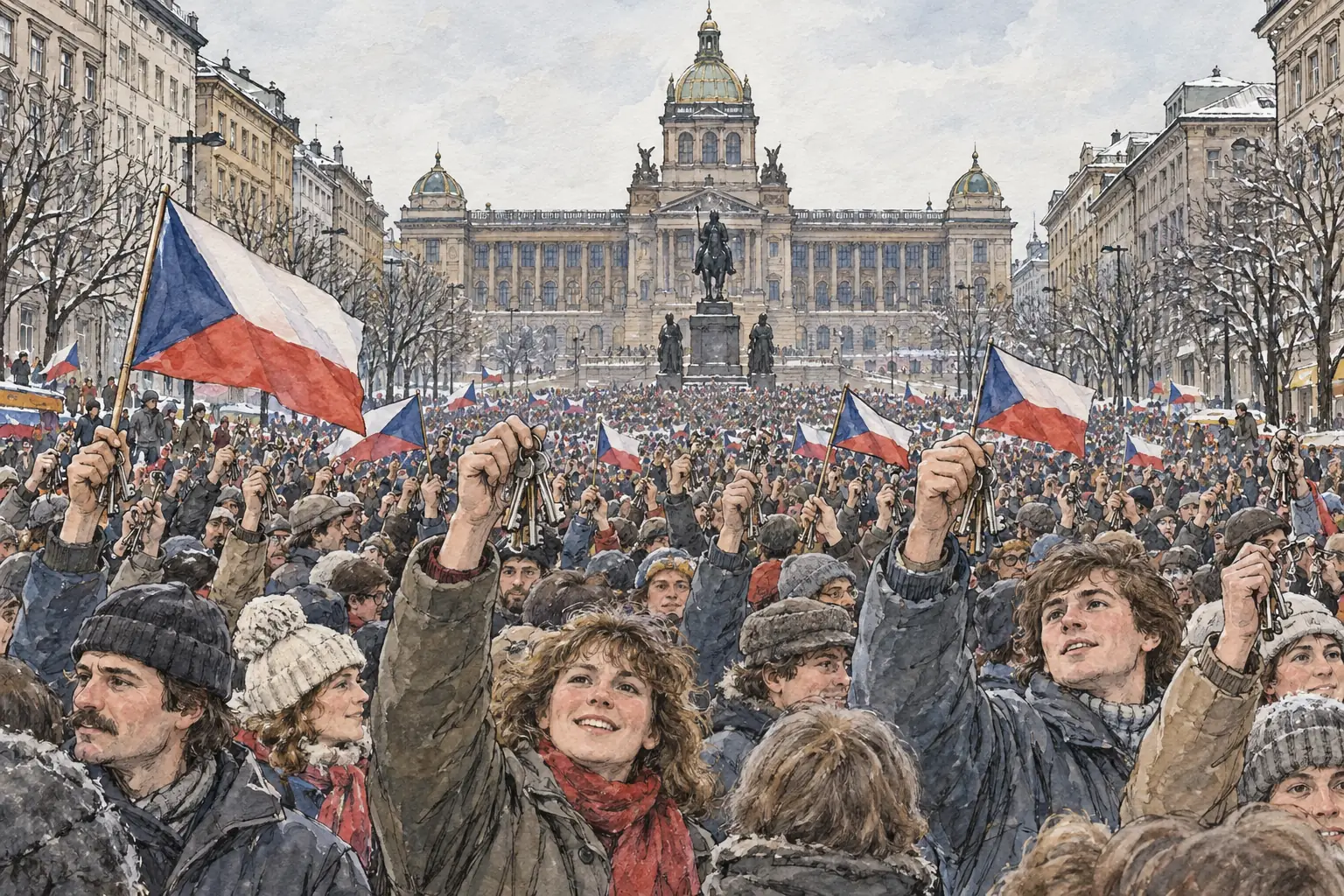
- Czechoslovakia and Romania - Peaceful protests in Czechoslovakia (the Velvet Revolution) and violent upheaval in Romania toppled their governments, with minimal resistance due to the absence of Soviet support.
- Broader regional impact - By year's end, communist rule had collapsed in multiple countries, marking a peaceful shift towards democracy and independence from Soviet dominance.
The significance of the fall of the Berlin Wall
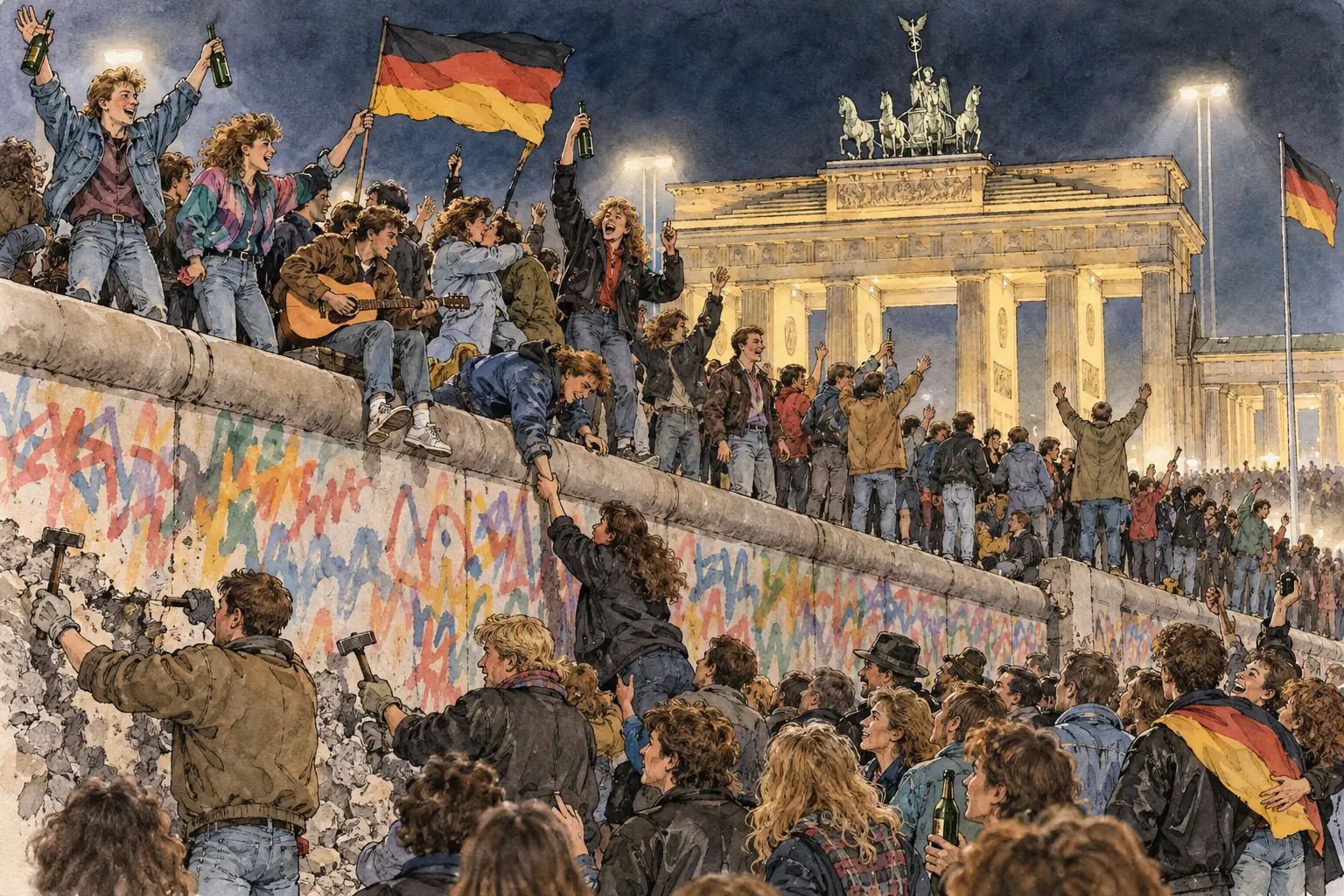
The Berlin Wall, erected in 1961 to prevent defections from East to West Germany, became a potent symbol of Cold War division. Its fall in November 1989 represented a turning point in European history.
Events surrounding the wall's collapse
- Mass protests - Growing demonstrations in East Germany pressured the government to ease travel restrictions, leading to the unexpected opening of checkpoints on 9 November 1989.
- Public reaction - Crowds from both sides of Berlin celebrated by chipping away at the wall, embodying the end of the Iron Curtain that had separated communist East from capitalist West.
Long-term consequences
- Symbolism - The event signified the breakdown of ideological barriers across Europe, boosting global hopes for unity and the decline of communism.
- Path to German reunification - It paved the way for negotiations that resulted in the merger of East and West Germany into a single state on 3 October 1990, strengthening a unified Germany within NATO.
The collapse of the Soviet Union in 1991
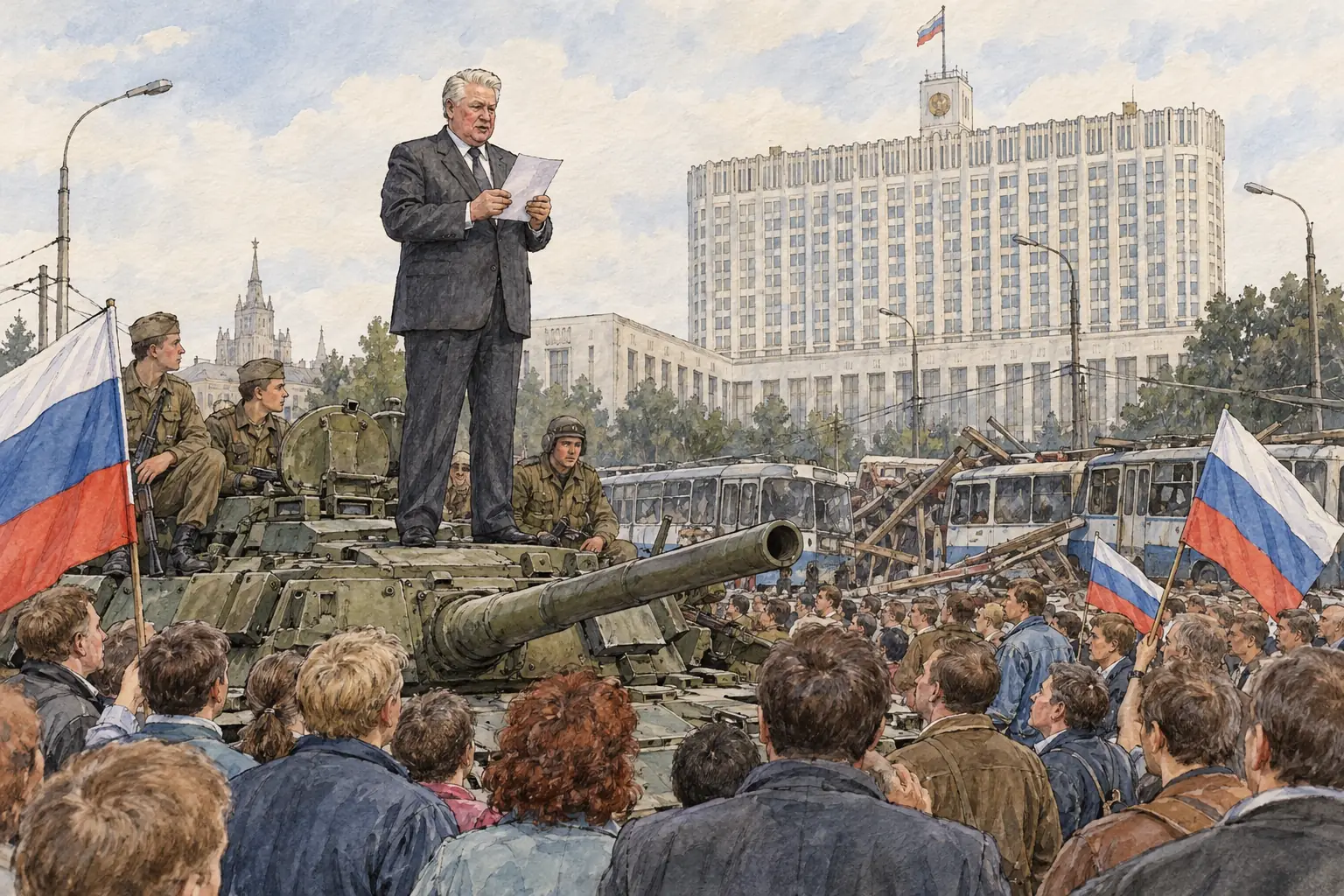
Image 1 of 2: During the hardliners' coup in August 1991 Boris Yeltsin stood on a tank outside the Russian parliament and called for resistance
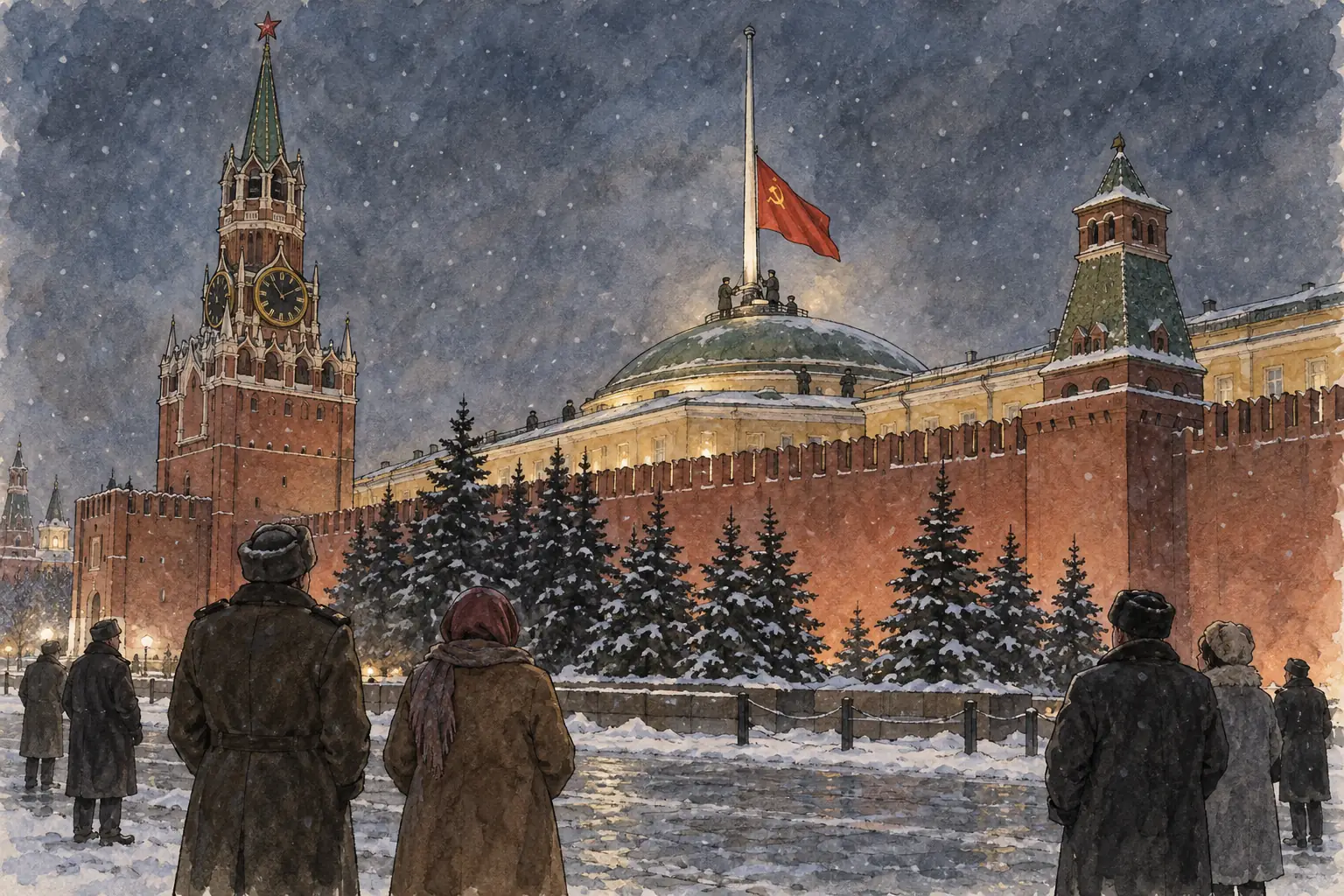
Gorbachev's reforms, while intended to strengthen the Soviet Union, inadvertently accelerated its fragmentation. Nationalist sentiments in the republics grew, leading to the USSR's dissolution.
Factors leading to the Soviet breakup
- Weakened central authority - Perestroika and glasnost unleashed demands for autonomy, with republics like the Baltic states pushing for sovereignty amid economic chaos.
- Failed coup - In August 1991, hardline communists attempted to overthrow Gorbachev but were thwarted by public resistance led by figures like Boris Yeltsin, further eroding the regime's legitimacy.
- Declarations of independence - Republics including Russia, Ukraine, and others proclaimed independence, culminating in Gorbachev's resignation on 25 December 1991.
Broader implications
- End of the Cold War - The USSR's collapse eliminated the superpower rivalry with the United States, closing an era of ideological conflict.
- Dissolution of the Warsaw Pact - The military alliance, formed in 1955 to counter NATO, formally ended in 1991, symbolising the termination of Soviet-led blocs in Europe.
- Shift in global order - This ushered in a unipolar world dominated by the West, with former Soviet states transitioning to new political and economic systems.