1.2 - Edward the Confessor & Succession Crisis
Key facts and dates
The final years of Edward the Confessor's reign were marked by political intrigue and power struggles, particularly involving the influential House of Godwin. These events culminated in a major succession crisis upon Edward's death, setting the stage for the Norman Conquest of 1066.
Timeline of key events
- 1051–1052 – House of Godwin exiled after conflict with Edward, but returns stronger in 1052, consolidating power.
- 1064 – Harold Godwinson's embassy to Normandy, where he allegedly pledges loyalty to William of Normandy.
- October 1065 – Rising against Tostig in Northumbria, leading to his exile and replacement by Morcar.
- 5 January 1066 – Death of Edward the Confessor without a direct heir, triggering the succession crisis.
- 6 January 1066 – Harold Godwinson crowned king, amid rival claims from William, Harald Hardrada, and Edgar Ætheling.
The power and significance of the House of Godwin
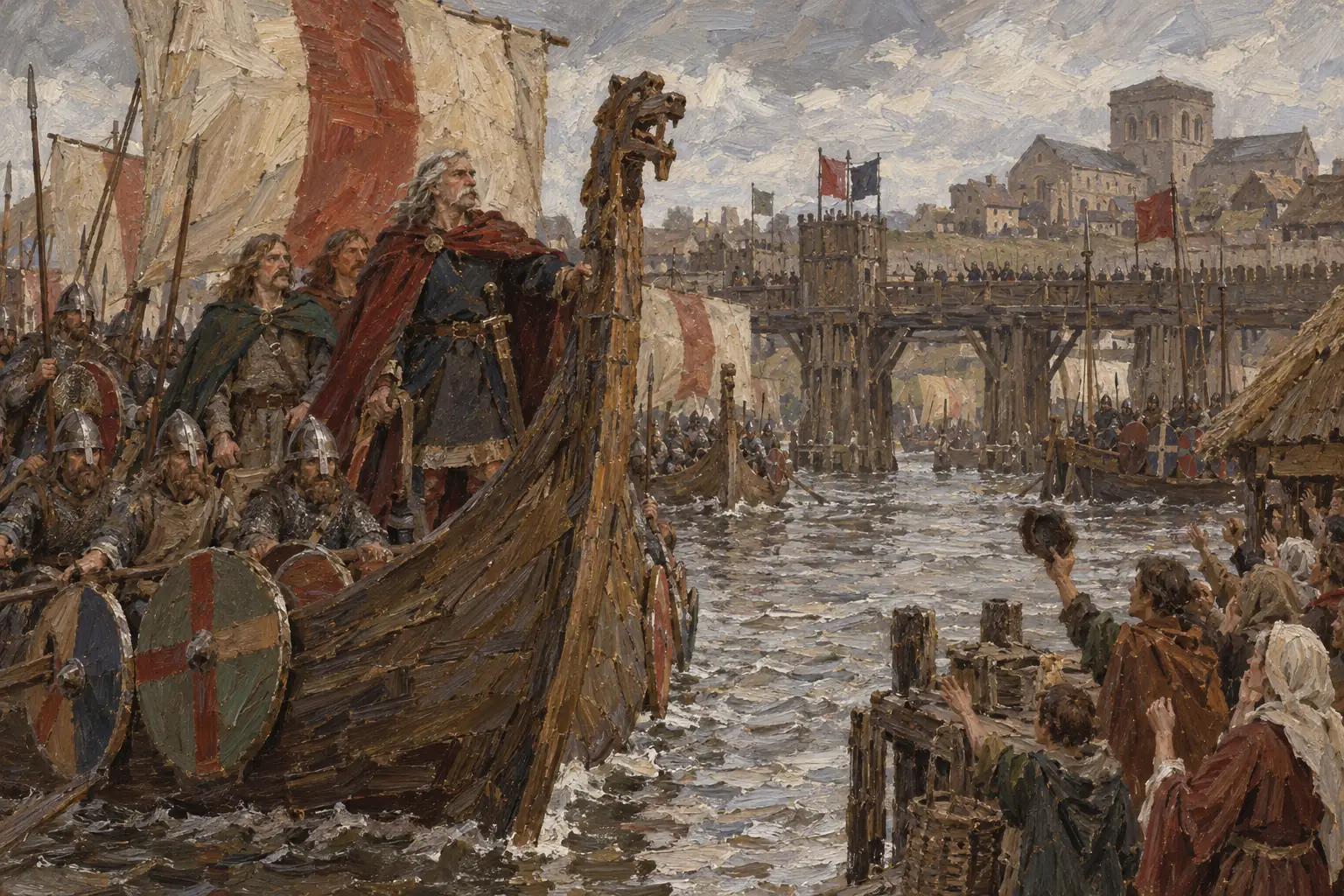
The House of Godwin emerged as England's most dominant noble family during Edward the Confessor's reign, wielding immense influence over politics, land, and military affairs. Led by Earl Godwin and later his sons, the family controlled vast territories and often challenged royal authority, shaping the kingdom's direction in the mid-11th century.
Key aspects of Godwin power
- Extensive land holdings - The family dominated earldoms across southern and central England, including Wessex, East Anglia, and Kent, providing economic strength and a network of loyal followers.
- Political manoeuvring - In 1051, Godwin clashed with Edward over favouritism towards Norman advisors, leading to temporary exile; their triumphant return in 1052 forced Edward to restore their positions, highlighting their indispensability.
- Military and advisory roles - As key earls, they commanded armies and influenced policy, with Harold Godwinson rising as Edward's trusted sub-regulus (deputy king), effectively managing the realm in the king's later years.
- Family alliances - Strategic marriages, such as Harold's sister Edith wedding Edward, embedded the Godwins at the heart of the royal court, amplifying their significance in governance.
Harold Godwinson's embassy to Normandy
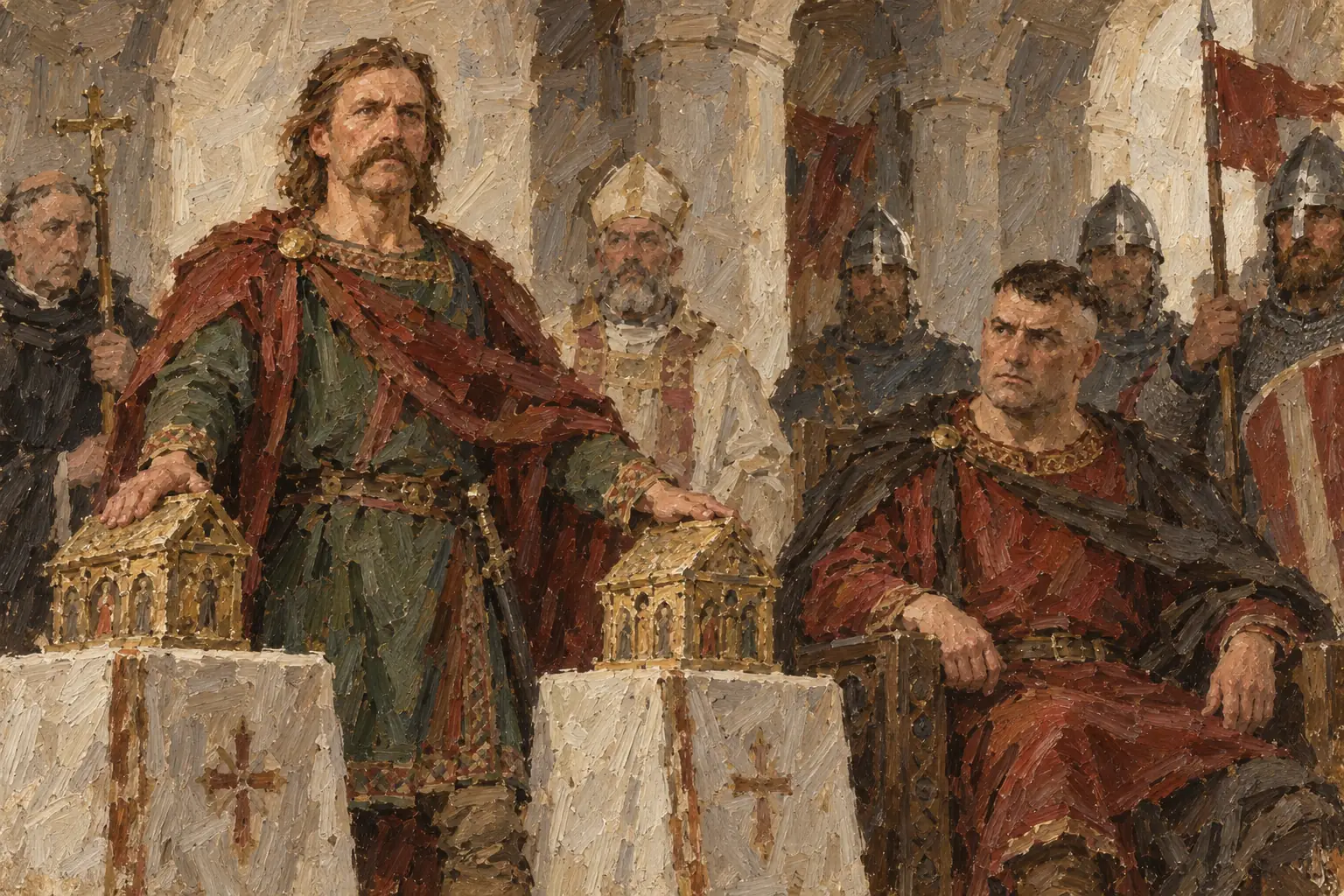
In 1064, Harold Godwinson, the most prominent son of Earl Godwin and Earl of Wessex, undertook a diplomatic mission to Normandy. This journey, shrouded in ambiguity, later became a point of contention, as it was interpreted differently by English and Norman sources.
Details and interpretations of the embassy
- Purpose and events - Harold travelled to Normandy, possibly to negotiate alliances or recover hostages; during the visit, he was shipwrecked, rescued by William of Normandy, and participated in military campaigns against Brittany.
- Alleged oath of loyalty - Norman accounts claim Harold swore an oath on holy relics to support William's claim to the English throne, a pledge Harold later disputed, arguing it was made under duress.
- Consequences for succession - The embassy fuelled William's later justification for invasion, portraying Harold as an oath-breaker; it also demonstrated Harold's diplomatic skills but exposed vulnerabilities in England's foreign relations.
The rising against Tostig and his exile
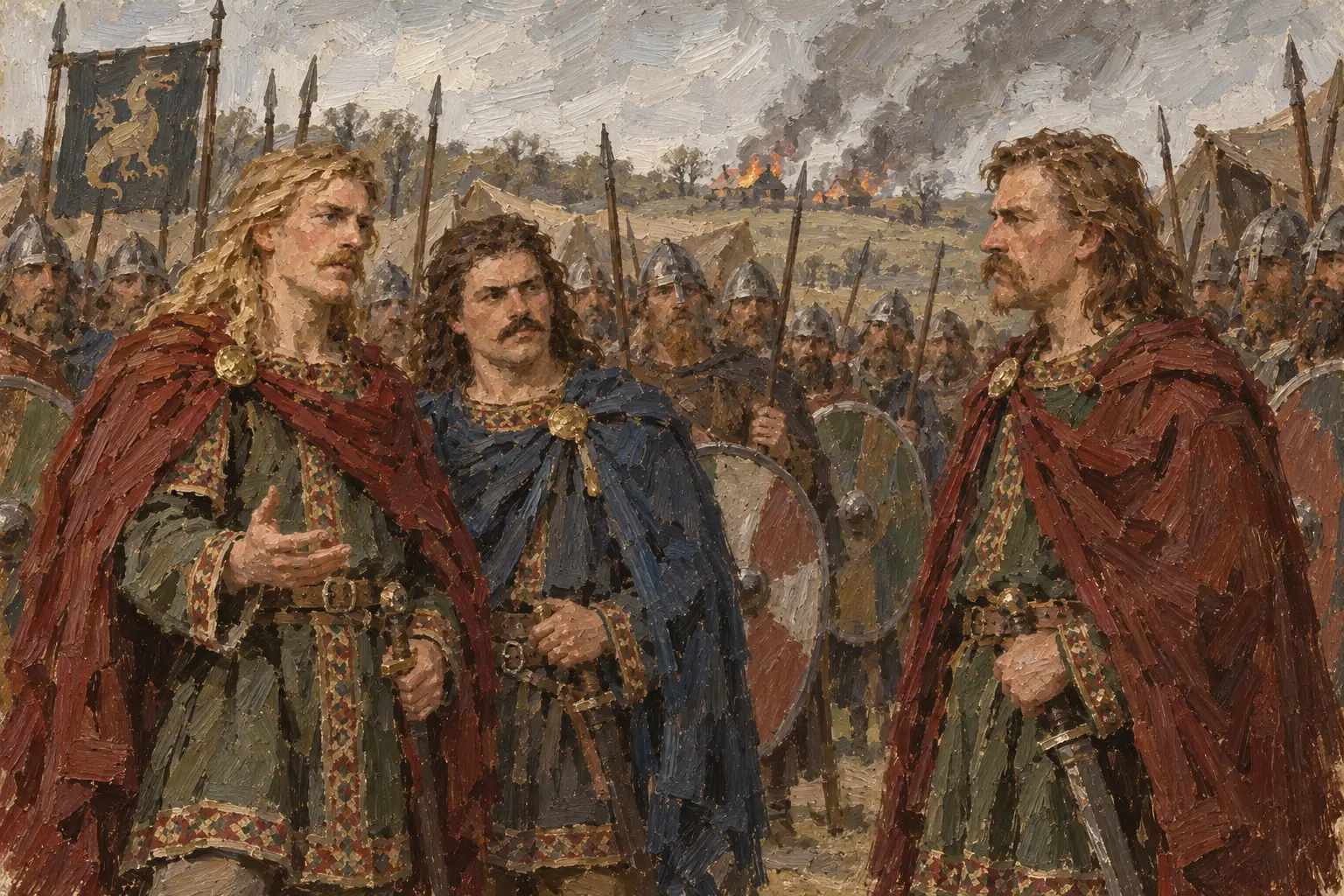
Tostig Godwinson, Harold's brother and Earl of Northumbria, faced a major rebellion in 1065 due to grievances over his governance. This uprising not only led to Tostig's exile but also weakened the House of Godwin's unity and contributed to national instability.
Causes and outcomes of the Northumbrian rising
- Harsh rule and taxation - Tostig imposed heavy taxes and strict laws, alienating local nobles and freemen who resented his outsider status and favouritism towards southern allies.
- Cultural and regional tensions - As a southerner, Tostig clashed with Northumbrian customs; accusations of murdering rivals and ignoring local traditions intensified discontent.
- Rebellion and demands - In October 1065, rebels seized York, killed Tostig's officials, and demanded his removal; they nominated Morcar, from the rival House of Leofric, as the new earl.
- Exile and family rift - Edward sent Harold to negotiate, but he sided with the rebels to avoid civil war, leading to Tostig's exile to Flanders; this fractured family bonds, with Tostig later allying against Harold.
The death of Edward the Confessor
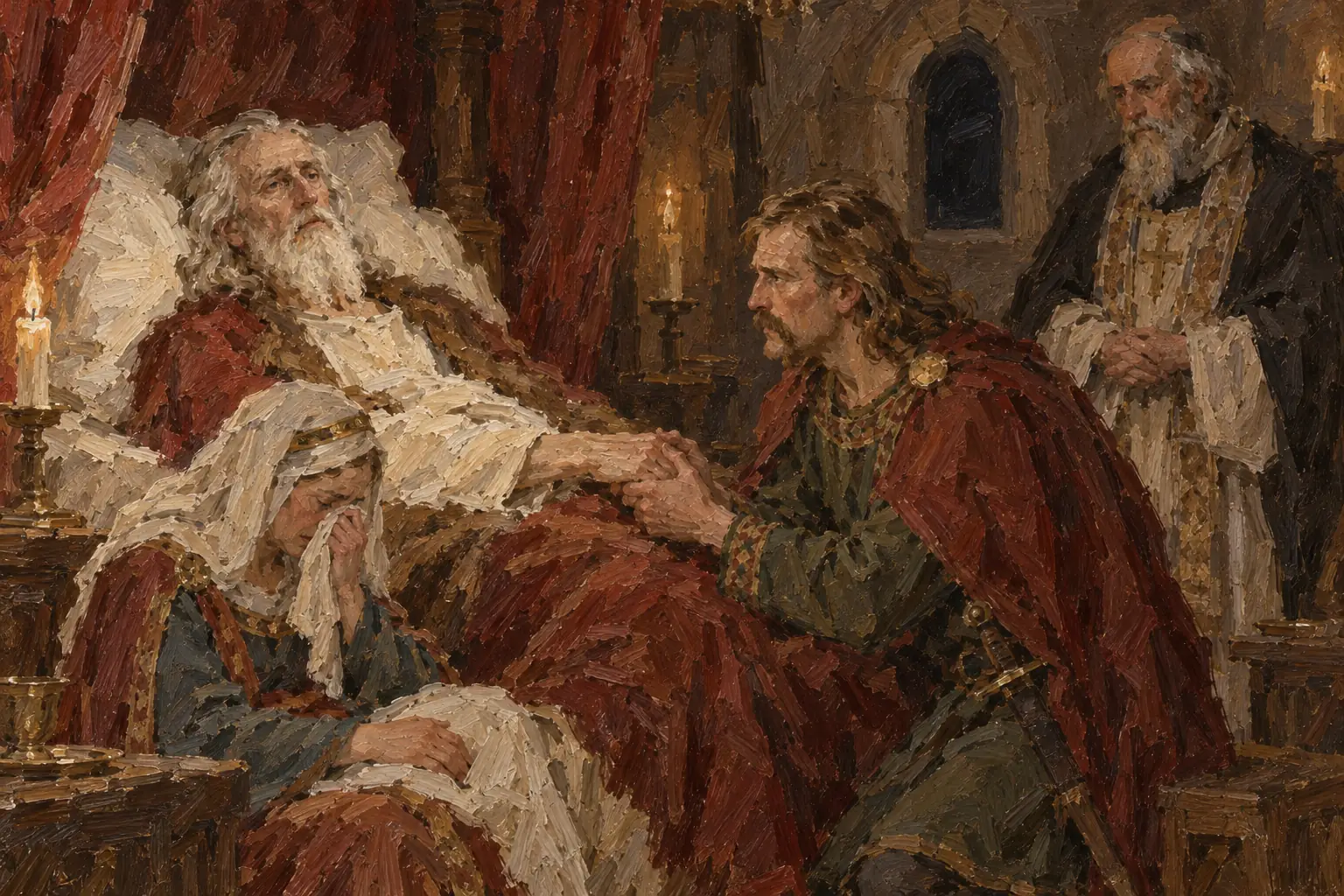
Edward the Confessor, king since 1042, died on 5 January 1066 after a reign marked by piety, Norman influences, and internal power struggles. His death, without a surviving direct heir, plunged England into uncertainty.
Circumstances surrounding Edward's death
- Declining health - In his later years, Edward focused on religious matters, such as building Westminster Abbey, while delegating authority to earls like Harold; a stroke in late 1065 hastened his decline.
- Childless marriage - Edward's union with Edith Godwinson produced no children, possibly due to a vow of chastity or political choices, leaving no clear successor.
- Deathbed succession - Accounts vary, but some sources claim Edward nominated Harold as his heir on his deathbed, commending the kingdom to his protection; the king was buried in Westminster Abbey the next day.
The succession crisis and rival claimants
Edward's death without a designated heir created a profound succession crisis, as multiple claimants vied for the throne based on blood ties, promises, or conquest rights. This rivalry destabilised England and invited foreign invasions.
Main claimants and sources of instability
- Harold Godwinson - Crowned on 6 January 1066, Harold claimed legitimacy through Edward's alleged deathbed wish, his powerful position as Earl of Wessex, and support from the English nobility (Witan).
- William of Normandy - Asserted a claim based on Edward's earlier promise (c.1051) and Harold's 1064 oath; as a distant relative, he prepared an invasion to enforce his right.
- Harald Hardrada of Norway - Invoked a pact from the 1030s between Scandinavian rulers, positioning himself as heir through conquest traditions.
- Edgar Ætheling - Edward's grandnephew and closest blood relative, but his youth and lack of support weakened his bid.
- Resulting instability - The crisis divided loyalties, with Tostig's exile adding betrayal; it led to simultaneous invasions in 1066, culminating in the battles of Stamford Bridge and Hastings.