2.7 - Plains Conflicts, 1862–68
Key facts and dates
Conflicts on the Plains during the 1860s arose from tensions over land, resources, and broken agreements between Indigenous groups and the expanding United States. These events highlighted the growing violence and mistrust, setting precedents for future confrontations.
Timeline of key events
- 1862 – Little Crow's War erupts in Minnesota due to delayed payments and famine among the Santee Sioux, leading to attacks and severe US retaliation.
- 1863 – US forces execute 38 Santee Sioux leaders; survivors are expelled from Minnesota.
- 1864 – Sand Creek Massacre occurs in Colorado, where militia attack a peaceful Cheyenne and Arapaho camp, sparking national controversy.
- 1866 – Red Cloud's War begins with Lakota opposition to US forts along the Bozeman Trail; Fetterman Fight results in major US defeat.
- 1868 – Treaty of Fort Laramie ends Red Cloud's War, with the US agreeing to withdraw from Bozeman Trail forts.
Little Crow's War (1862)
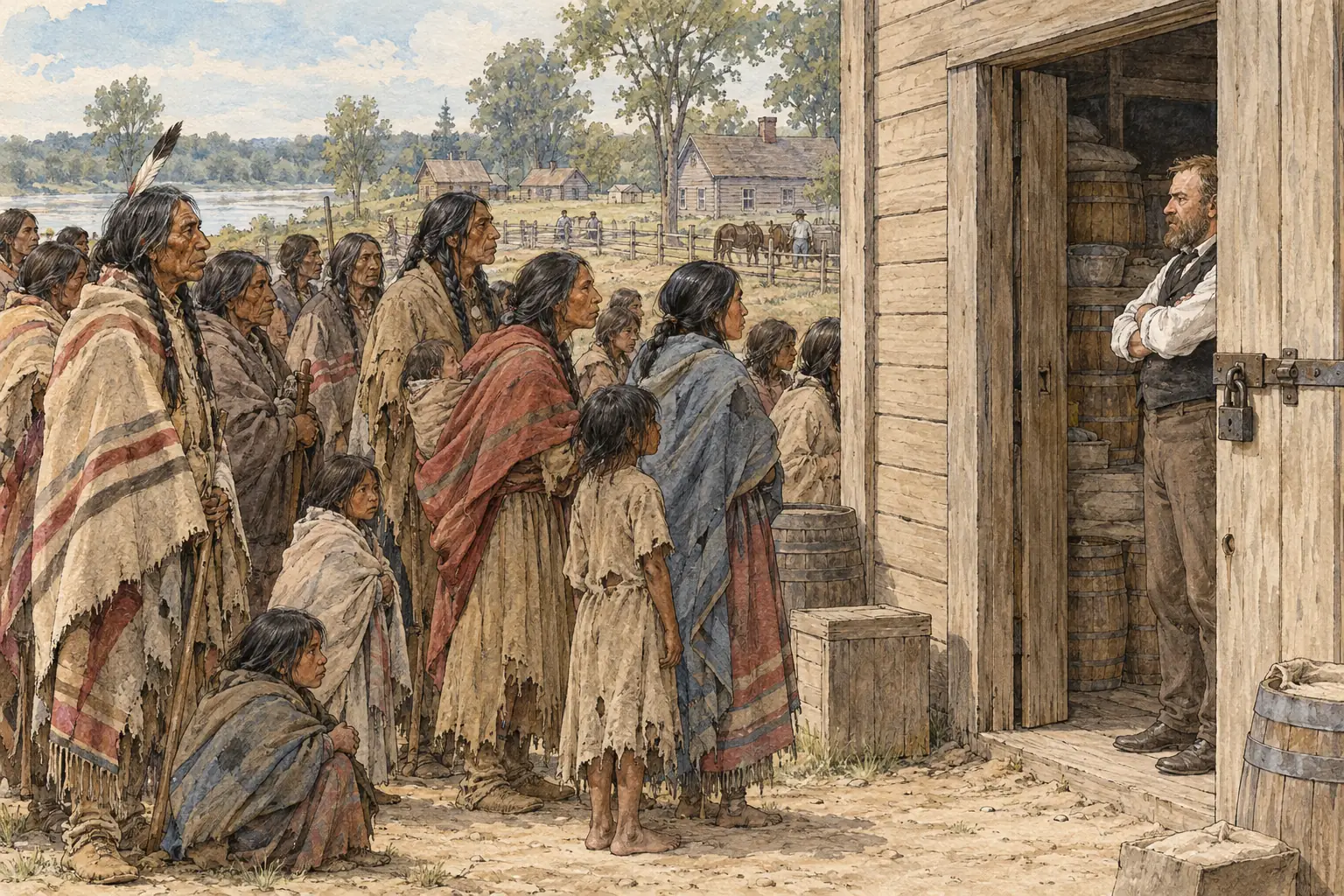
Little Crow's War, also known as the Dakota War, took place in Minnesota amid escalating frustrations among the Santee Sioux. It stemmed from unfulfilled government promises and harsh living conditions, leading to a brief but intense conflict that reshaped Indigenous-US relations in the region.
Factors leading to Little Crow's War
- Delayed annuities - The US government failed to deliver promised payments and supplies under treaties, leaving the Santee Sioux without essential funds for food and goods.
- Starvation and desperation - Crop failures and restricted hunting grounds caused widespread hunger, pushing the Santee Sioux to the brink of survival and fueling resentment towards settlers and officials.
- Cultural and territorial pressures - Encroaching white settlements reduced traditional lands, exacerbating economic hardships and cultural disruptions for the Indigenous population.
Main events during the conflict
- Outbreak of violence - In August 1862, Santee Sioux warriors, led by Chief Little Crow, attacked settlements and agencies in response to the crises, resulting in hundreds of settler deaths over several weeks.
- US military response - Federal troops, supported by local militias, launched counterattacks, capturing many Santee Sioux and forcing others to flee.
Outcomes and long-term effects
- Harsh reprisals - In December 1862, military trials led to the execution of 38 Santee Sioux leaders in the largest mass hanging in US history.
- Forced removal - Surviving Santee Sioux were expelled from Minnesota to reservations in Nebraska and South Dakota, stripping them of ancestral lands and deepening displacement.
- Broader implications - The war highlighted the unreliability of US treaties, increasing fear and hostility on both sides and setting a pattern for punitive responses to Indigenous resistance.
The Sand Creek Massacre (1864)
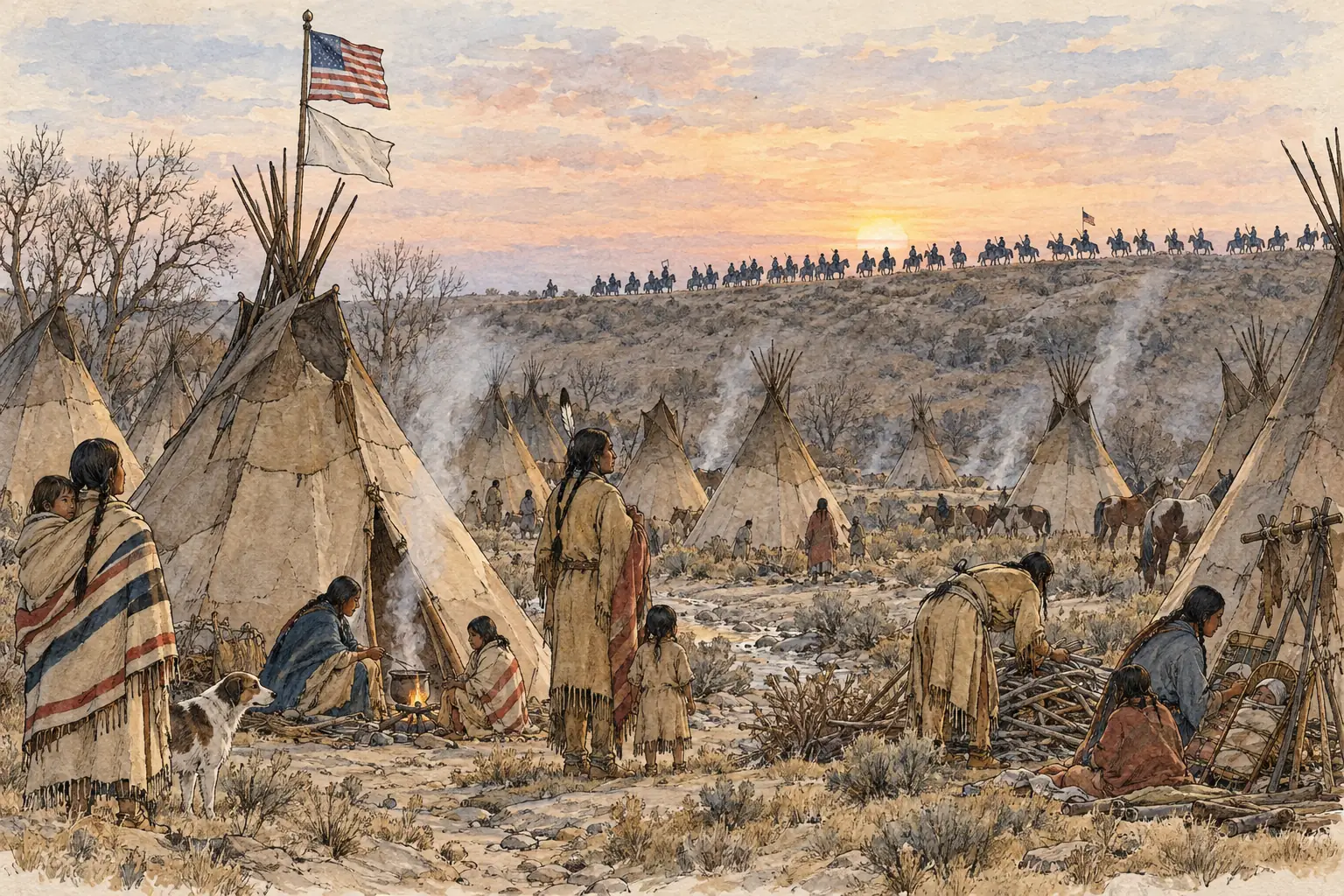
The Sand Creek Massacre unfolded in Colorado Territory during the American Civil War, representing a brutal escalation in conflicts between Plains tribes and US forces. It targeted a peaceful camp, underscoring the volatility of frontier relations and the disregard for Indigenous safety.
Factors leading to the Sand Creek Massacre
- Territorial disputes - Growing settler demands for land clashed with Cheyenne and Arapaho claims, intensified by gold discoveries that attracted more migrants.
- False pretences of peace - The camp, led by Chiefs Black Kettle and White Antelope, had sought protection under a flag of truce and US assurances of safety, but local authorities ignored these agreements.
- Militia aggression - Colorado Governor John Evans and Colonel John Chivington promoted anti-Indigenous sentiments, viewing the tribes as threats amid broader wartime insecurities.
Main events during the massacre
- Surprise attack - On 29 November 1864, Chivington's Colorado militia assaulted the undefended camp at Sand Creek, killing around 200 Cheyenne and Arapaho, mostly women, children, and elders.
- Atrocities committed - Troops mutilated bodies and took scalps as trophies, despite the camp's display of peace flags and attempts at surrender.
Outcomes and long-term effects
- National outrage - Investigations by the US Congress condemned the massacre as a betrayal, leading to public criticism and calls for reform in military conduct.
- Deepened mistrust - Surviving tribes lost faith in US negotiations, prompting increased resistance and alliances among Plains groups against further encroachments.
- Policy shifts - The event exposed flaws in federal oversight of territories, contributing to debates over Indigenous rights but failing to prevent similar incidents in the future.
Red Cloud's War (1866-68)
Image 1 of 2: Fort Phil Kearny, one of the forts built to guard the Bozeman Trail, was watched and harassed by Lakota warriors
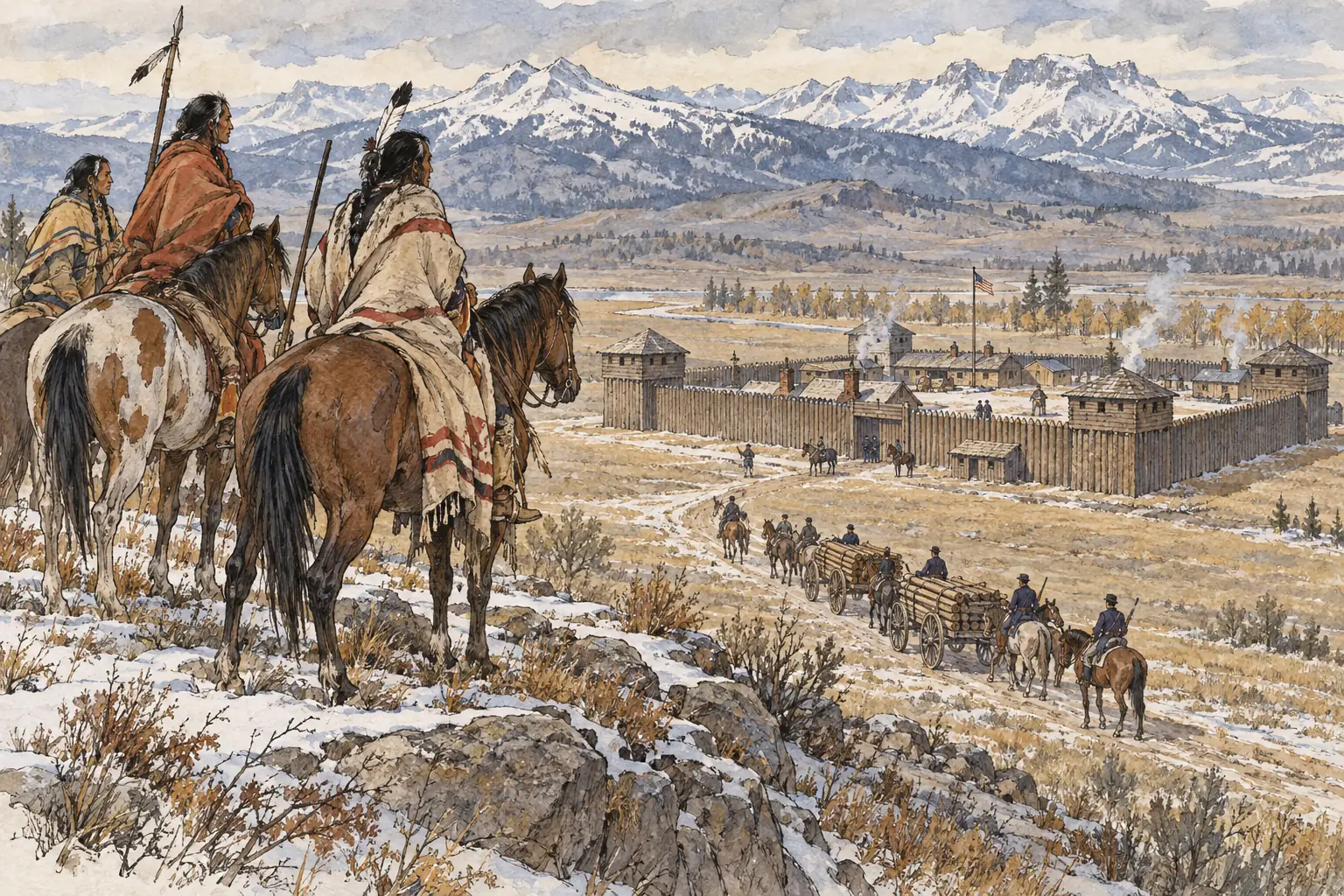
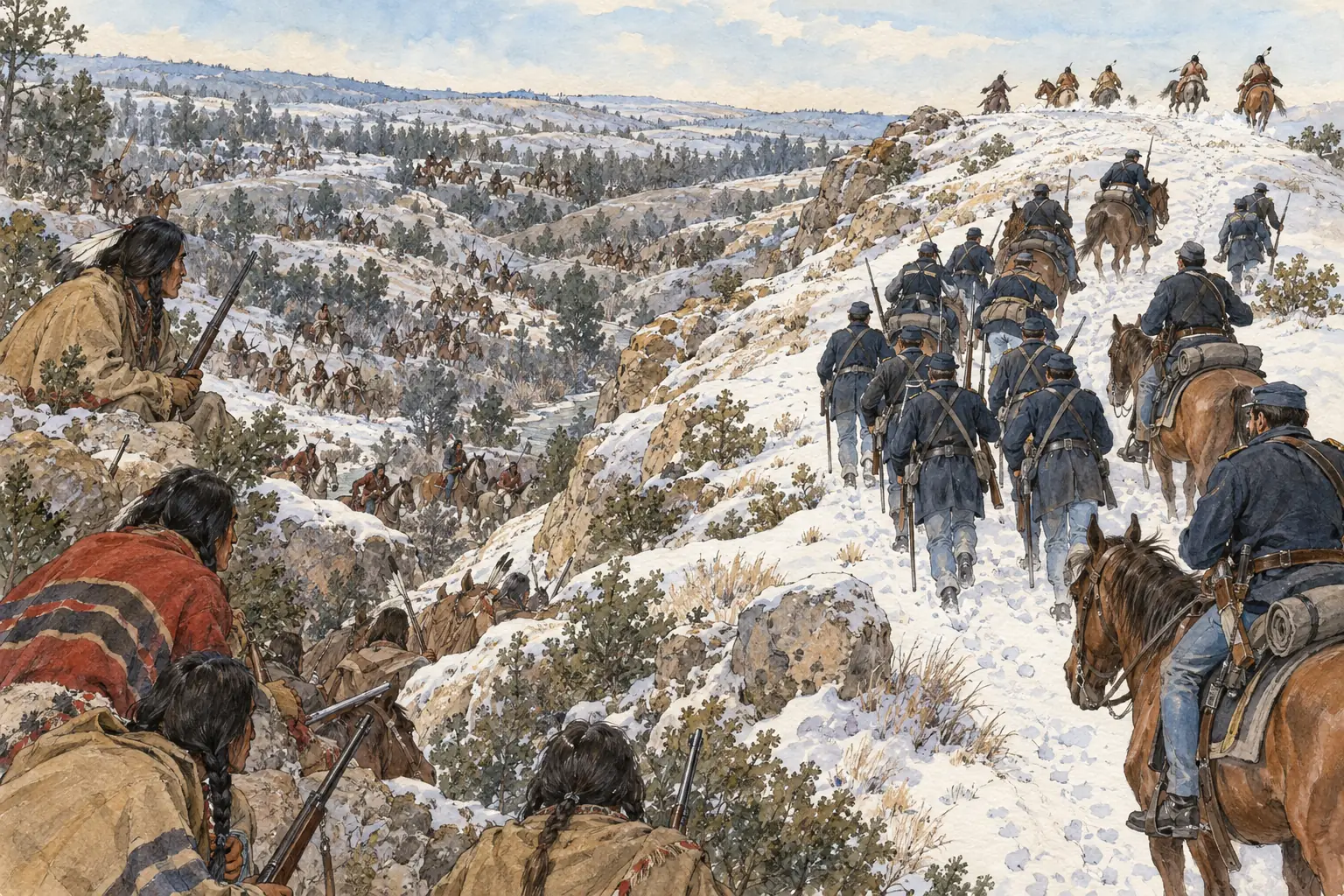
Red Cloud's War, fought primarily in the Powder River Country of Wyoming and Montana, marked a significant Lakota-led resistance against US expansion. It centred on the Bozeman Trail, a route cutting through sacred hunting grounds, and resulted in a rare Indigenous victory.
Factors leading to Red Cloud's War
- Bozeman Trail intrusion - The trail, used by gold seekers heading to Montana, violated the 1851 Fort Laramie Treaty by traversing Lakota territory without permission.
- Construction of forts - The US built military posts like Fort Phil Kearny to protect travellers, which the Lakota saw as a direct threat to their sovereignty and resources.
- Resource competition - Increased traffic disrupted buffalo herds essential for Lakota survival, heightening economic and cultural tensions.
Main events during the conflict
- Lakota resistance - Under Chief Red Cloud, warriors harassed supply lines and forts, isolating US outposts and inflicting ongoing casualties.
- Fetterman Fight - In December 1866, Captain William Fetterman's force of 80 soldiers was lured into an ambush near Fort Phil Kearny, resulting in their complete annihilation by Lakota, Cheyenne, and Arapaho fighters.
- Sustained warfare - Guerrilla tactics continued through 1867-68, wearing down US resources and morale without major pitched battles.
Outcomes and long-term effects
- Treaty of Fort Laramie (1868) - The US conceded defeat, agreeing to abandon the Bozeman Trail forts and recognise the Great Sioux Reservation, including the sacred Black Hills.
- Indigenous strategic victory - This marked one of the few instances where Indigenous forces compelled the US to retreat, boosting morale among Plains tribes.
- Temporary reprieve - While a short-term success, the treaty's terms were later violated, foreshadowing renewed conflicts like those in the 1870s.
Significance of these conflicts
These early Plains wars illustrated the patterns of broken promises, violence, and displacement that defined 19th-century US-Indigenous interactions. They accelerated the erosion of Indigenous autonomy while exposing inconsistencies in US policy.
Key patterns and impacts across the conflicts
- Escalation of mistrust - Repeated betrayals, such as ignored treaties and unprovoked attacks, hardened Indigenous resistance and justified US views of perpetual conflict.
- Role in US expansion - The wars facilitated westward settlement by weakening tribal structures, though Red Cloud's victory temporarily delayed incursions in some areas.
- Human and cultural costs - High casualties, forced relocations, and cultural disruptions devastated communities, contributing to long-term demographic declines and loss of traditional ways.
- Influence on future policies - Outrage over events like Sand Creek prompted sporadic reforms, but overall, the conflicts reinforced military approaches over diplomacy in dealing with Plains tribes.