2.5 - Cowboys, Ranching & Homesteaders
Key facts and dates
The role of cowboys and ranching practices evolved significantly in the American West during the late 19th century, shifting from open-range herding to more structured operations amid growing conflicts with homesteaders. Key developments included technological innovations and land disputes that reshaped the cattle industry and contributed to social tensions.
Key facts to remember
- Open-range era – Involved seasonal cattle drives over vast unfenced lands, with diverse workers including Mexican vaqueros and Black cowboys.
- Trail hazards – Cowboys faced risks like stampedes, river crossings, and harsh weather during long drives to railheads.
- Shift to enclosed ranching – Introduction of fencing led to year-round ranch-hands focused on boundary maintenance and winter care.
- Resource conflicts – Ranchers and homesteaders clashed over access to water and grazing land, exacerbated by new technologies.
- Barbed wire's role – Patented in 1874, it enabled cheap fencing but restricted open grazing and heightened disputes.
- Windmills – Allowed homesteaders to access groundwater, enabling settlement in arid areas and challenging ranchers' dominance.
- Formal land claims – Homestead Act of 1862 formalised small farm ownership, leading to fragmented land and eventual range wars.
Early open-range cowboys and their practices
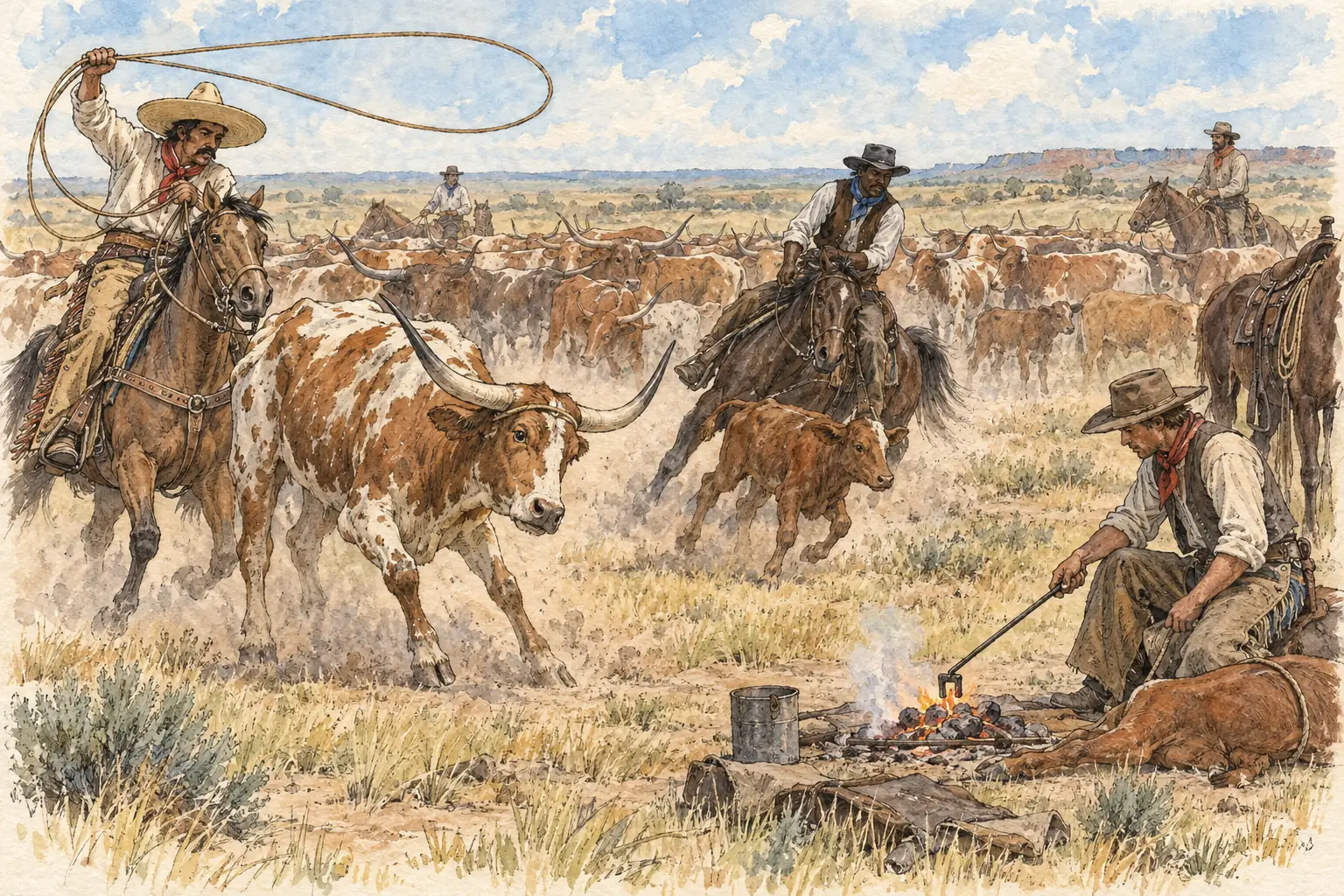
In the mid-to-late 19th century, cowboys operated in an open-range system where cattle roamed freely across vast, unfenced grasslands. This era relied on seasonal movements to transport herds to markets, involving a diverse group of workers adapted to the demands of long-distance herding.
Characteristics of early open-range cowboys
- Seasonal long drives - Cowboys herded cattle over hundreds of miles from grazing areas in places like Texas to railheads in Kansas, typically in spring and summer, to reach northern markets.
- Trail hazards - Drives involved dangers such as unpredictable weather, difficult river crossings, and the risk of stampedes triggered by storms or wildlife, requiring constant vigilance.
- Diverse workforce - The cowboy population included Mexican vaqueros who brought expertise in horsemanship and roping, as well as Black cowboys who often worked as skilled riders and cooks, reflecting a mix of cultural influences in the labour force.
Changes in ranching and the role of ranch-hands
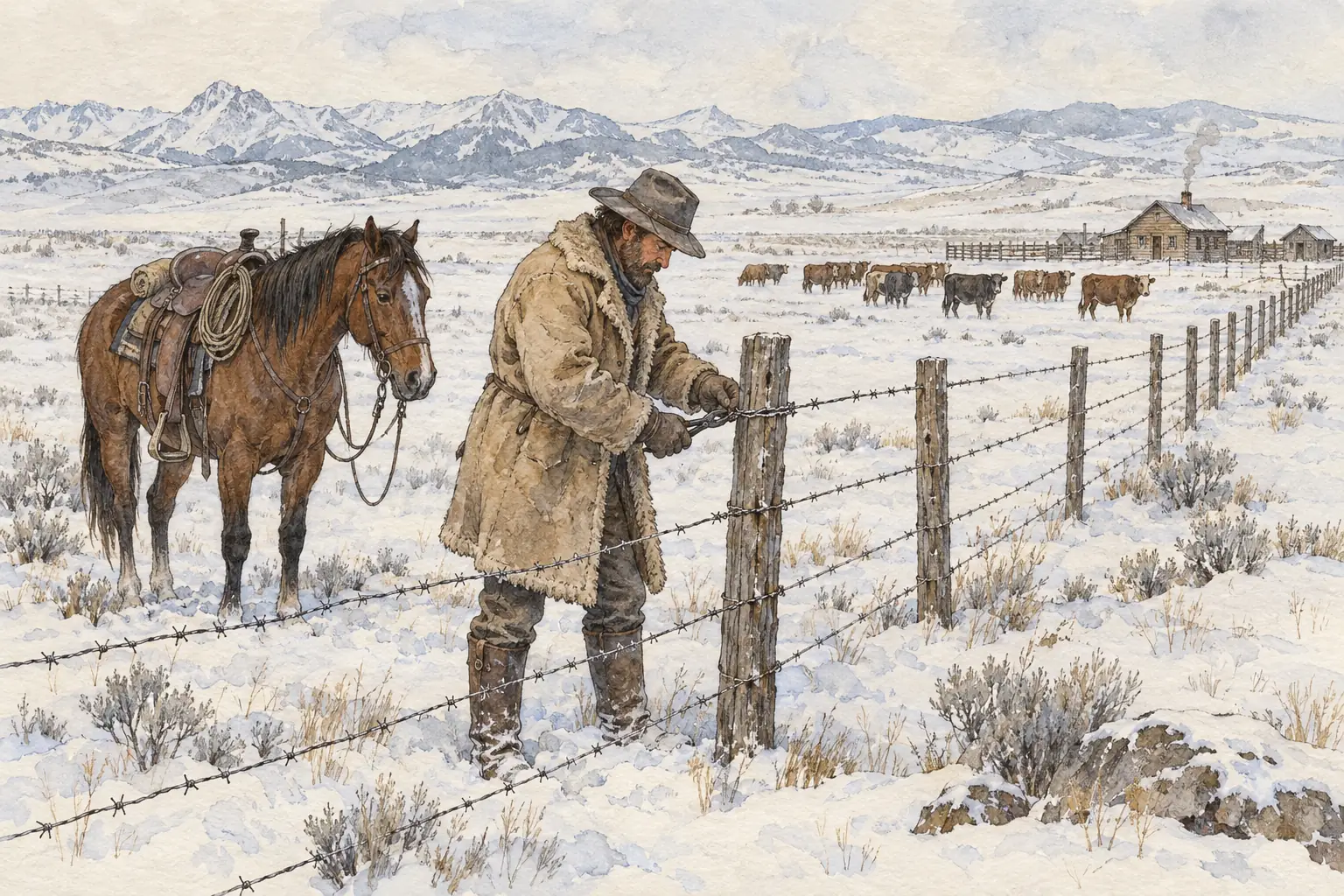
By the late 1870s and 1880s, ranching transitioned from open-range methods to enclosed systems due to expanding settlement and new technologies. This shift created a more permanent workforce of ranch-hands focused on maintaining fixed operations rather than nomadic drives.
Key changes in ranching practices
- Introduction of fencing - Enclosed pastures replaced open grazing, allowing ranchers to control herds and prevent mixing with other cattle.
- Line riding - Ranch-hands patrolled fence lines to repair damage and deter rustlers, ensuring the security of enclosed lands.
- Winter feeding - With cattle no longer free to roam for forage, workers provided supplemental feed during harsh winters to maintain herd health.
- Wage labour structure - Ranch-hands became year-round employees earning regular wages, shifting from the seasonal, adventure-based work of early cowboys to steady but demanding jobs.
Conflicts between ranchers and homesteaders
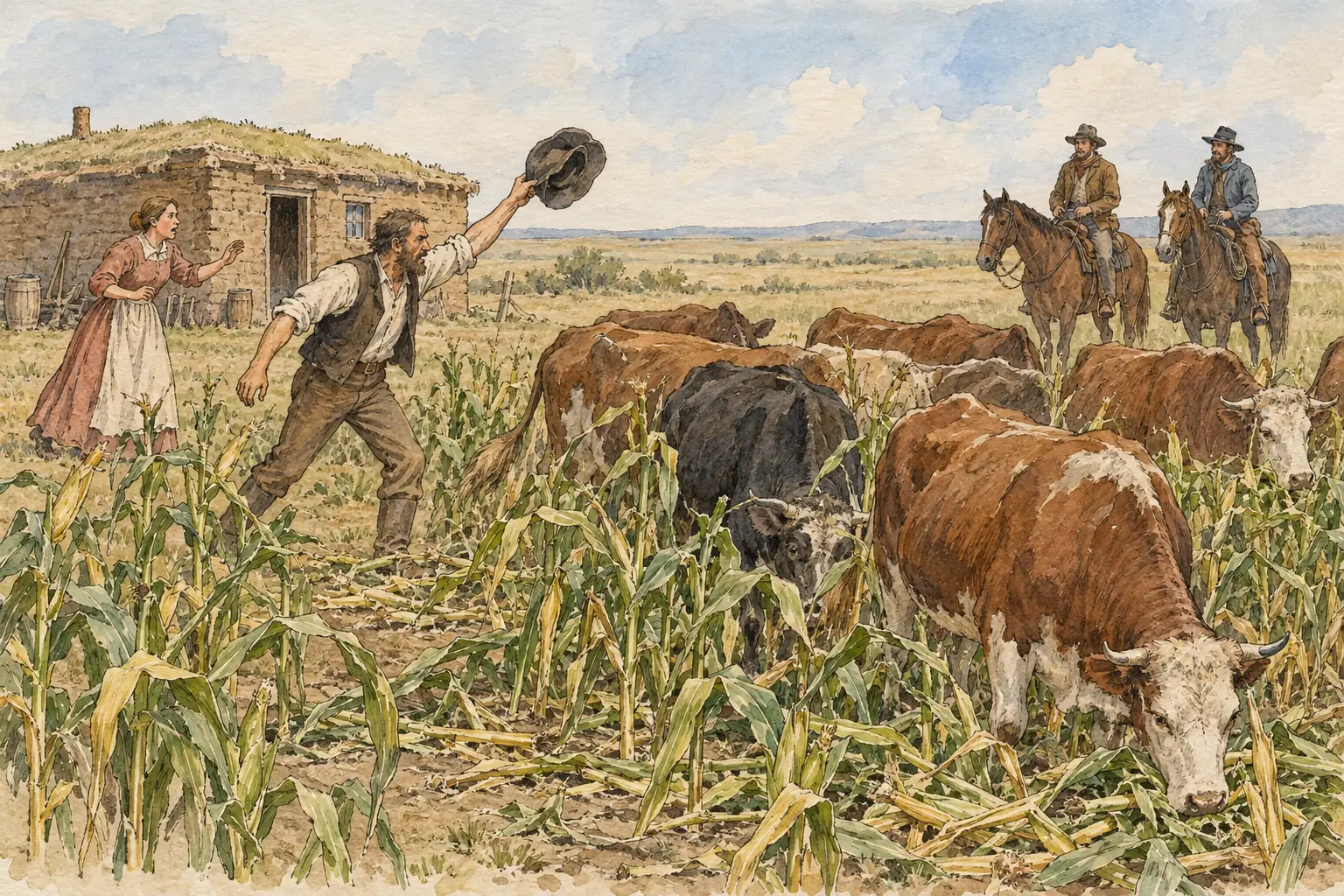
As homesteaders moved into the Plains to establish small farms, tensions arose with established ranchers who depended on large-scale grazing. Disputes centred on essential resources, leading to competition that disrupted traditional ranching.
Main sources of conflict over resources
- Water access - Ranchers needed open streams for cattle, but homesteaders diverted water for irrigation, reducing availability and sparking disputes in arid regions.
- Grazing land - Homesteaders fenced off sections for crops, limiting the open pastures ranchers relied on, which often led to cattle straying onto farms and causing damage.
- Economic pressures - Ranchers viewed homesteaders as intruders fragmenting the range, while homesteaders saw ranchers as monopolising land, creating mutual resentment.
Impact of barbed wire and windmills
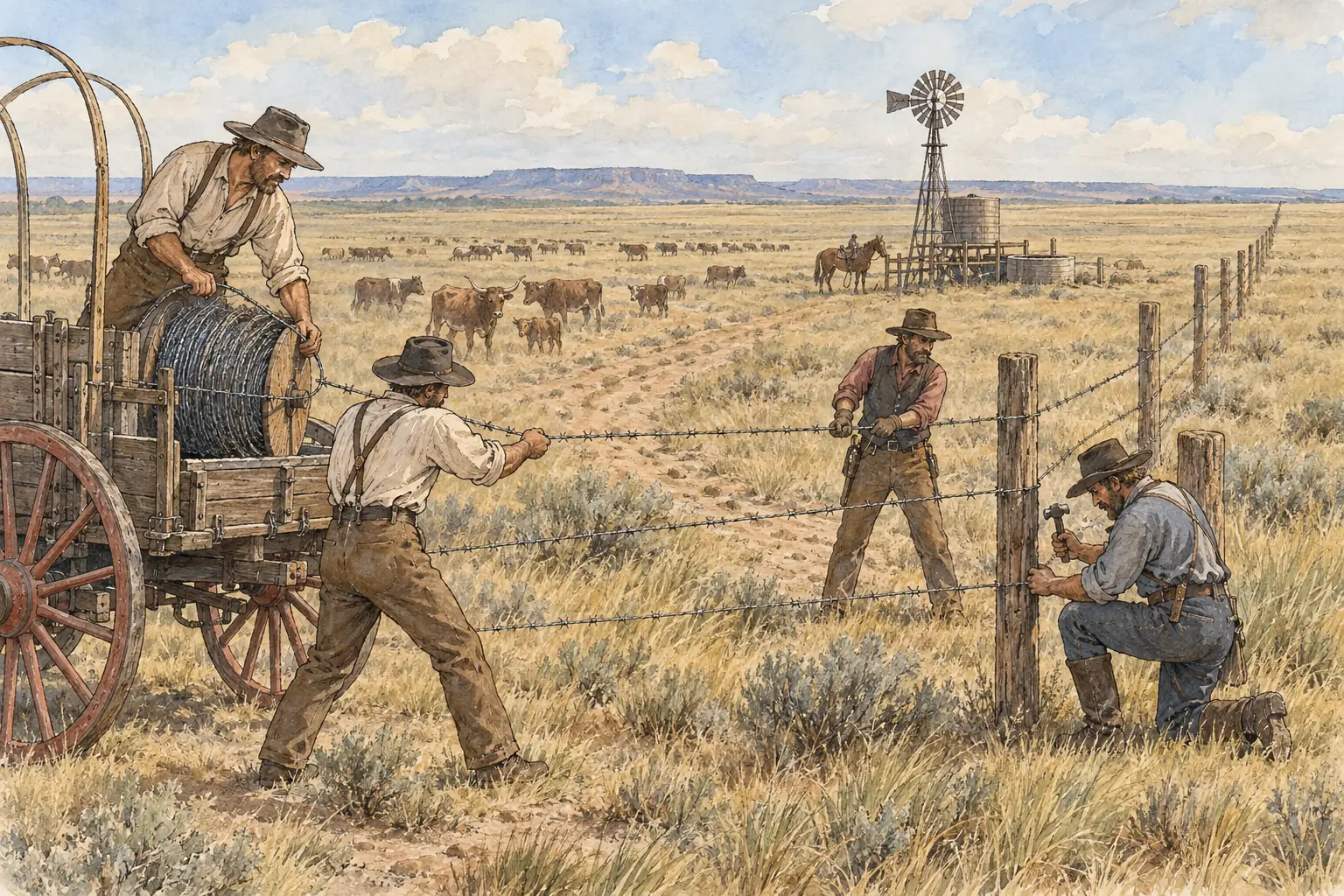
Technological advancements in the 1870s and 1880s transformed land use on the Plains, enabling homesteaders to settle more effectively while challenging the open-range system favoured by ranchers.
Role of key inventions in changing the Plains
- Barbed wire - This affordable fencing material allowed homesteaders to enclose small plots quickly, protecting crops from roaming cattle but restricting ranchers' access to traditional grazing areas.
- Windmills - By pumping groundwater to the surface, windmills provided a reliable water source for homesteaders in dry regions, supporting farming and encouraging more settlements that encroached on ranch lands.
- Broader effects - These inventions accelerated the enclosure of the Plains, shifting power towards individual landholders and intensifying rivalries between agricultural and ranching interests.
How formal land claims fuelled range wars
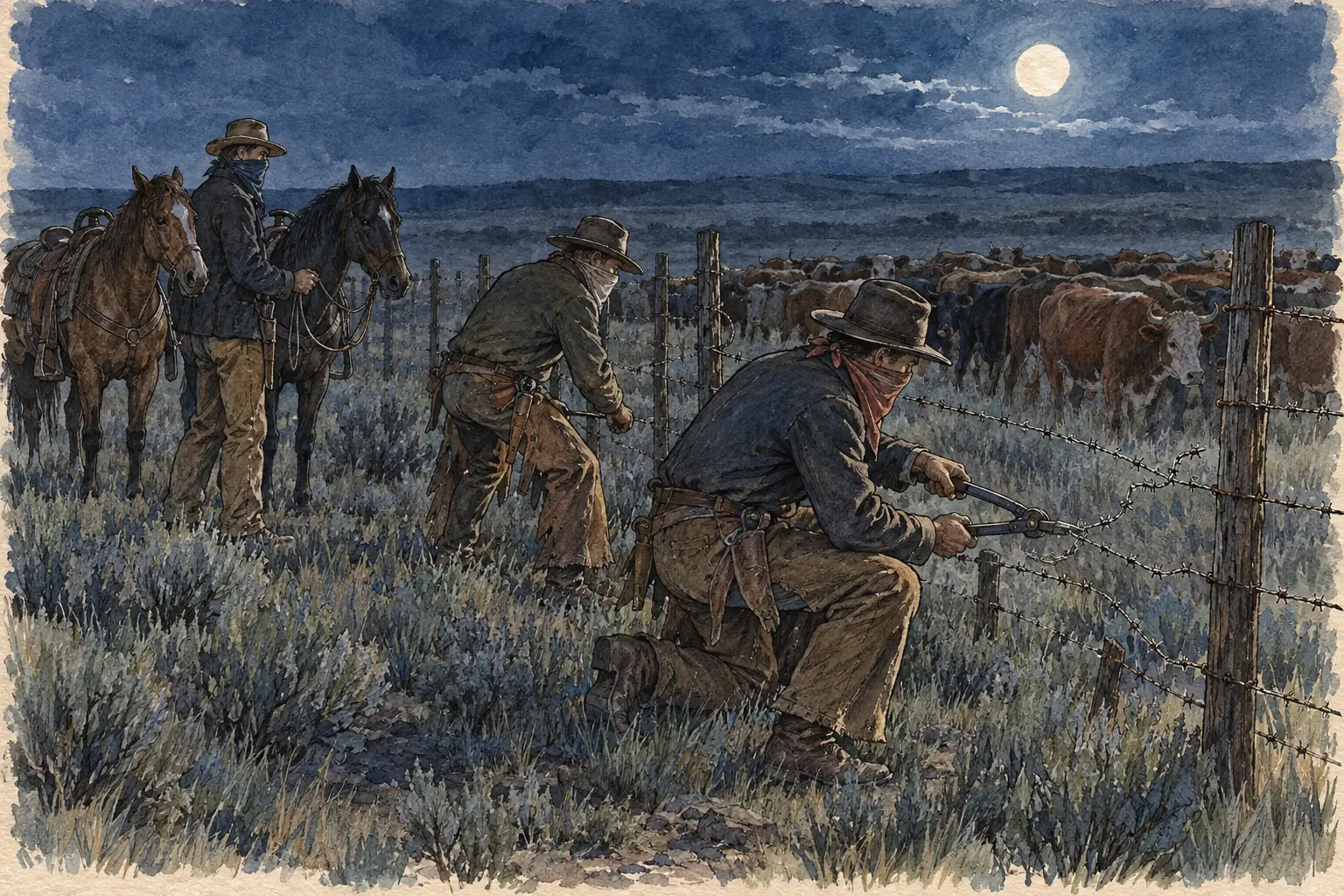
The formalisation of land ownership through government policies fragmented the open range, heightening conflicts that sometimes escalated into violent confrontations known as range wars.
Effects of formal land claims on tensions
- Homestead Act and land division - Laws like the 1862 Homestead Act granted 160-acre plots to settlers, breaking up vast ranching territories into smaller farms and limiting cattle movement.
- Increased competition - As more homesteaders claimed land, ranchers faced reduced grazing space, leading to deliberate acts like fence-cutting or driving cattle through farms to assert dominance.
- Escalation to range wars - Accumulated grievances over land and resources fuelled organised conflicts, such as those involving hired gunmen or vigilante groups, where ranchers sought to protect their interests against perceived encroachments.