2.6 - Reservations & Fort Laramie Treaty, 1868
Key facts and dates
The mid-19th century expansion in the American West, driven by railroads, gold prospecting, and ranching, severely disrupted indigenous ways of life, prompting the U.S. government to implement reservations and negotiate treaties. These changes often led to dependency, cultural erosion, and ongoing tensions with native tribes.
Timeline of key events
- 1863 – Bozeman Trail opens to support gold prospectors heading to Montana, crossing Sioux hunting grounds.
- 1866–1868 – Red Cloud's War erupts over U.S. forts along the Bozeman Trail, with indigenous forces resisting encroachment.
- 1868 – Second Fort Laramie Treaty signed, closing Bozeman Trail forts and establishing the Great Sioux Reservation.
- Post-1868 – Differing interpretations of the treaty fuel renewed conflicts, including disputes over land use and resources.
Impacts of expansion on hunting and buffalo
The rapid westward expansion in the United States during the 1860s brought significant changes to the Great Plains, directly affecting indigenous tribes such as the Sioux. Developments in transport, mining, and agriculture invaded traditional territories, disrupting established patterns of life and resource use.
Ways expansion disrupted indigenous lands and resources
- Railroads cutting through territories - Railway lines criss-crossed sacred hunting areas, dividing communities and restricting free movement while facilitating the influx of settlers and goods.
- Gold prospecting invasions - Prospectors flocked to regions like Montana, using trails that traversed tribal lands, leading to environmental damage and competition for water and game.
- Ranching and land occupation - Cattle ranchers claimed vast grazing areas, fencing off sections that overlapped with nomadic routes and reducing available space for traditional pursuits.
- Increased buffalo slaughter - Commercial hunting escalated to supply hides and meat for new markets, decimating herds that were central to indigenous diets, clothing, and tools.
- Arrival of military forts and settlers - Forts were built to protect trails and miners, bringing soldiers who enforced U.S. control, while settlers established farms and towns that displaced tribes.
Aims and realities of the reservation system
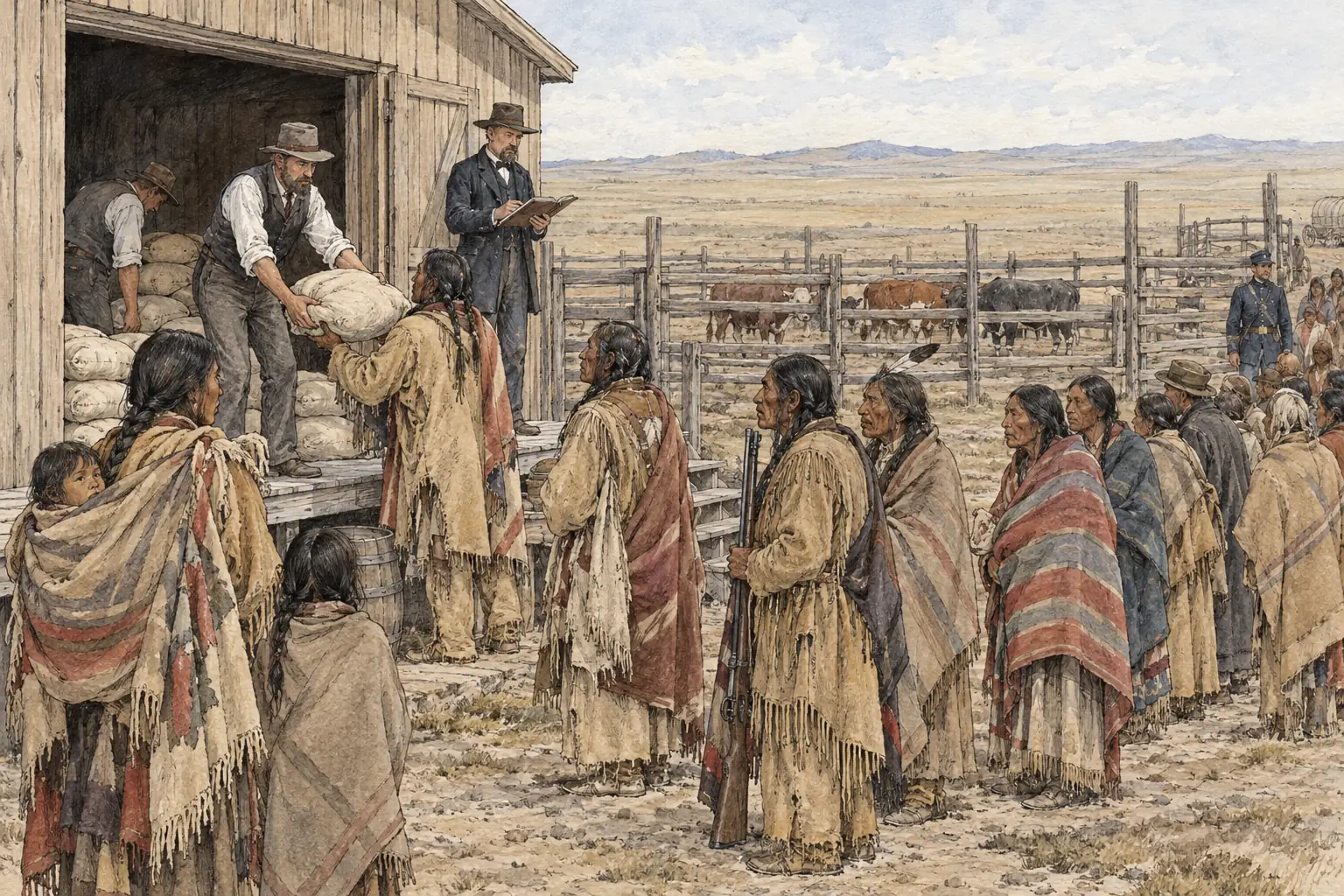
The U.S. government introduced reservations as designated areas for indigenous tribes, intending to manage and integrate them into American society. However, the system's implementation often fell short of its goals, creating hardships instead of opportunities.
Intended aims of reservations
- Promotion of farming - Tribes were encouraged to adopt settled agriculture, with land allocations aimed at replacing nomadic hunting with crop cultivation and livestock rearing.
- Education through schools - Boarding schools were established to teach English, vocational skills, and American customs, with the goal of assimilating younger generations.
- Spread of Christianity - Missionaries worked to convert tribes, viewing native spiritual practices as barriers to progress and seeking to instil Christian values.
Harsh realities faced by indigenous peoples on reservations
- Dependency on government aid - Tribes became reliant on rations and supplies, as traditional self-sufficiency was undermined by restricted hunting and poor soil quality.
- Reduced autonomy - Strict rules limited tribal governance, with U.S. agents controlling decisions and eroding traditional leadership structures.
- Corruption among agents - Many government-appointed agents exploited their positions, diverting resources or engaging in dishonest dealings that worsened poverty and mistrust.
Details of the Second Fort Laramie Treaty (1868)
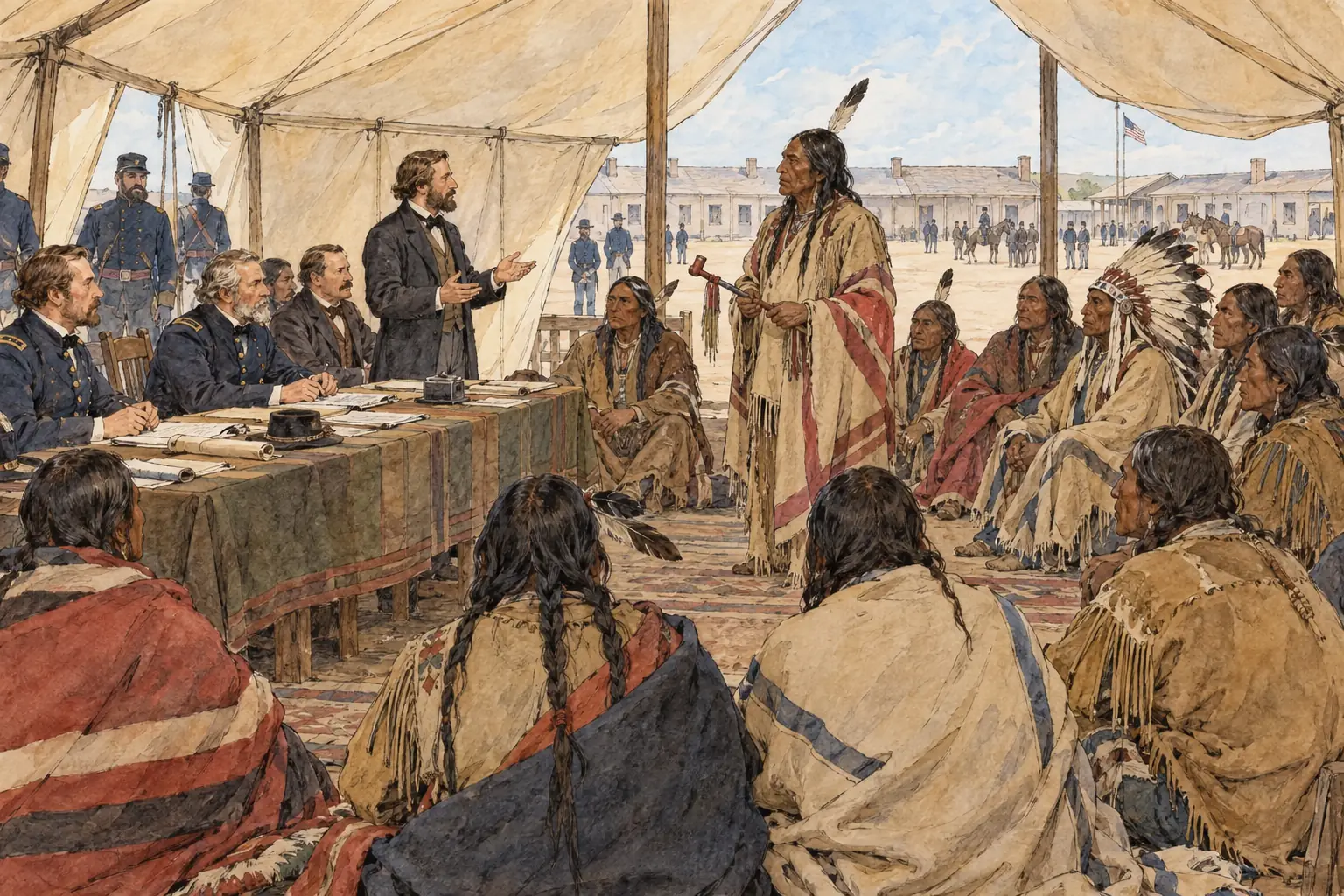
The Second Fort Laramie Treaty emerged from negotiations following Red Cloud's War, aiming to resolve conflicts over the Bozeman Trail. Signed in 1868, it represented a temporary concession by the U.S. government to indigenous demands, particularly from the Sioux.
Key provisions of the treaty
- Closure of Bozeman Trail forts - The U.S. agreed to abandon military posts along the trail, including Fort Phil Kearny, halting further encroachment in that area.
- Creation of the Great Sioux Reservation - A large territory in present-day South Dakota was designated for the Sioux, including the Black Hills, with guarantees against white settlement.
- Additional commitments - The treaty promised annuities, education, and farming tools, while recognising Sioux rights to hunt in unceded lands outside the reservation.
Differing expectations leading to renewed conflict
Although the treaty initially brought peace, fundamental differences in how the U.S. government and indigenous tribes interpreted its terms sowed seeds for future disputes. These mismatches in understanding and priorities made further confrontations almost inevitable.
Sources of misunderstanding and tension
- U.S. view of land ownership - The government saw reservations as fixed boundaries to contain tribes, expecting permanent settlement and assimilation, while ignoring nomadic traditions.
- Indigenous expectations of sovereignty - Tribes like the Sioux regarded the treaty as recognition of their territorial rights, including off-reservation hunting, without accepting U.S. oversight.
- Pressure from expansion - Growing demands for gold and land from settlers pressured the U.S. to revisit treaty terms, leading to violations that eroded trust.
- Cultural clashes - Efforts to 'civilise' through farming and Christianity conflicted with indigenous values, fostering resentment and resistance to imposed changes.