5.5 - The Met Police & Public Attitudes
Key facts and dates
By the late 19th century, the Metropolitan Police had evolved into a major force responsible for maintaining order in London, but it faced challenges in recruitment, leadership, and public perception. Incidents in areas like Whitechapel highlighted broader national issues that eventually drove improvements in policing practices.
Timeline of key events
- 1829 – Metropolitan Police founded, establishing a professional force for London.
- 1886 – Sir Charles Warren appointed as Commissioner, introducing military-style discipline.
- November 1887 – Bloody Sunday clash in Trafalgar Square, where police violently disperse protesters.
- 1888 – Warren resigns amid criticism over handling of the Jack the Ripper case.
- 1907 – Police Training College opens, marking a step towards better officer preparation.
Structure and recruits of the Metropolitan Police
The Metropolitan Police, established in 1829, had grown into a substantial organisation by the 1880s, covering London through various divisions such as H Division in Whitechapel. This setup allowed for localised policing while maintaining central control.
Organisation and divisions
- Divisional structure - The force was split into geographical areas, with each division handling local law enforcement; Whitechapel's H Division exemplified how policing adapted to high-crime urban zones.
- Size and scope - As a large entity, it employed thousands of officers to patrol streets, investigate crimes, and manage public order across the capital.
Quality and challenges of police recruits
- Background of recruits - Many constables came from working-class origins, including rural workers like farmers drawn to urban wages; this diversity sometimes led to adaptation issues in London's demanding environment.
- Training and retention problems - New officers underwent only basic instruction, with low salaries contributing to frequent resignations; the harsh job conditions meant high turnover and a lack of experienced personnel.
- Improvements over time - By the late 19th century, the force had achieved greater uniformity and discipline compared to its early years, though ongoing issues persisted in building a stable workforce.
Chain of command and Sir Charles Warren
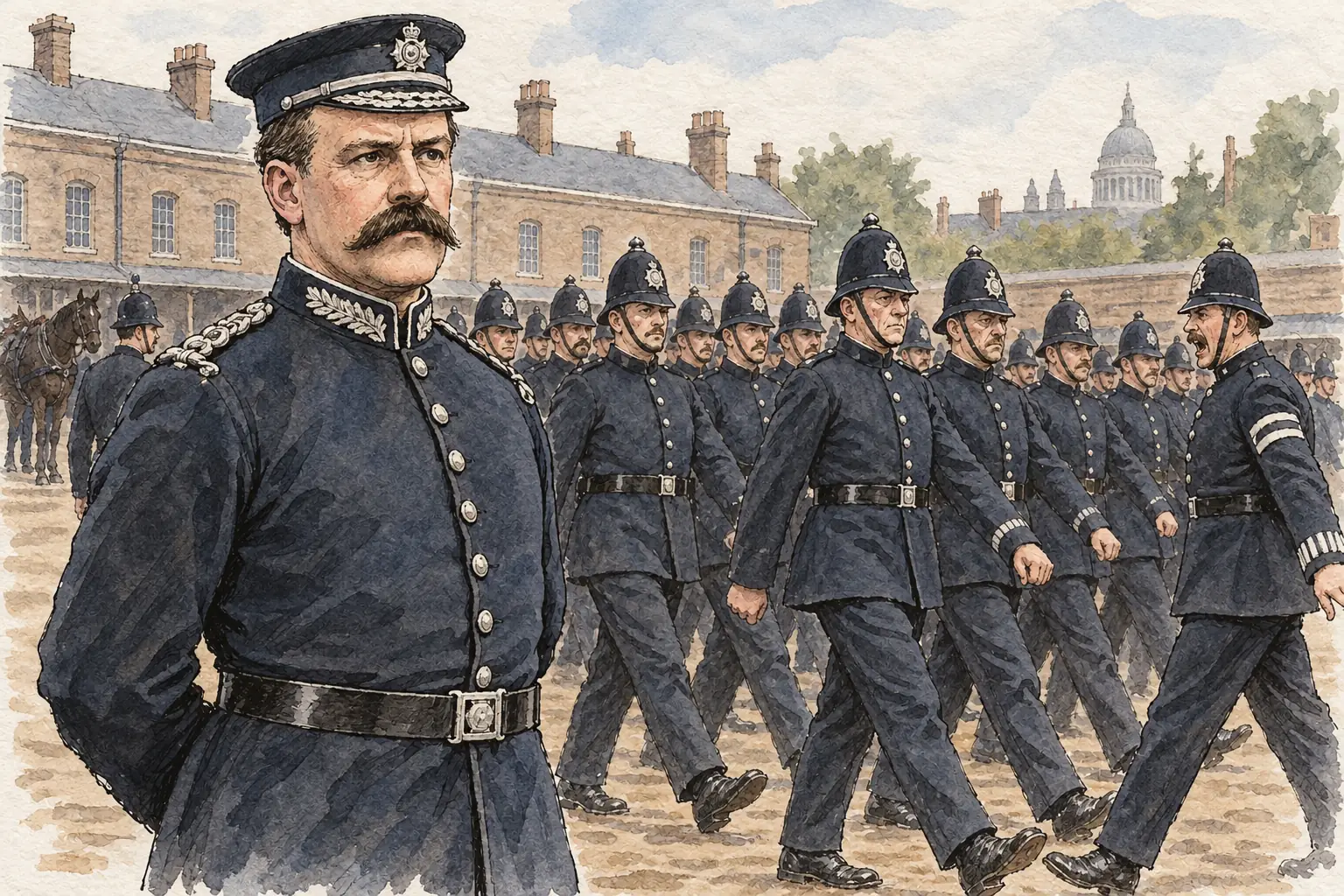
The Metropolitan Police operated under a clear hierarchy, with ultimate authority resting with the Commissioner, who reported to government officials. This structure influenced how policing was conducted, particularly during periods of social unrest.
Overall chain of command
- Commissioner's oversight - The Commissioner directed the force and was accountable to the Home Office and the Home Secretary, ensuring alignment with national policies.
- Government influence - Political leaders could intervene in policing matters, reflecting the force's role as a state instrument for maintaining order.
Sir Charles Warren's leadership and controversies
- Military background and approach - Appointed in 1886, Warren, a former army officer, implemented strict drills and discipline, which alienated some officers who found it overly rigid.
- Handling of social tensions - He adopted a firm stance against demonstrations, escalating conflicts during times of economic hardship.
- Involvement in Whitechapel - Warren directly engaged in the Jack the Ripper investigations, but decisions like removing evidence from a crime scene drew widespread condemnation for perceived mishandling.
Public attitudes to the police and key incidents
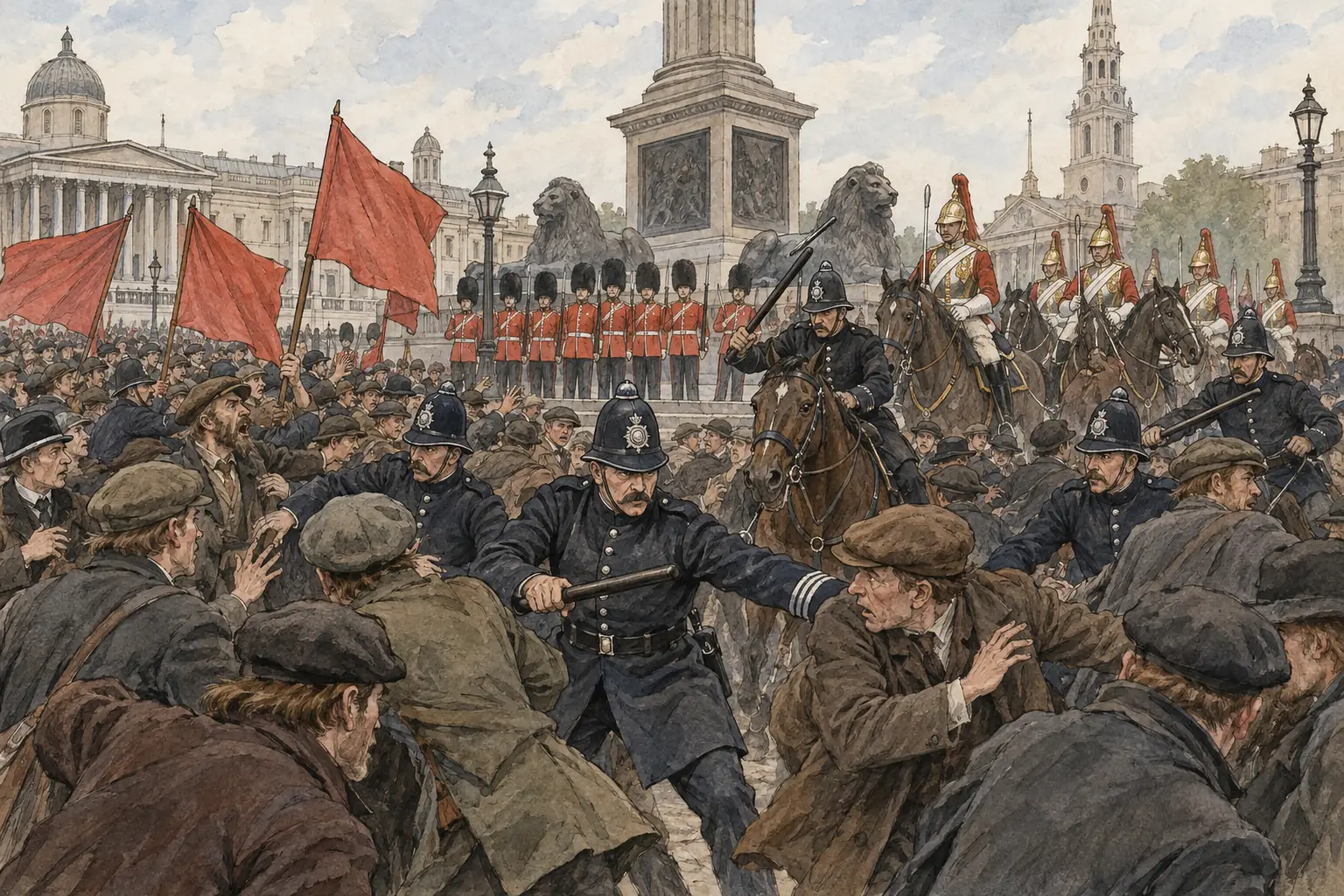
Public views of the Metropolitan Police varied widely in the late 19th century, shaped by class differences and high-profile events. While some admired the force, others saw it as oppressive, especially in poorer districts.
Divided public perceptions
- Distrust among the poor - Working-class communities, particularly in areas like Whitechapel, often viewed officers as tools of state control that neglected vulnerable groups and failed to solve serious crimes.
- Support from affluent groups - In wealthier areas, constables, known as "Bobbies", were respected for upholding law and order, symbolising stability and bravery.
- Expectations for modernisation - There was growing demand for advanced crime-solving techniques, with criticism mounting when the police fell short in prominent cases.
Impact of Bloody Sunday and other incidents
- Bloody Sunday (November 1887) - Police and soldiers clashed violently with unemployment demonstrators in Trafalgar Square, leading to injuries and deaths; this event fuelled accusations of excessive force.
- Jack the Ripper fallout - The unsolved murders in 1888 intensified scrutiny, with the press and public blaming police incompetence, ultimately contributing to Warren's resignation later that year.
- Broader effects on reputation - Such failures amplified negative sentiments, though successes in routine cases helped rebuild some trust.
Government oversight and development of the CID
The Home Secretary played a key role in directing policing, while internal reforms aimed to enhance investigative capabilities. These elements reflected efforts to address criticisms and improve effectiveness.
Role of the Home Secretary
- Policy direction - Officials like Henry Matthews in the late 1880s supervised the Metropolitan Police, responding to parliamentary and public pressures to modernise operations.
- Political scrutiny - Government involvement ensured accountability, with leaders able to critique or guide the force during crises.
Establishment and impact of the Criminal Investigation Department
- Formation and leadership - Under figures like Howard Vincent, the Criminal Investigation Department (CID) was organised to professionalise detective work, focusing on systematic methods for solving crimes.
- Improvements in effectiveness - The CID introduced better coordination, which gradually improved outcomes in everyday investigations and earned public recognition.
- Limitations in high-profile cases - Despite these advances, failures in major incidents continued to damage the force's image, highlighting the need for further resources.
Broader implications for national police reforms
Challenges in places like Whitechapel mirrored wider issues within the Metropolitan Police, including insufficient resources and leadership conflicts. These problems, combined with public division, prompted long-term changes.
Pressures leading to reforms
- Resource and leadership challenges - Limited funding and internal disputes hampered performance, as seen in Whitechapel's policing difficulties.
- Public and political demands - Criticism from various sectors pushed for enhancements to make the force more capable and trusted.
Key reforms and their outcomes
- Improved training initiatives - The opening of a dedicated Police Training College in 1907 provided more comprehensive preparation for recruits, addressing earlier shortcomings in skills and retention.
- Enhanced recruitment - Efforts focused on attracting and keeping better-qualified officers, leading to a more professional force over time.
- Legacy of crises - Events in Whitechapel and beyond spurred national improvements, demonstrating how local failures could drive systemic progress in policing.