5.6 - Sources on Whitechapel
Key facts and dates
Investigating Whitechapel from 1870 to 1900 involves a range of historical sources that reveal details about crime, policing, and living conditions. These materials, from official documents to media reports, help historians reconstruct the challenges faced by this East End district during a period of rapid urban change.
Key facts to remember
- Census data – Collected every decade, showing population details, jobs, and migration patterns.
- Workhouse records – Include admission logs and dietary plans, highlighting poverty treatment.
- Charles Booth's survey (late 1880s) – Produced colour-coded maps and interview notes on poverty levels.
- Police records – Log books and arrest reports from H Division, detailing crimes and responses.
- Jack the Ripper files (1888) – Investigation documents like witness statements and autopsy reports.
- Photographic evidence – Images of streets, lodging houses, and crime scenes for visual context.
- Newspapers – Local and national papers reporting events, often with sensational details.
- Punch magazine cartoons – Satirical illustrations critiquing police and social issues.
Local official records for community and poverty
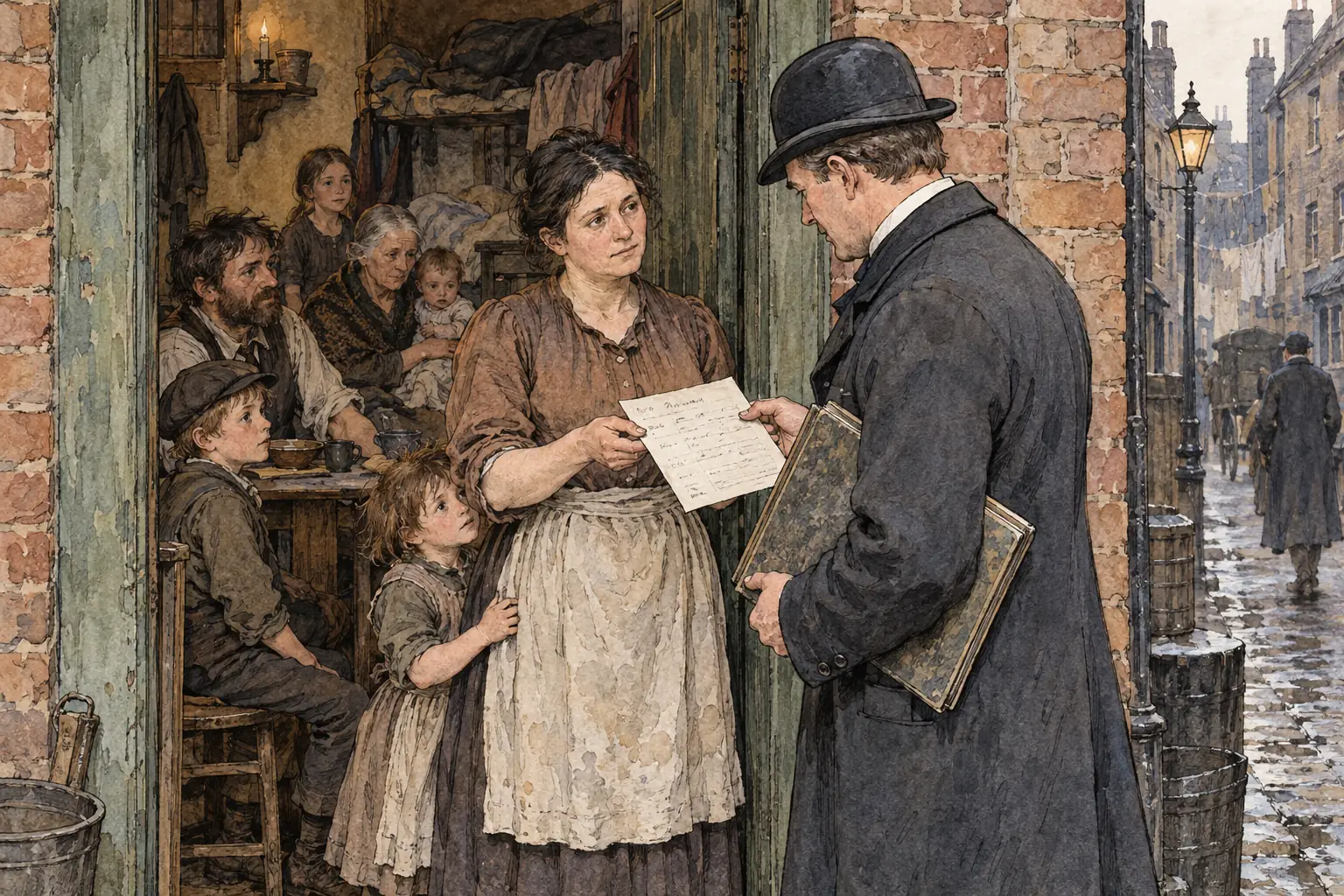
Local official records provide essential data on the population and living conditions in Whitechapel between 1870 and 1900. These documents help historians analyse the area's social makeup, economic struggles, and efforts to address urban problems.
Types of local official records
- Census data - Gathered every ten years, these records detail residents' ages, occupations, household sizes, and origins of migrants, offering a snapshot of overcrowding and community diversity.
- Workhouse records - Admission and discharge registers, along with rules and meal plans, illustrate the extent of destitution and the harsh treatment of the poor in institutions designed for relief.
- Housing and council records - Reports from bodies like the Board of Works or Medical Officers of Health include statistics on slum clearance, disease outbreaks, and overcrowding, showing attempts to improve sanitation and living standards.
- Employment and charity records - These outline common jobs in the area and support provided by aid groups, revealing patterns of unemployment and assistance for those in need.
Charles Booth's survey and mapping poverty
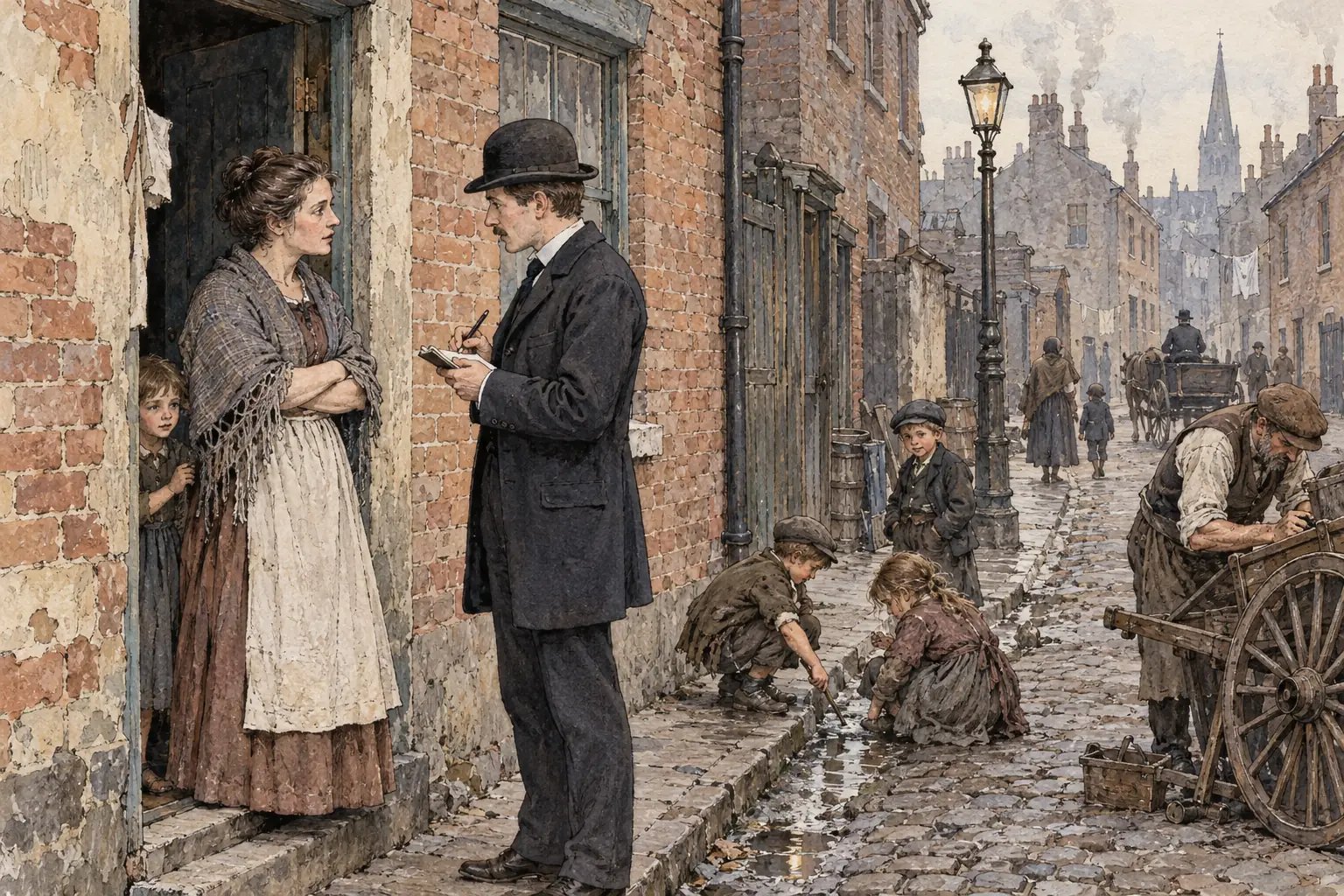
Charles Booth's extensive research in the late 1880s offers a detailed contemporary view of poverty in London, with a focus on Whitechapel. His work combines statistical mapping with firsthand observations to highlight social issues.
Features of Booth's survey
- Poverty maps - Colour-coded charts classify streets by wealth levels, identifying the poorest districts and linking them to problems like crime and deprivation.
- Notebooks and interviews - Contain descriptions from walks through Whitechapel, including accounts of living conditions, crime-prone areas, and resident experiences, providing qualitative insights into daily life.
Police and court records for crime and policing
Police and court records are vital for understanding crime patterns and law enforcement in Whitechapel. They document specific incidents and the challenges faced by officers in a high-crime area.
Key police and court records
- H Division police records - Incident logs and crime reports record daily offences and police actions, showing how authorities dealt with issues like theft and violence.
- Court registers - Documents from places like the Thames Police Court detail arrests, trials, and outcomes, offering evidence of judicial processes.
- Jack the Ripper investigation files - Specific to the 1888 murders, these include letters, witness testimonies, and post-mortem reports, illustrating police methods and limitations in major cases.
- Coroners' inquests - Reports on deaths, including those from the Ripper victims or other violent incidents, provide details on causes of death and forensic findings.
Newspapers and visual sources
Newspapers and visual materials capture public reactions and provide direct evidence of events in Whitechapel. These sources often reflect contemporary attitudes but require careful analysis due to potential biases.
Types of newspapers and visual sources
- Local and national newspapers - East End publications like the East London Advertiser reported on regional events, while national ones such as The Times or tabloids like The Illustrated Police News covered major crimes and social problems, including sensationalised accounts of murders.
- Photographic evidence - Images of streets, lodging house interiors, and crime-related scenes, such as victim morgue photos, give a visual record of the area's grim conditions and key incidents.
- Cartoons and periodicals - Magazines like Punch featured satirical illustrations and commentary, often mocking police ineffectiveness or government inaction on poverty, revealing middle-class views of Whitechapel's issues.
Importance of cross-referencing multiple sources
A comprehensive study of Whitechapel requires combining various sources to verify information and build a balanced view. Each type offers unique perspectives, from factual data to opinion-based accounts.
Benefits of using multiple sources
- Diverse evidence - Official records provide statistics, while personal accounts and media add narratives, helping to confirm or challenge interpretations of crime, policing, and living conditions.
- Addressing limitations - Newspapers may include exaggeration, so cross-checking with police files or Booth's observations ensures accuracy and reduces bias in historical analysis.