3.4 - Vietcong Guerrilla Warfare
Key facts and dates
The Vietcong's guerrilla warfare was a key element in the Vietnam conflict, relying on asymmetric tactics, local support, and supply networks to challenge superior U.S. and South Vietnamese forces. These methods combined military actions with political efforts to erode enemy control and build allegiance among the population.
Key facts to remember
- Guerrilla tactics – Emphasised hit-and-run attacks, ambushes, and booby traps to inflict damage without direct confrontation.
- Tunnel networks – Extensive underground systems used for hiding, movement, and surprise attacks.
- Local knowledge – Fighters exploited terrain familiarity and blended with civilians to evade detection.
- Political education – Programmes indoctrinated villagers to support the communist cause and resist Saigon.
- Propaganda and terror – Targeted officials and collaborators to undermine South Vietnamese authority.
- Ho Chi Minh Trail – Vital supply route through Laos and Cambodia for transporting troops and materials.
Main Vietcong guerrilla tactics
Image 1 of 2: Vietcong fighters waited hidden beside trails to ambush US patrols, then slipped away before the Americans could hit back
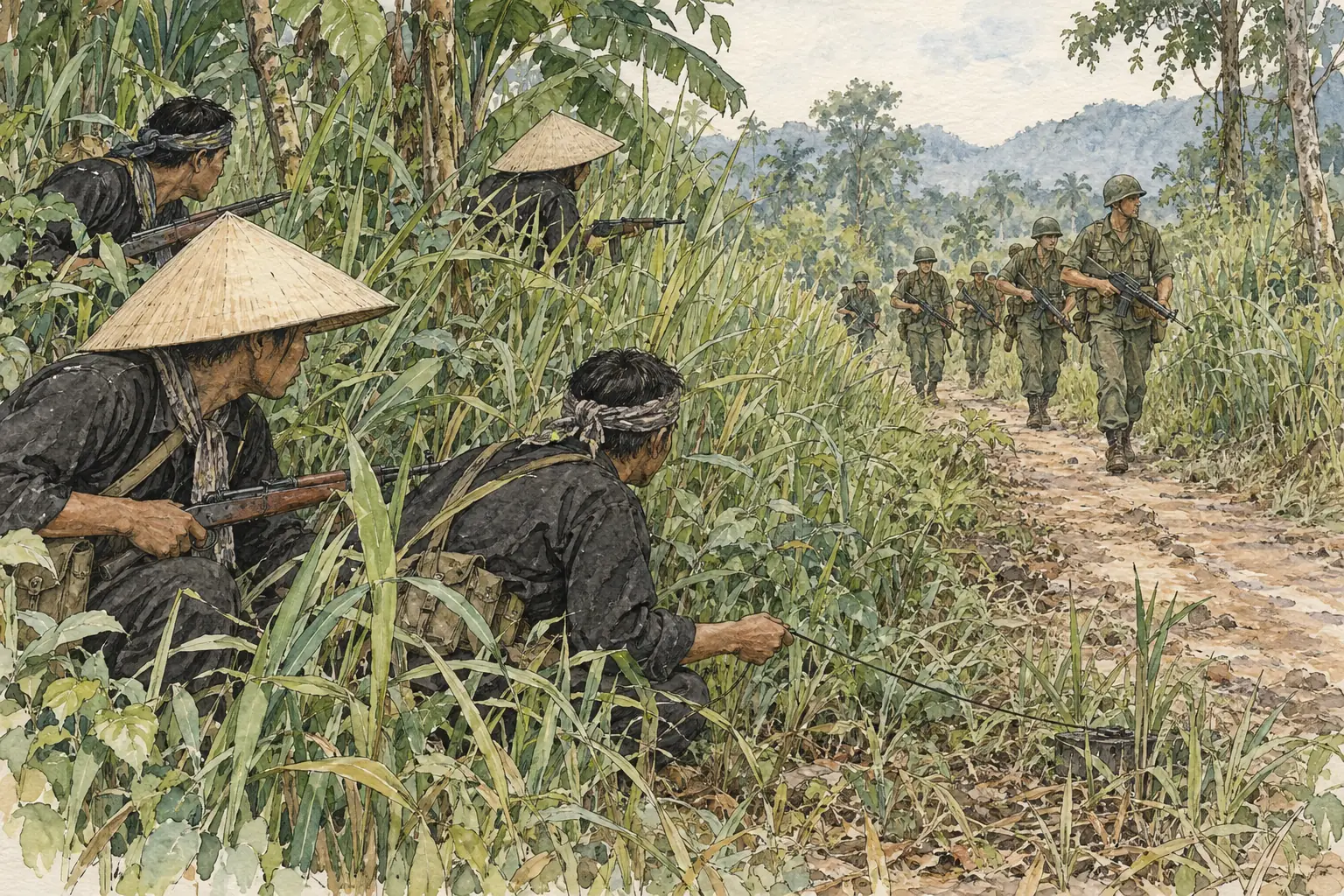
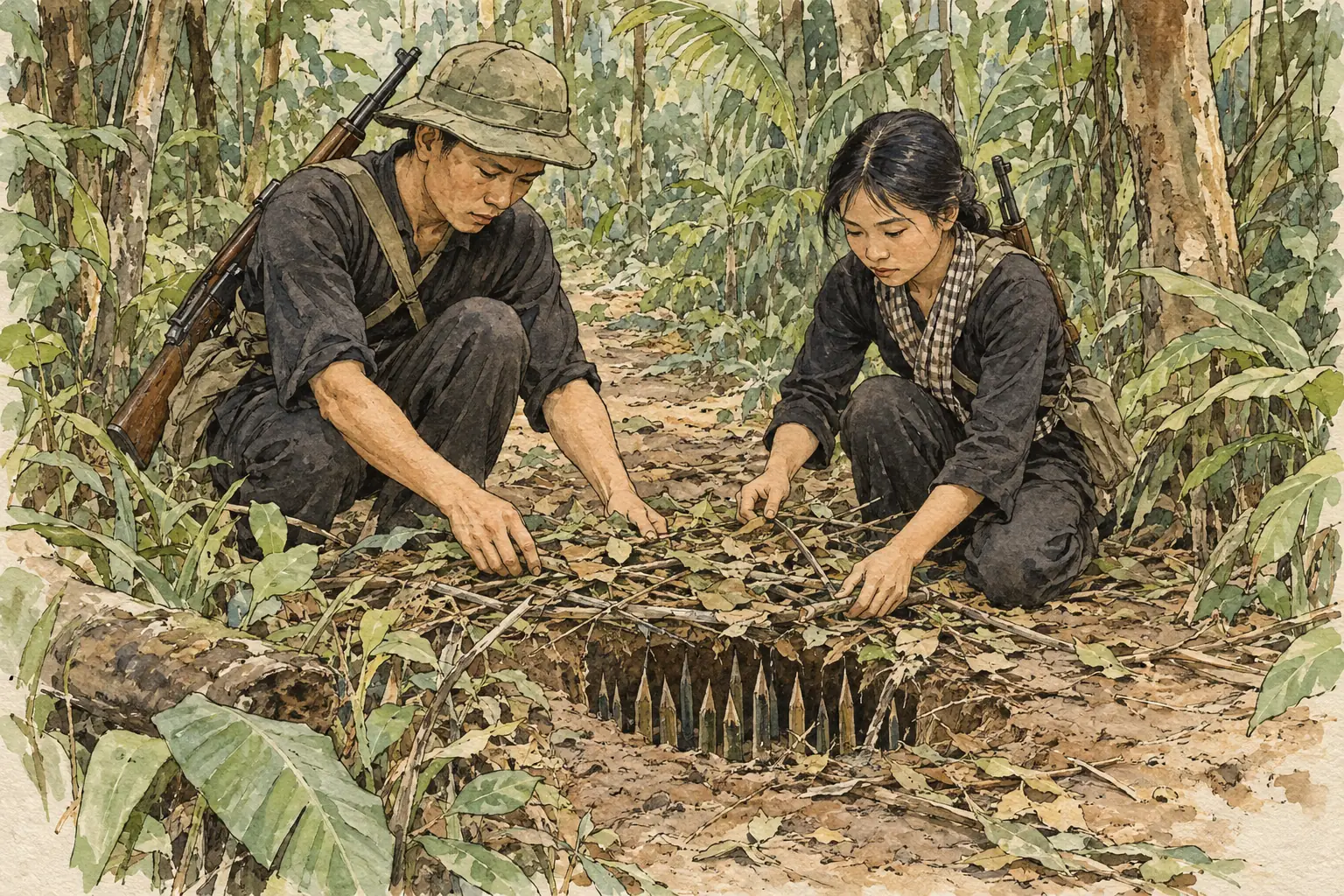
The Vietcong employed guerrilla warfare to counter the technological and numerical advantages of U.S. and South Vietnamese forces. This approach focused on mobility, surprise, and attrition rather than large-scale battles, allowing smaller units to wear down a stronger opponent over time.
Core guerrilla tactics
- Hit-and-run attacks - Fighters launched quick strikes on enemy positions or patrols, inflicting casualties before retreating rapidly to avoid counterattacks.
- Ambushes - Vietcong units set up hidden positions along roads or trails to surprise and overwhelm passing troops, often using the element of surprise to maximise impact.
- Booby traps and mines - Improvised devices, such as punji pits or explosive traps made from scavenged materials, were placed in strategic locations to injure or kill soldiers and slow enemy advances.
- Blending with civilians - By dressing as local farmers and integrating into villages, Vietcong forces made it difficult for enemies to identify targets, complicating military operations and increasing the risk of civilian casualties.
Use of tunnels and local knowledge in combat
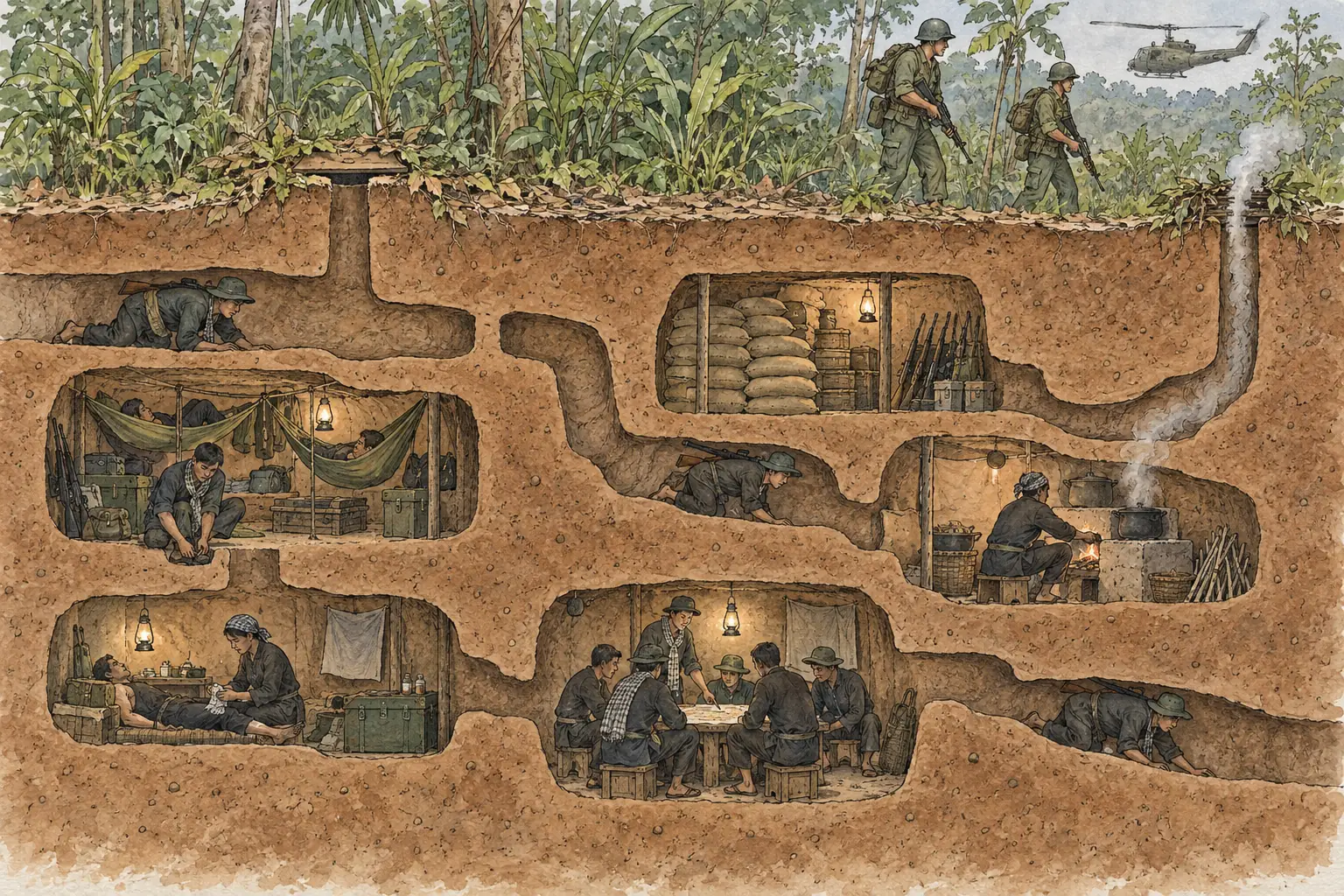
The Vietcong made extensive use of underground tunnel systems and their intimate understanding of the landscape to gain tactical edges. These elements allowed for stealthy operations and sustained resistance in rural areas.
Features of tunnel networks
- Construction and purpose - Elaborate tunnels, often dug by hand, included living quarters, storage areas, and escape routes, enabling fighters to hide, regroup, and launch attacks from below ground.
- Strategic advantages - Tunnels protected against aerial bombings and artillery, with hidden entrances that allowed sudden emergences for ambushes or retreats.
- Integration with local knowledge - Vietcong fighters, many of whom were local peasants, used their familiarity with jungles, rivers, and villages to navigate terrain, set traps, and evade searches more effectively than foreign troops.
Political strategies, propaganda and terror
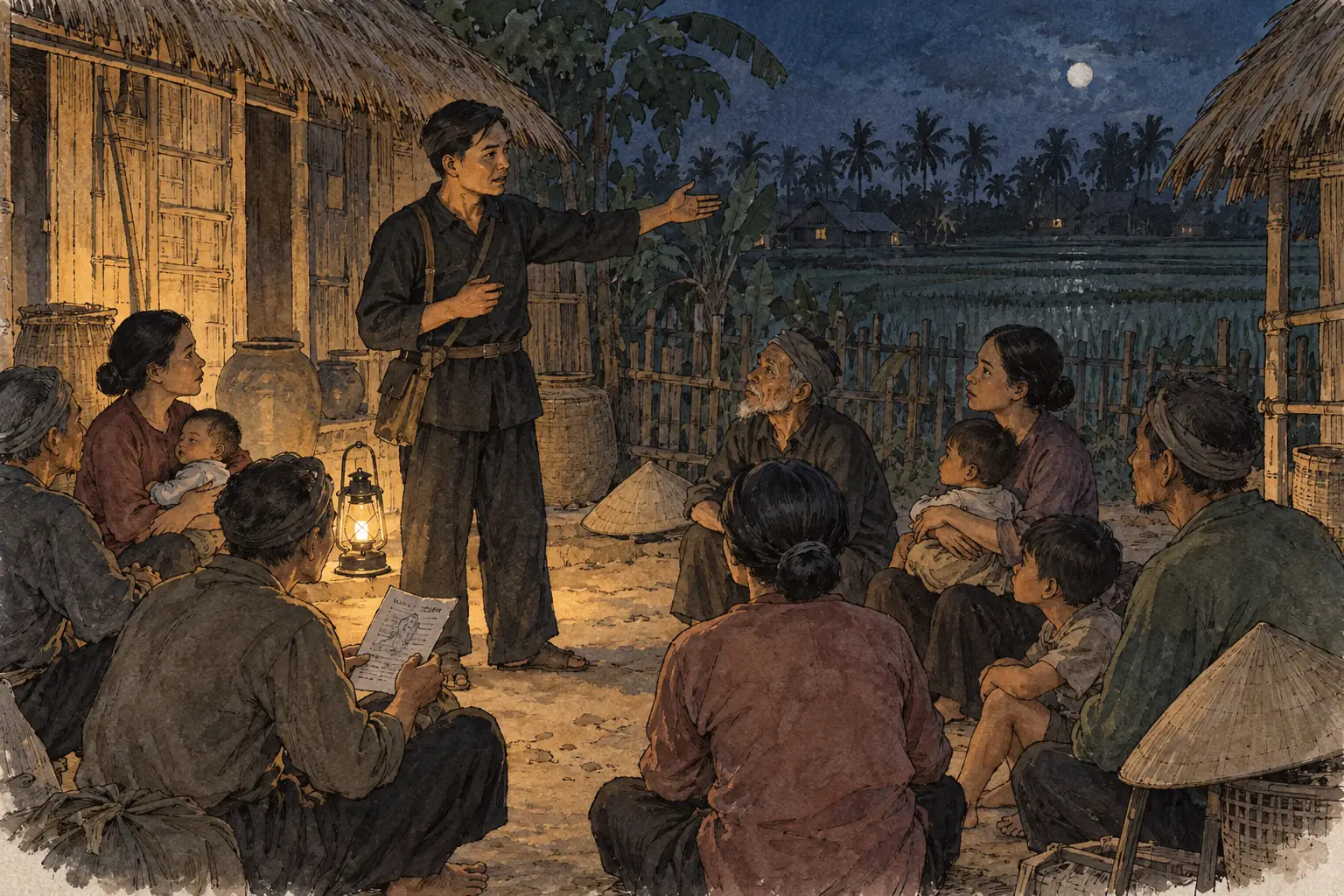
Beyond military actions, the Vietcong pursued political objectives to win hearts and minds and destabilise the South Vietnamese government. These efforts combined ideological indoctrination with coercive measures to build support and sow fear.
Methods of political education and propaganda
- Village programmes - Vietcong cadres conducted sessions in rural areas to teach communist ideals, emphasising land reform and anti-imperialism to gain loyalty from peasants.
- Propaganda campaigns - Leaflets, speeches, and radio broadcasts portrayed the Vietcong as liberators fighting foreign invaders, contrasting with the corrupt image of the Saigon regime.
Use of terror to undermine authority
- Targeted violence - Assassinations and attacks on government officials, teachers, and collaborators created an atmosphere of intimidation, discouraging cooperation with Saigon.
- Impact on control - By eliminating local leaders and disrupting administration, these tactics weakened the South Vietnamese government's grip on the countryside and encouraged defections.
The role of the Ho Chi Minh Trail
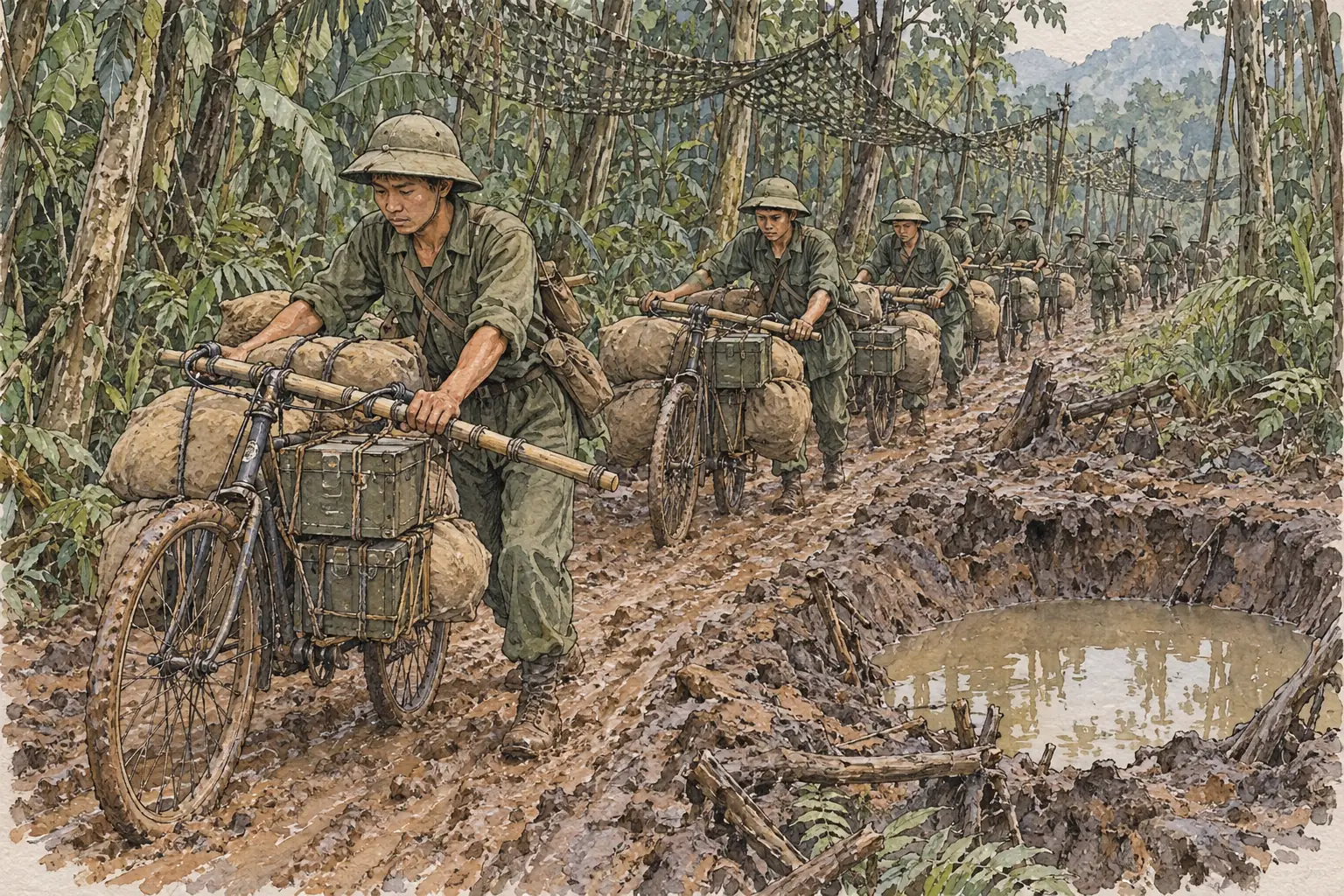
The Ho Chi Minh Trail served as a critical lifeline for the Vietcong and North Vietnamese forces, facilitating the movement of resources despite U.S. efforts to interdict it. This network was essential for sustaining prolonged guerrilla operations.
Importance of the supply route
- Path and operations - The trail consisted of a web of paths, roads, and rivers running through neutral Laos and Cambodia, allowing covert transport away from direct South Vietnamese territory.
- Movement of men and supplies - Thousands of troops, weapons, ammunition, and food were moved southward, often by bicycle or on foot, to support front-line units.
- Resilience against disruption - Despite bombings and patrols, the trail's multiple routes and repair crews ensured continuous flow, demonstrating the Vietcong's adaptability and logistical ingenuity.