3.5 - US War Methods in Vietnam
Key facts and dates
The United States employed aggressive military tactics during the Vietnam War to counter Viet Cong guerrillas and North Vietnamese forces, including ground searches, aerial bombardments, and chemical agents. These methods aimed to weaken enemy capabilities but often resulted in high civilian casualties and environmental damage, contributing to growing opposition.
Timeline of key events
- 1964 – Gulf of Tonkin incident leads to increased US involvement and authorisation for escalated military actions.
- 1965 – Operation Rolling Thunder begins, marking the start of sustained bombing campaigns over North Vietnam.
- 1966 – Search and Destroy missions intensify under General Westmoreland, focusing on body counts as a measure of success.
- 1967 – Extensive use of Agent Orange peaks, with millions of litres deployed for deforestation.
- 1968 – Tet Offensive exposes limitations of US strategies, prompting reevaluation of tactics.
- 1970 – Widespread napalm use continues amid international criticism of its effects on civilians.
Search and Destroy and its impact on civilians
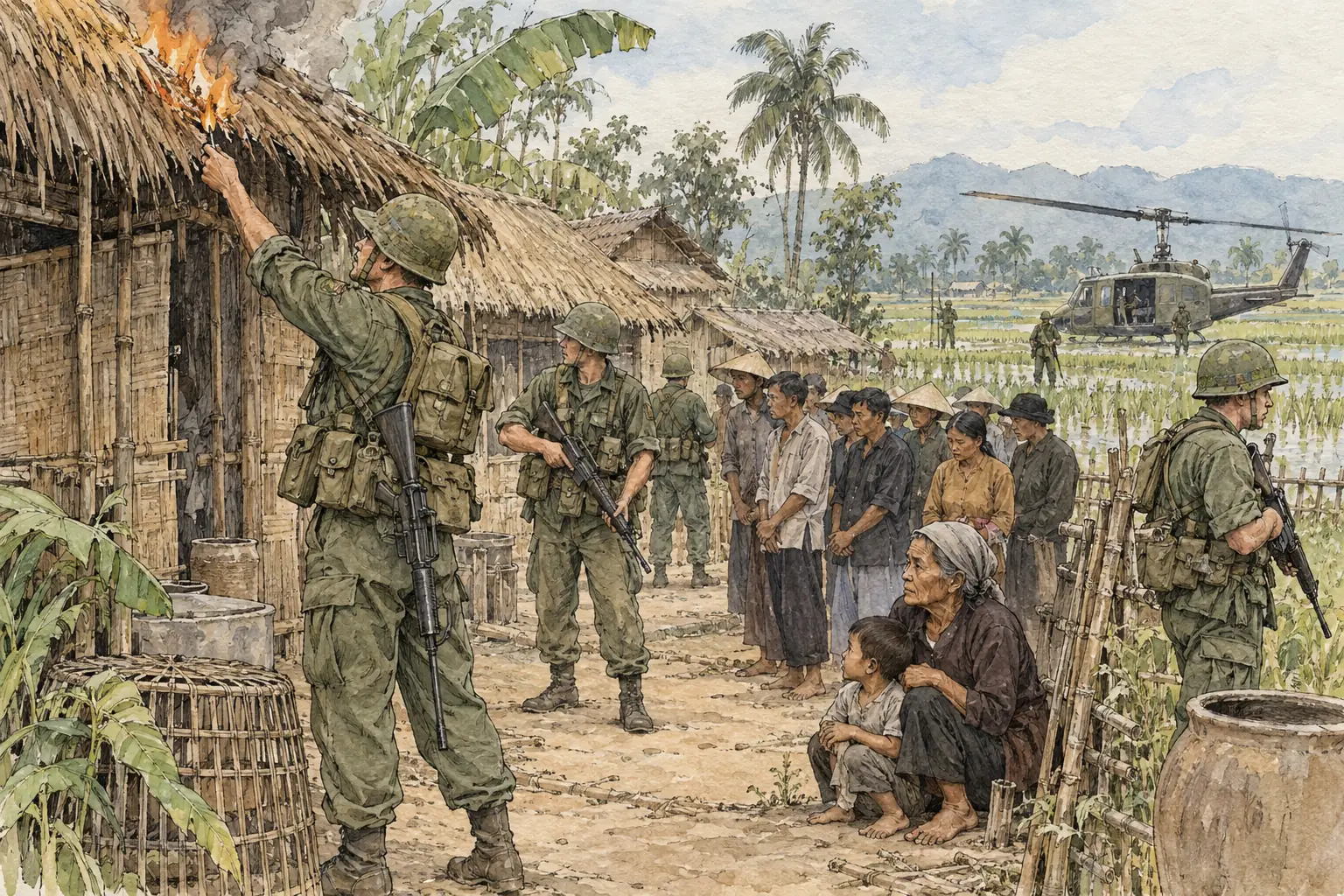
Search and Destroy operations formed a core part of US ground strategy in Vietnam, designed to locate and eliminate Viet Cong guerrilla units hidden among rural populations. These missions involved troops being airlifted into suspected enemy areas to engage in combat, but their aggressive nature frequently led to unintended consequences for local communities.
Features of Search and Destroy operations
- Aims and tactics - Soldiers aimed to find guerrilla fighters, destroy their supplies, and clear villages thought to harbour them, often using helicopters for rapid insertion and extraction.
- Reliance on body counts - Success was measured by the number of enemy killed, encouraging inflated reports and sometimes indiscriminate killing to meet quotas.
- Free fire zones - Designated areas where any movement could be targeted without prior approval, allowing artillery and air strikes on potential threats.
Reasons for alienating civilians
- High civilian casualties - Operations often destroyed villages and farms, mistaking non-combatants for enemies due to the guerrillas' blending with locals.
- Forced relocations - Many villagers were moved to 'strategic hamlets' for supposed safety, disrupting traditional life and breeding resentment.
- Long-term distrust - The tactics eroded support for US and South Vietnamese forces, pushing some civilians towards the Viet Cong for protection.
Operation Rolling Thunder and its limitations
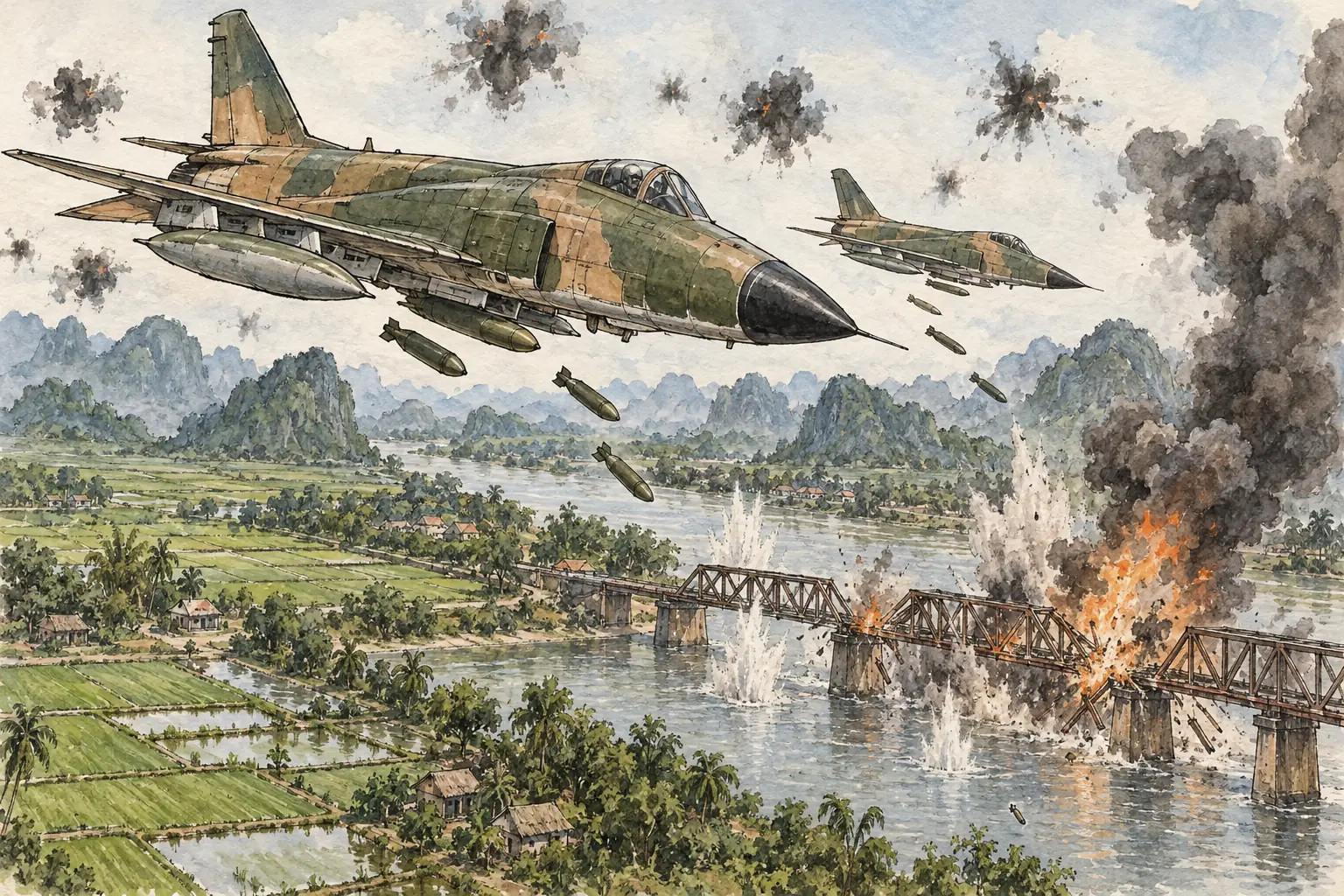
Operation Rolling Thunder was a major US bombing campaign intended to weaken North Vietnam's will and ability to support the insurgency in the South. Launched in 1965, it involved extensive aerial assaults but faced significant constraints that reduced its overall effectiveness.
Goals and execution of Operation Rolling Thunder
- Primary objectives - The campaign sought to destroy infrastructure like roads, bridges, and factories, disrupt supply lines along the Ho Chi Minh Trail, and pressure Hanoi into negotiations.
- Use of air power and artillery - Thousands of sorties dropped millions of tonnes of bombs, supplemented by ground artillery barrages to support infantry and target enemy positions.
- Scale of operations - Over three years, it escalated to include B-52 bombers, aiming for strategic precision but often resulting in widespread destruction.
Limitations and challenges
- Geographical restrictions - Bombing was limited to avoid provoking China or the Soviet Union, sparing key areas like Hanoi and Haiphong harbour initially.
- Enemy resilience - North Vietnamese forces adapted by using underground tunnels and dispersing supplies, minimising the impact on their war effort.
- Political and public backlash - The campaign's high cost and visible civilian suffering fuelled anti-war sentiment in the US, without achieving decisive military gains.
Use of chemical weapons: napalm and Agent Orange
Image 1 of 2: Napalm burned away jungle cover, but it also killed and injured villagers caught near its targets
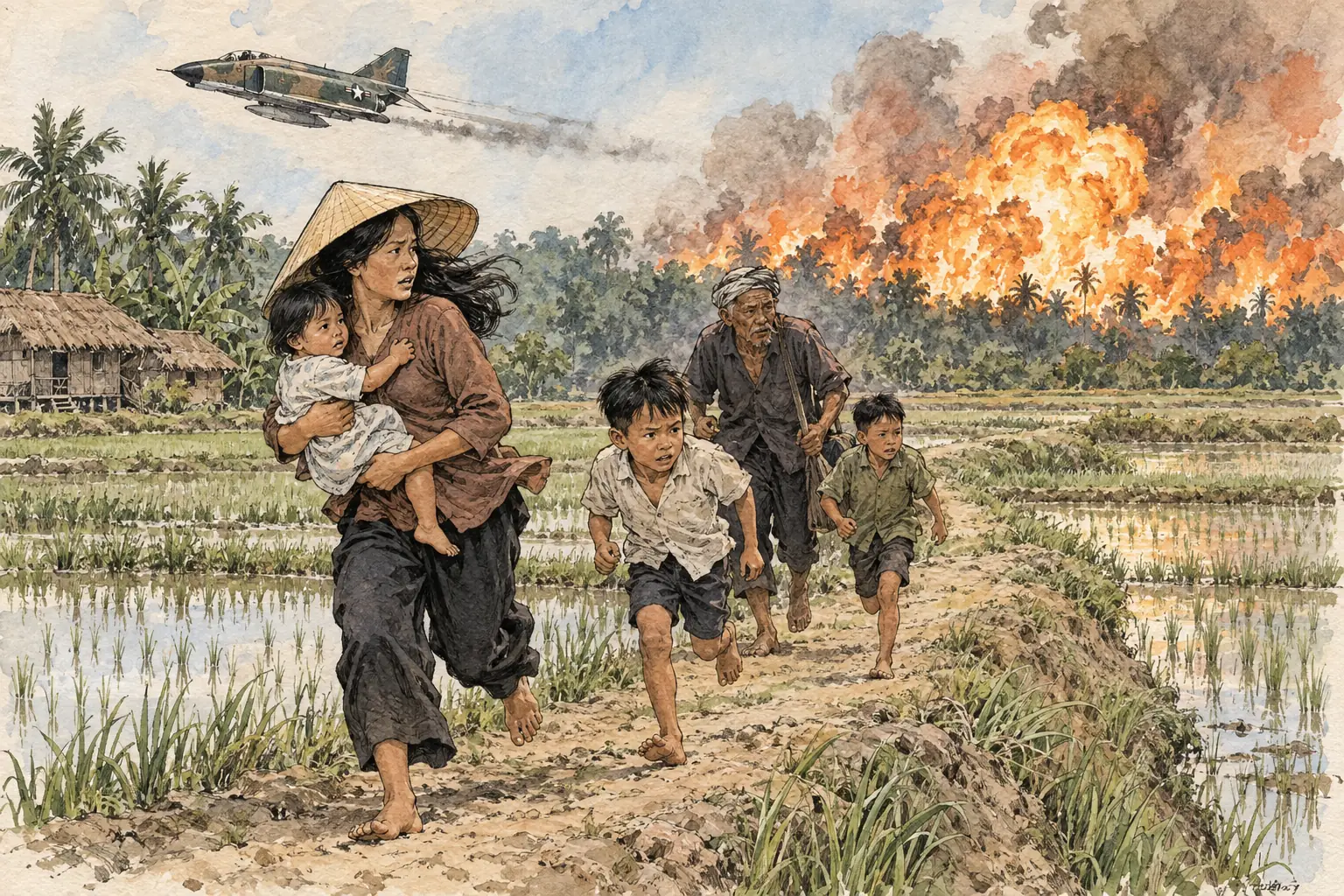
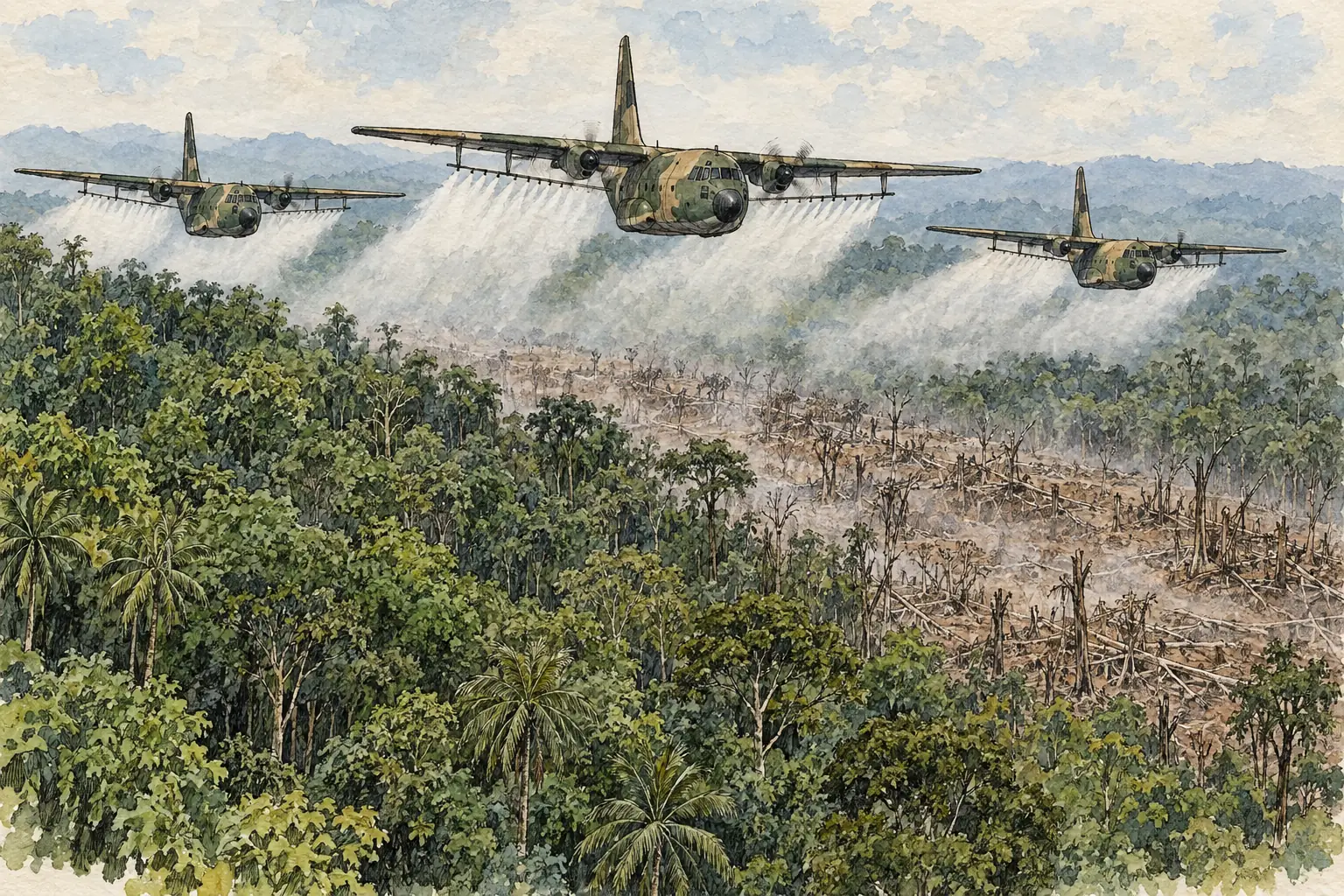
The US military deployed chemical agents extensively in Vietnam to gain tactical advantages, such as clearing vegetation and incinerating enemy positions. However, these weapons caused severe humanitarian and environmental harm, affecting both immediate operations and long-term health.
Napalm and its effects
- Intended military purposes - This incendiary mixture of petrol and gelling agents was dropped from aircraft to burn away jungle cover, expose enemy hideouts, and destroy troop concentrations.
- Humanitarian consequences - Napalm caused horrific burns and fatalities among soldiers and civilians alike, with its sticky nature making it difficult to extinguish; iconic images of injured children highlighted global outrage.
Agent Orange and its impacts
- Intended military purposes - This herbicide was sprayed to defoliate forests and crops, denying guerrillas cover and food sources, with over 70 million litres used across vast areas.
- Humanitarian consequences - Exposure led to widespread health issues, including cancers, birth defects, and skin disorders for Vietnamese civilians and US veterans; it also contaminated soil and water, causing ongoing ecological damage.
The strategic dilemma of US methods in Vietnam
US forces faced a fundamental challenge in Vietnam: adapting conventional military power to counter an elusive guerrilla enemy. While tactics like Search and Destroy and bombing aimed for overwhelming force, they often proved counterproductive in a war of attrition.
Challenges of fighting a guerrilla war
- Asymmetrical warfare - Viet Cong fighters used hit-and-run tactics, blending with civilians and terrain, making it hard for US troops to identify targets without collateral damage.
- Limitations of conventional firepower - Heavy reliance on artillery, air strikes, and chemicals provided short-term gains but failed to win 'hearts and minds', alienating the population and prolonging the conflict.
- Overall evaluation - The dilemma highlighted how superior technology could not substitute for political solutions, contributing to US withdrawal as domestic support waned and enemy resolve persisted.