2.2 - Law Enforcement & Punishment
Key facts and dates
Law enforcement in early modern England depended heavily on local communities without a professional police force, while punishments grew increasingly severe to deter crime. This period also introduced new penalties and expanded capital offenses, setting the stage for 18th-century developments.
Key facts to remember
- Town watchmen – Poorly paid or volunteer citizens who patrolled streets at night but were often ineffective.
- Constables – Local officials in villages and parishes who organised pursuits of suspects.
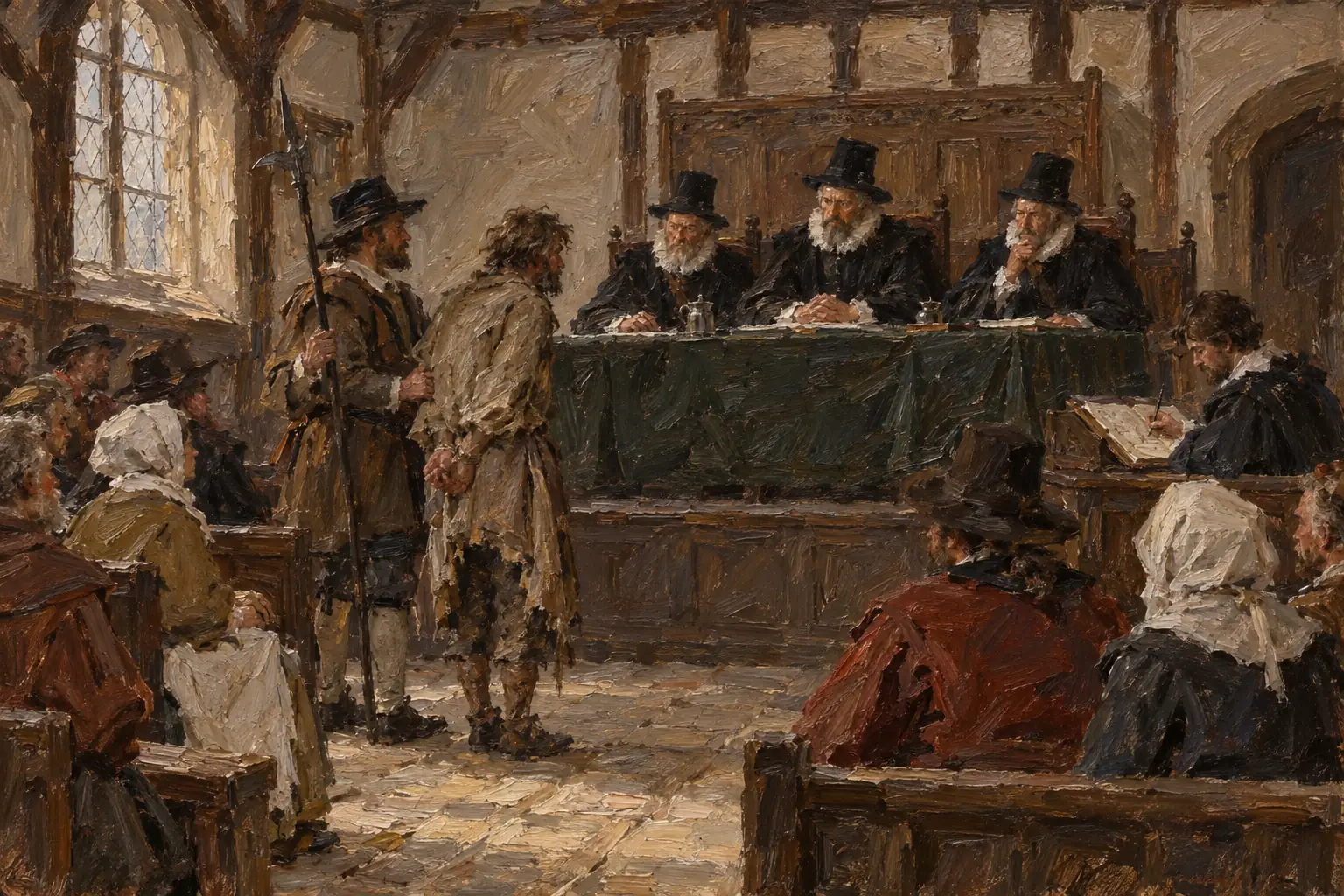
- Justices of the Peace (JPs) – Appointed landowners whose role expanded in Tudor times to include quarterly trials.
- Corporal punishments – Included whipping, branding, and public humiliation in stocks or pillories.
- Transportation – Introduced under James I in the early 17th century as an alternative to execution.
- Bloody Code beginnings – By 1688, around 50 offenses carried the death penalty, including minor crimes like poaching.
Community-based methods of law enforcement
In early modern England, maintaining order relied on local involvement rather than a dedicated police force. This system showed some early shifts but remained rooted in community participation, with varying degrees of effectiveness.
Key features of community enforcement
- Absence of professional policing - Without a formal force, communities handled crime detection and response through traditional methods, reflecting a continuation from earlier times.
- Hue and cry system - When a crime occurred, locals raised an alarm to pursue suspects collectively, emphasising shared responsibility for law and order.
- Early signs of change - While the core approach stayed community-focused, growing urban areas began to prompt minor adaptations, though these were limited and inconsistent.
Roles of local officials in maintaining order
Image 1 of 2: Town watchmen patrolled the streets at night but were often mocked as unreliable
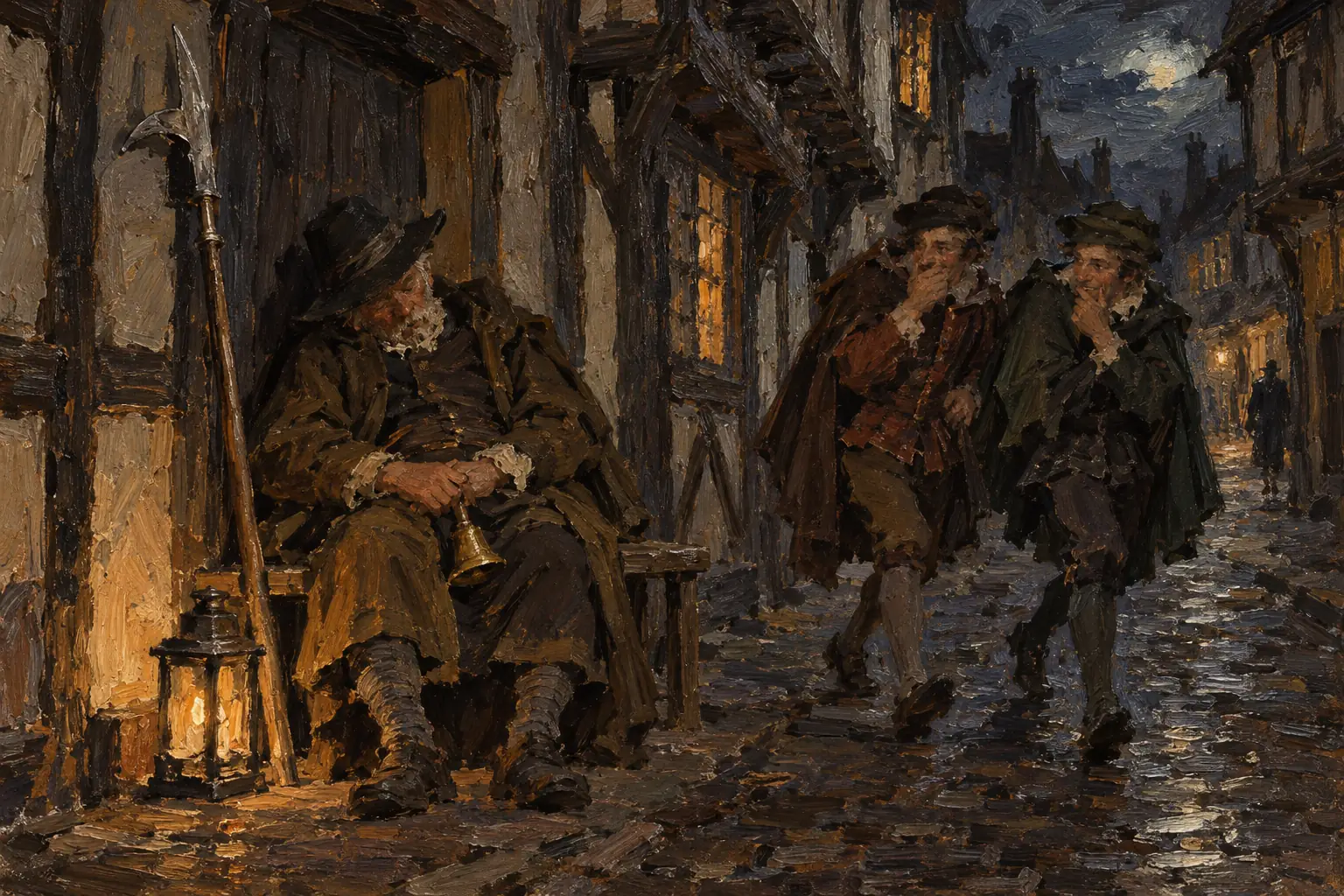
Local figures played essential parts in enforcing laws and resolving disputes. Their duties combined voluntary efforts with appointed authority, helping to bridge the gap left by the lack of organised policing.
Responsibilities of town watchmen
- Night patrols - These officials, often unpaid or low-wage volunteers from the community, walked urban streets after dark to prevent disturbances and theft.
- Challenges and perceptions - Frequently viewed as unreliable or mocked for their lack of training, watchmen struggled to command respect or deter determined criminals effectively.
Duties of constables
- Village and parish coordination - Constables, selected locally, organised the hue and cry and ensured suspects were captured and presented for trial.
- Everyday enforcement - They managed minor issues like public disorder, acting as the primary link between communities and higher authorities.
Functions of Justices of the Peace
- Appointment and expansion - Wealthy landowners were chosen to oversee local peace, with their powers growing during the Tudor era to include judging lesser offenses.
- Quarter Sessions - JPs convened four times a year to hear cases, making decisions on a range of crimes and maintaining regional stability.
Types of corporal and capital punishments
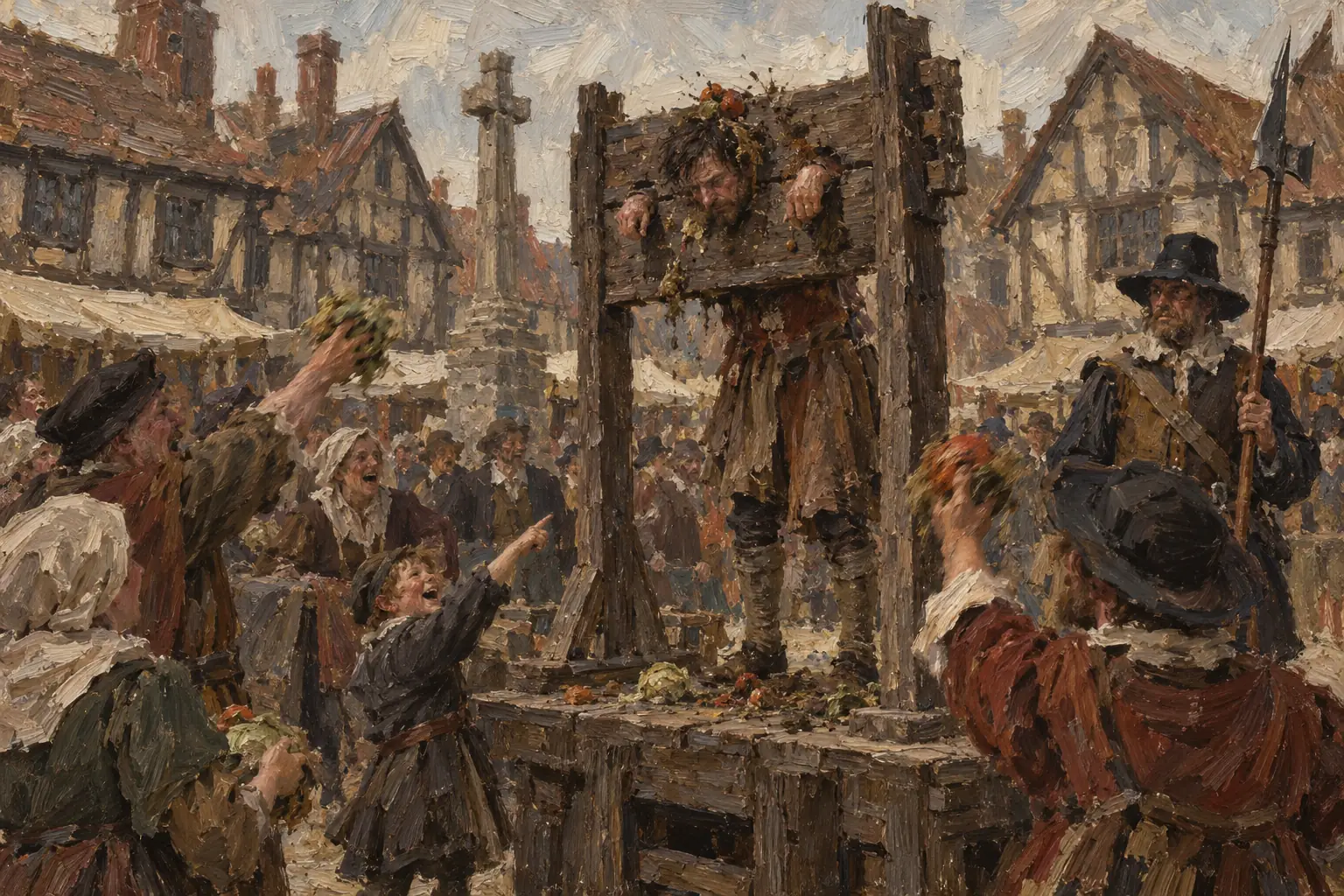
Punishments in this era focused on deterrence through severity and public spectacle. Harsh measures were common, reflecting the belief that visible suffering would prevent others from offending.
Forms of corporal punishment
- Physical penalties - Offenders faced whipping or branding, with repeated crimes sometimes leading to mutilation such as ear cropping.
- Public humiliation - Devices like the pillory or stocks exposed wrongdoers to community ridicule, combining shame with physical discomfort to reinforce social norms.
Application of capital punishment
- Increased frequency - Executions became more common for grave offenses, often carried out publicly to maximise their warning effect.
- Deterrence strategy - Authorities relied on these brutal displays, including hangings and other gruesome methods, to control crime in the absence of effective policing.
Introduction of transportation as a new punishment
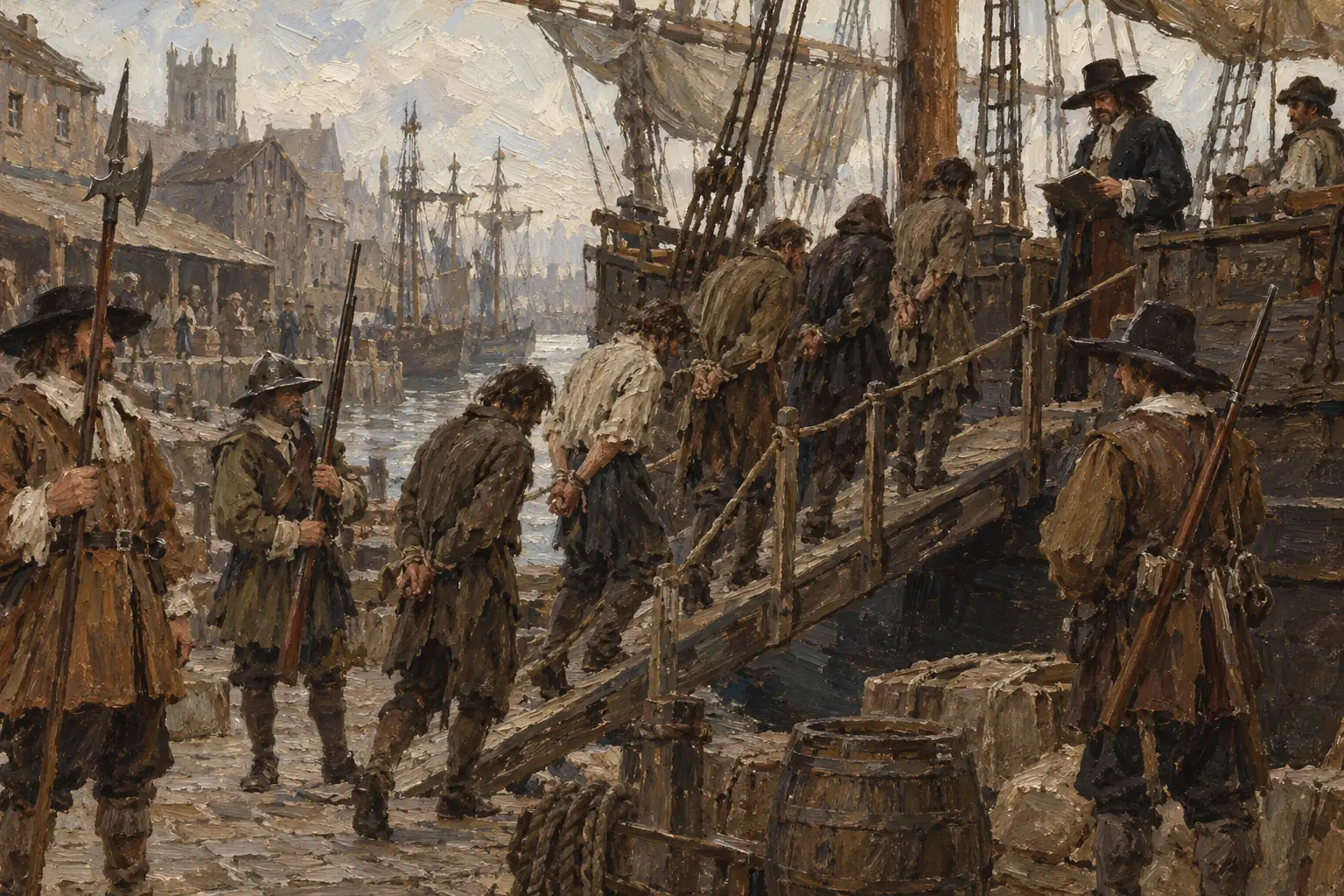
As an alternative to death sentences, transportation emerged in the 17th century, offering a way to exile convicts while addressing labour needs in distant territories.
Development and purpose of transportation
- Origins under James I - Starting in the early 1600s, this penalty involved sending offenders overseas, initially to American colonies, for terms of forced labour.
- Dual benefits - It removed criminals from society, reducing local threats, and served as a strong deterrent due to the hardships of exile and servitude.
- Growth in usage - Over time, transportation expanded as a merciful option for those who might otherwise face execution, reflecting evolving ideas about punishment.
Emergence of the Bloody Code
Towards the end of the early modern period, laws began to classify more offenses as capital, laying the groundwork for the extensive "Bloody Code" of the following century.
Expansion of capital offenses
- Increasing severity - Parliament passed statutes making even small crimes, such as stealing minor goods or hunting rabbits illegally, punishable by death.
- Scope by 1688 - Approximately 50 crimes carried the death penalty, a rise driven by the need to instil fear amid rising concerns over property and order.
Rationale behind the Bloody Code
- Response to limited policing - Without formal law enforcement, harsh penalties were seen as essential to prevent crime through intimidation.
- Foreshadowing future trends - This trend signalled a shift towards more punitive measures, with public executions central to the system of justice.