2.4 - Rivalry with Spain
Key facts and dates
By the 1570s and 1580s, England's relationship with Spain had shifted from uneasy coexistence to open rivalry, driven by competing ambitions in politics, religion, and trade. This period of escalating tensions set the stage for direct conflict, with key events highlighting the breakdown in relations.
Timeline of key events
- Late 1560s – Dutch Protestants begin rebelling against Spanish rule in the Netherlands, receiving covert English support.
- 1570 – Elizabeth I is excommunicated by the Pope, encouraging Catholic opposition and intensifying religious friction with Spain.
- 1577–1580 – Sir Francis Drake circumnavigates the globe, raiding Spanish ships and capturing treasure, which enriches England while provoking Spain.
- 1581 – Elizabeth knights Drake aboard the Golden Hind, publicly endorsing his actions and insulting Spanish interests.
- Mid-1580s – Tensions reach a peak with ongoing English piracy and aid to Dutch rebels, prompting Philip II to plan for war.
Political rivalry between England and Spain
Spain emerged as Europe's dominant power in the 16th century, boasting a vast empire under Philip II, who aimed to protect and extend his influence. In contrast, Elizabeth I's England, though less powerful, increasingly challenged this supremacy, particularly through actions in Europe and beyond.
Factors driving political rivalry
- Competing ambitions - Philip sought to maintain Spain's status as a superpower, while Elizabeth pursued policies that asserted England's independence and growth, including potential alliances that could undermine Spanish dominance.
- Concerns over alliances - Spain feared England might align with France or other adversaries, disrupting the European balance of power and threatening Philip's strategic interests.
- Territorial and imperial tensions - English ventures into areas claimed by Spain, such as parts of the Americas, directly contested Spanish control and expansion.
Religious rivalry and its implications
Religion deepened the divide between Catholic Spain and Protestant England, with Philip II viewing himself as a defender of the Catholic faith. This conflict was not solely ideological but intertwined with political strategy, influencing both nations' foreign policies.
Key aspects of religious rivalry
- Catholic vs. Protestant divide - Spain regarded England's Protestantism as heresy, and Philip, previously married to the Catholic Mary I, felt a duty to restore Catholicism in England.
- Impact of excommunication - The 1570 papal bull excommunicating Elizabeth encouraged English Catholics to oppose her rule, justifying Spanish intervention in Philip's eyes.
- Strategic tolerance and shifts - Initially, Philip tolerated Elizabeth's regime to counter greater threats like France, but growing religious pressures eventually pushed him towards confrontation.
Commercial and maritime rivalry, including piracy
Image 1 of 2: On his voyage round the world Drake raided Spanish ships for treasure
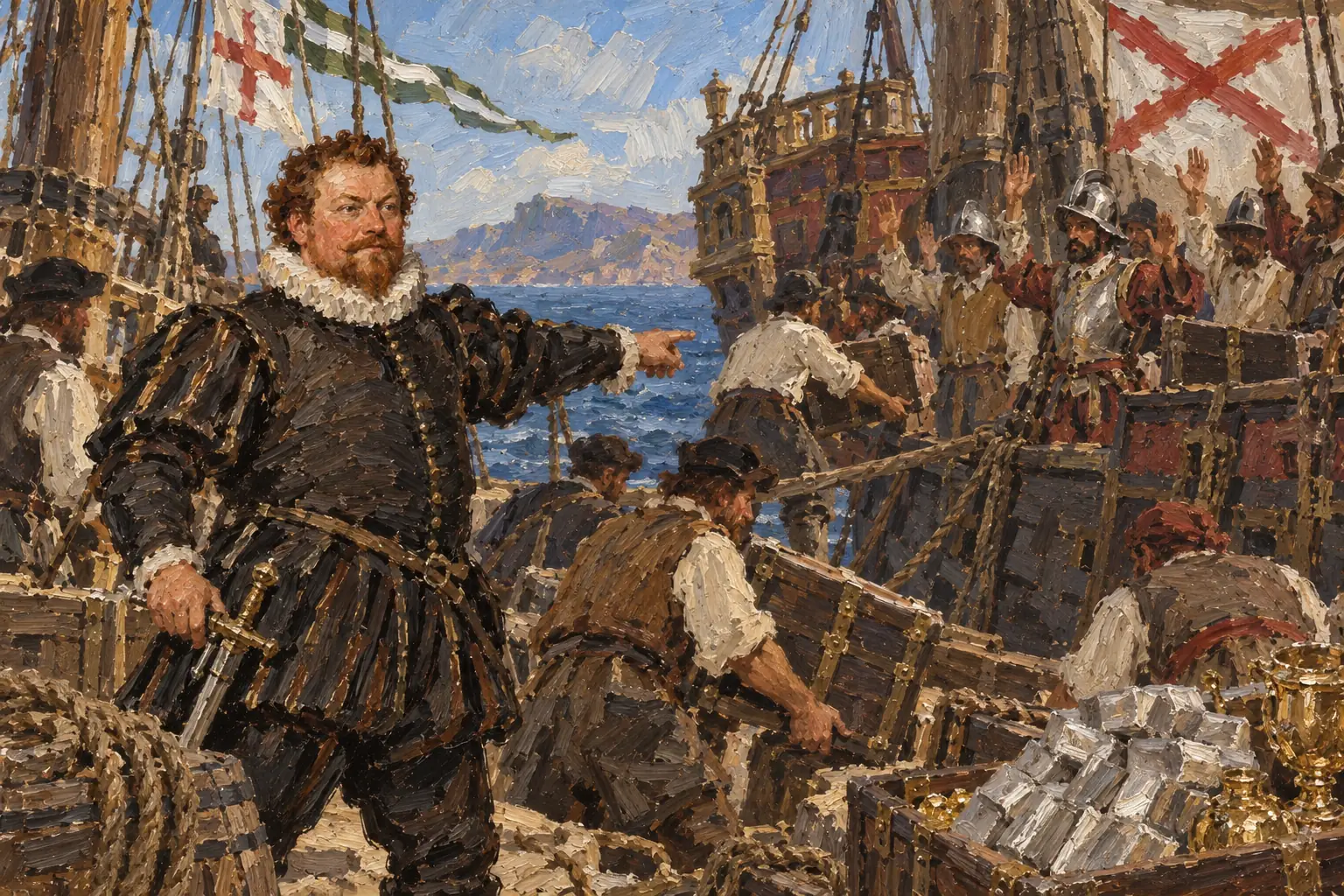
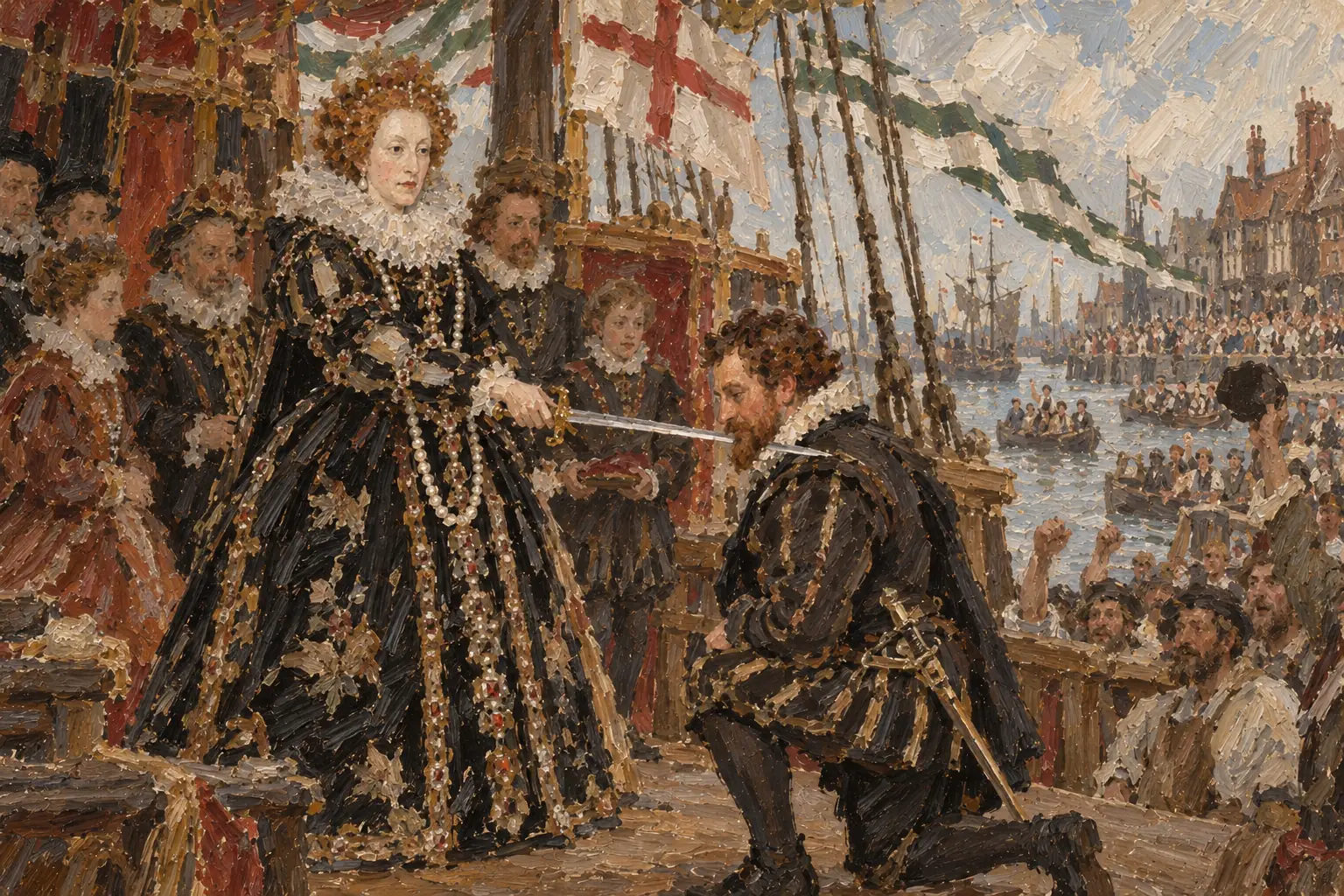
Economic competition intensified as England's traditional trade routes faltered, prompting merchants and sailors to seek opportunities in Spanish-dominated areas. This led to direct clashes over wealth from the New World, often manifesting as sanctioned raids on Spanish assets.
Elements of commercial and maritime rivalry
- Pursuit of New World wealth - Spain's control over American resources created envy, with English adventurers targeting treasure fleets and engaging in unauthorised trade with Spanish colonies.
- Role of English privateers - Figures like Sir Francis Drake conducted raids on Spanish ships and ports, capturing valuables; Elizabeth covertly supported these through letters of marque, treating them as legitimate privateering rather than piracy.
- Diplomatic fallout - Spain protested these attacks as theft, but Elizabeth's minimal response, including knighting Drake in 1581 after his global voyage, escalated grievances and highlighted England's challenge to Spanish economic supremacy.
English support for the Dutch Revolt
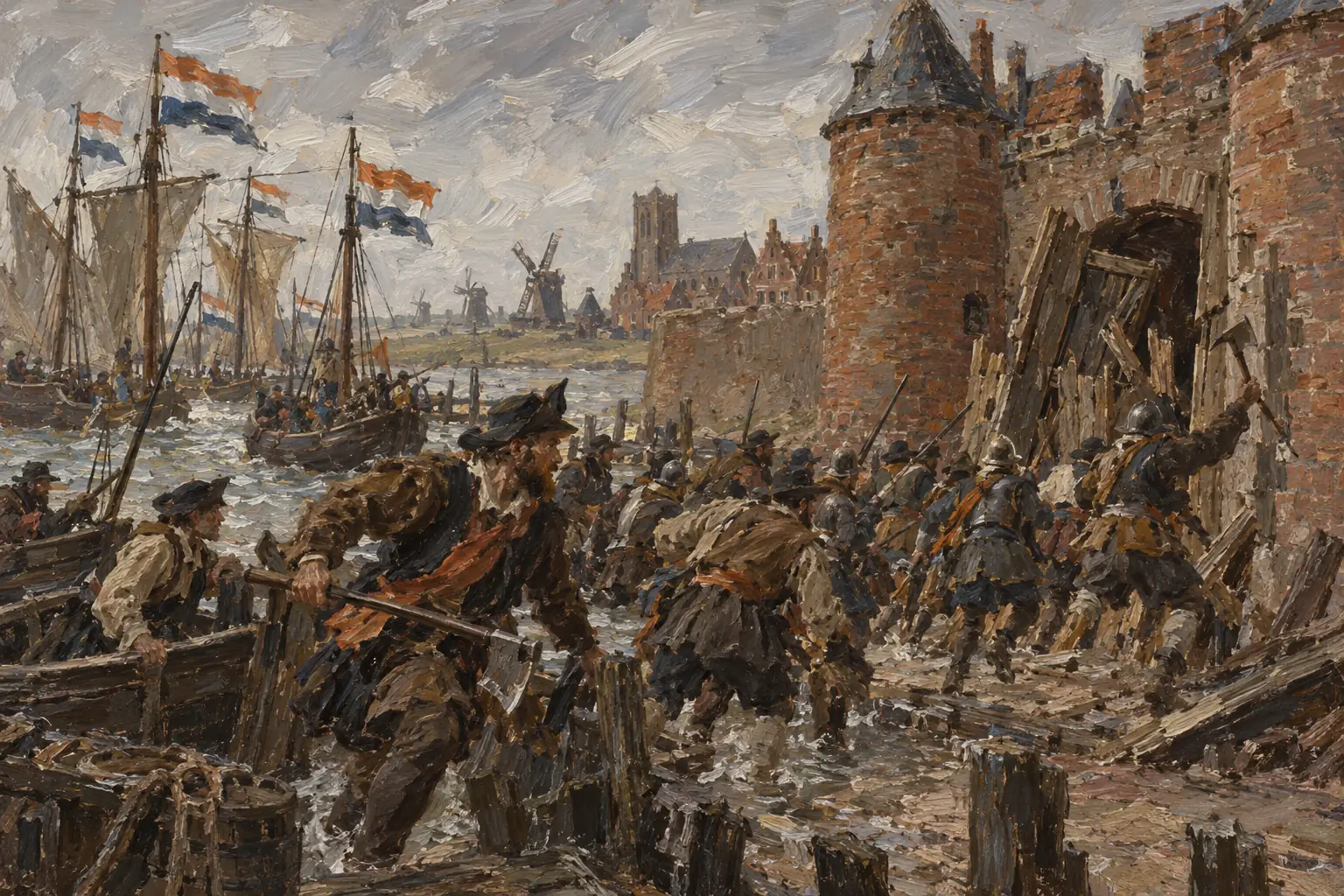
The Netherlands, under Spanish control, became a flashpoint as Dutch Protestants rebelled against Philip II's oppressive rule. England's involvement stemmed from shared religious beliefs and economic ties, further straining relations with Spain.
Forms of English assistance to the Dutch
- Unofficial aid in the 1570s - Elizabeth provided financial support, weapons, and safe havens for rebel ships, aiding the Dutch without formal commitment.
- Religious and economic motivations - Solidarity with Protestant rebels aligned with England's faith, while protecting trade interests in the region prevented Spanish dominance from harming English commerce.
- Spanish reactions - Philip viewed this interference as a direct threat to his authority, contributing to the broader pattern of proxy conflicts that heightened bilateral tensions.
Escalation of tensions by the mid-1580s
By the mid-1580s, accumulated rivalries had created a state of undeclared hostility between England and Spain, marked by indirect confrontations and preparations for potential war. This period foreshadowed open conflict as both sides positioned themselves strategically.
Factors leading to heightened conflict
- Proxy and small-scale clashes - Ongoing raids at sea, colonial incursions, and support for Dutch rebels turned rivalry into a 'cold war', with frequent but limited engagements.
- Philip II's response - Frustrated by English meddling and Protestant defiance, the Spanish king began organising military plans to counter Elizabeth's actions.
- England's strategic positioning - Elizabeth strengthened England's defences and continued aggressive maritime policies, aiming to resist Spanish aggression while advancing national interests on the global stage.