4.7 - Antisemitism & Persecution, 1933–39
Key facts and dates
The Nazi regime's antisemitic policies escalated systematically from 1933 to 1939, moving from initial discrimination to widespread violence and exclusion. This progression aimed to isolate and expel Jewish people from German society, culminating in state-sponsored terror on the brink of the Second World War.
Timeline of key events
- April 1933 – Nationwide boycott of Jewish businesses, marking the first organised anti-Jewish action.
- April 1933 – Law excludes Jews from civil service positions and professional roles.
- September 1935 – Nuremberg Laws strip Jews of citizenship and prohibit marriages with non-Jews.
- 1936-38 – Aryanisation intensifies, forcing Jews to sell businesses to non-Jews at low prices.
- 9-10 November 1938 – Kristallnacht sees state-orchestrated destruction of synagogues and shops, with mass arrests.
- Late 1938-39 – Policies harden, including fines on Jews and increased emigration pressures.
Early measures of persecution in 1933
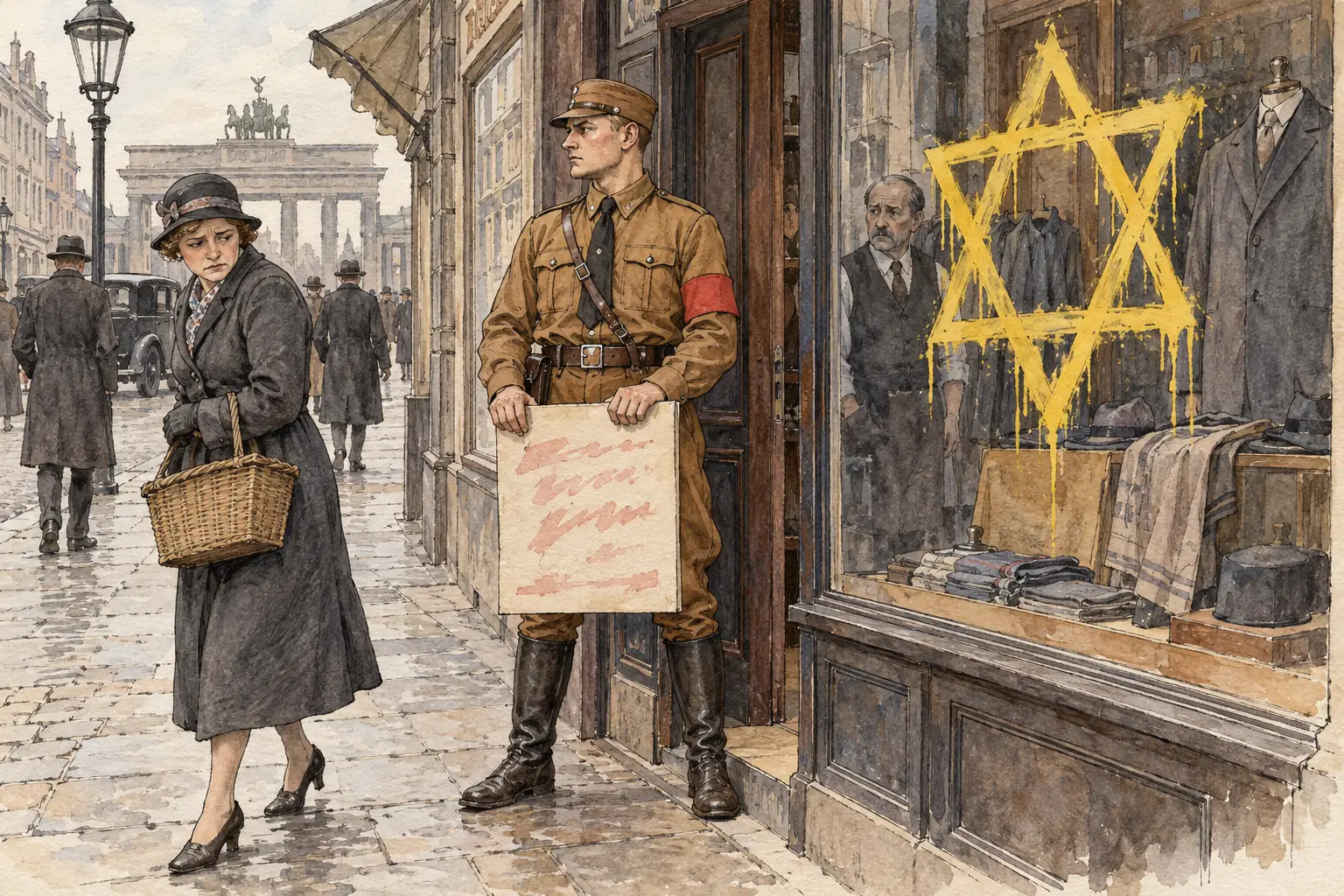
Upon gaining power in 1933, the Nazi regime quickly implemented antisemitic policies to marginalise Jewish people in Germany. These initial steps focused on economic boycotts and professional exclusions, setting the stage for broader discrimination.
Key actions in 1933
- Boycott of Jewish businesses - In April, the regime organised a one-day national boycott, where SA members painted anti-Jewish slogans on shops and intimidated customers to prevent trade.
- Professional bans - Laws barred Jews from roles in medicine, law, and education, limiting their ability to work in these fields.
- Exclusion from civil service - The Law for the Restoration of the Professional Civil Service removed Jews from government jobs, affecting thousands and signalling official state antisemitism.
The Nuremberg Laws of 1935
The Nuremberg Laws represented a major escalation in legal discrimination against Jews, formalising their status as second-class citizens. Announced at the annual Nazi Party rally in September 1935, these laws institutionalised racial theories and further isolated the Jewish population.
Provisions of the Nuremberg Laws
- Loss of citizenship - The Reich Citizenship Law redefined citizenship based on "German blood", excluding Jews and denying them political rights such as voting.
- Ban on mixed marriages - The Law for the Protection of German Blood and Honour prohibited marriages or sexual relations between Jews and non-Jews, aiming to preserve supposed racial purity.
- Additional restrictions - Supplementary decrees extended bans to include employment in certain sectors and required Jews to adopt identifying names, deepening social exclusion.
Intensified economic Aryanisation and street violence
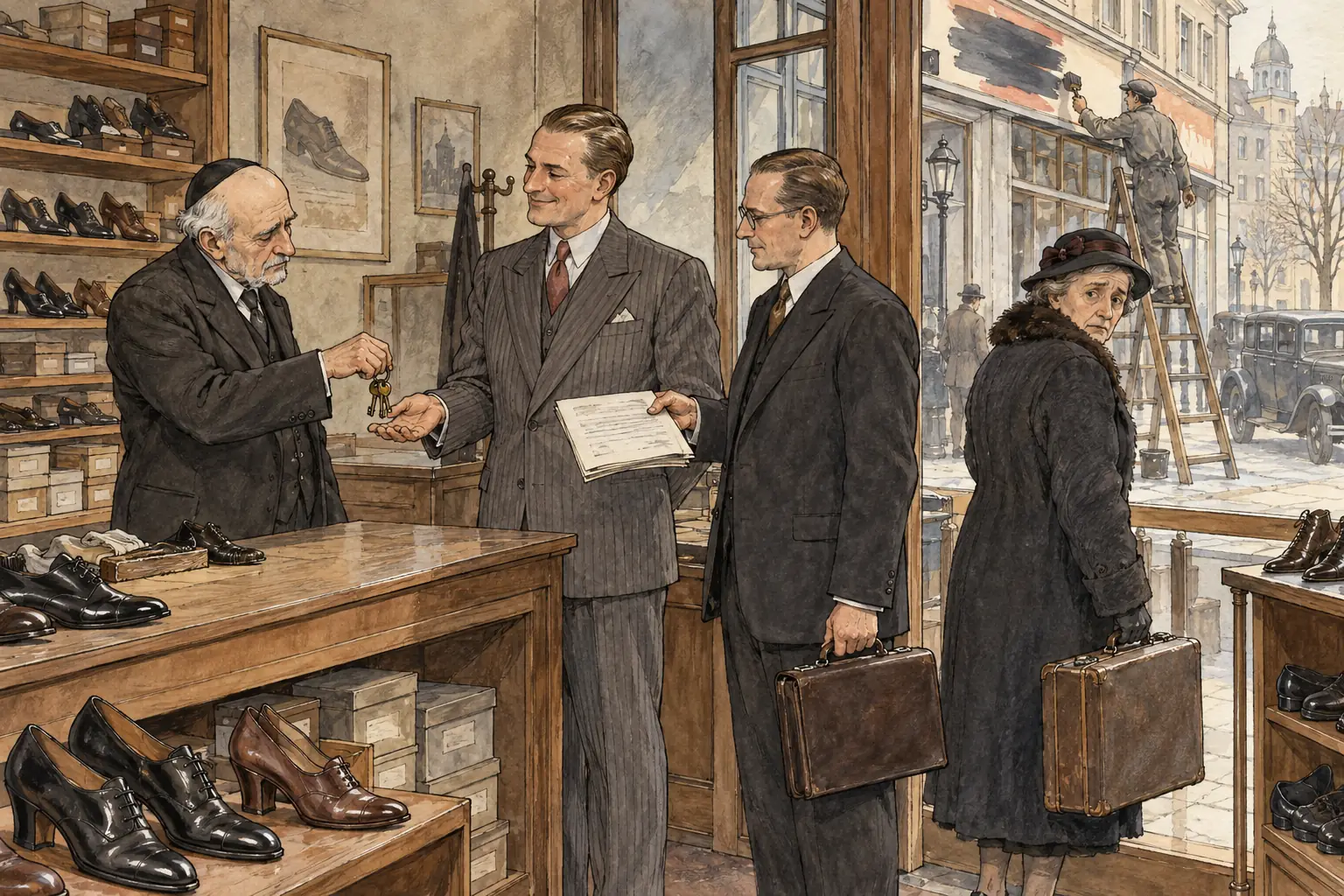
From the mid-1930s, Nazi policies shifted towards aggressive economic dispossession and sporadic violence. Aryanisation involved the forced transfer of Jewish-owned businesses, while increasing street attacks created an atmosphere of fear.
Aspects of Aryanisation and violence
- Economic Aryanisation - Jews were pressured to sell their businesses to non-Jews at undervalued prices, often through boycotts or legal coercion, resulting in the loss of livelihoods for many.
- Street violence - Incidents of harassment, beatings, and vandalism by Nazi supporters became more common, particularly in urban areas, eroding Jewish safety and community ties.
- Government encouragement - These measures were supported by propaganda that portrayed Jews as economic threats, accelerating their marginalisation within society.
Kristallnacht in 1938
Image 1 of 2: On 9-10 November 1938 synagogues were burned and Jewish shops wrecked across Germany and Austria
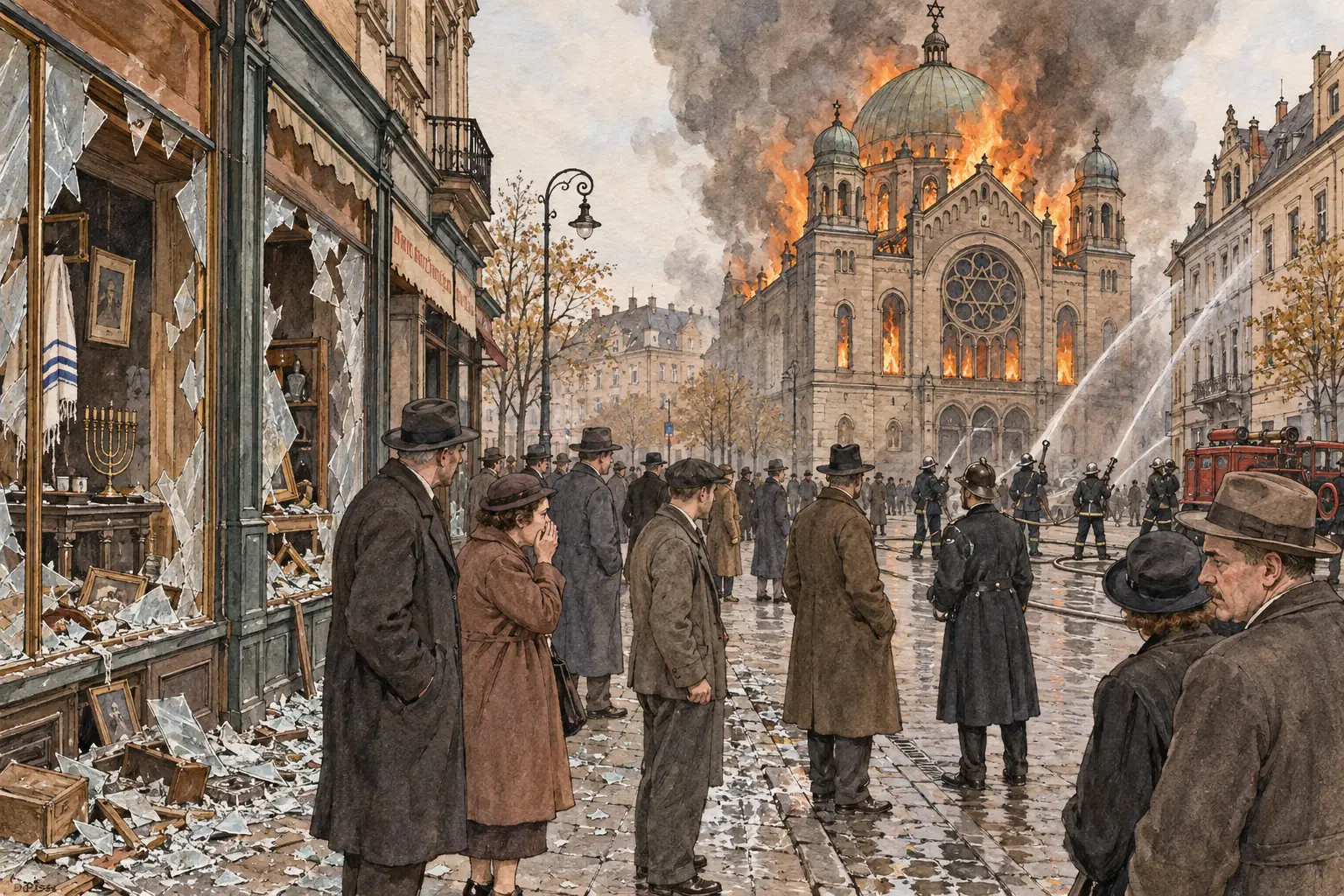
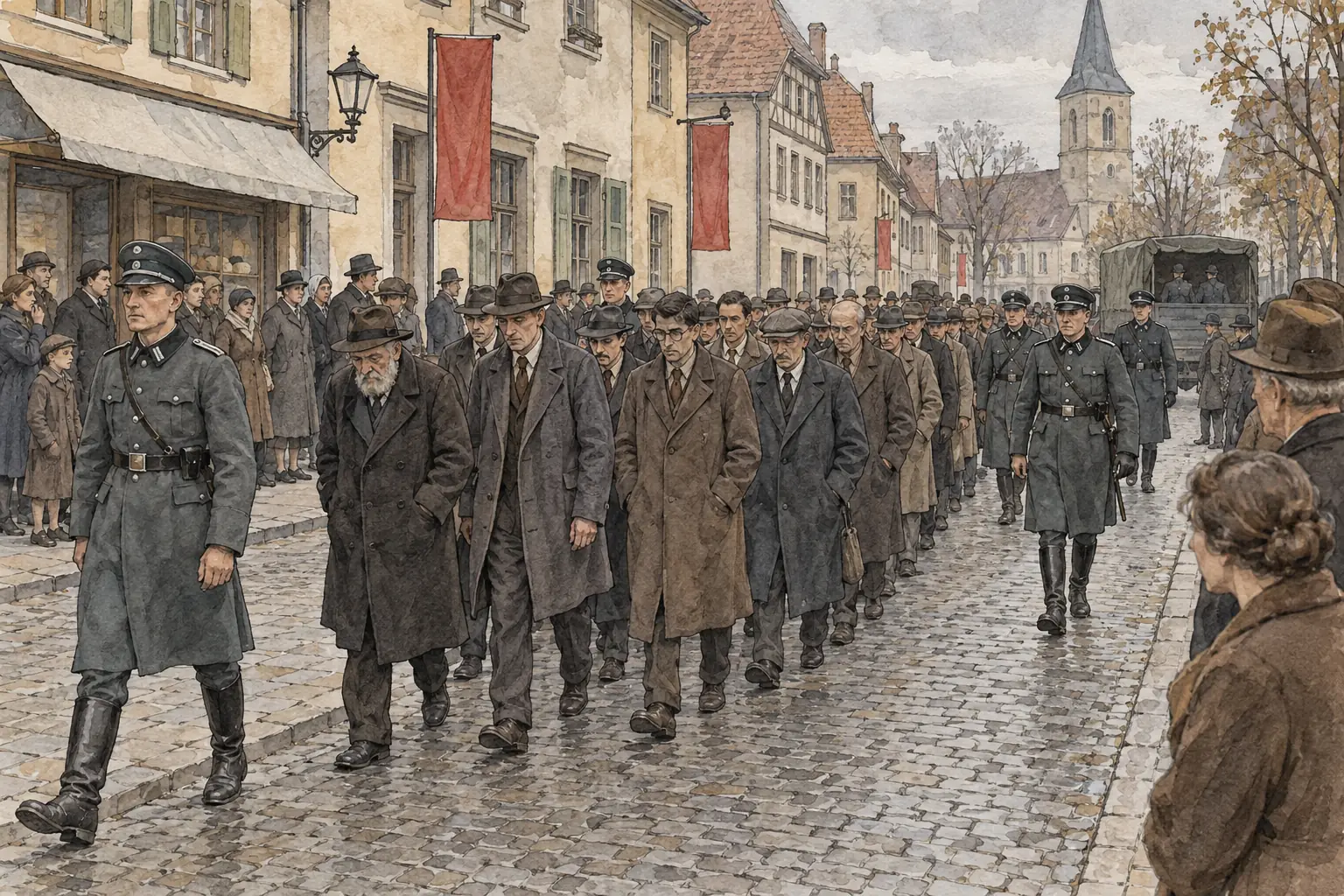
Kristallnacht, or the Night of Broken Glass, marked a turning point with coordinated, state-sponsored violence against Jews on 9-10 November 1938. Triggered by the assassination of a German diplomat by a Jewish refugee, it involved widespread destruction and arrests.
Events and consequences of Kristallnacht
- State-orchestrated attacks - Nazi forces and civilians destroyed over 1,000 synagogues, vandalised thousands of Jewish shops, and looted homes across Germany and Austria.
- Mass arrests - Around 30,000 Jewish men were detained and sent to concentration camps, many released only after agreeing to emigrate.
- Fines and repercussions - The regime imposed a massive fine on the Jewish community for the damages, further stripping them of assets and pushing for expulsion.
Aims, public reactions, and hardening of policy
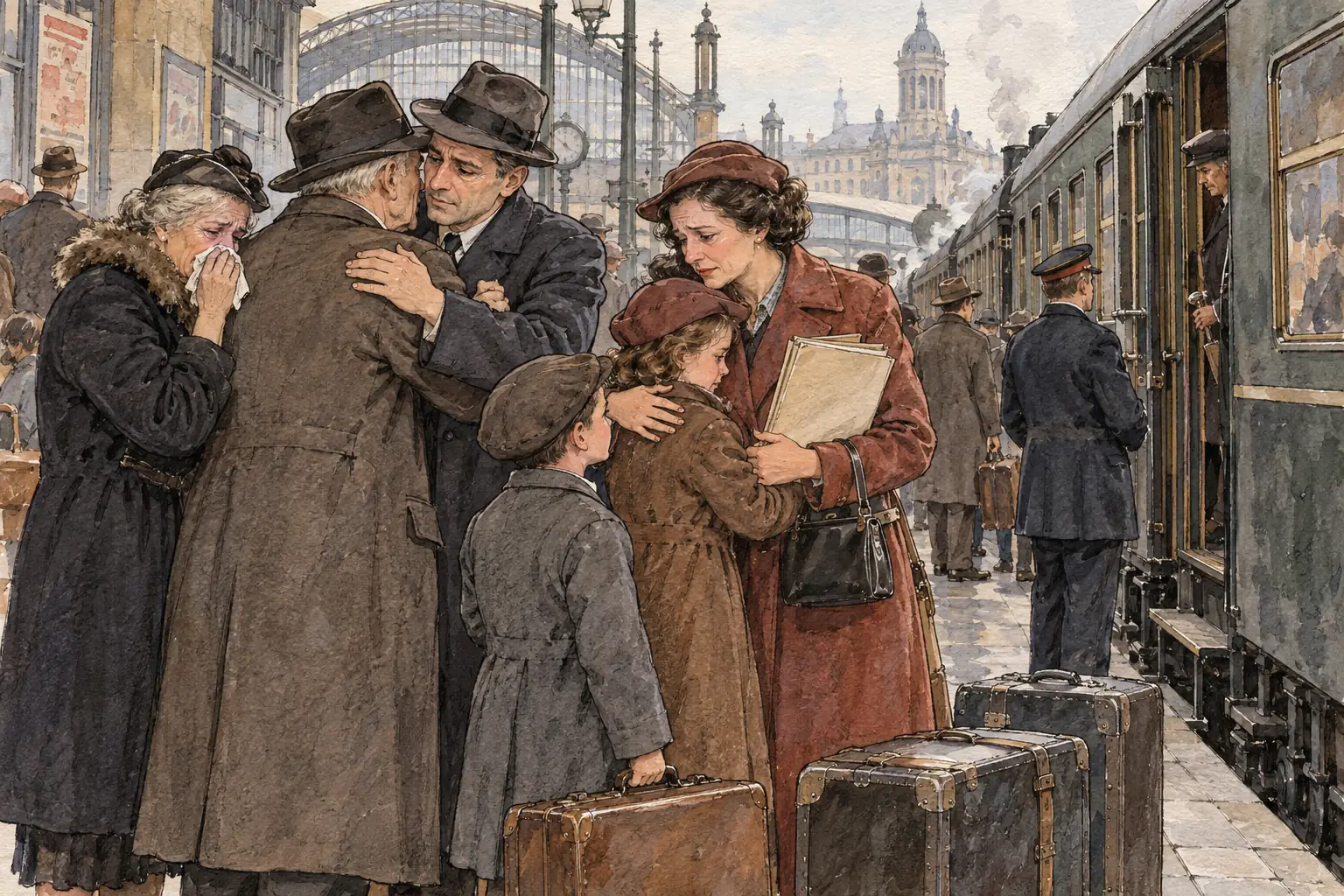
The overarching goals of Nazi antisemitic policies were to isolate Jews from society and encourage their emigration. Public responses varied, and by 1939, measures had intensified in preparation for war.
Aims and public reactions
- Isolation and expulsion - Policies sought to segregate Jews socially and economically, promoting voluntary departure; by 1939, about half of Germany's Jewish population had fled.
- Public reactions - Many Germans were indifferent or supportive due to propaganda, though some expressed unease over extreme violence like Kristallnacht; international outrage grew, but domestic compliance remained high.
Hardening of policy
- Pre-war escalation - As war approached, restrictions tightened, including curfews, property seizures, and forced labour, signalling a shift towards even more radical measures.