3.7 - Nixon’s Vietnam Strategy
Key facts and dates
Richard Nixon's presidency marked a shift in U.S. strategy during the Vietnam War, emphasising the reduction of American involvement while pressuring North Vietnam to negotiate. This period involved military escalations and diplomatic efforts, ultimately leading to a fragile peace agreement amid ongoing challenges.
Timeline of key events
- 1969 – Nixon announces Vietnamisation policy, beginning the withdrawal of U.S. troops.
- 1970 – U.S. and South Vietnamese forces launch incursion into Cambodia to disrupt North Vietnamese supply lines.
- 1971 – South Vietnamese-led offensive into Laos (Operation Lam Son 719) aims to cut Ho Chi Minh Trail but ends in retreat.
- 1972 – North Vietnam launches Easter Offensive; U.S. responds with Operation Linebacker, intensifying bombing of the North.
- 1973 – Paris Peace Accords signed, enabling U.S. troop withdrawal while leaving North Vietnamese forces in the South.
Definition and limitations of Vietnamisation
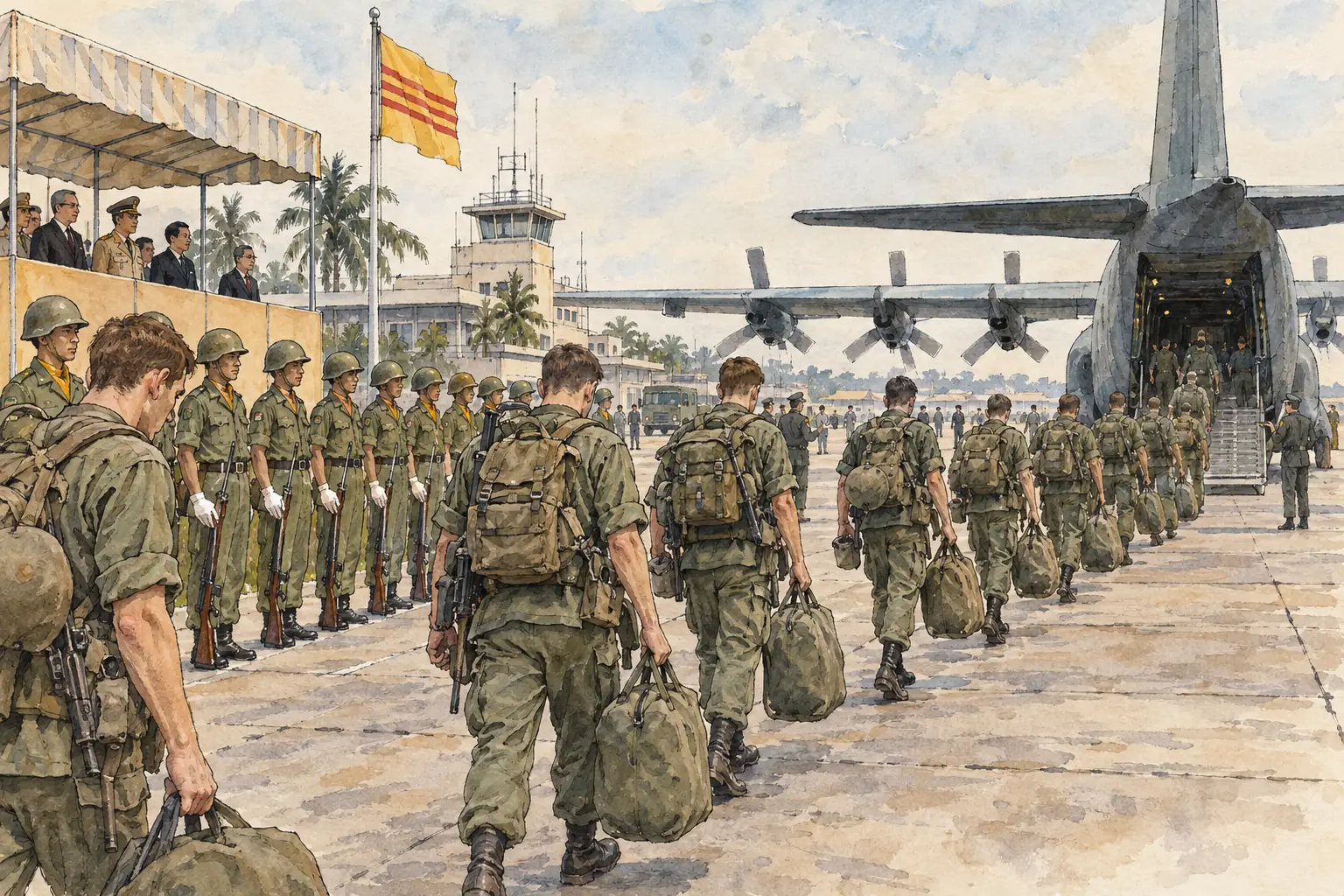
Vietnamisation was a core element of President Richard Nixon's approach to the Vietnam War, introduced in 1969. It involved strengthening the Army of the Republic of Vietnam (ARVN) to handle combat responsibilities independently, allowing for a phased withdrawal of American ground forces. This policy sought to shift the burden of fighting from U.S. troops to South Vietnamese allies, reducing domestic opposition to the war while maintaining support for South Vietnam.
Key features of Vietnamisation
- Building ARVN capabilities - The U.S. provided extensive training, equipment, and funding to expand and modernise the ARVN, aiming to create a self-sufficient fighting force capable of defending against North Vietnamese aggression.
- U.S. troop reductions - American soldiers were gradually pulled out, with numbers dropping from over 500,000 in 1969 to around 25,000 by late 1972, focusing U.S. involvement on advisory roles and air support.
Reasons for limited success
- Training and leadership issues - ARVN troops often lacked effective preparation and experienced officers, leading to poor performance in independent operations.
- Corruption within ranks - Widespread graft and low morale undermined discipline and resource allocation, weakening overall effectiveness.
- Dependence on U.S. air power - The ARVN continued to rely heavily on American bombing and logistical aid, limiting true self-reliance and exposing vulnerabilities when support was reduced.
The Nixon Doctrine and its implications
The Nixon Doctrine, articulated in a 1969 speech, represented a broader shift in U.S. foreign policy during the Cold War era. It emphasised that allied nations should take primary responsibility for their own defence, with the U.S. providing assistance but avoiding direct military commitments. This approach was designed to prevent overextension of American resources while countering communist expansion.
Core principles of the Nixon Doctrine
- Burden-sharing with allies - Countries like South Vietnam were expected to bear the main costs of their security, reducing the need for large-scale U.S. interventions.
- U.S. support role - America would offer economic aid, military supplies, and nuclear deterrence, but ground combat would fall to local forces.
- Global application - The doctrine influenced U.S. relations beyond Vietnam, encouraging self-reliance in regions such as Asia and the Middle East to conserve American strength amid domestic war fatigue.
Implications for the Vietnam War
- Reducing U.S. casualties - By promoting allied independence, the doctrine helped lower American deaths and addressed anti-war sentiment at home.
- Strategic flexibility - It allowed Nixon to pursue negotiations with North Vietnam while maintaining pressure through selective escalations.
- Long-term challenges - The doctrine highlighted limitations in ally capabilities, as seen in South Vietnam's struggles, raising questions about its effectiveness in unstable regions.
Widening the war through incursions and bombings
Image 1 of 2: In Cambodia in May 1970 US and South Vietnamese troops captured huge North Vietnamese supply dumps
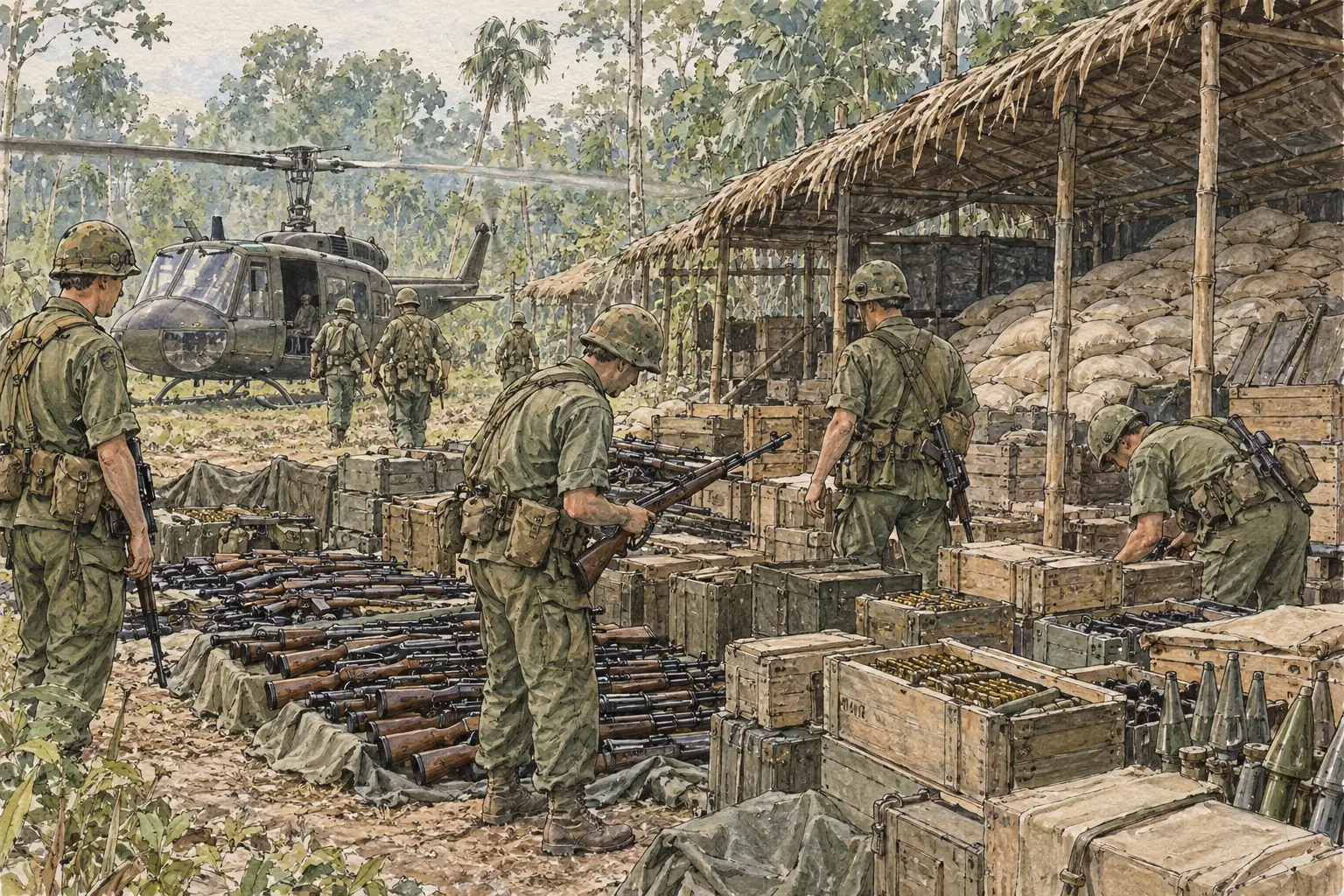
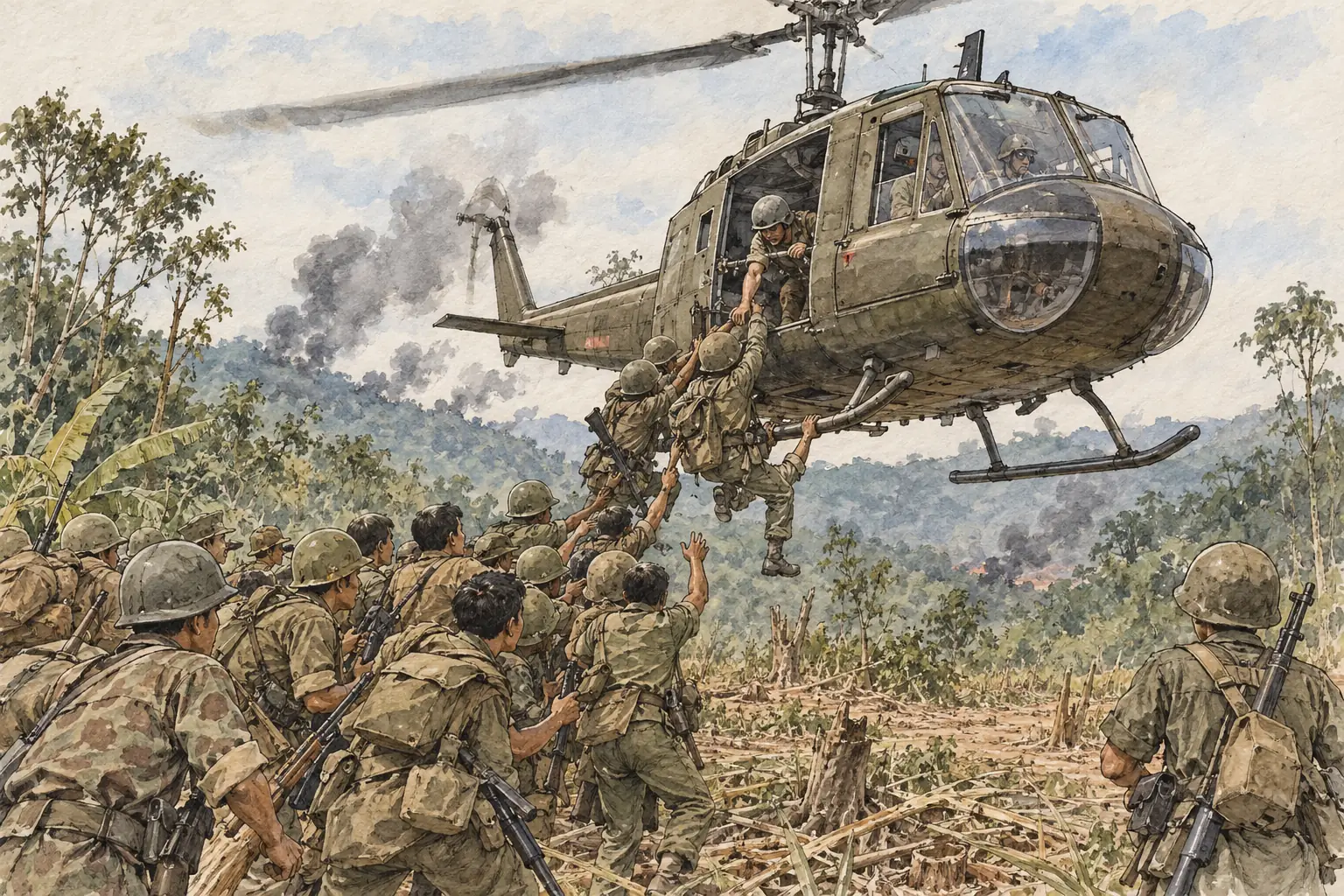
To force North Vietnam to the negotiating table, Nixon expanded military operations beyond Vietnam's borders while pursuing diplomacy. These actions targeted supply routes and sanctuaries used by North Vietnamese forces, aiming to weaken their position without re-escalating U.S. ground involvement. Key operations included ground incursions and aerial campaigns, often conducted in coordination with ARVN troops.
Major military actions
- 1970 incursion into Cambodia - U.S. and South Vietnamese forces invaded eastern Cambodia to destroy North Vietnamese bases and disrupt the Ho Chi Minh Trail, a vital supply network. Although some supplies were captured, the operation sparked domestic protests in the U.S. and destabilised Cambodia, contributing to the rise of the Khmer Rouge.
- 1971 ARVN offensive into Laos (Lam Son 719) - South Vietnamese troops, supported by U.S. air and artillery, advanced into Laos to sever supply lines. The operation failed due to strong North Vietnamese resistance, resulting in heavy ARVN losses and highlighting weaknesses in Vietnamisation.
- 1972 renewed bombing of North Vietnam (Operation Linebacker) - In response to the North's Easter Offensive, the U.S. launched intense airstrikes on military targets, ports, and infrastructure. This campaign, using advanced precision bombing, inflicted significant damage and pressured Hanoi into resuming peace talks.
Aims for 'peace with honour' and settlement
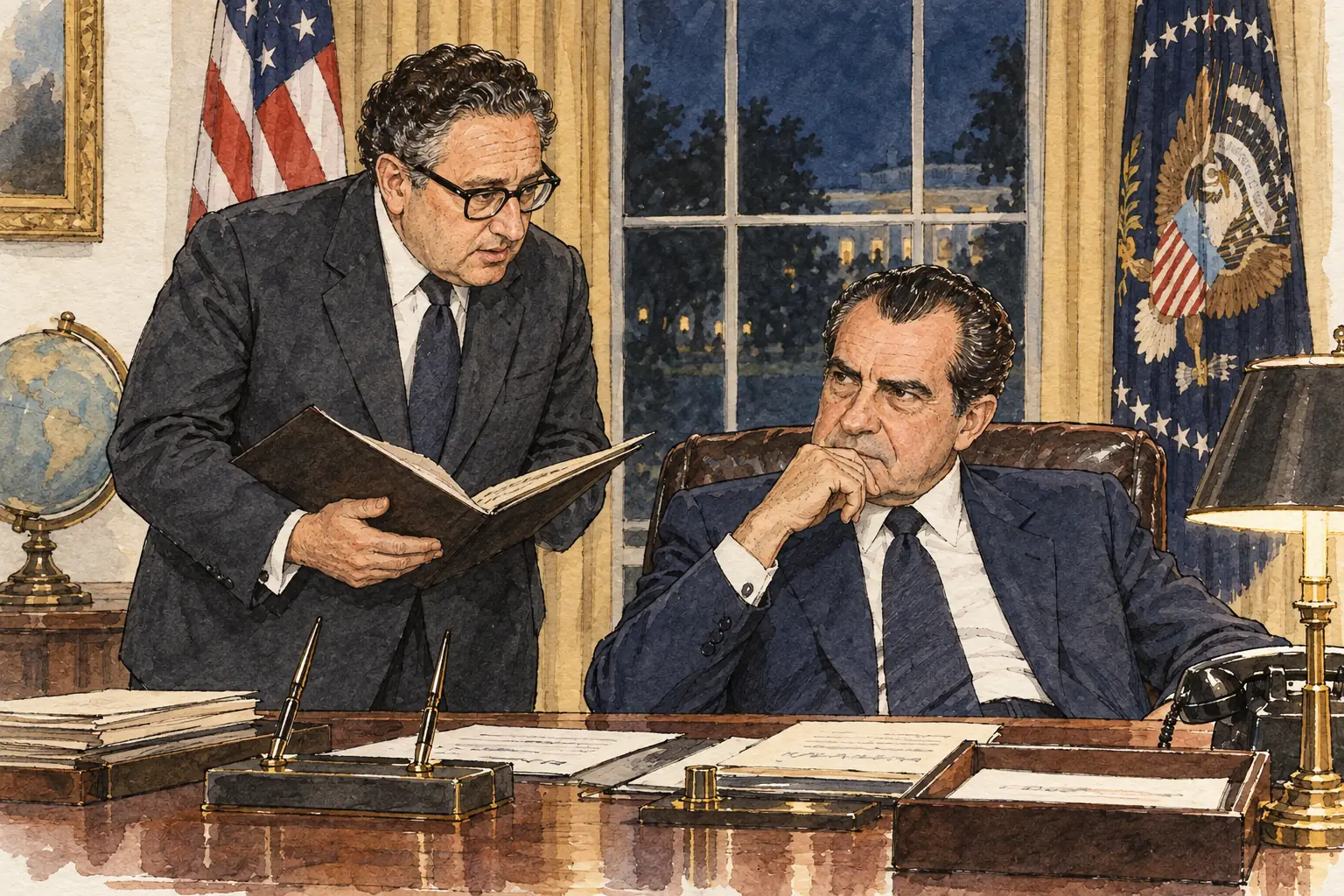
Nixon's overarching goal was to achieve 'peace with honour', meaning a withdrawal that preserved U.S. credibility and South Vietnam's independence without appearing as a defeat. This involved balancing military pressure, diplomatic negotiations, and domestic politics to secure a favourable agreement. The strategy culminated in the 1973 Paris Peace Accords, though it left unresolved issues that contributed to South Vietnam's eventual fall.
Strategies to achieve 'peace with honour'
- Combining force and diplomacy - Escalations like the Cambodian incursion and Linebacker bombings were timed to strengthen the U.S. position in talks, demonstrating resolve while offering concessions such as troop withdrawals.
- Negotiating key terms - Secret discussions led by Henry Kissinger focused on ceasefires, prisoner exchanges, and political arrangements, allowing North Vietnamese troops to remain in the South temporarily.
- Domestic considerations - By reducing U.S. involvement, Nixon aimed to satisfy anti-war voters and secure his 1972 re-election, framing the settlement as an honourable exit.
Assessment of outcomes
- Short-term gains - The accords enabled the full withdrawal of U.S. forces and the return of prisoners, temporarily halting major fighting.
- Long-term limitations - The agreement failed to ensure lasting peace, as North Vietnam violated terms and overran the South in 1975, undermining the 'honour' Nixon sought.
- Broader impact - These measures shaped U.S. foreign policy by emphasising negotiation over escalation, but they also exposed the challenges of exiting prolonged conflicts.