1.2 - Civil Rights Organisations Before 1954
Key facts and dates
Before 1954, civil rights organisations like the NAACP and CORE laid important groundwork for challenging racial segregation in the United States through legal battles and direct action. These groups built cross-racial alliances and used various methods to combat discrimination, setting the stage for later milestones in the movement.
Timeline of key events
- 1909 – Founding of the National Association for the Advancement of Colored People (NAACP) to fight racial injustice through legal means.
- 1942 – Establishment of the Congress of Racial Equality (CORE), focusing on nonviolent protest methods.
- 1946 – Supreme Court ruling in Morgan v. Virginia declares segregation on interstate buses unconstitutional, influencing future actions.
- 1947 – Journey of Reconciliation organised by CORE tests compliance with the Morgan ruling through integrated bus rides.
The NAACP's legal strategy against segregation
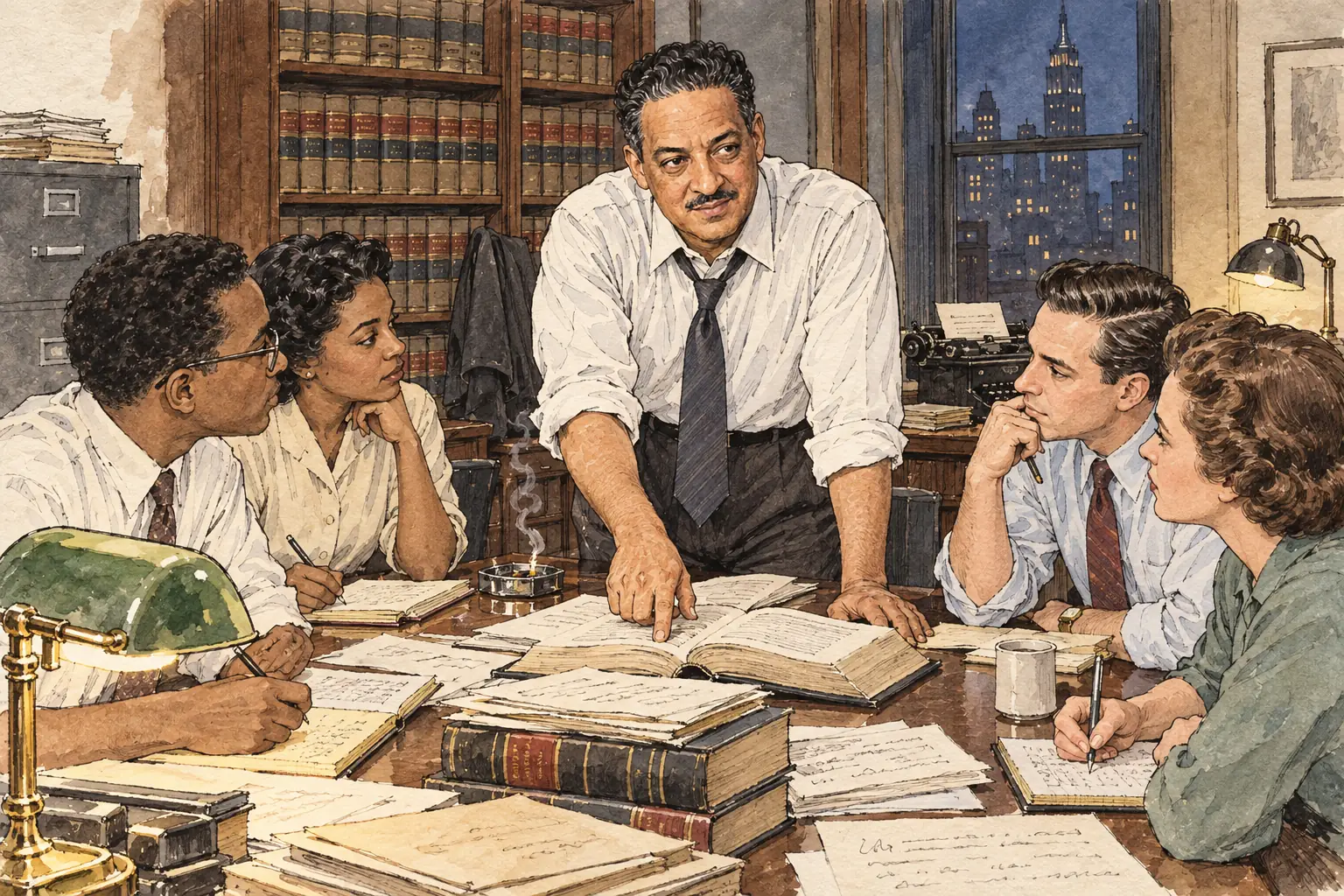
The National Association for the Advancement of Colored People (NAACP), established in 1909, adopted a systematic approach to erode racial segregation laws in the United States. This strategy centred on using the courts to set legal precedents that would gradually undermine discriminatory practices, particularly in education and public facilities.
Core elements of the NAACP's approach
- Building precedents - The organisation targeted specific cases to create rulings that could be applied more broadly, aiming to prove that segregation violated the US Constitution's guarantee of equal protection.
- Focus on education - By challenging inequalities in schooling, such as underfunded facilities for Black students, the NAACP sought to expose the flaws in the "separate but equal" doctrine established by the 1896 Plessy v. Ferguson decision.
- Broader discriminatory practices - Legal efforts extended to unfair voting restrictions, employment barriers, and housing policies, using evidence of systemic inequality to push for change.
Key figures and test cases in the NAACP
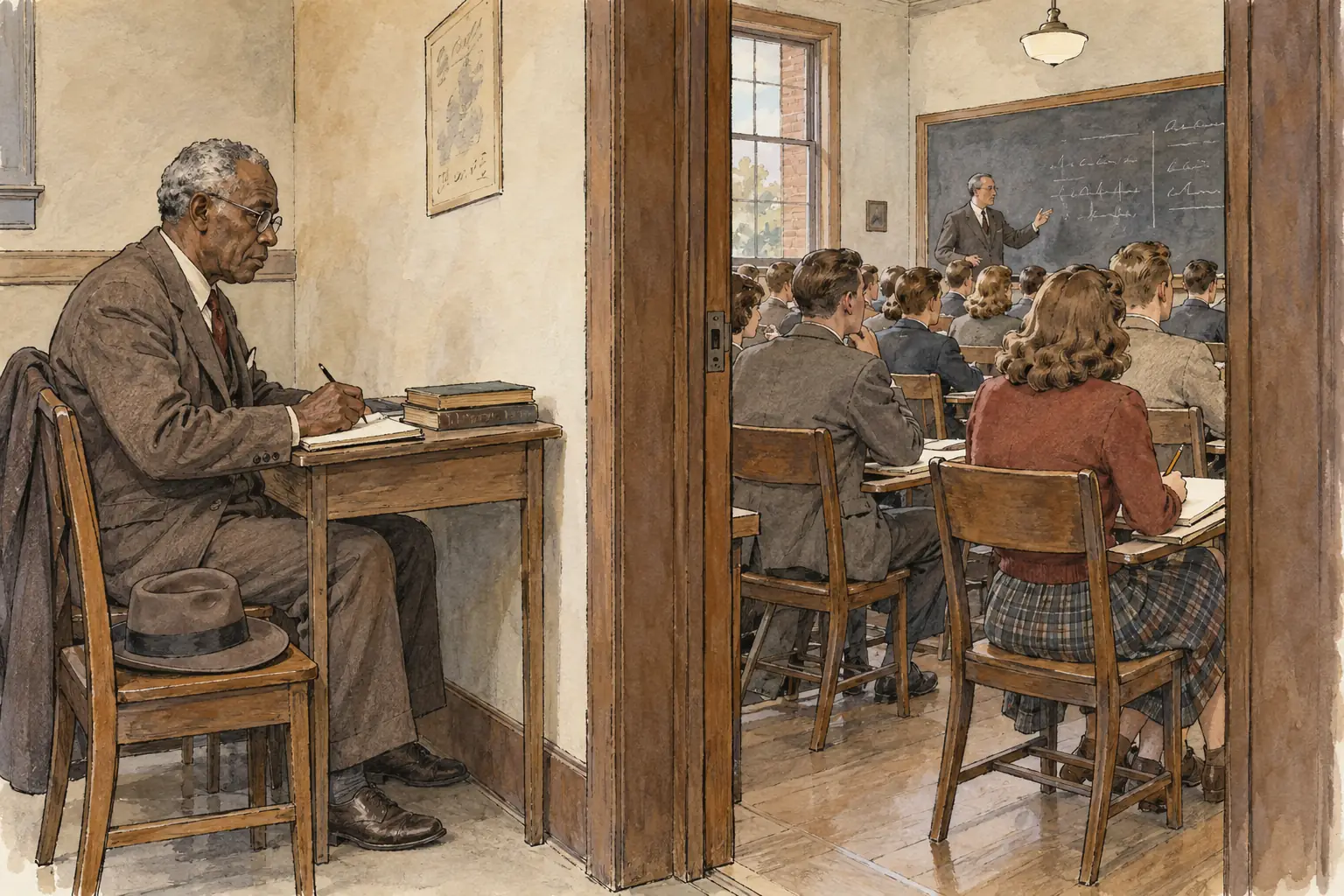
Thurgood Marshall, a prominent NAACP lawyer who later became the first African American Supreme Court justice, played a central role in directing the organisation's legal battles. Under his leadership, the NAACP carefully selected and pursued cases that built momentum towards a major assault on school segregation.
Notable test cases and their outcomes
- Sipuel v. Board of Regents (1948) - Challenged the exclusion of a Black student from a white law school in Oklahoma, leading to a ruling that states must provide equal educational opportunities, though it did not end segregation outright.
- Sweatt v. Painter (1950) - Involved a Black applicant denied entry to the University of Texas Law School; the Supreme Court ruled that creating a separate school for Black students did not provide true equality, weakening the separate but equal principle.
- McLaurin v. Oklahoma State Regents (1950) - Addressed the isolation of a Black graduate student within a white university; the court found that such treatment hindered equal education, further eroding segregation's legal foundation.
- Strategic progression - These cases were chosen to accumulate evidence of inequality, paving the way for a direct challenge to segregated schooling in the landmark Brown v. Board of Education case in 1954.
The founding and methods of CORE
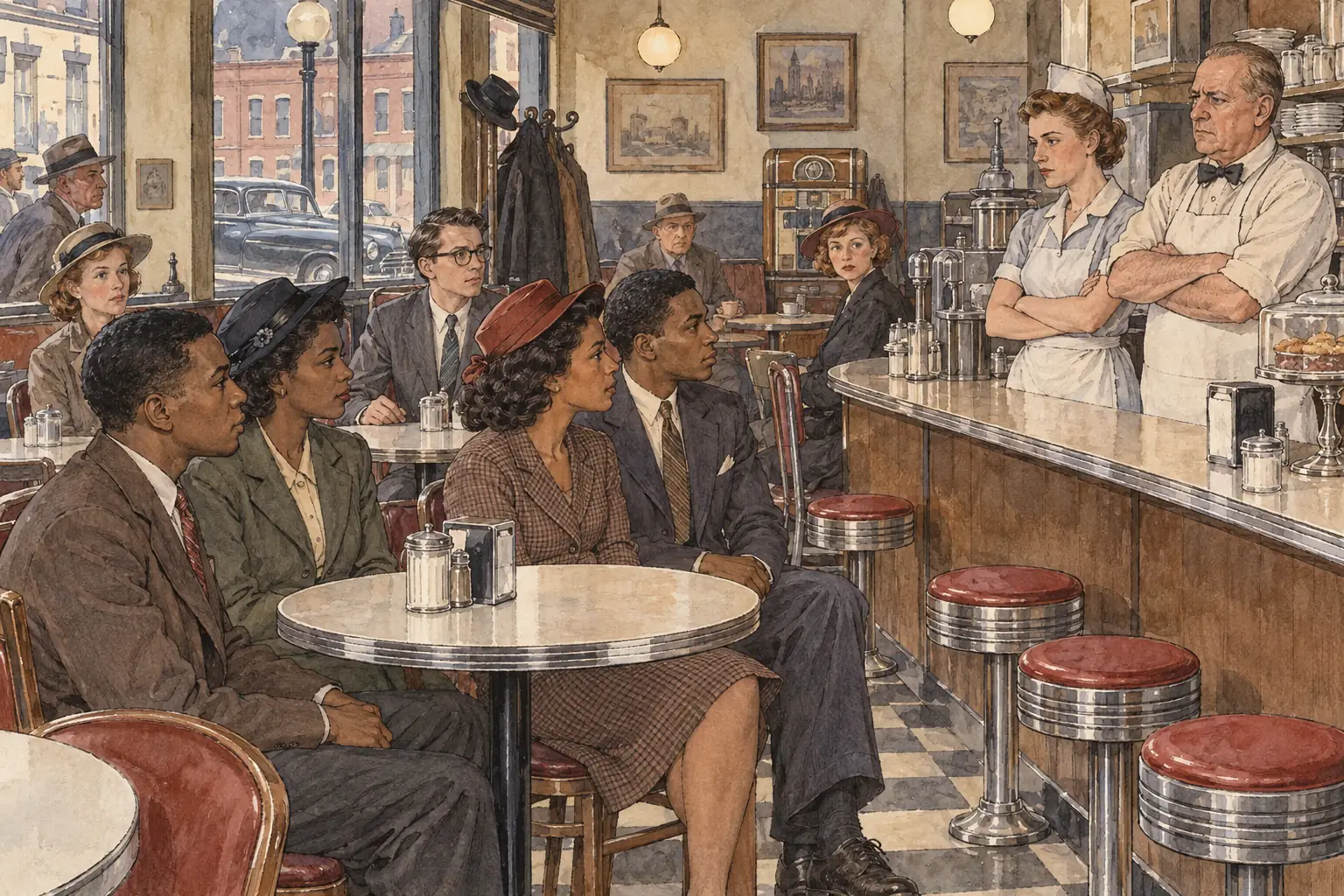
The Congress of Racial Equality (CORE) was founded in 1942 by a group of activists in Chicago, drawing inspiration from Mahatma Gandhi's principles of nonviolent resistance. Unlike purely legal-focused groups, CORE emphasised direct, community-based actions to confront segregation and promote racial equality.
Membership and protest methods
- Cross-racial coalitions - CORE's membership included both Black and white activists, fostering interracial cooperation to challenge discriminatory practices and build broader support.
- Nonviolent direct action - Tactics were influenced by Gandhian methods, including peaceful confrontations designed to highlight injustice without resorting to violence.
- Key protest techniques - The organisation used boycotts to pressure businesses, picketing to draw public attention to unfair policies, and sit-ins where integrated groups occupied segregated spaces like restaurants or theatres to demand service.
The Journey of Reconciliation and its significance
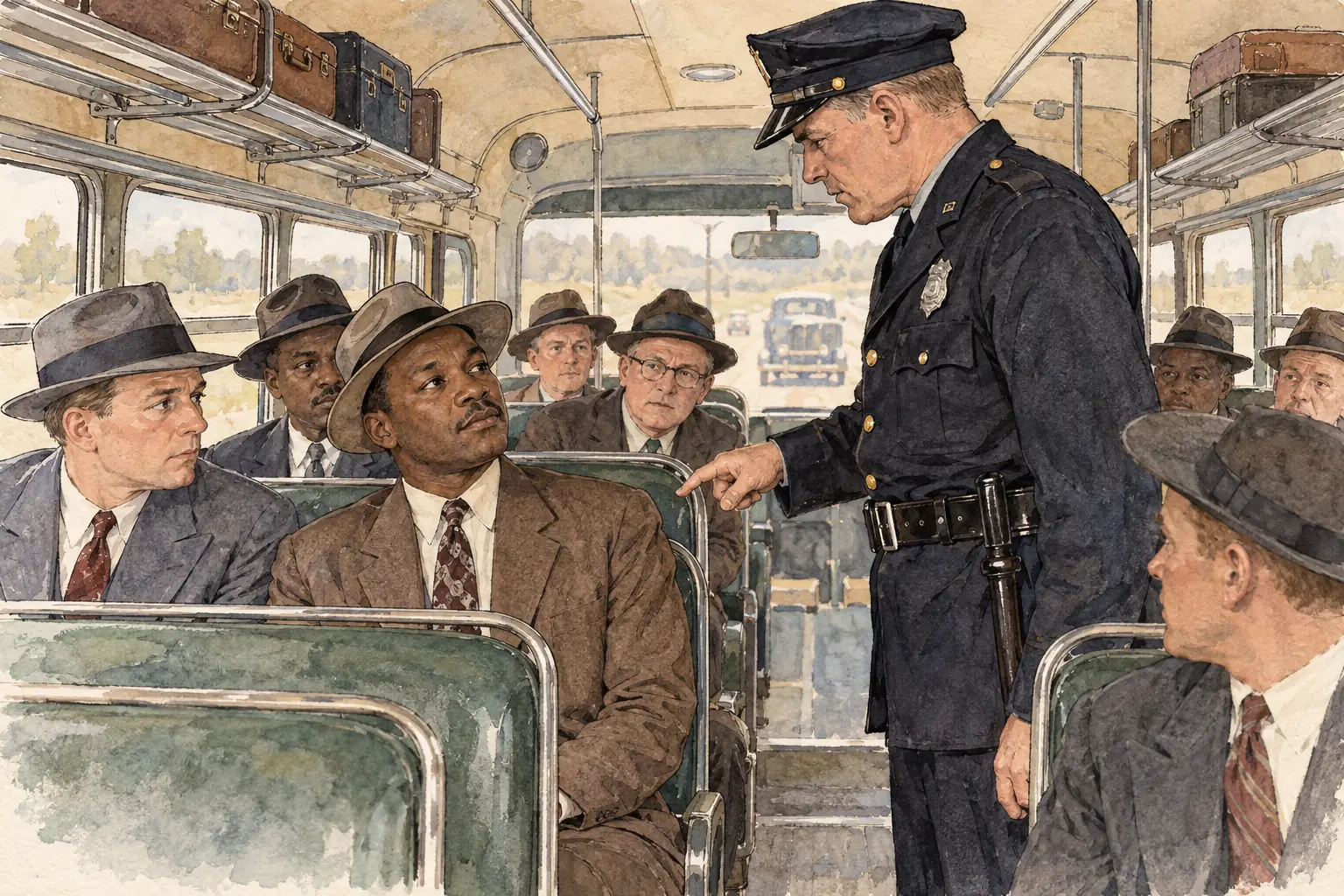
In 1947, CORE organised the Journey of Reconciliation, an early effort to test and enforce a recent Supreme Court decision against segregation on interstate buses. This action marked a pioneering use of integrated travel to challenge Jim Crow laws in the South.
Details and impact of the Journey of Reconciliation
- Organisation and execution - A group of 16 Black and white activists rode buses through southern states, deliberately violating segregation rules by sitting together; the journey aimed to assess compliance with the 1946 Morgan v. Virginia ruling.
- Challenges encountered - Participants faced arrests, violence, and hostility in states like North Carolina and Virginia, with some serving time on chain gangs for their actions.
- Long-term significance - Although it did not immediately end bus segregation, the journey raised awareness of interstate travel discrimination and inspired later actions, such as the 1961 Freedom Rides, demonstrating the effectiveness of nonviolent protest in exposing injustice.
Complementary roles of NAACP and CORE
Before 1954, the NAACP and CORE operated in tandem, with their distinct approaches reinforcing each other to advance the fight against racial segregation. This collaboration highlighted the value of combining institutional challenges with on-the-ground activism.
How the organisations supported each other
- Courtroom litigation (NAACP) - Focused on achieving legal victories through lawsuits and precedents, providing a formal pathway to dismantle segregation laws at the national level.
- Grassroots protest (CORE) - Emphasised direct action to generate public pressure and visibility, complementing legal efforts by mobilising communities and highlighting everyday injustices.
- Shared goals and synergies - While the NAACP built cases in courts, CORE's protests supplied real-world evidence of discrimination, strengthening arguments; together, they created a multifaceted strategy that appealed to different segments of society and accelerated progress towards civil rights reforms.