4.2 - Hitler Youth & League of Maidens
Key facts and dates
Nazi youth organisations played a central role in indoctrinating young people to support the regime's ideology, emphasising loyalty, physical strength, and traditional gender roles. These groups helped to shape a generation aligned with Nazi values, blending voluntary appeal with eventual compulsion.
Key facts to remember
- Hitler Youth (HJ) – Focused on boys, promoting military-style training and obedience to prepare for future service.
- League of German Maidens (BDM) – Aimed at girls, emphasising domestic skills and motherhood to support the Nazi vision of family and race.
- Ideological instruction – Both groups included lessons on Nazi beliefs, anti-Semitism, and loyalty to Adolf Hitler.
- Membership growth – Started as voluntary but became increasingly mandatory, with laws enforcing participation.
- Activities mix – Combined fun elements like camping with disciplined drills and service to build group identity.
- Control mechanisms – Used to monitor and suppress dissent, ensuring young people internalised Nazi ideals.
- Gender division – Boys trained for warfare; girls for homemaking, reflecting Nazi views on societal roles.
Nazi aims for youth organisations
The Nazi regime viewed young people as essential to securing the future of the Third Reich, aiming to mould them into loyal supporters through structured organisations. These groups were designed to instil core values that aligned with Nazi ideology, while preparing boys and girls for distinct roles in society.
Core objectives of Nazi youth policy
- Loyalty to the Führer - Emphasised unwavering devotion to Adolf Hitler, portraying him as a father figure to foster personal allegiance.
- Physical fitness - Promoted health and strength to create a robust population capable of defending the nation.
- Obedience and discipline - Encouraged unquestioning compliance with authority to maintain social order.
- Military readiness for boys - Focused on preparing males for warfare and service in the armed forces.
- Homemaking and motherhood training for girls - Aimed to equip females with skills for family life, emphasising their role in producing and raising the next generation of Aryans.
Structure and activities of the Hitler Youth
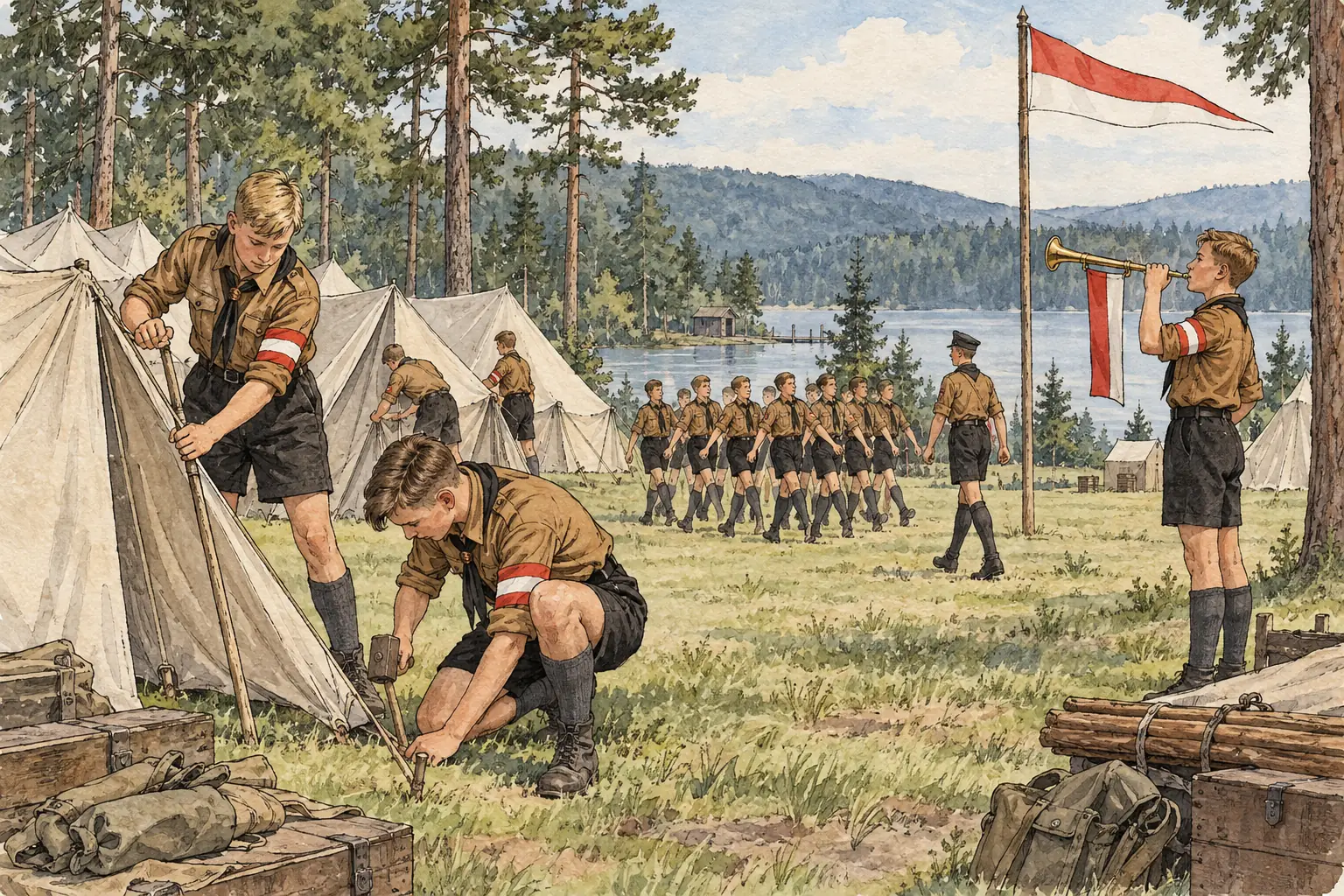
The Hitler Youth, known as Hitlerjugend (HJ), was the primary organisation for boys, structured hierarchically to mirror military ranks. It combined recreational pursuits with rigorous training to build camaraderie and discipline.
Organisation and key activities in the Hitler Youth
- Hierarchical structure - Divided into age groups, such as the Jungvolk for boys aged 10-14 and the main HJ for those aged 14-18, with leaders appointed based on loyalty and performance.
- Military drills and fitness exercises - Included parades, obstacle courses, and weapons training to develop physical endurance and combat skills.
- Camping and outdoor adventures - Organised hikes, survival challenges, and team-building trips to promote resilience and group bonding.
- Service projects - Involved community tasks like collecting materials for the war effort or helping with harvests, teaching the value of national service.
- Ideological instruction - Featured lessons on Nazi history, racial theories, and anti-Semitic propaganda to indoctrinate members with regime beliefs.
Structure and activities of the BDM
Image 1 of 2: BDM girls did gymnastics to keep fit for their future role as mothers
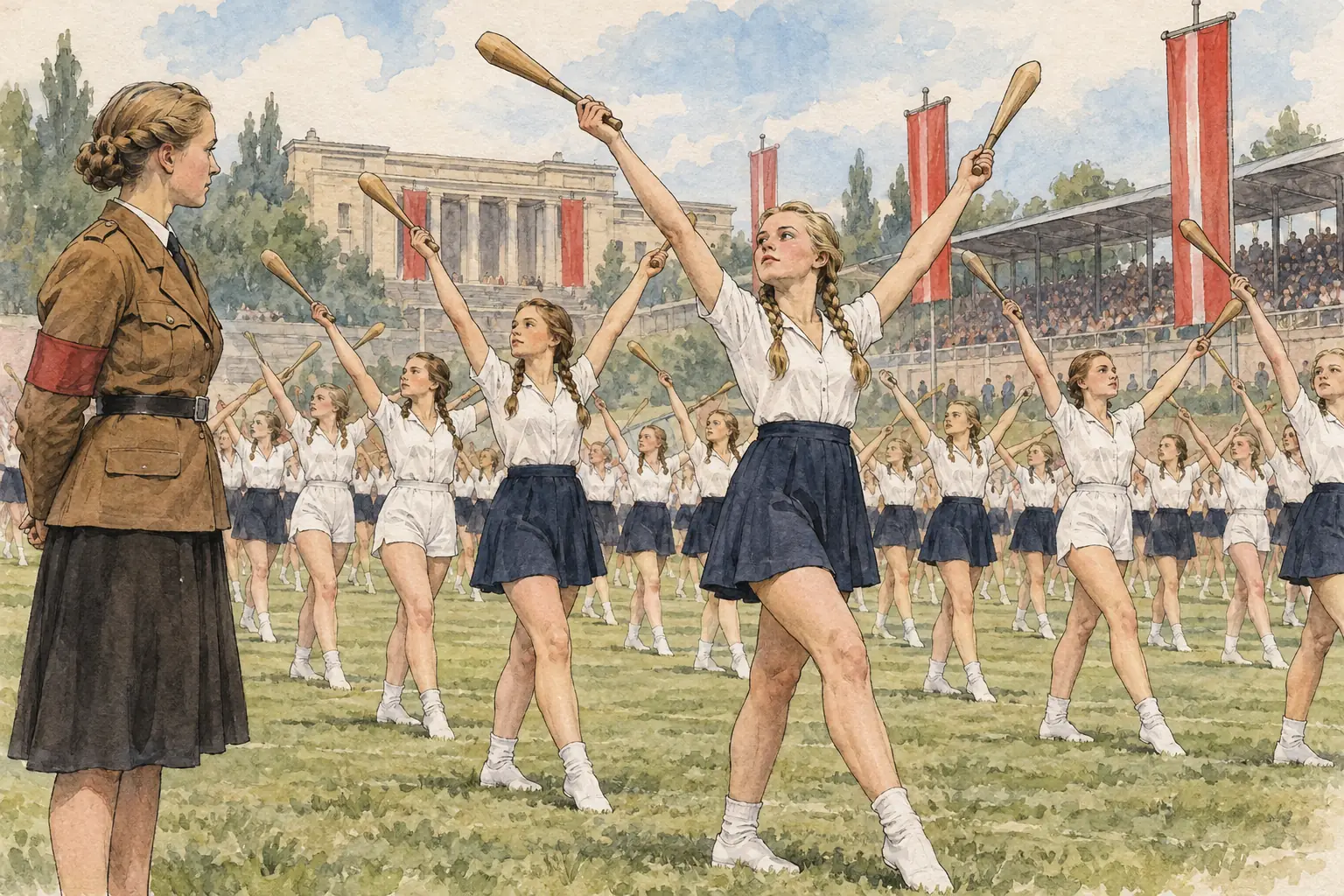
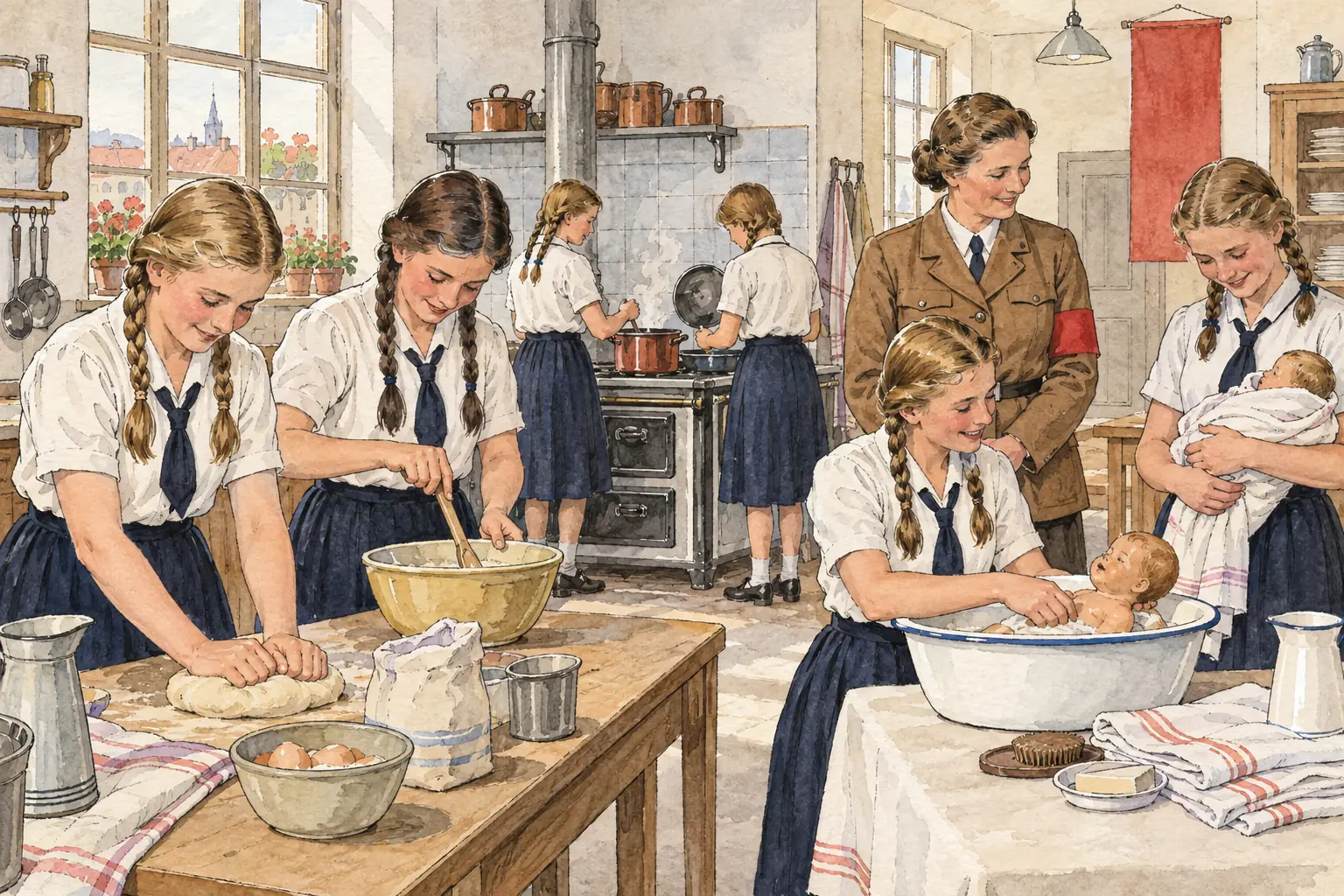
The League of German Maidens, or Bund Deutscher Mädel (BDM), served as the female counterpart to the HJ, with a structure that emphasised traditional gender roles. Activities were tailored to prepare girls for domestic responsibilities while fostering a sense of belonging.
Organisation and key activities in the League of German Maidens
- Age-based structure - Included sections like the Jungmädel for girls aged 10-14 and the main BDM for those aged 14-18, led by female supervisors who enforced Nazi ideals.
- Homemaking skills training - Covered cooking, sewing, and childcare to prepare for roles as wives and mothers.
- Physical fitness and sports - Involved gymnastics, dancing, and team games to maintain health and promote the ideal of strong, capable women.
- Camping and group outings - Featured nature trips and communal events to build friendships and a shared identity.
- Service projects - Included helping in hospitals, assisting families, or supporting wartime efforts like knitting for soldiers.
- Ideological instruction - Taught Nazi views on family, race purity, and the importance of motherhood in strengthening the German nation.
Appeal, compulsion, and membership pressures
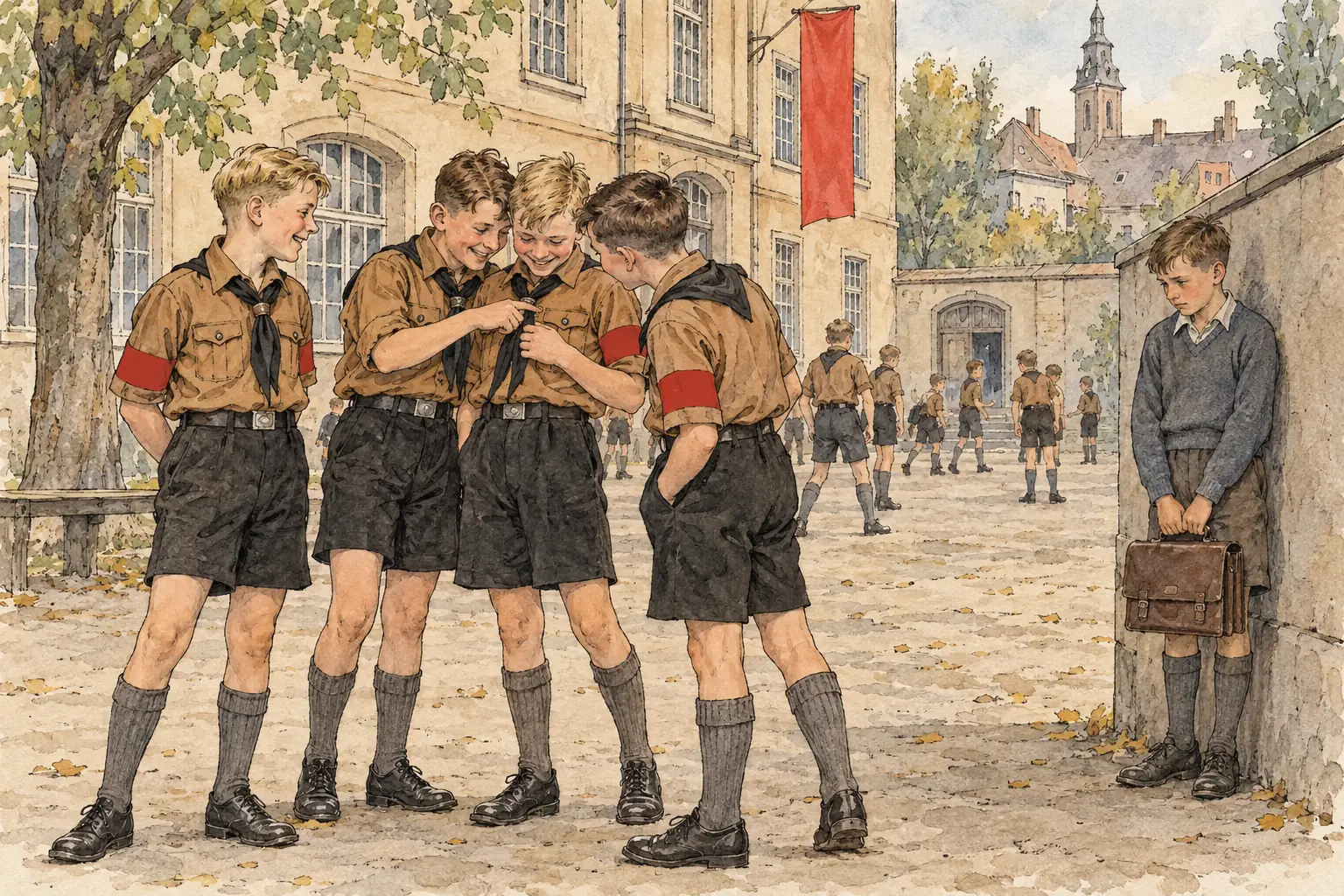
Initially, Nazi youth organisations attracted members through exciting activities and a sense of purpose, but participation became increasingly mandatory as the regime tightened control. This shift reflected the Nazis' determination to encompass all young people.
Factors influencing membership in youth organisations
- Voluntary appeal - Early recruitment drew on the fun of group activities, uniforms, and badges, which provided a feeling of adventure and belonging.
- Social and peer pressure - Joining offered opportunities for friendship and status, with non-members often facing exclusion or ridicule.
- Rising compulsion - From the mid-1930s, laws made membership obligatory for Aryan youth, with penalties for evasion such as job restrictions or family repercussions.
- Membership growth - Numbers surged due to bans on rival groups and propaganda campaigns, reaching millions by the late 1930s.
- Enforcement measures - Schools and parents were pressured to ensure participation, turning voluntary groups into tools of state control.
Cultivating identity and control via youth groups
Nazi youth organisations were instrumental in shaping personal identities aligned with regime goals, while enabling surveillance and suppression of opposition. They created a controlled environment that extended Nazi influence into everyday life.
Ways youth groups built identity and enforced control
- Fostering group identity - Uniforms, oaths, and shared rituals created a strong sense of community and superiority, reinforcing Nazi values like racial purity.
- Indoctrination techniques - Regular propaganda sessions and leader worship instilled ideological conformity from a young age.
- Monitoring and reporting - Members were encouraged to report disloyal behaviour, extending state surveillance into families and schools.
- Suppression of alternatives - Rival youth groups, such as those linked to churches or socialists, were outlawed to eliminate competing influences.
- Long-term control - By preparing youth for adult roles in the military or home front, the groups ensured ongoing loyalty to the Nazi state.