4.3 - Education & Indoctrination in Schools
Key facts and dates
Education under the Nazi regime was transformed into a tool for indoctrination, promoting ideology through curriculum reforms, teacher loyalty, and specialised institutions. These changes aimed to create a generation aligned with Nazi values, emphasising physical fitness, racial theories, and nationalistic narratives.
Key facts to remember
- Curriculum emphasis – Physical education (PE) increased to 15% of school time, promoting fitness for military readiness.
- Racial indoctrination – Biology lessons taught 'race science', portraying Aryans as superior and justifying anti-Semitic policies.
- Nationalist history – Lessons focused on Germany's past glories and the injustices of the Treaty of Versailles.
- Gender-specific skills – Boys learned military-style subjects; girls focused on domestic tasks like cooking and childcare.
- Teacher control – 97% of teachers joined the Nazi Teachers' League by 1936, with mandatory loyalty oaths.
- Elite institutions – Napolas and Adolf Hitler Schools selected promising students for leadership training.
- Classroom culture – Daily rituals, such as salutes and anti-Jewish propaganda, embedded Nazi ideology.
School curriculum changes under Nazi rule
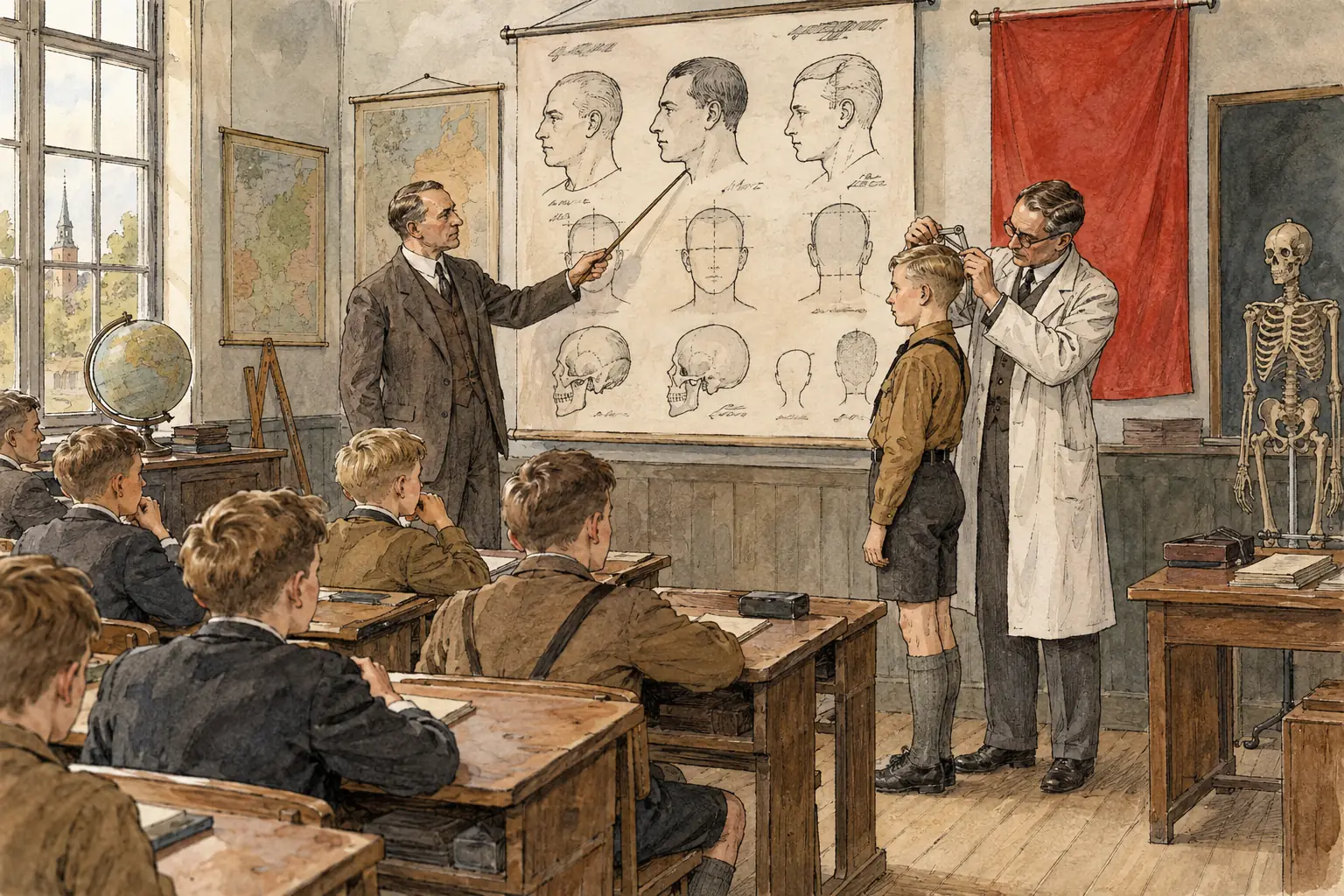
The Nazi regime overhauled the school curriculum to align with its ideological goals, shifting focus from academic learning to physical training, racial theories, and patriotic narratives. This transformation ensured that education served the state's needs, preparing boys for war and girls for motherhood.
Emphasis on physical education and fitness
Physical education (PE) became a core part of the timetable, occupying up to 15% of school hours. Lessons prioritised activities like gymnastics, team sports, and endurance training to build strong bodies ready for military service and to foster a sense of discipline and national pride.
Integration of race science in biology
Biology classes incorporated pseudoscientific ideas about racial superiority, teaching that Aryans were genetically superior to other groups, particularly Jews. Students learned about eugenics and heredity, with content designed to justify Nazi policies on sterilisation and racial purity.
Nationalist approach to history lessons
History education emphasised Germany's heroic past, glorifying figures like Frederick the Great while portraying the Weimar Republic as a failure. Topics highlighted the 'stab-in-the-back' myth and the unfairness of post-World War I treaties, instilling resentment and a desire for national revival.
Practical skills aligned with gender roles
The curriculum reinforced traditional gender divisions:
- Boys studied subjects like mechanics and basic military tactics to prepare for roles in the armed forces or industry.
- Girls focused on home economics, including sewing, household management, and child-rearing, to promote their future as wives and mothers in the Volksgemeinschaft (people's community).
New textbooks were introduced across subjects, filled with Nazi propaganda, anti-Semitic illustrations, and revised facts to support the regime's worldview. Examination questions tested ideological knowledge, such as essays on racial theories or the Führer's achievements, ensuring students internalised these ideas.
Control over teachers and their indoctrination
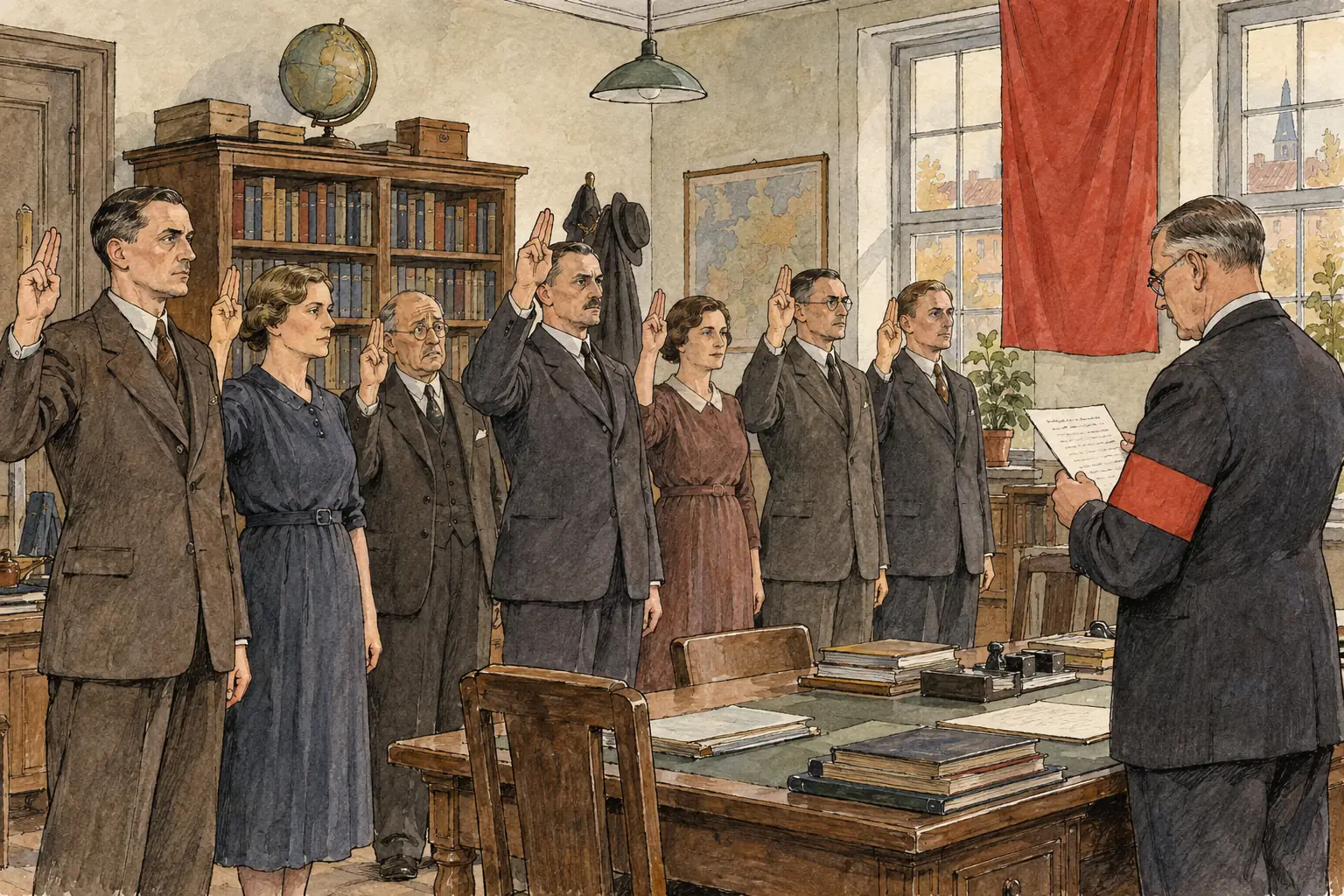
To ensure schools promoted Nazi values, the regime exerted strict control over educators, requiring loyalty and ideological alignment. This involved organisations, oaths, and training programmes to weed out dissenters and indoctrinate the teaching workforce.
The Nazi Teachers' League and loyalty requirements
By 1936, nearly all teachers had joined the Nazi Teachers' League, a compulsory organisation that monitored political reliability. Members underwent ideological training camps where they studied Nazi doctrines and participated in physical exercises to embody the regime's ideals.
Mandatory oaths and professional training
Teachers were required to swear oaths of allegiance to Hitler, pledging to uphold Nazi principles in their work. New entrants to the profession completed specialised courses emphasising racial theories and anti-democratic values, while Jewish teachers and those deemed politically unreliable were dismissed, reducing the workforce by around 3,000 by 1938.
This system created a uniform teaching body that actively promoted Nazi ideology, with regular inspections to ensure compliance and reports on any suspected disloyalty.
Elite schools for developing future leaders
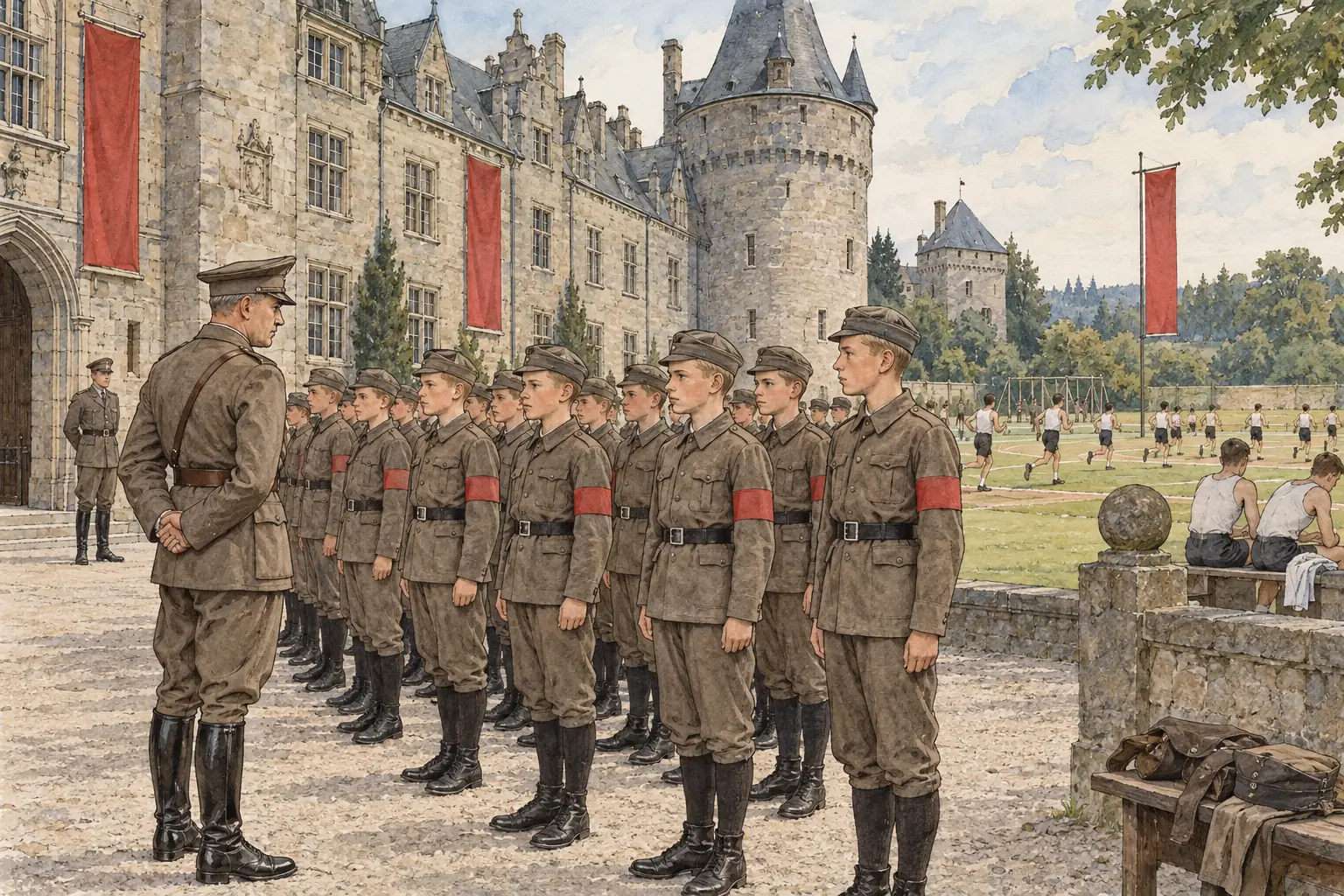
The Nazis established specialised institutions to identify and train promising young people for leadership roles in the party and state. These schools combined academic, physical, and ideological education to produce an elite cadre loyal to the regime.
National Political Institutes of Education (Napolas)
Napolas were boarding schools for boys aged 10 to 18, selected through rigorous tests for physical fitness, racial purity, and intellectual potential. The curriculum blended military drills, sports, and Nazi ideology, aiming to groom future SS officers and administrators. By 1945, over 40 such schools existed, emphasising obedience, camaraderie, and anti-intellectualism.
Adolf Hitler Schools
These institutions targeted boys from the Hitler Youth, focusing on political indoctrination and leadership skills. Run by the Nazi Party, they prepared students for roles in government and the military, with a strong emphasis on ideological purity and physical prowess. Unlike regular schools, they prioritised character-building over traditional academics.
Both types of schools served as breeding grounds for the Nazi elite, isolating students from outside influences and immersing them in a culture of total devotion to the Führer.
Reinforcing Nazi ideology in school culture
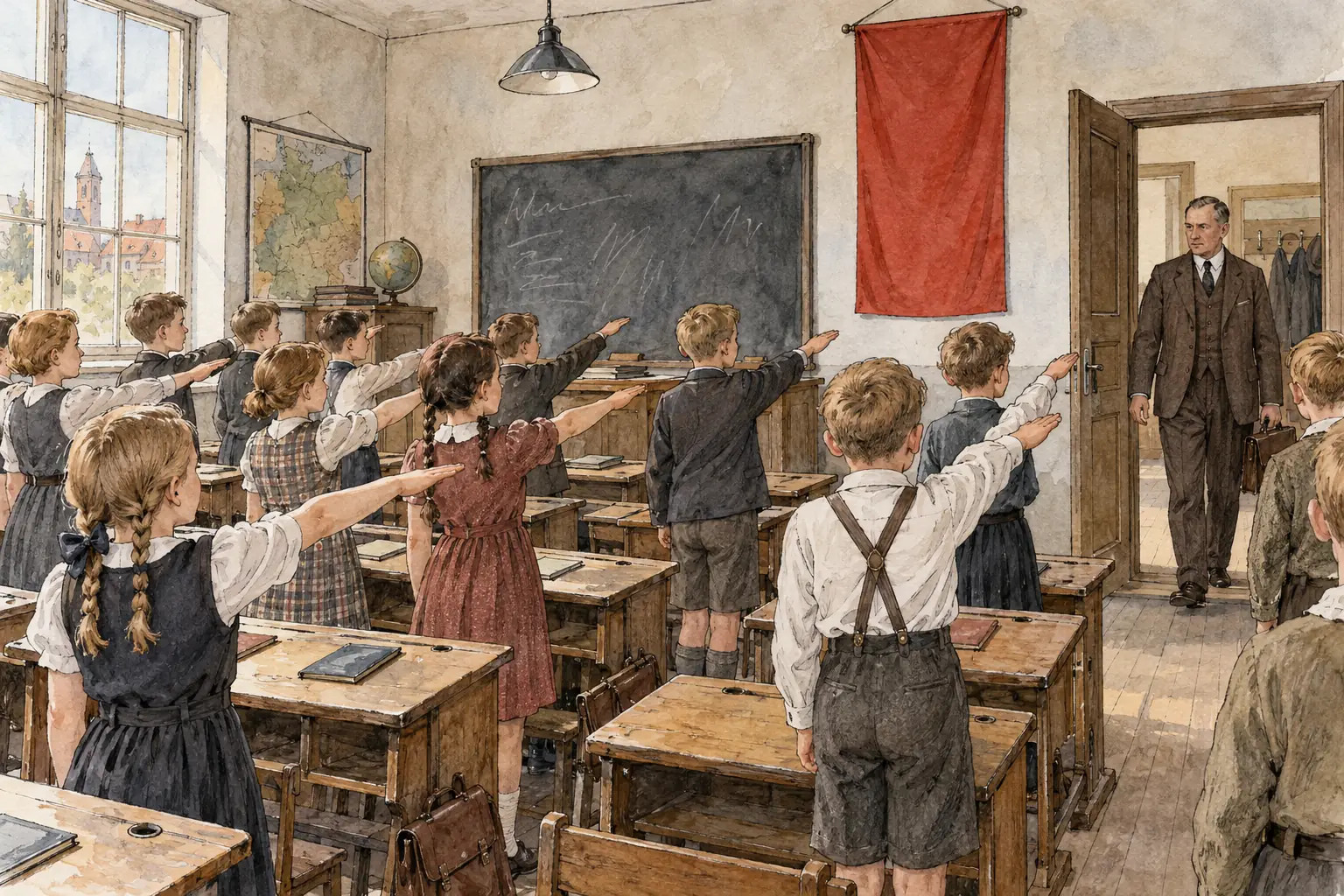
Beyond formal lessons, the entire school environment was engineered to embed Nazi beliefs, creating a daily routine that normalised ideology. This holistic approach ensured that indoctrination permeated every aspect of school life.
Ideological elements in daily lessons
Subjects across the curriculum wove in Nazi themes: mathematics problems involved calculations about bombing raids or population growth under racial policies, while geography lessons promoted Lebensraum (living space) expansion. Textbooks and posters reinforced messages of Aryan supremacy and anti-Semitism, making ideology a constant presence.
Classroom rituals and culture
Schools enforced routines like starting the day with the Hitler salute and singing patriotic songs. Teachers led discussions on current events from a Nazi perspective, encouraging students to report 'disloyal' behaviour. Extracurricular activities, such as youth group meetings, extended this influence, fostering a sense of belonging to the national community while marginalising minorities.
This immersive culture effectively turned schools into indoctrination centres, where peer pressure and authority figures reinforced loyalty, though some students and families privately resisted.