1.1 - Anglo-Saxon Government, Economy & Society
Key facts and dates
The Anglo-Saxon period in England, spanning from the 5th to the 11th century, featured a structured government, agrarian economy, and hierarchical society heavily influenced by the Church. These elements provided stability through clear roles but also generated tensions from power struggles and social inequalities leading up to the Norman Conquest in 1066.
Key facts to remember
- Monarchical power – Kings held central authority, issuing laws and commanding loyalty through the witan council.
- Earldoms – Large regions like Wessex and Mercia governed by powerful earls who controlled local affairs.
- Local divisions – Society organised into shires, hundreds, and tithings for administration and law enforcement.
- Legal system – Based on wergild compensation and trial by ordeal, with community involvement in justice.
- Social classes – Hierarchical structure including slaves, ceorls (free peasants), thegns (nobles), and earls.
- Economic base – Primarily agrarian, with villages focused on farming and towns serving as trade centres.
- Church influence – Monasteries and bishops shaped education, law, and daily morals, often aligning with royal power.
Structure of monarchy and government
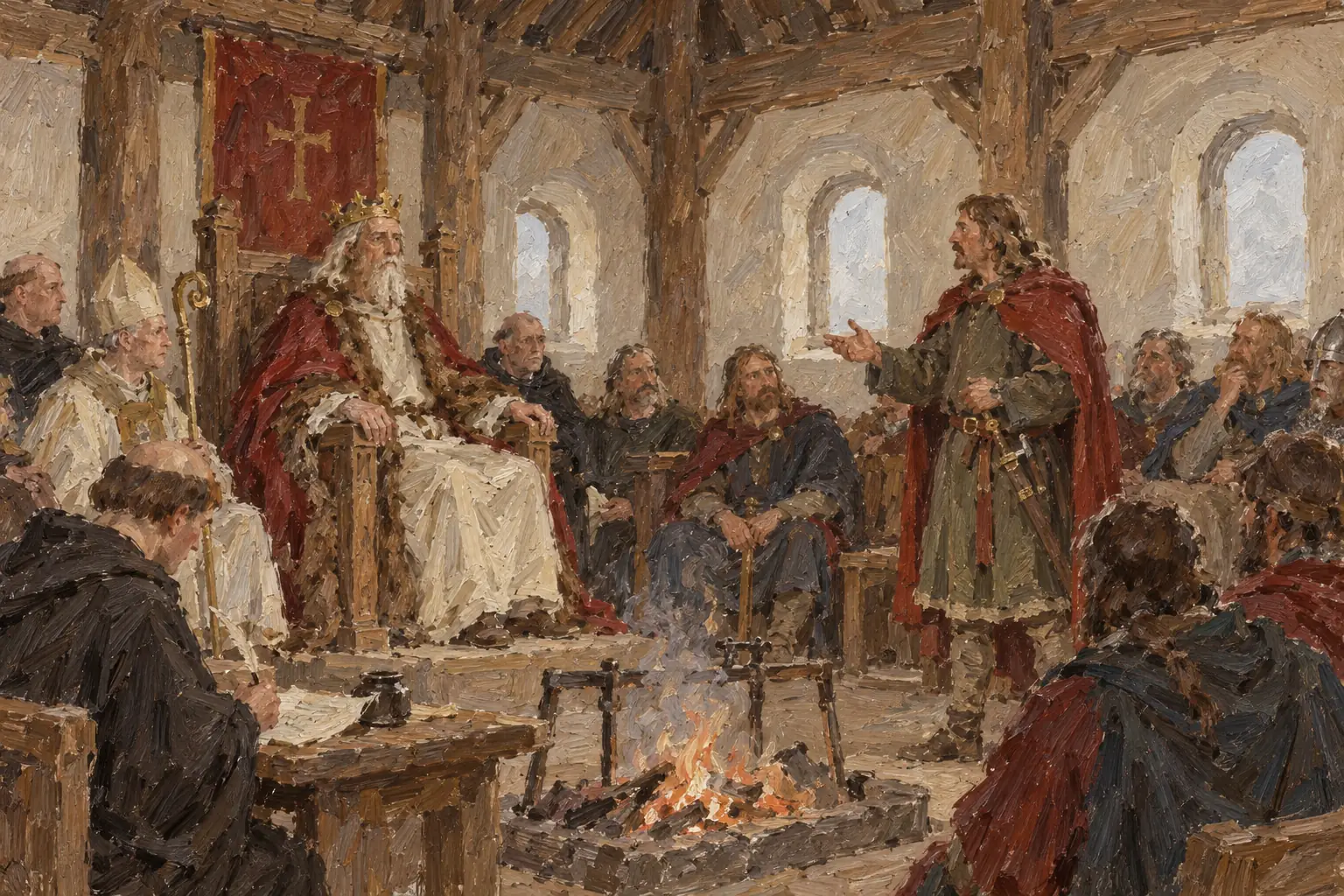
Anglo-Saxon England operated under a monarchical system where the king served as the central figure of authority. This structure evolved over centuries, blending Germanic traditions with emerging administrative practices to maintain control over a fragmented kingdom.
Powers and limitations of the king
- Central authority - The king issued laws, collected taxes, minted coins, and commanded the fyrd (national army) during threats, symbolising unity across regions.
- Role of the witan - An advisory council of nobles, bishops, and wise men that counselled the king on major decisions, such as law-making or succession, though its power was consultative rather than binding.
- Challenges to royal power - Kings faced limitations from powerful nobles or external invasions, requiring them to grant lands and privileges to secure loyalty, which sometimes led to internal rivalries.
Role of earldoms and local administration
Earldoms formed the backbone of regional governance, dividing England into large territories managed by earls appointed by the king. This system extended to finer local levels, ensuring administration reached villages and ensured compliance with royal directives.
Organisation of earldoms and local government
- Earls' responsibilities - Earls oversaw justice, tax collection, and defence in major regions like Northumbria or East Anglia, acting as the king's representatives while amassing personal wealth and influence.
- Shire system - Each earldom was subdivided into shires, led by a sheriff (shire-reeve) who enforced laws, collected fines, and organised local militias.
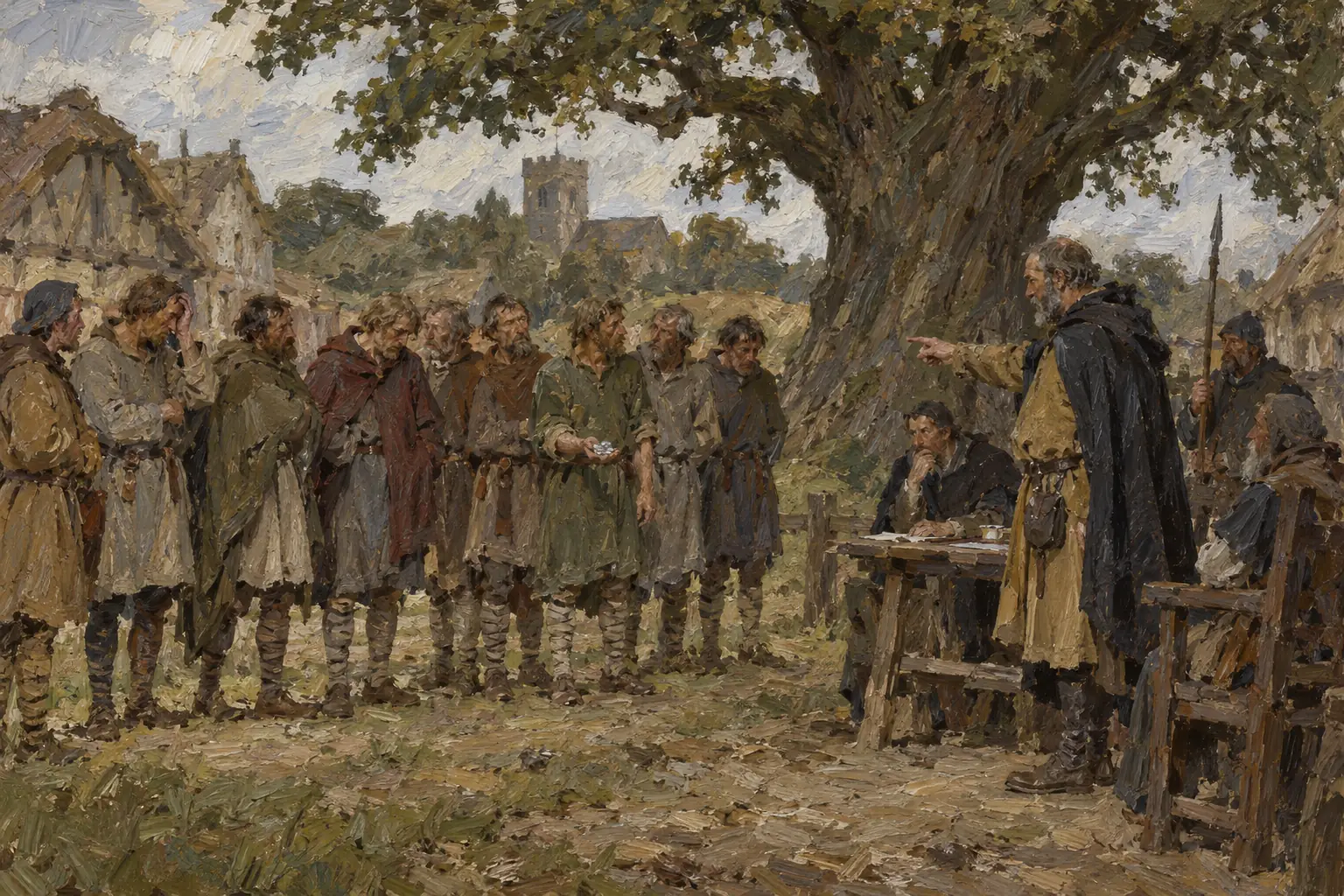
- Hundreds and tithings - Shires broke down into hundreds (groups of about 100 households) for local courts and tithings (smaller groups of 10 families) where members were mutually responsible for each other's behaviour, fostering community accountability.
The legal system and its enforcement
Image 1 of 2: The men of a tithing were responsible for each other's behaviour and were fined together if one of them escaped justice
The Anglo-Saxon legal system emphasised compensation and community involvement rather than centralised punishment. It aimed to maintain social order but could create tensions when disputes escalated or enforcement proved inconsistent.
Key features of the legal system
- Wergild compensation - A system of fines based on social status, where offenders paid 'man-price' to victims' families; for example, a thegn's wergild was higher than a ceorl's, reflecting hierarchical values.
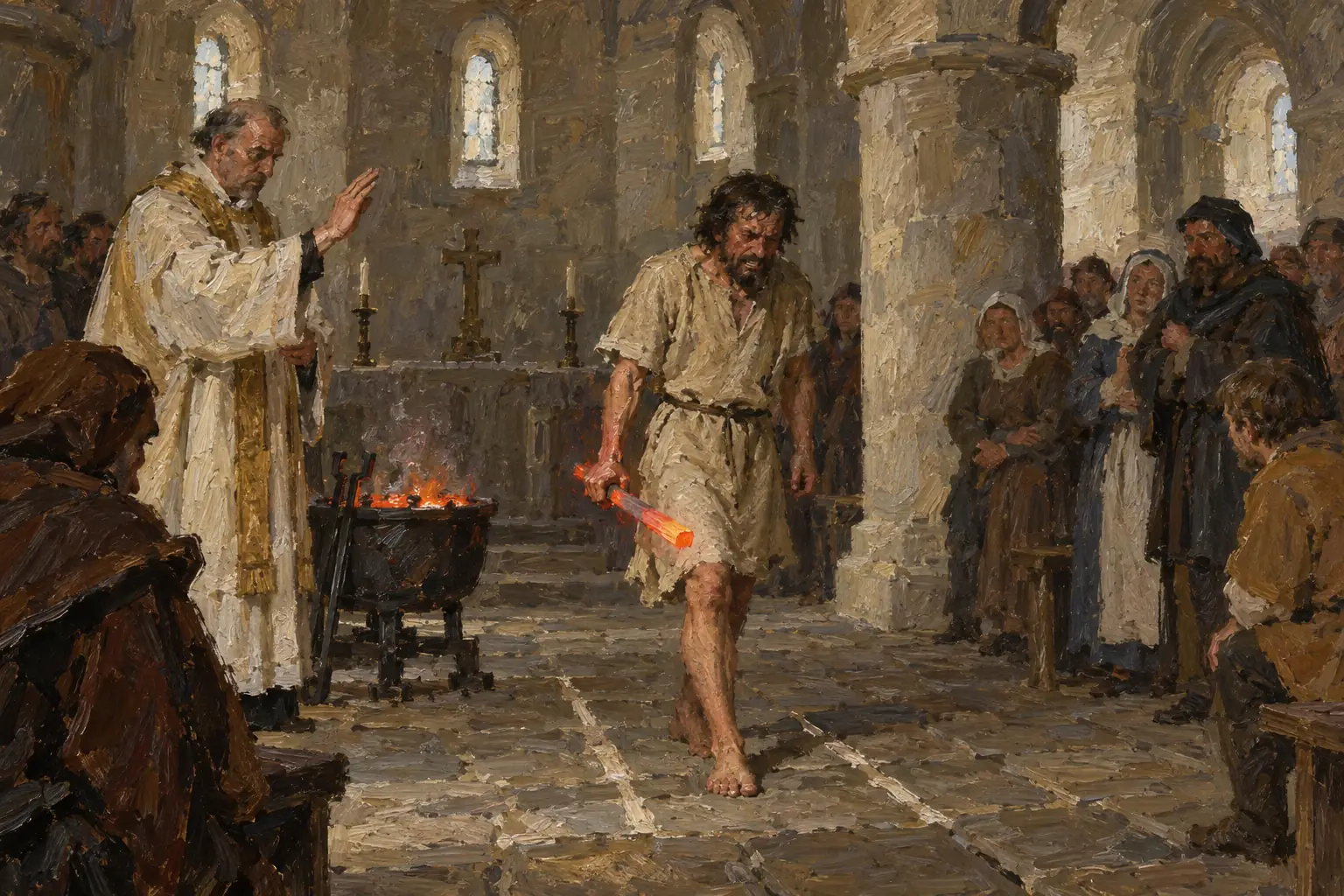
- Trial by ordeal - Used when guilt was unclear, involving tests like carrying hot iron or immersion in water, interpreted as divine judgement, often overseen by the Church.
- Community and hue and cry - Local people raised the 'hue and cry' to pursue criminals, with tithings required to present suspects at hundred courts, blending collective responsibility with royal oversight.
Economy and social hierarchy
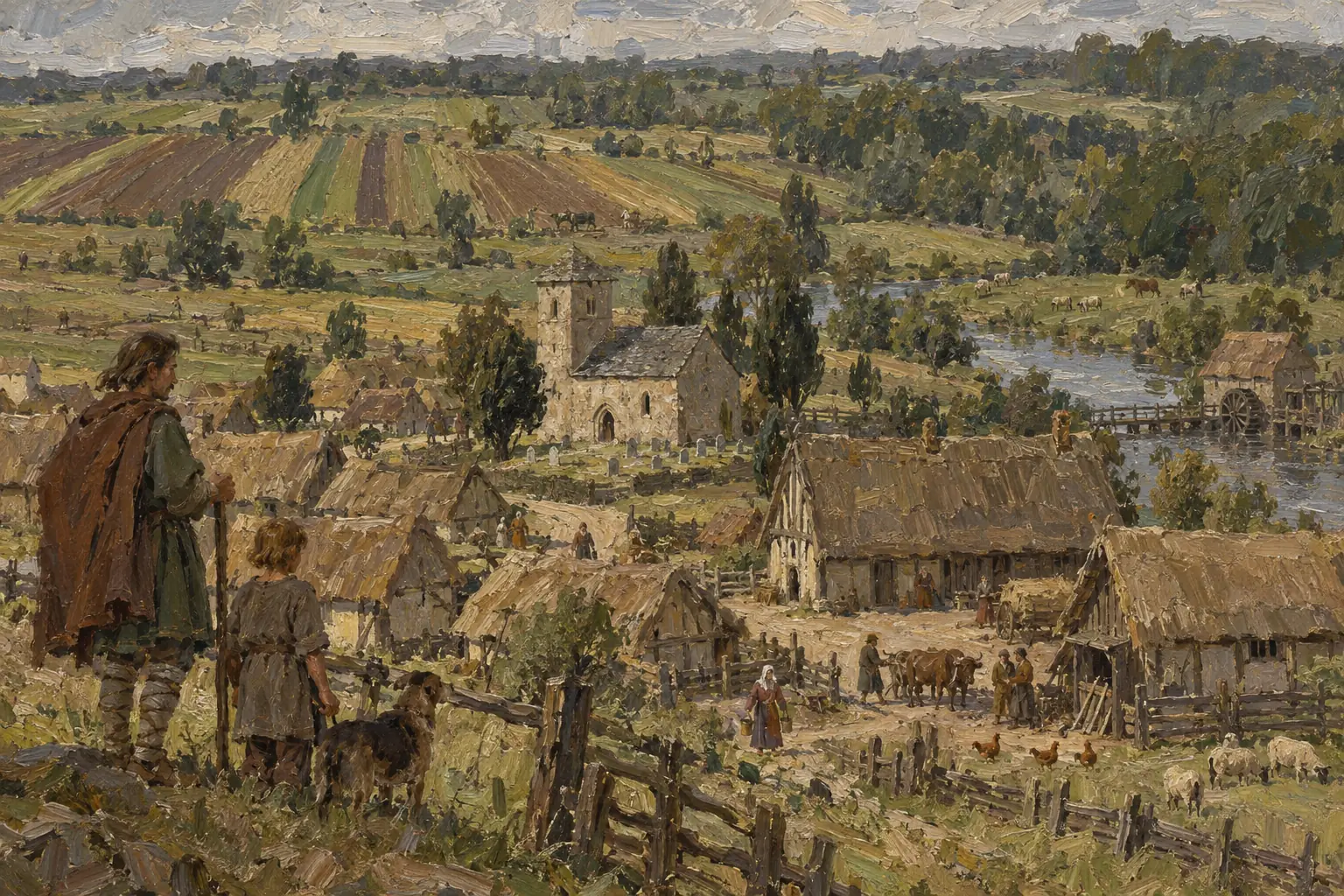
The Anglo-Saxon economy was predominantly rural and self-sufficient, centred on agriculture, with a rigid social structure that defined roles and opportunities. This setup provided economic stability but reinforced inequalities.
Structure of the economy and society
| Social class | Economic role | Social status and daily life |
|---|---|---|
| Slaves | Performed manual labour on farms or in households, often captured in war | Lowest status, with no freedom or land ownership, dependent on owners for survival |
| Ceorls | Free peasants who farmed land, paid rents, and served in the fyrd | Formed the bulk of society, living in villages with some independence but vulnerable to debt |
| Thegns | Landowning nobles who managed estates and provided military service to the king | Enjoyed privileges like tax exemptions, living in halls and influencing local affairs |
| Earls | Controlled large territories, collecting taxes and leading armies | Highest nobles, often rivalling the king's power, with wealth from land and trade |
Towns, known as burhs, emerged as fortified trade centres for goods like wool and iron, while villages focused on subsistence farming, creating a mix of local self-reliance and emerging commerce.
Influence of the Church on society
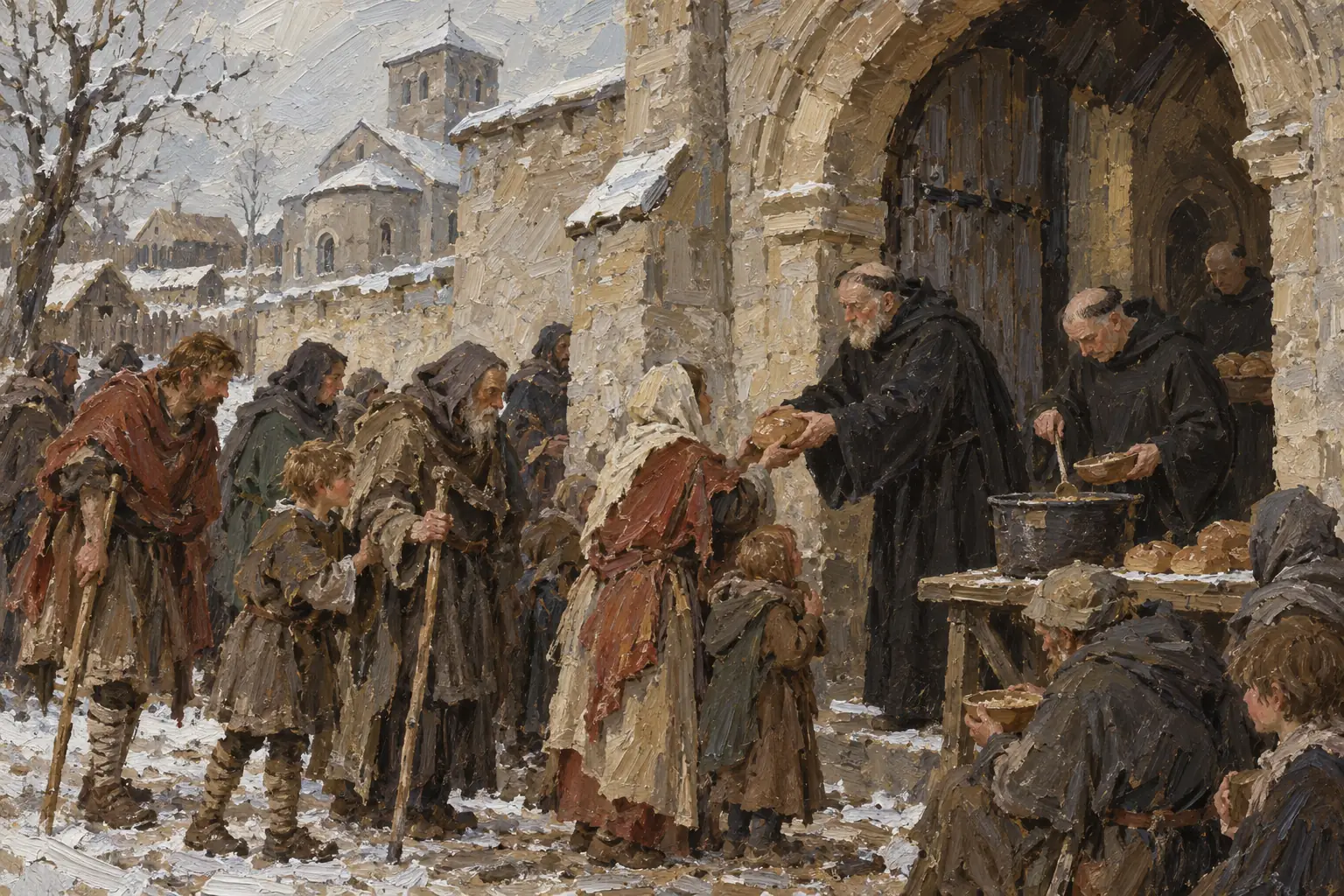
The Church was a pervasive force in Anglo-Saxon England, intertwining with government and economy to shape morals, education, and social norms. It offered stability through spiritual guidance but sometimes caused tensions with secular authorities.
Ways the Church shaped society
- Educational and cultural role - Monasteries provided learning in Latin and scripture, preserving knowledge and advising kings, which elevated bishops to influential positions in the witan.
- Economic contributions - The Church owned vast lands, collecting tithes (a 10% tax on produce) and operating farms, bolstering the agrarian economy while funding charitable works.
- Impact on daily life - Religious festivals structured the calendar, and parish priests enforced moral codes, promoting community cohesion; however, disputes over Church wealth or papal influence occasionally sparked conflicts with kings.
- Sources of stability and tension - The Church's alliance with monarchy reinforced order, but its growing power led to rivalries, as seen in pre-1066 debates over ecclesiastical reforms.