6.4 - Framing Enquiries & Selecting Sources
Key facts and dates
Framing historical enquiries about medicine on the Western Front requires developing precise questions and choosing suitable sources to explore aspects of medical practices during the First World War. Effective enquiries focus on specific issues, time frames, and locations to enable targeted investigations.
Key facts to remember
- Focused questions – Should specify issue, time, and place for clarity, avoiding broad topics.
- Source relevance – Select materials that directly address the question, such as war diaries or medical reports.
- Range and balance – Use multiple source types for quantitative data and qualitative insights.
- Reliability considerations – Evaluate perspective, bias, and context when choosing sources.
- Justification – Explain how sources illuminate the enquiry and overcome limitations.
- Availability check – Ensure sufficient surviving sources exist to support the question.
Formulating focused enquiry questions
Historical enquiries about medicine on the Western Front during the First World War need to be carefully crafted to allow for detailed and targeted analysis. A well-formulated question directs the investigation towards specific aspects of medical practices, ensuring it remains manageable and insightful.
Guidelines for developing effective enquiry questions
- Identify key elements - Include the main issue, a defined time frame, and often a specific location to narrow the scope.
- Maintain specificity - Focus on particular developments or impacts rather than general overviews to enable deeper exploration.
- Align with historical context - Centre questions on medical challenges, innovations, or roles in battles along the Western Front.
Effective and ineffective enquiry questions
Choosing the right wording for an enquiry question is crucial, as it determines the depth and feasibility of the investigation. Effective questions are precise and allow for evidence-based answers, while ineffective ones are too vague or broad, making them difficult to address thoroughly.
Comparison of enquiry question types
| Question type | Example | Why effective or ineffective |
|---|---|---|
| Effective (specific) | How did the evacuation of wounded soldiers improve during the Battle of Arras in 1917? | Narrows to a particular battle and aspect of medical logistics, allowing targeted source analysis. |
| Effective (specific) | What was the impact of the introduction of the steel helmet on head injury survival rates in 1917? | Focuses on a single innovation, time period, and measurable outcome for clear investigation. |
| Effective (specific) | In what ways did nurses contribute to surgical care at Casualty Clearing Stations during the Battle of Passchendaele in 1917? | Specifies roles, location type, and battle for a focused enquiry into contributions. |
| Ineffective (broad) | Describe medicine in the First World War. | Lacks specificity, covering too wide a scope without a clear focus or time frame. |
Selecting relevant sources to answer enquiries
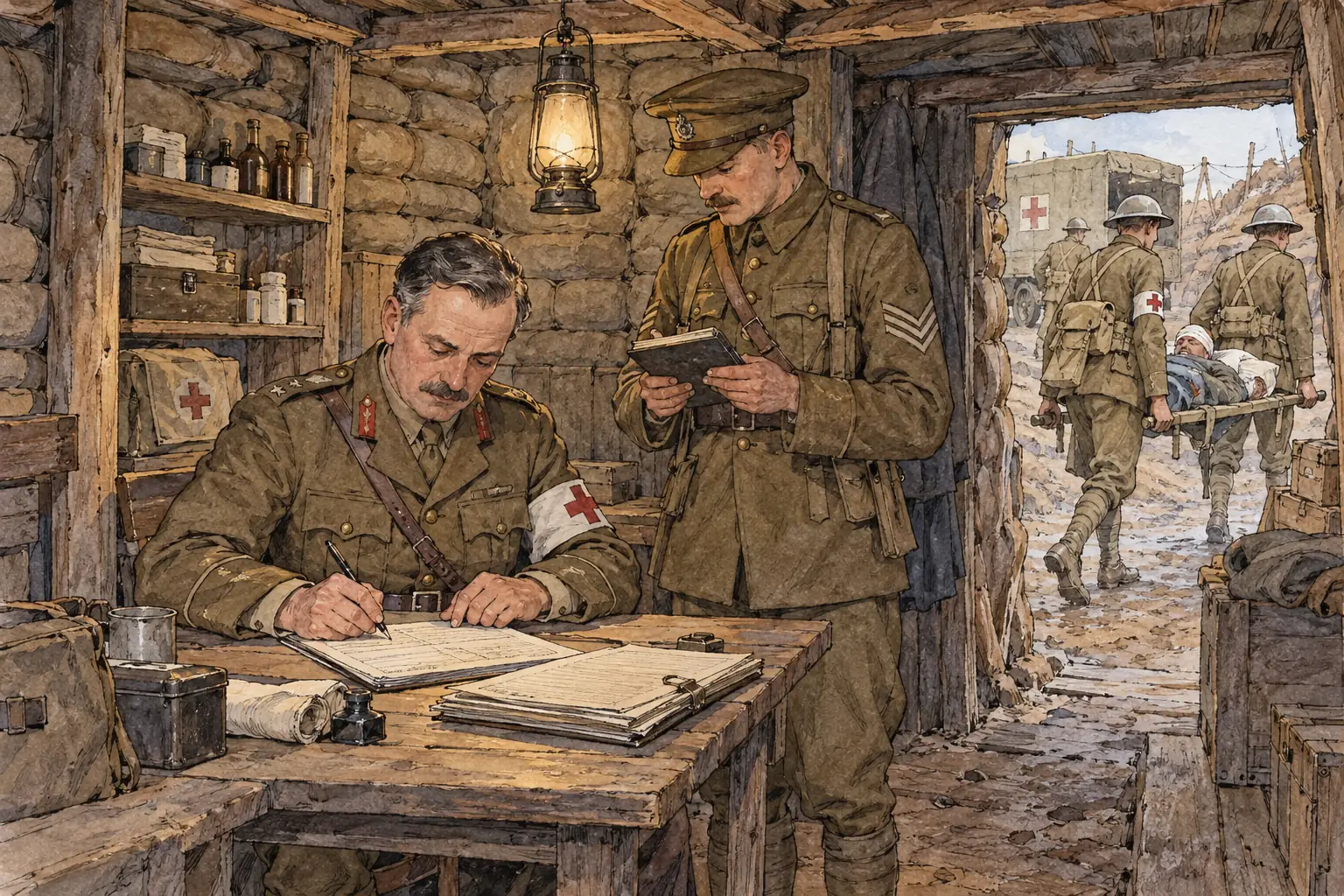
Once an enquiry question is established, the next step involves identifying sources that directly contribute to answering it. Sources should be chosen based on their ability to provide evidence that aligns with the question's focus, such as improvements in medical procedures or personal experiences.
Criteria for choosing appropriate sources
- Match to question needs - Select materials that offer relevant details; for an enquiry on evacuation improvements during a specific battle, prioritise sources like medical unit diaries or official army reports.
- Incorporate firsthand accounts - Use personal testimonies, such as memoirs from medical personnel or soldiers' letters, to provide qualitative insights into effectiveness or challenges.
- Utilise visual or diagrammatic evidence - Include photographs or maps of medical routes when they illustrate practical aspects, like evacuation pathways.
- Avoid irrelevant materials - Exclude sources that do not address the core issue, such as general propaganda posters unrelated to the specific enquiry.
Range, balance, reliability and perspective
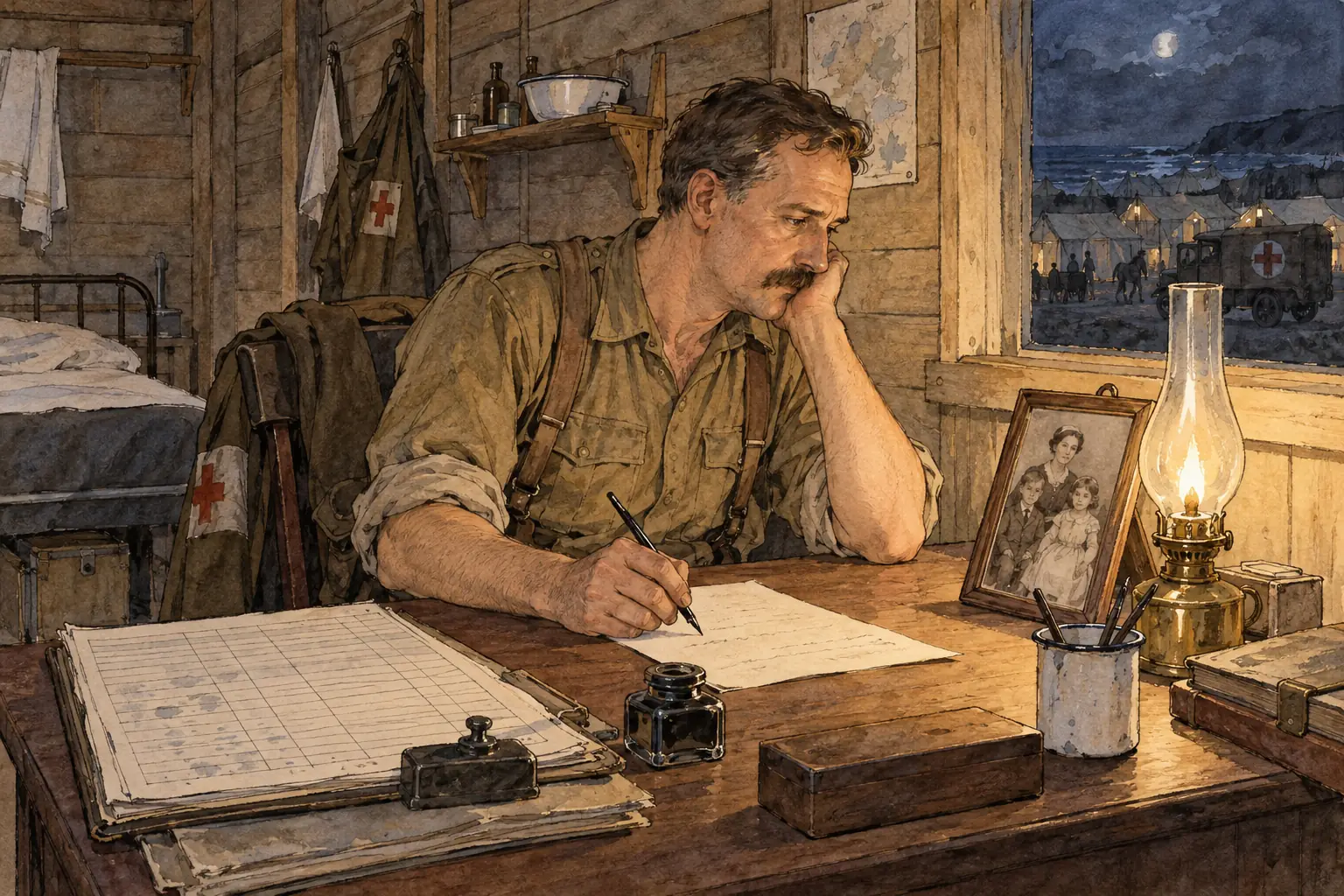
A strong historical enquiry relies on a diverse selection of sources to provide comprehensive insights. This involves balancing different types of evidence while assessing their strengths, limitations, and viewpoints to build a reliable picture.
Strategies for balanced and reliable source selection
- Achieve range and balance - Combine quantitative sources, like statistical reports on injury rates, with qualitative ones, such as doctors' letters, to cover data and context.
- Address changes over time - For enquiries comparing developments, like gas treatment evolution from 1916 to 1918, select sources from each period, including early manuals and later medical summaries.
- Evaluate reliability and perspective - Consider bias; pair official reports (for factual data) with private accounts (for personal views) to counter potential weaknesses, such as exaggeration in newspapers.
- Overcome source limitations - Choose combinations that address gaps, ensuring a mix that provides both the official narrative and ground-level experiences.
Justifying source choices and availability
Selecting sources is not just about relevance but also about ensuring they are accessible and can be defended in terms of their value to the enquiry. This step involves checking for sufficient evidence and explaining the rationale behind choices.
Approaches to justification and availability
- Assess source availability - Frame questions around topics with ample surviving materials, such as government reports on wartime medicine, to ensure the enquiry can be supported.
- Justify selections - Explain choices by noting how sources directly tackle the question; for instance, medical records are essential for surgical outcomes, while diaries add illustrative examples.
- Tailor to enquiry focus - For questions on morale, prioritise personal letters or journals; for treatment results, emphasise statistics, using other sources to provide supporting context.
- Encourage strategic thinking - Practice selecting sources that collectively strengthen the investigation, highlighting how they reveal key insights into the Western Front's medical history.